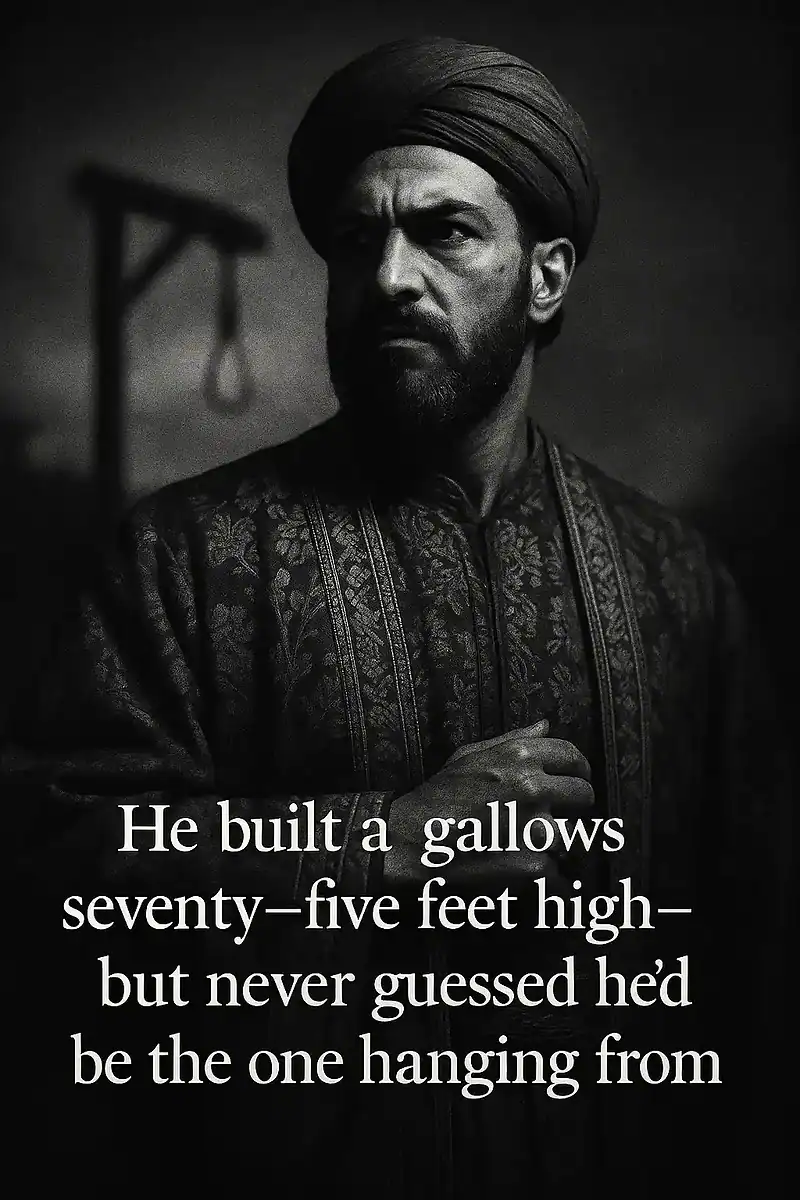
The Man Who Rose Too Fast
Power came to Haman like a rush of wind. One day, he was just another noble in King Ahasuerus’s court; the next, he was elevated above all the princes of Persia. The people bowed before him wherever he passed. His robe shimmered, his words carried weight, and his ego swelled to fill the room before he even entered. Yet beneath that proud exterior, something sinister brewed – a craving not just for honor, but for control.
When Mordecai refused to bow, Haman’s pride cracked. A single man’s defiance – one humble Jew at the king’s gate – became an unbearable insult. Pride whispered, “You can’t let this go.” And so Haman plotted not only Mordecai’s death, but the annihilation of all Jews throughout the empire.
A Seed of Hatred in a Palace of Gold
The court of Persia glittered with gold, but Haman’s heart was dark with envy. He told himself it was about respect, about loyalty, about keeping order in the kingdom. But deep down, it was about him. Pride always starts small – like a seed that looks harmless until it grows into a tree that shades out everything good.
Day by day, Haman’s obsession with Mordecai became the lens through which he saw the world. Every honor he received, every feast he attended, felt incomplete as long as that one man refused to kneel. It’s astonishing how one thorn of bitterness can poison an entire vineyard of blessing.
A Plan Signed in the King’s Name
Haman convinced the king that a certain people scattered throughout the provinces lived by different laws. He painted them as a threat. He spoke smoothly, flattering the king, offering silver to fund their destruction. Without realizing the weight of what he was permitting, the king handed him his ring – the symbol of royal authority.
The decree went out. It bore the king’s seal but Haman’s venom. On a certain day, throughout all 127 provinces, men, women, and children of Jewish descent were to be slain.
What must that have felt like for Haman? To hold power so absolute that one word from his lips could condemn a nation? He mistook that momentary control for sovereignty. But there’s only One whose word truly determines life or death – and it wasn’t Haman.
Mordecai’s Refusal and Esther’s Resolve
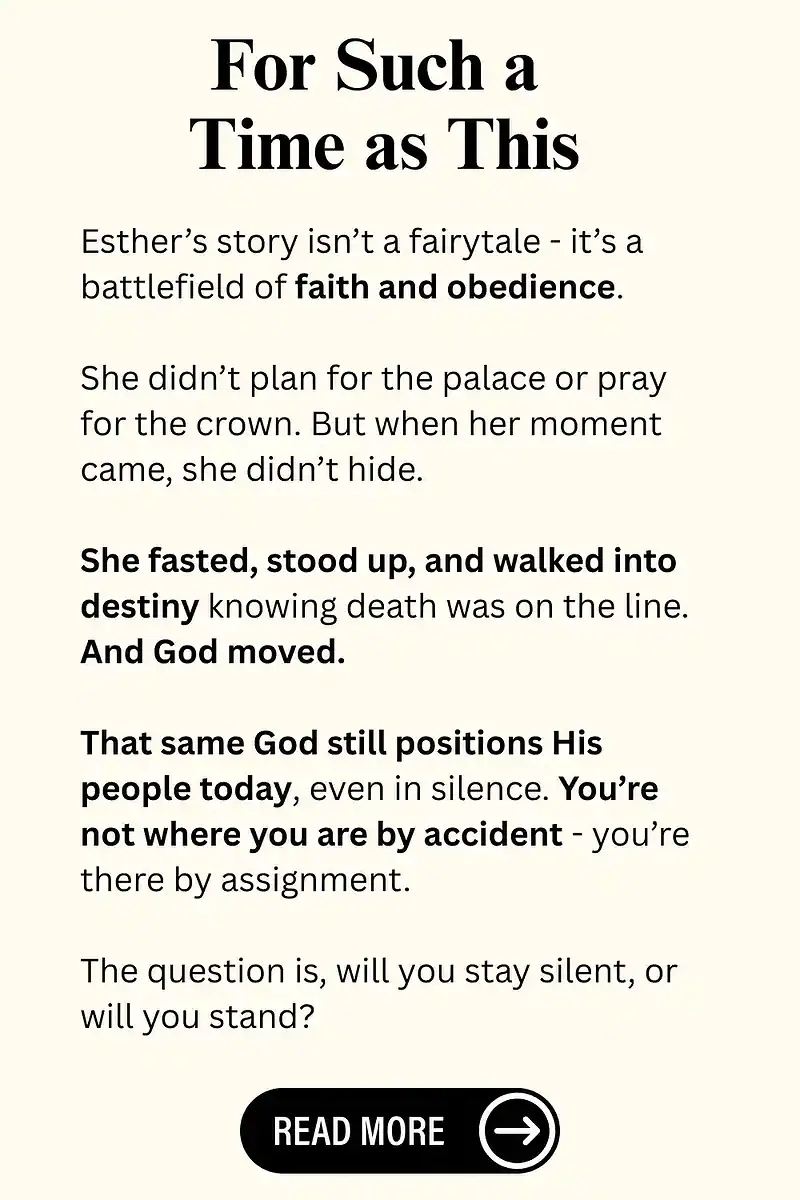
While Haman rejoiced, the Jews mourned. Mordecai tore his clothes, put on sackcloth, and went to the king’s gate crying out for mercy. Inside the palace, Queen Esther heard the whispers. Her people were condemned. She, too, was a Jew – though the king didn’t know it.
When Mordecai sent word urging her to act, her heart trembled. Approaching the king uninvited meant death unless he extended his golden scepter. Yet Mordecai’s words carried heaven’s echo: “Who knoweth whether thou art come to the kingdom for such a time as this?”
Faith stirred in her heart. She called for fasting – not food, not drink, just prayer. No crown, no robe, no beauty could save her now. Only God could.
The Pride Before the Fall
As Esther prepared her heart, Haman prepared his gallows – seventy-five feet high. His friends and wife suggested it; his pride approved it. “Hang Mordecai there,” they said. Haman smiled at the thought. That night, he slept soundly, sure that justice – his version of it – would soon be done.
But the King of Heaven had other plans.
The Sleepless King and the Forgotten Deed
The same night, King Ahasuerus couldn’t sleep. Of all the nights in the empire, that one was chosen by God to stir him awake. He ordered the royal chronicles to be read aloud. Page after page passed until the story of Mordecai surfaced – the Jew who had exposed a plot to assassinate the king.
“What honor and dignity hath been done to Mordecai for this?” the king asked.
“Nothing,” came the reply.
And at that very moment, Haman entered the court – ready to ask permission to hang Mordecai.
The Twist Only Heaven Could Write
“Who is in the court?” the king asked. “Haman,” they said. “Let him come in.”
Before Haman could speak, the king asked, “What shall be done unto the man whom the king delighteth to honor?”
Thinking only of himself, Haman painted his dream aloud: “Let the man wear the royal robe, ride the king’s horse, and be led through the city by one of the king’s princes proclaiming, ‘Thus shall it be done to the man whom the king delighteth to honor!’”
“Make haste,” said the king, “and do even so to Mordecai the Jew.”
It’s hard to imagine a louder silence. Haman’s face must have drained of color. Every step he took leading Mordecai through the streets echoed like divine irony. Pride had written its own humiliation.
The Banquet of Revelation
The next day, Esther held a banquet for the king and Haman. The air was sweet with the scent of spiced wine and roasted meat, but beneath the laughter, destiny stirred. The king, curious, asked again, “What is thy petition, Queen Esther?”
Her voice was steady. “If I have found favor in thy sight, O king, let my life be given me at my petition, and my people at my request.”
The king’s brow furrowed. “Who is he, and where is he, that durst presume in his heart to do so?”
Esther pointed across the table. “The adversary and enemy is this wicked Haman.”
The silence that followed must have rung like thunder.
The Fall of the Proud
In that moment, everything Haman had built crumbled. The gallows he prepared for Mordecai became his own. The decree he signed in arrogance was reversed by royal authority. The house he had filled with pride became the inheritance of the man he sought to destroy.
God doesn’t forget justice. It may not come when we expect it, but it never misses its mark. “Pride goeth before destruction, and an haughty spirit before a fall.”
The God Who Reverses the Story
When the Jews received word of their deliverance, laughter broke through years of sorrow. Mordecai rose from the gate to the palace, clothed in royal apparel of blue and white, a crown of gold upon his head. The people rejoiced, and the name of their God was magnified across the land.
The book of Esther never mentions God’s name directly, yet His fingerprints are everywhere – on the sleepless night, the timing of the banquet, the courage of Esther, and the downfall of the proud.
God was in the unseen details, reversing what seemed irreversible.
Reflection: When Pride Builds Its Own Trap
Haman’s story reminds us that pride is never just arrogance – it’s blindness. It blinds us to mercy, to truth, to others’ humanity, and ultimately to God’s hand. Every self-made gallows begins with self-made importance.
How often do we build our own “gallows” in daily life – through bitterness, jealousy, or the silent desire to be noticed? Pride always ends up hanging on the rope it tied.
But humility – trusting God with our honor and our vindication – frees us. “Humble yourselves therefore under the mighty hand of God, that He may exalt you in due time.”
The Final Parallel: From Gallows to Cross
Centuries later, another man was condemned on a wooden structure. But unlike Haman, He bore no guilt. The cross that should have been ours became His – yet in dying, He reversed our sentence forever.
Haman’s gallows were instruments of revenge. Christ’s cross became the symbol of redemption.
And where pride built death, humility built life everlasting.
So when you feel unseen, remember: God still watches the proud from afar and gives grace to the humble. The gallows of pride will always bow before the grace of God.
For the God who turned a night of judgment into a morning of joy still reigns today – and He will write the final word.