A Crown Made of Fear
He never wanted the crown. It was placed on his head by Babylon’s hand, not Israel’s heart. Zedekiah, the son of Josiah, stood in the shadow of kings who had both pleased and angered God, but his crown came with a leash. Appointed by Nebuchadnezzar to keep Judah compliant, Zedekiah wore more than gold that day – he wore the heavy burden of compromise. The temple still stood, but the glory of the Lord had long departed, and though Jerusalem’s walls looked strong, its spirit was hollow.
Each morning, the young king would step to his balcony and watch the smoke rise from the temple mount. He’d hear the priests chant, “The Lord is in His holy temple,” but deep inside, he wondered – was He? The people spoke of deliverance, of Egypt’s help, of prophets who promised peace, yet Jeremiah’s voice cut through it all like fire through dry wood: “You shall not prosper.”
The Prophet in Chains, the King in Denial
Jeremiah was already a weary man when Zedekiah began to rule. He had been mocked, beaten, and thrown into dungeons for one message: submit to Babylon – it is God’s judgment. To the king, that message sounded like treason. But God’s truth never changes to fit a throne.
There were nights when Zedekiah secretly summoned Jeremiah. “Is there any word from the Lord?” he would whisper, hoping the prophet had finally changed his tune. But Jeremiah never did. “If you surrender, you shall live.”
Yet fear was Zedekiah’s closest counselor. He feared the Babylonians. He feared the nobles. He feared the people. But he never feared God enough to obey Him.
The Breaking of an Oath
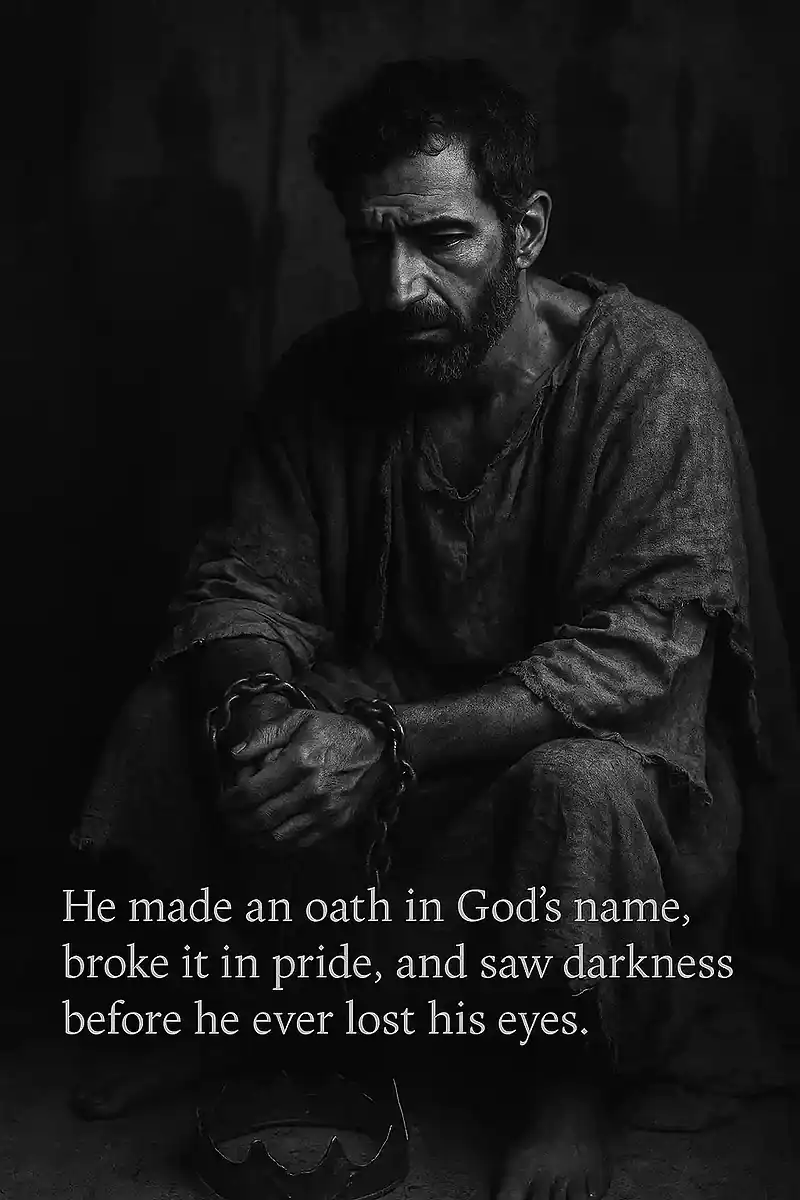
Once, long before the siege, Zedekiah had sworn before God to be loyal to Nebuchadnezzar. That oath wasn’t just political – it was sacred. He had made it in the name of the Lord. But with rebellion stirring in his veins and prophets of deception whispering victory, he broke it.
He sent envoys to Egypt for help, sealing letters with trembling hands. Perhaps he believed strength would come from alliances, not repentance. Perhaps he thought a little rebellion could bring freedom. But God saw it differently.
The Lord spoke through Ezekiel in Babylon: “As I live, says the Lord God, surely in the place where the king dwells that made him king, whose oath he despised, and whose covenant he broke, even with him in the midst of Babylon he shall die.”
When God says something, He doesn’t forget.
The Siege that Starved the Soul
Then came the armies – fierce, relentless, and cold. Babylon encircled Jerusalem like a serpent tightening its coils. For nearly two years, the city groaned under siege. Mothers rationed crumbs; soldiers sharpened dull blades they’d never get to use. The once-celebrated temple singers had gone silent.
Inside the palace, Zedekiah’s hands shook as famine crept closer. He walked the marble halls like a ghost, unable to pray, unable to repent. The Word of God had come again and again, but the king’s heart was stone.
Sometimes judgment doesn’t fall in an instant. Sometimes it comes slow, like a shadow that lengthens by the hour until there’s no light left.
The Night the Wall Fell
On the ninth day of the fourth month, in the eleventh year of Zedekiah’s reign, it happened. The wall was breached. The Babylonians poured through the gap like fire through dry grass. Panic swept the city.
Zedekiah fled by night through a gate between two walls, thinking he could outrun the judgment of God. His guards ran beside him in silence until dawn caught them in the plains of Jericho. There, Babylon’s soldiers found the king trembling, his breath ragged, his crown fallen somewhere in the dust behind him.
They bound him and brought him before Nebuchadnezzar at Riblah.
Eyes That Saw Too Much
What happened next was unbearable. Nebuchadnezzar ordered Zedekiah’s sons – his legacy, his hope, his name – to be killed before his eyes. Then, as if to seal the memory forever, they blinded him.
The last thing the king of Judah ever saw was the death of his sons. The man who refused to see God’s warning was left in eternal darkness. They put chains on him and carried him to Babylon. There, in a foreign land, a blinded king sat alone, remembering the covenant he broke, the words he ignored, and the God he underestimated.
When Chains Speak Louder Than Crowns
It’s strange how freedom feels when you’ve lost everything. For Zedekiah, the chains became his last teacher. In Babylon, he had no throne, no subjects, and no prophets. Only silence. But in that silence, perhaps he finally understood what Jeremiah meant – that surrender to God is not defeat, it’s salvation.
Zedekiah’s life stands as a warning carved into Scripture’s wall: you can’t make peace with sin and expect peace with God. You can’t claim His covenant and break your word without consequence. But even in his tragedy, God’s justice remained pure. He had sent warnings for years. His patience had been long. His mercy had been extended.
The God Who Keeps Oaths
Centuries later, another King stood before Jerusalem. This one didn’t break His covenant – He fulfilled it. Where Zedekiah disobeyed to save himself, Jesus obeyed unto death to save others. The last king of Judah lost his sight; the King of Kings gave sight to the blind. One died in Babylonian chains; the other broke the chains of sin forever.
Zedekiah’s story shows us that the word of the Lord always comes true – whether in mercy or in judgment. But it also whispers hope: where men fail, Christ redeems.
Reflection: The Chains We Choose
Every believer has a choice – to trust God’s word or try to manage life our own way. We may not wear crowns, but we carry vows: promises to follow Christ, to walk in truth, to forgive, to love. When we break them, we feel the weight. Not of Babylon’s chains, but of guilt, confusion, and distance from the presence of God.
Yet there’s good news. Jesus came to free captives like Zedekiah – like us. He still speaks to stubborn hearts. He still invites us to surrender.
If you’ve ever found yourself running from obedience, remember the blinded king who once sat in darkness. His story is a mirror. It asks: will we bow before God willingly, or wait until the walls fall?
Closing Parallels
Zedekiah’s throne crumbled, but Christ’s endures forever. The king who broke an oath met judgment; the Savior who kept His covenant brought grace. In the ashes of one man’s failure, God’s faithfulness shines brighter.
And so the story of the last king whispers across the centuries: The Word of the Lord stands sure. His mercy still waits. His covenant still holds.
The Lord who watched Zedekiah’s fall still reigns, unbroken, unchanging, and everlasting.
Call to Action: The Question That Demands an AnswerIn Acts 2:37 Peter and the Apostles were asked the question – What Shall We do? And in Acts 2:38 Peter answered, Repent, and be baptized every one of you in the name of Jesus Christ for the remission of sins, and ye shall receive the gift of the Holy Ghost. For the promise is unto you, and to your children, and to all that are afar off, even as many as the Lord our God shall call. Do you understand this? After hearing the gospel and believing, they asked what should would do. The answer hasn’t changed friend, Peter clearly gave the answer. The question for you today is, Have you receieved the Holy Spirit Since you believed? If you’re ready to take that step, or you want to learn more about what it means to be born again of water and Spirit, visit: Come, and let the Spirit make you new. |