The Empire That Shook the Ground
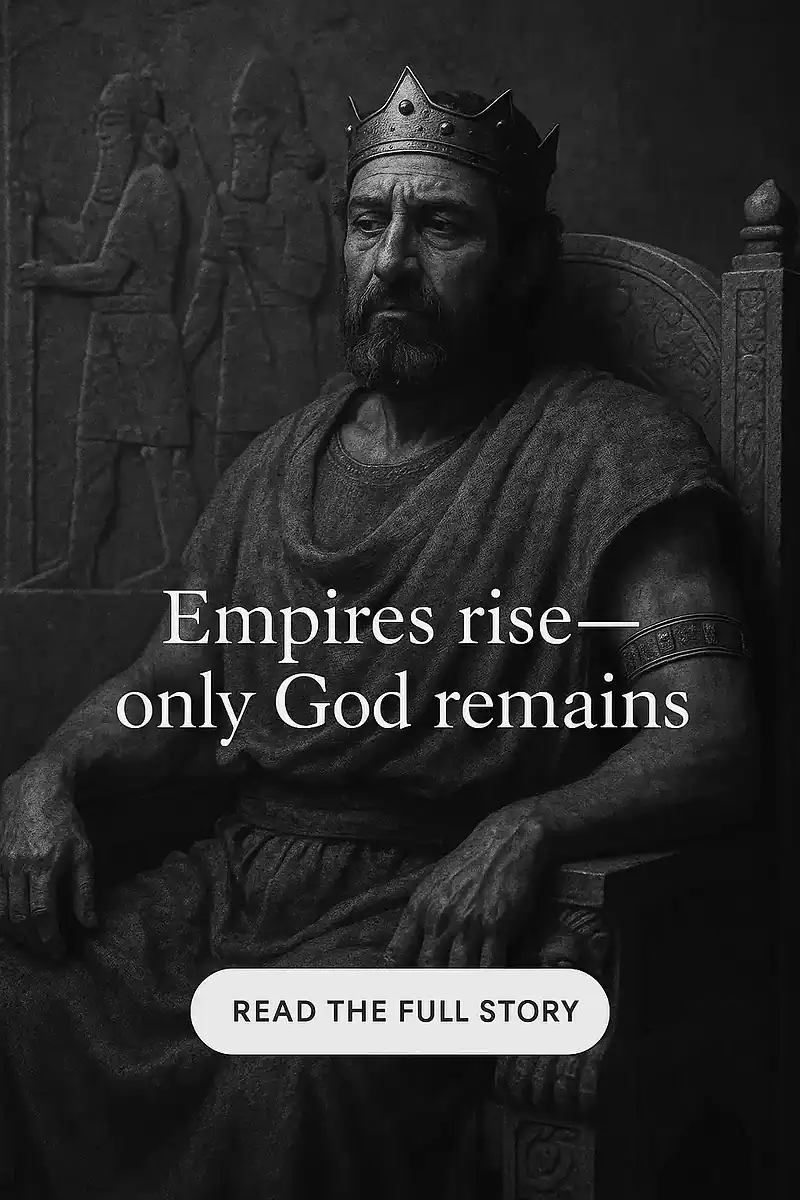
The dust of the ancient Near East was never still for long. Empires rose and fell like waves, each one hungrier than the last. But when Tiglath-Pileser of Assyria stepped onto the scene, the ground itself seemed to tremble beneath his march.
He wasn’t just another conqueror. He was a tool – though he didn’t know it – used by the Lord to pull at the cords of nations and test the hearts of kings.
The Assyrian empire was fierce, ruthless, and organized. Its armies moved like iron locusts across the land, devouring kingdoms and rewriting borders. From Damascus to Samaria, fear spread like wildfire.
Every messenger carried the same news: “Assyria is coming.” Behind that fear was more than political panic – it was spiritual decay. Israel had traded covenant loyalty for convenience, altars of worship for idols of comfort. So God allowed a shaking.
The Heart of a Divided Kingdom
Israel was split in two – Judah in the south, Israel in the north. Both carried the name of God, but their hearts drifted in opposite directions. In the north, King Menahem had bought peace by paying tribute to Tiglath-Pileser. It was a temporary fix, like putting a bandage over a mortal wound. The gold from the temple treasury quieted Assyria for a moment, but not for long.
When Menahem’s son Pekahiah took the throne, betrayal brewed behind the palace doors. His own captain, Pekah, killed him and seized the crown. Chaos became the new normal. The prophet Hosea cried out that Israel had sown the wind and would reap the whirlwind – and the whirlwind had a name written in cuneiform.
Meanwhile, in Judah, King Ahaz trembled. When he heard that the armies of Israel and Syria had joined forces against him, his heart was “moved, as the trees of the wood are moved with the wind.” God sent Isaiah with a message of hope: “If ye will not believe, surely ye shall not be established.” But Ahaz, blinded by fear, chose politics over prayer.
A King’s Desperate Bargain
Ahaz made a decision that would change the course of his nation. He sent envoys north, loaded with gold and silver, bearing a desperate message to Tiglath-Pileser: “I am thy servant and thy son; come up, and save me.”
It sounded humble, but it wasn’t faith – it was surrender. The king of Judah bowed to an earthly empire instead of trusting the God who had delivered his forefathers. Tiglath-Pileser accepted the offer with a smile that hid an iron fist. His armies swept down, crushed Syria, and subdued Israel. Damascus burned, and its people were carried away captive.
The alliance Ahaz sought bought him survival – but at a cost. When the Assyrian king came to Damascus, Ahaz followed. There, surrounded by the smoke of conquered altars, Ahaz saw something that caught his eye: a foreign altar. It glittered with gold and grandeur, and he thought, This is what power looks like. He sent its design back to Jerusalem, ordering the high priest to build a copy before he returned.
The Altar of Imitation
When Ahaz stepped back into the temple of the Lord, he walked not as a worshiper but as a designer of idols. The new altar stood where God’s had stood for centuries – a foreign symbol in the holy place. The king approached it and offered sacrifices to the gods of Damascus, whispering that maybe their power could save him.
It was more than a political act; it was a spiritual collapse. The altar of the Lord was pushed aside like an unwanted relic. The priest, afraid to resist the king, complied. The house of God became a showroom for compromise.
Isaiah, somewhere in the city, must have grieved. The prophet had spoken of Immanuel – God with us – but the king preferred Assyria with us. Ahaz thought he was securing Judah’s safety, but he was opening the door to oppression. The pull of Assyria wasn’t just on the map; it was on the heart.
The Turning Point in the Shadows
Even in those dark years, God wasn’t silent. He allowed the tightening grip of Assyria not to destroy His people but to draw out what lay hidden within them. The prophets’ words were seeds planted in a broken nation. Through Isaiah, God declared that a remnant would remain. The land might be carved up, but His covenant wouldn’t.
When Tiglath-Pileser marched through the north, taking cities and scattering tribes, he thought he was building his legacy. He didn’t see that the God of Israel was using him to prune a dying vine so it could bear fruit again. From Naphtali to Gilead, captives were carried away, but heaven was still writing a bigger story.
Faith Meets the Impossible
Judah learned that alliances built on fear always crumble. Tiglath-Pileser eventually died, and his successors inherited an empire heavy with arrogance. They didn’t know that the very nation they oppressed carried a promise older than Babylon itself – a promise that through Israel, the world would see salvation.
When Hezekiah, the son of Ahaz, rose to power, something shifted. He tore down the altars his father built and reopened the temple. He dared to trust the Lord again. And when Assyria came knocking once more – this time under Sennacherib – the Lord proved what Ahaz never believed. One prayer, one night, one angel – and an army of 185,000 fell silent. The God of Judah didn’t need gold, alliances, or tribute. He only needed faith.
The Aftermath and the Awakening
Long after Tiglath-Pileser’s reign faded into the dust, the scars of his campaigns remained etched on Israel’s memory. But even judgment carried mercy. The scattering of Israel would one day become the spreading of the gospel. The same regions Assyria emptied would later hear of a Savior born in Bethlehem.
What Assyria pulled apart, Christ would one day gather together. The lost tribes that vanished into foreign lands would have descendants who’d hear the message of a kingdom not built on conquest but on the cross.
Lessons for the Heart
The story of Tiglath-Pileser isn’t just ancient history – it’s a mirror. How often do we, like Ahaz, trade faith for security, or chase strength in places that cannot save us? The pull of the world’s power still tempts believers to bow before foreign altars – altars of success, comfort, or approval. But the Lord still calls His people to trust Him even when the odds feel overwhelming.
When everything in Judah shook, God was still steady. The same hands that allowed Assyria’s rise were preparing salvation’s plan. From the ashes of broken covenants would come One who’d write a new covenant in His own blood.
The Map and the Messiah
Tiglath-Pileser redrew maps with a sword. Christ redrew eternity with a cross. One ruled through fear; the other through love. The Assyrian king took nations captive; the Lord Jesus set captives free.
Every time we read the story of a powerful empire that thought it held history in its grasp, we’re reminded of how God quietly rules above them all. The Assyrian pull reshaped a map and a people – but the hand of God reshaped history itself.
Final Reflection
The footprints of kings fade in the sand, but the Word of the Lord endures forever. Tiglath-Pileser’s name may be buried under centuries of dust, yet the covenant of God still stands unbroken. Empires rise and fall, but His kingdom has no end. And when the maps of men are redrawn again, heaven will still whisper what Judah forgot to believe: The Lord, He is God.
Manifesto: When God Uses Empires to Awaken Hearts
We live in an age that still bows to power. We dress it differently – trade deals, politics, influence – but the spirit behind it hasn’t changed since Tiglath-Pileser marched his armies across the earth. The story of that Assyrian king isn’t just ancient history; it’s a wake-up call for every believer who’s ever been tempted to lean on the wrong source of strength.
The Lord rules over nations, not just hearts. He can raise an empire to expose idolatry or tear one down to make room for revival. Tiglath-Pileser thought he was conquering lands, but God was conquering pride. He used Assyria like a plow – turning over the hardened soil of His people’s hearts. Judah thought safety would come from diplomacy, but peace has never been built on fear. It’s built on faith.
This story calls us to stop running to modern Assyrias – the deals, distractions, or idols that promise protection while quietly stealing our worship. Every believer faces that same pull: to copy the world’s altars, to chase its shine, to silence the voice of conviction for a little comfort. But the Lord’s voice still echoes: “If you will not believe, surely you will not be established.”
So this is the call – to trust again. To tear down the imitation altars. To let God’s shaking bring alignment, not panic. He allows the shaking so that what cannot be shaken will remain. The same God who watched over Judah watches over us. And though empires still boast and kings still plot, heaven remains unmoved.
Faith will always outlast fear. God will always outmaneuver man. And when the dust of every Tiglath-Pileser has settled, the throne of Christ will still stand – unshaken, unshared, and eternal.
Call to Action: The Question That Demands an AnswerIn Acts 2:37 Peter and the Apostles were asked the question – What Shall We do? And in Acts 2:38 Peter answered, Repent, and be baptized every one of you in the name of Jesus Christ for the remission of sins, and ye shall receive the gift of the Holy Ghost. For the promise is unto you, and to your children, and to all that are afar off, even as many as the Lord our God shall call. Do you understand this? After hearing the gospel and believing, they asked what should would do. The answer hasn’t changed friend, Peter clearly gave the answer. The question for you today is, Have you receieved the Holy Spirit Since you believed? If you’re ready to take that step, or you want to learn more about what it means to be born again of water and Spirit, visit: Come, and let the Spirit make you new. |