A Seat of Power, A Restless Conscience
The morning was gray, heavy with the kind of stillness that hangs before a storm. Jerusalem was swelling with pilgrims for Passover, but inside the governor’s hall, it was suffocating. Pontius Pilate, the Roman governor, sat in judgment – yet peace had long abandoned him. Authority looked good on him from a distance: the polished armor, the rings, the Roman seal. But beneath it all was a man caught between empire and eternity.
He was used to trials. Bandits. Rebels. Thieves. His word could end a life before breakfast and start another war by noon. But this man – this Jesus – they brought before him was different. Pilate felt it the moment He entered the room. Not in posture or protest, but in presence. Jesus stood silent, steady, unafraid. It was the kind of composure that unnerved men like Pilate, because it exposed something missing in them.
The Accused Who Judged the Judge
“Are You the King of the Jews?” Pilate asked, trying to sound detached. The words came out more like curiosity than accusation. Jesus answered with calm clarity, “You say that I am.”
Something flickered in Pilate’s chest. This wasn’t rebellion. It was royalty – but not the kind that drew swords. It was truth embodied, and Pilate, a man drowning in compromise, could feel it rising like light through the cracks of his own corruption.
He turned to the priests, demanding proof of guilt. They shouted accusations: blasphemy, treason, claims of kingship. Pilate saw through them. He’d governed long enough to recognize envy in religious robes. But politics has a price, and Pilate’s allegiance was not to justice – it was to survival.
The Warning from His Wife
As the shouts grew louder, a messenger ran in breathless with a note. It was from his wife. Pilate read it once, then again, his hands trembling: “Have nothing to do with that righteous man, for I have suffered many things today in a dream because of Him.”
Her words were a whisper of heaven cutting through the noise of hell. God was speaking even into Pilate’s household, but fear wrapped itself around him like chains. How do you defy the very people who could end your career – or your life? Pilate stared at Jesus again, and the silence between them was deafening.
The Crowd Chooses Barabbas
It was supposed to be simple. One man released for Passover. A custom to please the people. Pilate gave them a choice: Jesus or Barabbas – a murderer, a known insurrectionist. Surely they would choose the teacher over the terrorist.
But the crowd, stirred by priests and mob fever, roared for Barabbas. The name “Jesus” was drowned under the echo of hatred. Pilate’s heart pounded in disbelief. He tried one last plea, “Why? What evil has He done?”
Their answer came in waves of fury: “Crucify Him!”
It was no longer about reason. It was about rage. The governor of Judea, the representative of Caesar, stood powerless before a crowd he was supposed to rule. He could have stopped it. He could have declared Jesus innocent and released Him. But he didn’t.
The Basin of Cowardice
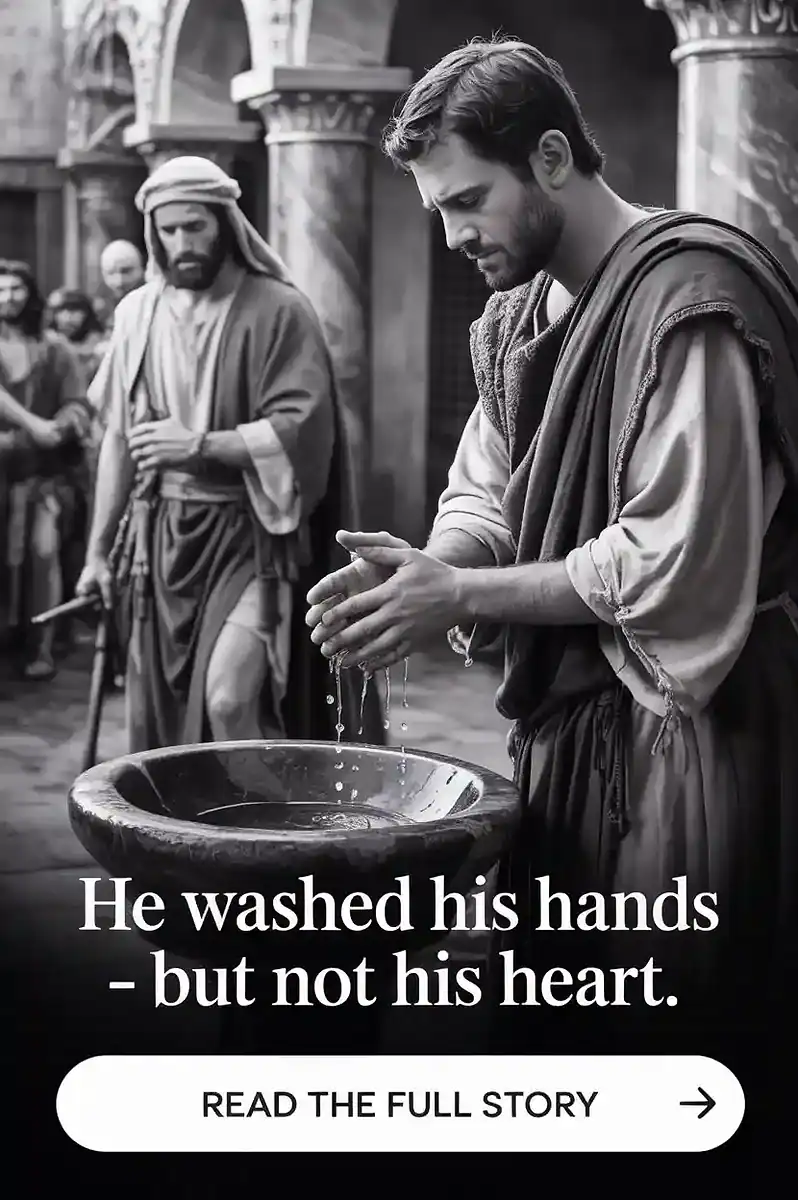
Pilate called for water. A servant brought a basin. The gesture was meant to be symbolic – Rome’s governor washing his hands of responsibility. But no amount of water could cleanse the stain of that day.
He looked down at his hands – hands that once signed orders, decrees, judgments. Now, they trembled. He washed, but the guilt clung like oil. He said to the crowd, “I am innocent of this man’s blood.” But the heavens knew better.
He handed Jesus over to be crucified. The soldiers led Him away, and Pilate turned his face, unwilling to watch righteousness suffer under his command.
The Silence After the Sentence
When the shouts faded, when the courtyard emptied, the stillness returned. Pilate sat alone, listening to the dripping water in the basin. His wife found him hours later, staring at his reflection in it. He didn’t speak, because there were no words for what he’d done.
He had tried to avoid guilt by pretending innocence. But deep down, he knew – washing hands doesn’t wash hearts. He had encountered Truth in flesh and had turned Him over to be nailed to wood. And that truth would haunt him forever.
The Price of Compromise
History remembers Pilate as the man who condemned the Son of God. But long before the crowd shouted “Crucify,” compromise had already taken root in him. He had traded integrity for influence, conviction for convenience.
He wanted to please everyone – and ended up pleasing no one, not even himself. His political survival became his spiritual ruin. Pilate tried to control his image before men, but forgot his standing before God.
The Shadow That Followed
Legend says Pilate’s later years were marked by unrest. Some say he was recalled to Rome and executed. Others say he ended his own life, tormented by guilt. There’s no proof of what happened, but one thing is certain – his name became a cautionary tale.
He stood closer to Jesus than most ever would, heard truth straight from the source, and still walked away unchanged. Not because he didn’t believe – but because he wouldn’t surrender.
The Reflection for Us
We shake our heads at Pilate, but how many times do we wash our own hands instead of bowing our hearts? We say, “That’s not my fault,” or “That’s not my fight,” while Jesus stands before us waiting for a decision.
Faith isn’t neutral. Every day, we’re standing in that same courtyard – choosing between the world’s approval and God’s truth. Between silence that feels safe and courage that costs something.
Pilate reminds us that indecision is a decision. When truth stands before us, silence is not innocence – it’s surrender to fear.
The Cross He Couldn’t Escape
What Pilate couldn’t understand was that the very blood he tried to avoid would become the only thing that could have cleansed him. The water in that basin could never purify his guilt, but the blood of Jesus – poured out on that cross – was powerful enough to wash away the sins of the world.
Had Pilate knelt that day instead of washing, his story might have ended in redemption instead of regret.
But that’s where our hope enters. The same Christ he condemned still offers grace to anyone willing to believe. The Judge who was judged stands ready to forgive even those who once turned away.
The Final Reflection
Pilate’s name lives on in history, but the story of Jesus lives on in eternity. The Roman governor tried to silence truth, but truth rose from the tomb three days later.
In the end, Pilate’s basin was empty – but Christ’s tomb was not. And that’s the difference between guilt and grace, between washing hands and washing hearts.
Even now, the same question echoes: What will you do with Jesus?
Because once you’ve stood before Him, you can never wash Him away.
Call to Action: The Question That Demands an AnswerIn Acts 2:37 Peter and the Apostles were asked the question – What Shall We do? And in Acts 2:38 Peter answered, Repent, and be baptized every one of you in the name of Jesus Christ for the remission of sins, and ye shall receive the gift of the Holy Ghost. For the promise is unto you, and to your children, and to all that are afar off, even as many as the Lord our God shall call. Do you understand this? After hearing the gospel and believing, they asked what should would do. The answer hasn’t changed friend, Peter clearly gave the answer. The question for you today is, Have you receieved the Holy Spirit Since you believed? If you’re ready to take that step, or you want to learn more about what it means to be born again of water and Spirit, visit: Come, and let the Spirit make you new. |