Quick Overview of This Bible Study…
Short on time? I have created a short slide show presentation of some key takeaways in our study. The complete, more comprehensive bible study is below…
Do you ever crave a deep, unshakable peace? In our chaotic world, peace can feel like a distant dream. Yet the Bible – especially the King James Version (KJV) – overflows with promises and pictures of peace.
Today, let’s explore what “peace” really means from Genesis to Revelation. Along the way we’ll see how peace is described, promised, and fulfilled – and how you and I can walk in that peace daily. Ready? Let’s dive in.
What Does “Peace” Mean in the Bible?
When we hear peace, we might think “no conflict” or a quiet evening at home. But biblical peace is so much richer! In the Old Testament, the Hebrew word is shalom, which at its root means wholeness or completeness biblehub.com.
Shalom isn’t just the absence of war – it’s the presence of everything needed to be whole or sound. It speaks of well-being, safety, prosperity, and restbiblehub.com. Think of a puzzle perfectly put together with no missing pieces – that’s shalom.
In the New Testament, the Greek word for peace is eirēnē (pronounced ay-RAY-nay). Eirēnē carries the idea of things being joined together. It’s about harmony and tranquility – both with God and with others biblehub.com.
One Bible word-study explains it as “wholeness, when all essential parts are joined together – peace (God’s gift of wholeness)” biblehub.com. Isn’t that beautiful? Biblical peace is God making us whole.
Quick recap: In Scripture, peace is multidimensional: it’s wholeness with God, within ourselves, and with others. It’s like a calm inside us even if storms rage outside. No wonder peace is something we all long for!
Old Testament Shalom: Peace in Promise and Practice
From the very beginning, God showed that His plan was for peace. In the Garden of Eden there was perfect shalom – no strife, fear, or shame. Of course, sin disrupted that peace, but God’s heart remained to restore it.
All through the Old Testament, peace appears as a blessing from God. One of the most famous blessings is the Aaronic blessing God gave the priests to speak over Israel: “The LORD lift up his countenance upon thee, and give thee peace” kingjamesbibleonline.org. Can’t you just feel the warmth of that? God smiling on you and filling your life with peace.
Some ways shalom is seen in the OT:
- Peace as Well-Being: Shalom was a common greeting and farewell – “Go in peace.” It meant, “I want things to go well for you.” It covered safety, health, and prosperity biblehub.com. When Joseph asked about his brothers’ welfare, he literally asked about their shalom.
- Peace after Conflict: The Bible often notes times when the land “had rest” from war. For example, in the book of Judges, when enemies were defeated, the land had peace for a number of years. Peace was relief and calm after turmoil.
- Peace Offerings: Under the Mosaic Law, there was even a peace offering – a sacrifice symbolizing fellowship with God. It was a joyful offering, shared as a meal, celebrating that things were “right” between you and God (Leviticus 7). It’s like saying “Thank You, Lord, we’re at peace!”
- God Himself as Peace: At one point, Gideon was fearful, but God reassured him, “Peace be unto thee; fear not” (Judges 6:23). In response, Gideon built an altar and called it Jehovah-Shalom, meaning “The LORD is peace” biblegateway.com. Imagine naming an altar “The Lord is Peace”! It shows that peace comes from God’s presence.
The Psalms and Prophets also overflow with peace. King David sang about God leading him “beside the still waters”, restoring his soul kingjamesbibleonline.org.
Picture those still waters – quiet, glassy lakes reflecting the sky. That’s the kind of inner rest God gives us: He brings us to spiritual “green pastures” and “still waters” (Psalm 23:2) where our souls can exhale and be renewed.

Prophets like Isaiah spoke of peace as the ultimate blessing of walking with God: “thou wilt keep him in perfect peace, whose mind is stayed on thee” (Isaiah 26:3).
They even used metaphors: “peace like a river” flowing steadily (Isaiah 48:18, 66:12) and righteousness and peace kissing each other (Psalm 85:10) – a poetic way to say that when things are right with God, peace and goodness embrace.
And importantly, the Old Testament points forward to a coming Prince of Peace. We’ll get to Him soon!
New Testament Eirēnē: Peace Fulfilled in Christ
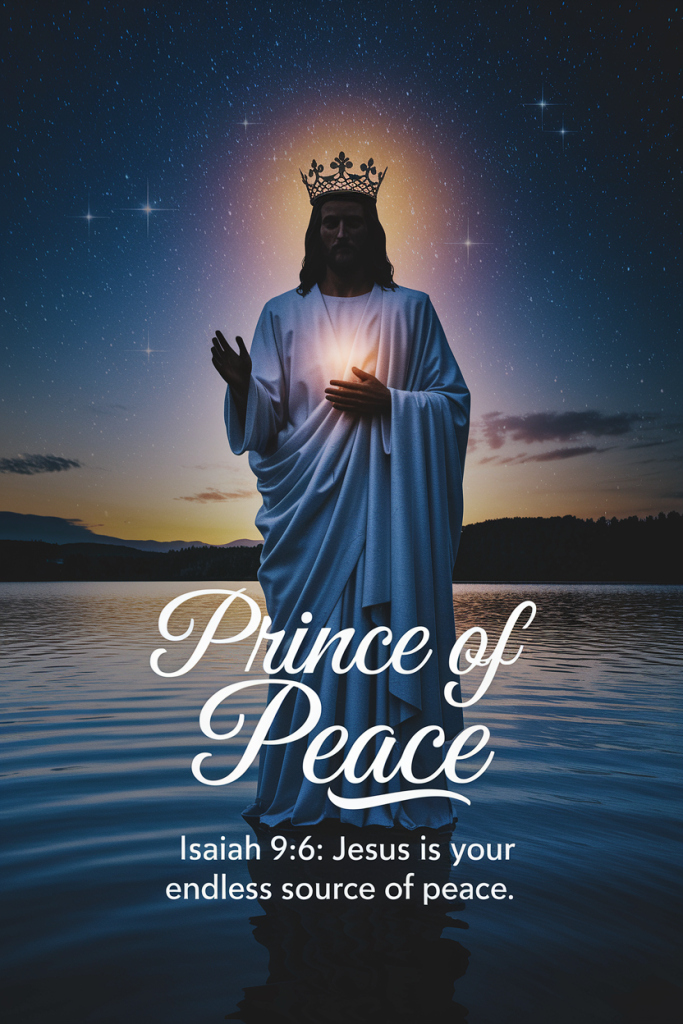
Enter Jesus Christ, and the ancient promises of peace burst into reality. At Jesus’ birth, the angels declared, “on earth peace, good will toward men” (Luke 2:14). Peace had arrived! One of Jesus’ titles, foretold by Isaiah, is “The Prince of Peace” kingjamesbibleonline.org – and He truly lived up to that name.
Jesus taught peace and brought peace everywhere He went. He told people, “Blessed are the peacemakers: for they shall be called the children of God” (Matthew 5:9). He often greeted with “Peace be unto you,” and when He was about to face the cross, He comforted His disciples with these amazing words: kingjamesbibleonline.org“
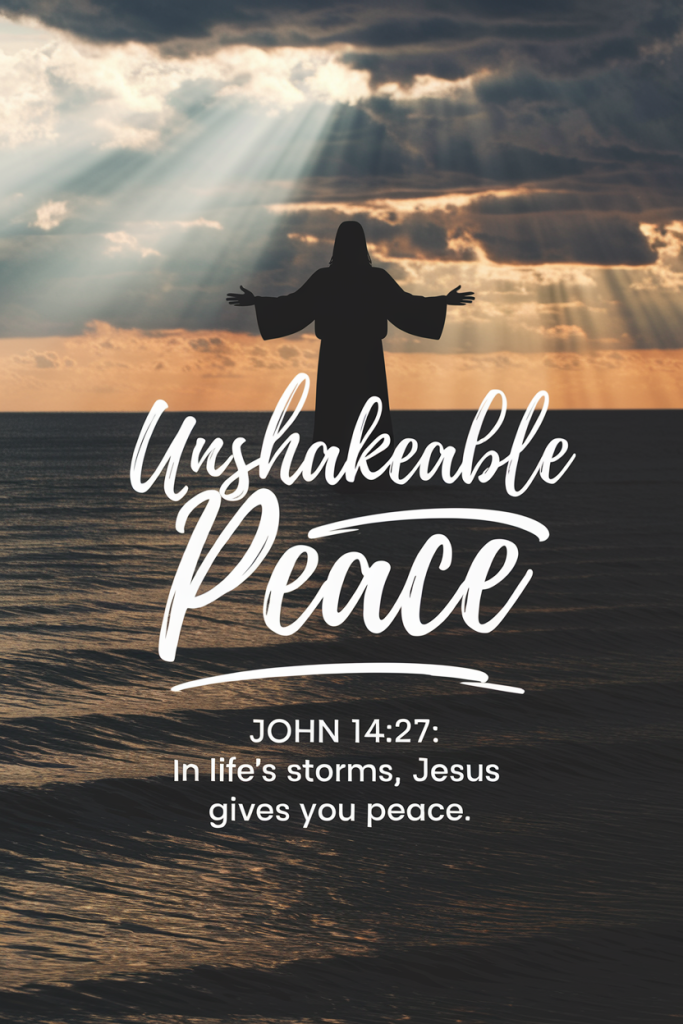
Peace I leave with you, my peace I give unto you: not as the world giveth, give I unto you. Let not your heart be troubled, neither let it be afraid.” (John 14:27)
Did you catch that? Jesus gives us His peace – a peace the world can’t offer. It’s like He wrapped up His own calm trust in the Father and handed it to us as a gift. This is the peace that calmed storms (literally, in Mark 4:39!) and cast out fear.
Through Christ, the biggest conflict of all was resolved: our broken relationship with God. The Apostle Paul wrote, “being justified by faith, we have peace with God through our Lord Jesus Christ” (Romans 5:1).
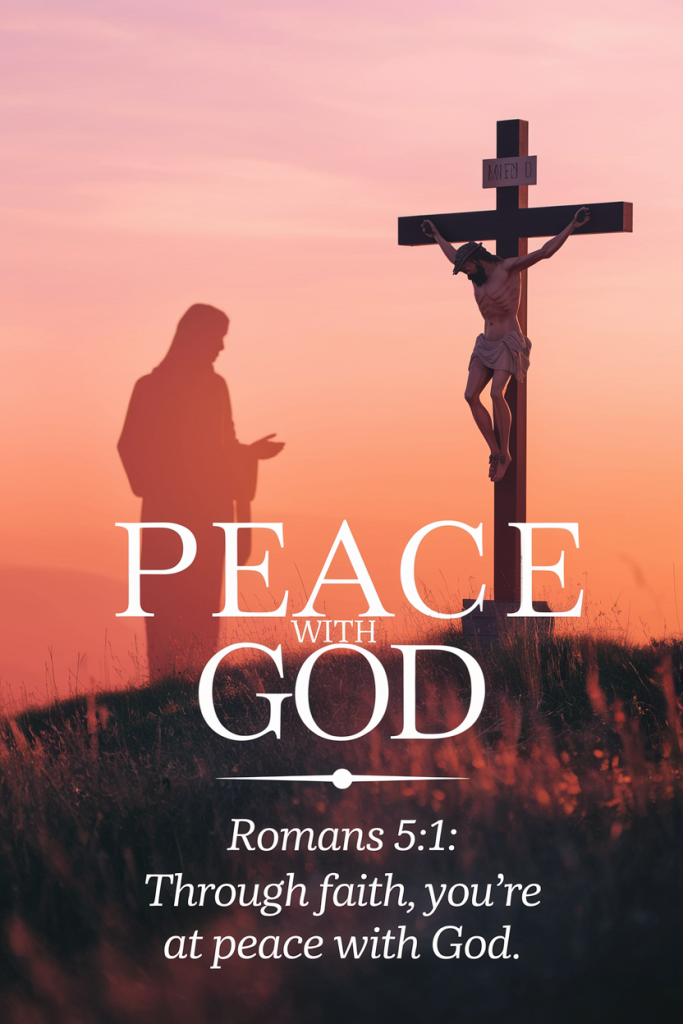
When Jesus died and rose again, He broke down the barrier between us and God, making peace through His blood. In fact, Paul says Jesus is our peace, uniting even longtime enemies (Jew and Gentile) into one family biblehub.com. Talk about reconciliation!
After Jesus ascended, the apostles kept echoing this theme of peace:
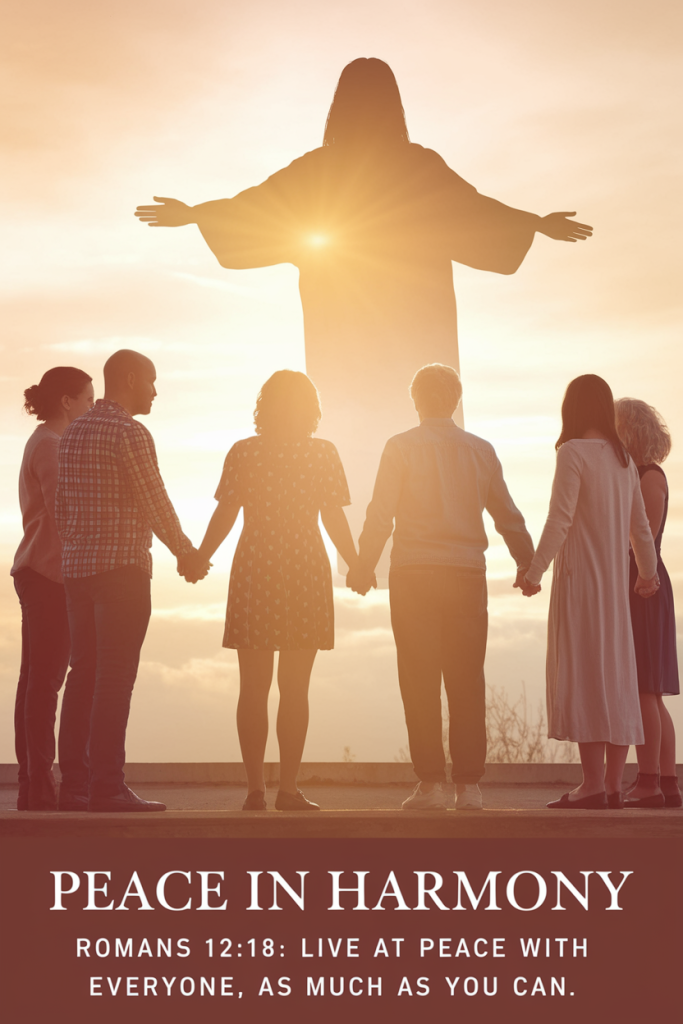
- They opened their letters with “Grace and peace to you” – almost every epistle begins that way. For instance, Peter writes, “Grace and peace be multiplied unto you through the knowledge of God, and of Jesus our Lord” (2 Peter 1:2, KJV). It wasn’t a fluffy greeting; it was a genuine prayer that believers would experience God’s grace and peace more and more.
- They taught believers to live in peace with others: “If it be possible, as much as lieth in you, live peaceably with all men” (Romans 12:18). We’re called to be agents of peace in our relationships, to forgive and forbear. Paul even tells a quarreling church, “Be of one mind, live in peace; and the God of love and peace shall be with you” kingjamesbibleonline.org.
- They pointed constantly to the peace we have in our hearts because of Christ. One of my favorite promises: “the peace of God, which passeth all understanding, shall keep your hearts and minds through Christ Jesus” kingjamesbibleonline.org. In other words, when we pray instead of worry, God’s peace will stand guard over our hearts like a soldier, protecting us from anxiety. Have you ever felt that unexplainable peace after praying? That’s what Paul is talking about. It’s real.
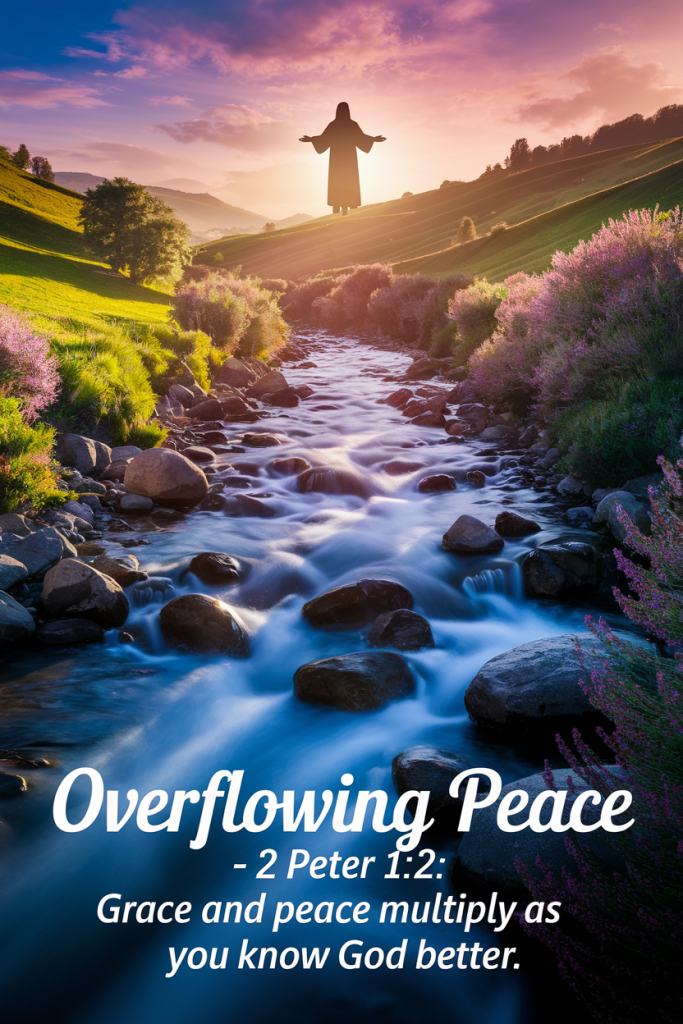
And of course, peace is a fruit of the Holy Spirit (Galatians 5:22). As the Spirit works in us, we become more peace-filled and peace-spreading. It’s like our hearts become still waters that reflect God’s peace to those around us.
Peace and Its Closest Friends: Grace, Love, Unity, Patience
Biblical peace doesn’t stand alone. It has some best friends – other virtues that often travel with it in Scripture. As Christians, we’re encouraged to cultivate a whole cluster of Christ-like qualities together, with peace in the center. Consider some of peace’s close companions:
- Grace and Peace: Ever notice how grace and peace are paired in greetings? “Grace” (God’s undeserved favor) is the foundation for peace. When you know God’s grace has covered you, peace follows. No more striving to earn God’s love – it’s pure grace, and thus our hearts can rest. Grace to you and peace… we need both!
- Love and Peace: The “God of love and peace” is with those who live in love and harmony kingjamesbibleonline.org. True Christian peace is fueled by love – a love that puts others first and seeks their good. When we love one another, we naturally seek peace and unity. Think of a healthy family: love binds them together, and peace is the beautiful atmosphere that results.
- Unity and Peace: Peace and unity are like twins. Paul urged believers to “keep the unity of the Spirit in the bond of peace” kingjamesbibleonline.org. It takes effort and humility (and sometimes patience) to maintain unity, but peace is the “bond” that holds us together. Conversely, being unified in purpose and belief strengthens our peace. In church or community, when we focus on what unites us (one Lord, one Spirit, one hope – Eph 4:4-6), peace tends to reign.
- Patience and Peace: Ever try to have peace without patience? It’s hard! The Bible often connects patience, gentleness, and peace. “Be patient toward all” and “live in peace” show up in the same context (1 Thessalonians 5:13-14). Why? Because impatience stirs up strife, but patience helps us stay calm and peaceful. When we bear with each other’s faults and quirks, we keep the peace. Remember, “love suffers long” (1 Cor 13:4) – and that patience preserves unity.
In Ephesians, Paul beautifully ties many of these together: we should walk “with all lowliness and meekness, with longsuffering (patience), forbearing one another in love, endeavouring to keep the unity of the Spirit in the bond of peace” kingjamesbibleonline.org.
Did you see all those gems in one sentence? Humility, patience, love, unity, peace – they’re a package deal.
So, if you want more peace in your life, it might help to also grow in grace, love, unity, and patience. They reinforce each other. It’s like a garden where all the plants help shade and support one another.
Pictures and Symbols of Peace in Scripture
The Bible doesn’t just tell us about peace; it shows us through rich images and symbols that stick in our minds:
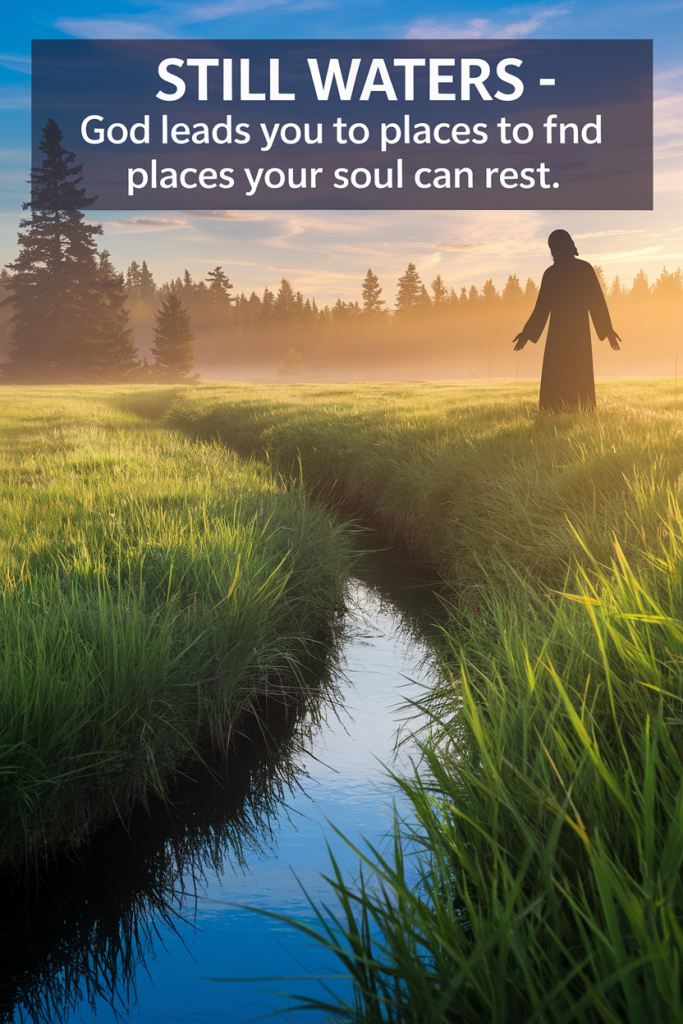
- Still Waters: We already visited Psalm 23’s still waters kingjamesbibleonline.org. Think of the most peaceful scene in nature you can imagine – maybe a calm lake at dawn, with birds chirping softly and the sun just peeking over the mist. That’s God’s imagery for the peace He gives. No wonder our souls long for a “beside still waters” moment with God each day, where He quiets us and restores us.
- A Dove: The image of a gentle dove has become a universal symbol of peace. This has biblical roots! After the flood, Noah sent out a dove, and it returned with a fresh olive leaf – a sign that God’s judgment was over and peace with Him was restored (Genesis 8:10-11). At Jesus’ baptism, the Holy Spirit descended like a dove, linking peace with the presence of God’s Spirit. Many also connect the dove to the Holy Spirit’s peace that fills our hearts. Isn’t it fitting that the Spirit is associated with both peace and a dove? Just seeing a white dove can remind us of the Holy Spirit’s gentle, calming work in our lives.
- Jerusalem – the City of Peace: Did you know the name Jerusalem is commonly interpreted to mean “City of Peace”? It comes from the Hebrew shalom en.wikipedia.org. Throughout the Bible, Jerusalem is central – it’s where God’s temple was, where Jesus was crucified and rose, and where He’ll return. Ironically, this “City of Peace” has seen much war and turmoil due to human sin. But prophetically, it stands for the ultimate peace of God’s kingdom. Psalm 122:6 says, “Pray for the peace of Jerusalem”, and many take that as praying not just for a city in the Middle East, but for God’s peace to reign on earth. In the end, the New Jerusalem (Revelation 21) truly will be a city of everlasting peace, with God himself wiping away every tear.
- A Kingdom of Peace: Many prophecies paint a peaceful kingdom under the Messiah’s rule. Isaiah famously speaks of a time when “the wolf also shall dwell with the lamb” and “the leopard shall lie down with the kid (goat)” and “they shall not hurt nor destroy” (Isaiah 11:6-9). These are poetic pictures of total peace – even in nature, former enemies chill out together. Swords become plowshares, spears become pruning hooks (Isaiah 2:4). In short, peace will characterize Jesus’ reign. Every Christmas when we read “Prince of Peace” kingjamesbibleonline.org, it’s a reminder that world peace is not a naive dream – it’s a guaranteed future when Christ returns. Hallelujah!
- Anchor in the Storm: Though not a direct symbol the Bible uses in one phrase, I find the image of Jesus sleeping in the storm (Mark 4:37-39) powerfully symbolic. The chaotic sea can symbolize the turmoil of life, and Jesus’s ability to sleep through it – and then calm it with a word – shows His perfect peace and sovereignty. In Hebrews 6:19, hope in God is called “an anchor for the soul.” I’d say peace is like that anchor’s effect: keeping us steady and unmoved even when winds howl. We can be in a storm yet not have the storm inside us.

Each of these pictures is like a mini sermon about peace. The more we reflect on them, the more our faith grows that God really intends for us to have peace.
The Messiah and Our Peace: Connecting Old and New
One of the most thrilling things as we study peace in Scripture is seeing how the Old Testament promises were fulfilled in Jesus. It’s like watching puzzle pieces click together (and remember, shalom is like a puzzle made complete!).
Consider these connections:
- Prophecy: “For unto us a child is born… and his name shall be called… The Prince of Peace” (Isaiah 9:6 kingjamesbibleonline.org). Hundreds of years later, Jesus is born in Bethlehem, and the angels announce peace on earth. Jesus embodied this prophecy. He didn’t overthrow Rome by force (much to some people’s dismay); instead, He brought a deeper peace by reconciling us to God. The prophecy also says, “Of the increase of his government and peace there shall be no end” (Isa 9:7). Jesus started a kingdom in the hearts of people that will one day cover the globe – a kingdom characterized by endless peace. Every time someone trusts Christ, that peaceable kingdom grows a bit more.
- Peace Offerings & Sacrifices: In Leviticus, the peace offering was one of the sacrifices that involved shedding an animal’s blood to symbolize restored fellowship with God. Those were shadows. On the cross, Jesus became our ultimate sacrifice. The book of Hebrews explains that Jesus’ one sacrifice for sins accomplished what all the OT offerings pointed to: peace with God. Colossians 1:20 says Jesus “made peace through the blood of his cross”. No more sacrifices are needed – the war between God and us is over for those who are in Christ. This is why after His resurrection, Jesus repeatedly said to His disciples, “Peace be unto you.” It wasn’t just a greeting – it was mission accomplished. Peace was now theirs (and ours)!
- King of Salem: Here’s a cool “type and shadow” many overlook. In Genesis, Abraham meets a mysterious priest-king named Melchizedek, who was king of Salem. “Salem” is related to shalom, and Hebrews 7:2 draws this out: Melchizedek is “first… King of righteousness, and after that also King of Salem, which is, King of peace.” Sound like anyone we know? Melchizedek was a foreshadowing of Christ, our true King of Righteousness and Peace. Jesus is a priest “after the order of Melchizedek,” meaning His priesthood is all about righteousness and peace that lasts forever. The Old Testament quietly drops the hint that the coming Messiah would bring a reign of peace, and the New Testament shouts the fulfillment.

- New Covenant of Peace: The prophets also spoke of a coming covenant of peace. For example, God promises in Ezekiel, “I will make a covenant of peace with them; it shall be an everlasting covenant” (Ezek. 37:26). In Christ, we have the New Covenant by His blood – a covenant that indeed brings everlasting peace between God and those who receive Jesus. Every time we take the Lord’s Supper, we’re essentially celebrating that covenant of peace sealed by Christ’s blood. We’re saying, “Thank You, Lord, I am at peace with You because of Jesus.” That’s huge! It’s a peace that will last into eternity.
- Peace for All Nations: The Old Testament primarily dealt with Israel, but it hinted that peace would extend to the nations (Gentiles) too. Zechariah prophesied about the Messiah, “he shall speak peace unto the heathen (nations)” (Zech. 9:10). Jesus fulfilled this by sending His disciples to all nations with the gospel of peace. Paul literally calls the message of salvation “the gospel of peace” (Eph. 6:15). Now, people from every corner of the globe can find peace with God through Jesus. It’s not limited to one group – it’s for everyone.
When you connect these dots, it boosts your confidence that God had a master plan for peace all along. Peace in the Bible isn’t random feel-good talk; it’s a thread woven through the grand story of redemption, all pointing to Jesus.
Walking in Peace Today: Practical Encouragement
By now, our heads and hearts are full of biblical truth about peace. But how do we apply this? How do we walk in that peace on Monday morning when the alarm jolts us awake, or on Wednesday afternoon when the coworker is being difficult, or on Friday night when worries keep us up?

Here are some down-to-earth encouragements for living out biblical peace:
- Receive Peace with God: First and foremost, make sure you have peace with God through Jesus. If you’ve never surrendered to Christ, that’s Step 1. Romans 5:1 says it plainly – we’re justified by faith and thus have peace with God. There’s nothing like knowing you and your Creator are good. No sin blocking, no guilt remaining – just an open channel of love. If you have that peace, treasure it. Remind yourself often that God isn’t angry with you; He’s your loving Father. Sometimes I literally exhale and say, “Thank You, Lord, I’m at peace with You right now.” It helps!
- Pursue Peace with Others: Peace is something we have to “seek and pursue” (1 Peter 3:11). Is there someone you’re at odds with? Pray for wisdom and humility to move toward peace. It might mean an apology, or letting go of a grudge, or reaching out to rebuild a strained friendship. Paul said, “as much as lieth in you”, live peaceably kingjamesbibleonline.org – we can’t control others’ responses, but we can make sure we’re doing our part. Forgive quickly. Listen more. Speak gently. Be the first to reconcile. It’s not easy, but God’s Spirit helps us. And think of it this way: each time you promote peace, you’re reflecting your Father (the “God of peace”) to those around you.
- Embrace God’s Inner Peace: Life will throw us curveballs – Jesus guaranteed “in the world ye shall have tribulation”. But He added, “in me ye might have peace” (John 16:33). We have a constant choice: focus on the storm, or focus on the Lord in the boat with us. One practical habit is to start and end your day with prayer and Scripture, even if just for a few minutes. Let God “lead you beside still waters” in the morning before the noise hits. Meditate on a promise, like “You will keep him in perfect peace whose mind is stayed on You” (Isa 26:3). When anxious thoughts creep in, follow Philippians 4:6-7 – turn those worries into prayers with thanksgiving, and expect God’s peace to settle you kingjamesbibleonline.org. It’s a transaction: worries out, peace in. I can testify that the nights I deliberately cast my cares on Him, I sleep better, and the problems shrink by morning.
- Cling to Peace in Turbulent Times: Sometimes our circumstances are anything but peaceful. Maybe you’re in a season of loss, conflict, or uncertainty. Friend, that’s when God’s peace shines brightest. Jesus doesn’t promise to remove every difficulty now, but He promises heart-peace in the midst of them. “Let not your heart be troubled” was said by Jesus on the worst night of His life, humanly speaking kingjamesbibleonline.org. Yet He was looking ahead to the joy set before Him. We can do the same. Cling to His promises. Perhaps memorize a few peace Scriptures and speak them out loud. Rhetorical question: What if that trial you’re facing is actually an invitation to experience Christ’s peace more deeply than ever? Trust that He is with you in the boat, whispering “Peace, be still” to your soul (Mark 4:39).
- Be a Peacemaker: Finally, don’t keep this peace to yourself. Jesus calls us to be peacemakers (Matthew 5:9). In a world full of strife – whether it’s global conflicts, workplace drama, or family squabbles – we’re to be the people who step in with calmness, wisdom, and reconciliation. We carry the atmosphere of heaven’s peace with us. How? By the Holy Spirit’s power. Maybe it looks like mediating a dispute between friends, or sharing the gospel so someone can find peace with God, or simply offering a non-anxious presence when everyone else is panicking. Peacemaking is immensely practical, and it’s a high calling. Jesus says peacemakers will be called children of God – it makes our family resemblance to our Heavenly Father obvious.
Finding Your Still Waters
As we wrap up, let’s circle back to that serene image of still waters and green pastures. “He maketh me to lie down in green pastures: he leadeth me beside the still waters” kingjamesbibleonline.org.
This is more than poetic imagery; it’s God’s heart for you. He wants to lead you into peace. He is, after all, Jehovah-Shalom – the Lord our Peace biblegateway.com. And Jesus, our Good Shepherd, knows exactly how to soothe our souls.
Imagine yourself as a sheep who has been wandering through rugged, scary valleys (we all do at times). Then you feel the gentle nudge of the Shepherd’s staff.
He guides you over a hill... and suddenly you see it: a quiet meadow with a bubbling brook. Safe. Abundant. Peaceful. You lie down, finally able to rest, as the Shepherd keeps watch. This is your place of peace. The Shepherd prepared it just for you.
In truth, that place is wherever you meet with God. It could be your armchair with a cup of coffee and Bible in hand. It could be a park bench where you pray.
It could even be your commute, turning your car into a sanctuary of worship instead of worry. The Prince of Peace is with you (Isaiah called Him Immanuel, God with us) – therefore, peace is with you.
Let’s encourage one another to stay close to Jesus, because proximity to Him equals peace. If you lose your peace, don’t beat yourself up; just go back to the Shepherd and say, “Lord, I’m frazzled. Please calm me.” He will. Jesus never turns away a weary heart seeking rest.
So, dear friend, may the peace of God rule in your heart (Colossians 3:15).
Let it call the shots over anxiety and fear. May you know the breadth and depth of God’s shalom – that wholeness and completeness that only He gives biblehub.com. And may you become a beacon of that peace in a world that desperately needs it.
As the Apostle Paul often blessed his readers: “Now the Lord of peace himself give you peace always by all means” (2 Thessalonians 3:16). Amen – let it be so, Lord, in us today.
go in His peace!
Call to Action: The Question That Demands an AnswerIn Acts 2:37 Peter and the Apostles were asked the question – What Shall We do? And in Acts 2:38 Peter answered, Repent, and be baptized every one of you in the name of Jesus Christ for the remission of sins, and ye shall receive the gift of the Holy Ghost. For the promise is unto you, and to your children, and to all that are afar off, even as many as the Lord our God shall call. Do you understand this? After hearing the gospel and believing, they asked what should would do. The answer hasn’t changed friend, Peter clearly gave the answer. The question for you today is, Have you receieved the Holy Spirit Since you believed? If you’re ready to take that step, or you want to learn more about what it means to be born again of water and Spirit, visit: Come, and let the Spirit make you new. |