Quick Overview of Occupations and Their Spiritual Significance
Short on time? Here’s a brief slideshow of key insights from our study of biblical occupations. Scroll through to see each role’s practical duties, symbolic lessons, and New Testament fulfillment.
The Bible mentions many jobs and occupations from everyday life. These roles not only tell us about life in ancient times, but often carry deeper spiritual meanings.
Below we explore several biblical occupations — what people actually did, their symbolic lessons in Scripture, and how Old Testament roles connect to New Testament truths. Each occupation is backed by specific Bible references for context.
Shepherd

Practical Role: Shepherds were caretakers of sheep and goats, leading their flocks to food and water and guarding them from predators (Occupations and Professions in the Bible - Holman Bible Dictionary - ). \Abel, Adam’s son, is noted as the first “keeper of sheep” in Scripture (Genesis 4:2) (Bible Customs: Occupations), and young David defended his father’s sheep from lions and bears (1 Samuel 17:34-36).
Spiritual Symbol (Old Testament): Kings and leaders of Israel were often described as shepherds of God’s people.
Most importantly, God Himself is called a shepherd – “The Lord is my shepherd; I shall not want” (Psalm 23:1) (Occupations and Professions in the Bible - Holman Bible Dictionary - ). This imagery showed God’s care and guidance for His “flock” (the people).
New Testament Fulfillment: Jesus Christ declared, “I am the good shepherd. The good shepherd lays down his life for the sheep.” (John 10:11 NIV - “I am the good shepherd. The good - Bible Gateway)
In laying down His life, Jesus fulfilled the shepherd’s role of protecting the flock at all costs. He cares for us as His sheep, knowing us each by name (John 10:11-14).
Likewise, Christian pastors are instructed to “shepherd the flock of God” (1 Peter 5:2), continuing the shepherd theme for spiritual leaders caring for God’s people.
Farmer (Tiller of the Soil)

Practical Role: Farming was a core occupation in biblical times. The first farmer was Adam’s son Cain, a “tiller of the ground” (Genesis 4:2) (Occupations and Professions in the Bible - Holman Bible Dictionary - ).
Farmers plowed fields, sowed seed, and harvested grain. They worked closely with nature and relied on God for rain and growth (Occupations and Professions in the Bible - Holman Bible Dictionary - ).
Laws like leaving gleanings for the poor (Leviticus 19:9-10) show farming’s social importance, and harvest festivals like Pentecost celebrated God’s provision of crops.
Spiritual Symbol (Old Testament): Farming became a picture of God’s work with His people. God is described as instructing and blessing the farmer (Occupations and Professions in the Bible - Holman Bible Dictionary - ), showing that He is the true source of growth.
Prophets often used agricultural images: for example, “They shall beat their swords into plowshares” (Isaiah 2:4) imagines a time of peace when farmers, not fighters, predominate.
New Testament Lessons: Jesus frequently taught using farming parables. In the Parable of the Sower, a farmer sowing seed illustrates how God’s Word takes root in different hearts (Matthew 13:3-9). Jesus also compared evangelism to harvest work, saying, “The harvest is plentiful, but the workers are few” (Luke 10:2).
Believers are “God’s field” (1 Corinthians 3:9), and as we sow and water seeds of the gospel, God gives the growth (1 Corinthians 3:6-7). Harvest imagery also points to the final judgment when God will gather the wheat and burn the chaff (Matthew 13:24-30).
Fisherman

Practical Role: Fishing was a common job, especially in the New Testament around the Sea of Galilee. Fishermen cast nets or used hooks to gather fish from lakes and rivers.
In the Old Testament, we see mention of fishermen along the Nile (Isaiah 19:8) and the Sea of Galilee’s rich fishing culture carried into Jesus’ day (Occupations and Professions in the Bible - Holman Bible Dictionary - ). It was hard work; Peter once said, “we toiled all night and caught nothing” (Luke 5:5).
Spiritual Symbolism: The idea of “catching” is used in Scripture for gathering people.
The prophet Jeremiah spoke of God sending “many fishermen” to gather Israel for judgment or restoration (Jeremiah 16:16). In a positive sense, good leaders would gather people to God much like fishermen gathering a catch.
New Testament Fulfillment: Jesus called ordinary fishermen to become His disciples. He told Simon Peter and Andrew, “Follow Me, and I will make you fishers of men.” (Matthew 4:19, Mark 1:17) (Occupations and Professions in the Bible - Holman Bible Dictionary - ).
This meant their new “catch” would be people brought into God’s kingdom. After Jesus’ resurrection, these disciples cast the net of the gospel and “caught” thousands of believers.
The fisherman’s work of sorting good fish from bad (Matthew 13:47-50) became a picture of the final separation of the righteous and wicked. Thus, a humble fisherman’s labor took on great spiritual meaning as the disciples spread the good news.
King (Ruler)

Practical Role: In Israel, the king was the highest governing official once the monarchy was established (around 1050 BC). Kings like Saul, David, and Solomon had the duty to govern the people, lead in battle, and uphold justice.
Unlike pagan nations that treated kings as gods, Israel’s king was meant to be a servant of God and example to the people (Occupations and Professions in the Bible - Holman Bible Dictionary - ).
His obedience or disobedience to God could bless or ruin the nation (Occupations and Professions in the Bible - Holman Bible Dictionary - ). For instance, King Josiah’s faithfulness brought renewal, while others’ idolatry led to disaster.
Spiritual Symbol (Old Testament): The ideal king in the Old Testament was a shepherd-king (like David) who cared for his flock. God promised King David that one of his descendants would reign forever (2 Samuel 7:16).
Human kings often failed, pointing Israel to hope for a perfect king. Some psalms even use royal language that ultimately applies to God or His Messiah (e.g. Psalm 45:6).
New Testament Fulfillment: Jesus Christ is revealed as the promised King from David’s line. He proclaimed the “Kingdom of God”, yet He came humbly, even riding on a donkey as prophesied of Zion’s king (Zechariah 9:9, fulfilled in Matthew 21:5).
After His resurrection, Jesus ascended to heaven and was given all authority. In Revelation He is called “KING OF KINGS, AND LORD OF LORDS.” (Revelation 19:16 NIV - On his robe and on his thigh he has - Bible Gateway), the eternal ruler over all.
Unlike flawed earthly kings, Jesus reigns with justice, love, and ultimate power. Christians thus honor Him as our King and await the full coming of His Kingdom.
Priest

Practical Role: Priests in the Bible were men set apart to serve God and the people in worship. In the Old Testament, the priests (especially descendants of Aaron) worked at the Tabernacle and later the Temple (Occupations and Professions in the Bible - Holman Bible Dictionary - ).
They offered animal sacrifices, led prayers, and taught God’s laws. A priest acted as a mediator – representing the people before God by offering their sacrifices, and representing God to the people by pronouncing blessings (Occupations and Professions in the Bible - Holman Bible Dictionary - ).
High Priests, like Aaron or those after him, had the special duty of entering the Holy of Holies once a year on the Day of Atonement to make atonement for Israel.
Spiritual Symbol (Old Testament): The priesthood showed that people need a way to come to God. Sacrifices offered by priests illustrated the cost of sin (Hebrews 9:22).
Faithful priests like Samuel also prayed for the nation. However, the Old Testament hinted that this system was temporary – for example, God spoke of a coming priestly figure in the order of Melchizedek (Psalm 110:4) who would be greater than the Levites.
New Testament Fulfillment: Jesus is the ultimate High Priest. The Book of Hebrews says, “We have a great high priest who has passed through the heavens, Jesus the Son of God.” (Hebrews 4:14-16 NIV - Jesus the Great High Priest - Bible Gateway)
Jesus offered Himself as the perfect sacrifice for sins, accomplishing in reality what Old Testament priests could only symbolically portray. Because of Jesus, we no longer need animal sacrifices; He opened direct access to God.
Every believer now forms a “royal priesthood” (1 Peter 2:9), meaning we can approach God directly in prayer and are called to serve Him.
In summary, the Old Testament priest foreshadowed Jesus’ work of mediation and sacrifice, and through Christ, the priestly role is fulfilled and transformed for all believers.
Prophet

Practical Role: Prophets were messengers chosen by God to speak His word. In the Old Testament, prophets like Moses, Samuel, Elijah, Isaiah, and Jeremiah received divine messages (through words, visions, or dreams) and delivered them to the people and kings (Occupations and Professions in the Bible - Holman Bible Dictionary - ).
Their job often involved calling Israel back to faithfulness, warning of judgment for sin, and giving hope of God’s salvation. Prophets sometimes performed miracles (Elijah multiplying oil, calling fire from heaven) to confirm their message.
They were not primarily fortune-tellers; rather, they declared God’s will for current situations, though many prophecies did predict future events (for example, Isaiah’s prophecy of the Messiah’s birth in Isaiah 7:14).
Spiritual Significance (Old Testament): The prophets revealed God’s heart and kept Israel spiritually accountable.
They often clashed with unfaithful priests or kings (Occupations and Professions in the Bible - Holman Bible Dictionary - ), showing that ritual alone wasn’t enough — God desired righteousness.
Importantly, Moses foretold that God would one day raise up a prophet like himself to fully reveal God’s word (Deuteronomy 18:15-18). Many understood this to point to the coming Messiah.
New Testament Fulfillment: Jesus is the ultimate prophet that Moses predicted. He spoke with final authority as the Word of God in flesh (John 1:14, Hebrews 1:1-2).
People recognized Jesus as a prophet when they exclaimed, “A great prophet has arisen among us!” (Luke 7:16 A sense of awe swept over all of them, and they glorified God. "A great prophet has appeared among us!" they said. "God has visited His people!") after He raised a widow’s son (Luke 7:16).
Jesus not only delivered messages from God; He embodied the message. Moreover, He fulfilled many prophetic predictions (such as being born in Bethlehem, Micah 5:2).
After Jesus, the prophetic ministry continued in a different form: the Holy Spirit empowered certain believers to speak prophetic words (Acts 2:17-18). But all true prophecy now points back to Jesus and the gospel.
Thus, the Old Testament prophet’s role of revealing God’s will finds its completion in Christ, and through Him, God’s word is now written on our hearts.
Carpenter
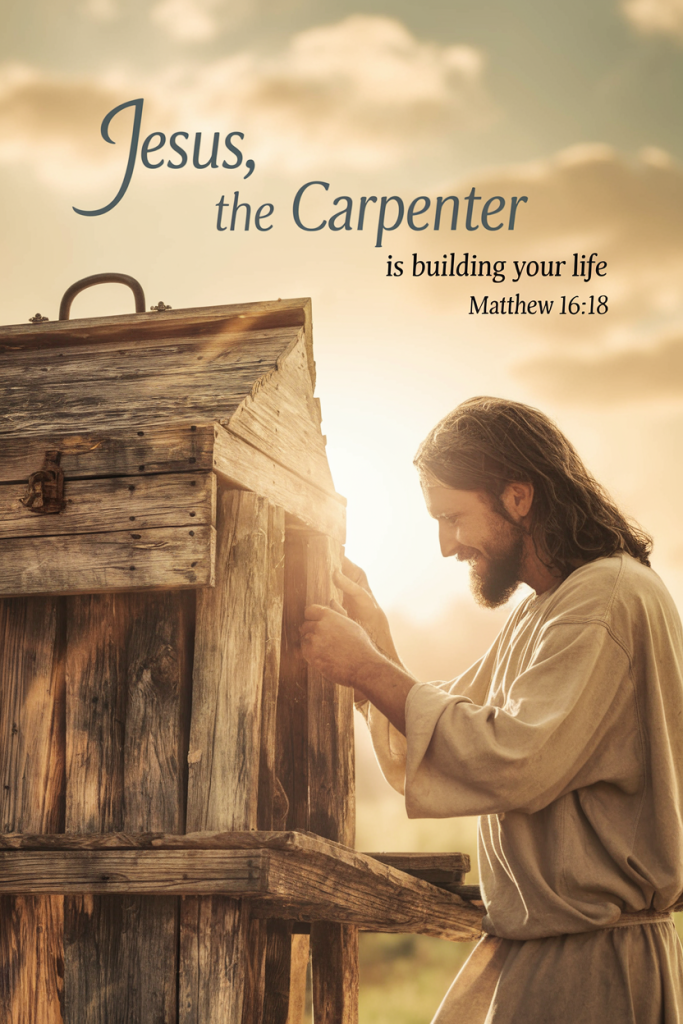
Practical Role: A carpenter is a woodworker or builder. Carpenters in biblical times made furniture, tools, and buildings.
In the Old Testament, carpenters helped construct structures like Noah’s ark and Solomon’s Temple (using the craftsmen sent by King Hiram of Tyre (Occupations and Professions in the Bible - Holman Bible Dictionary - )).
They crafted plows, yokes, doors, and roof beams. Notably, carpenters could also misuse their skill – Isaiah 44:13-17 describes a carpenter carving an idol from wood. But generally, it was an honest trade requiring skill and strength.
Biblical Example: In the New Testament, Jesus Himself worked as a carpenter during His youth.
People from His hometown ask in surprise, “Is this not the carpenter, the son of Mary?” (Mark 6:3) and also call Him “the carpenter’s son” (Matthew 13:55), referring to Joseph.
Thus, our Lord spent years in a humble woodworking shop. This sanctifies everyday labor – showing God appreciates good, honest work.
Spiritual Symbolism: Carpenters build and repair, which God uses as a metaphor. In the Old Testament, God is sometimes portrayed as a builder/architect of His people (Psalm 127:1).
In the New Testament, Jesus the carpenter became the master builder of the Church. He told Peter, “On this rock I will build my church” (Matthew 16:18).
Believers are likened to a spiritual house “built on the foundation of the apostles and prophets, Christ Jesus Himself being the cornerstone” (Ephesians 2:20).
Jesus, the carpenter from Nazareth, is building something far greater than tables or houses – He is building our lives and a community of faith.
In a sense, every Christian is under construction by Christ, the master craftsman. Additionally, carpentry images remind us to build our lives on the solid foundation of His teachings (Matthew 7:24-27).
Potter

Practical Role: A potter shapes clay into vessels like pots, jars, and plates. In ancient times this was a busy occupation since clay pottery was the common cookware and storage container (Occupations and Professions in the Bible - Holman Bible Dictionary - ).
The potter’s workshop had a wheel — the potter would spin clay and form it with skilled hands. After shaping, the clay vessel is fired (baked) to harden it.
Pottery was cheaper and more abundant than metal vessels, so nearly every household had pottery for daily use (Occupations and Professions in the Bible - Holman Bible Dictionary - ). However, fired clay is fragile; a dropped pot shatters easily.
Spiritual Symbolism (Old Testament): The potter and clay image powerfully illustrates God’s sovereignty. The prophet Jeremiah visited a potter’s house and saw a vessel spoiled in the potter’s hand; the potter remade it as he saw fit.
God declared, “O house of Israel, can I not do with you as this potter has done?...Behold, like the clay in the potter's hand, so are you in My hand.” (Jeremiah 18:6).
Similarly, Isaiah prays, “We are the clay, and You are our potter; we are all the work of Your hand.” (Isaiah 64:8) (Why Does the Bible Portray God through Various Occupations? by Don Stewart).
These images taught Israel that God is the master shaper of our lives, with the right to mold and even remold His people according to His purpose.
On the other hand, if a vessel (person or nation) becomes hardened in sin, it may face breaking – as Jeremiah 19:11 warns that Jerusalem, rejecting God, would be smashed like a ruined pot.
New Testament Connection: The apostle Paul echoes this analogy: “Does not the potter have the right to make out of the same lump of clay some pottery for special purposes and some for common use?” (Romans 9:21) (Occupations and Professions in the Bible - Holman Bible Dictionary - ).
He emphasizes God’s authority in salvation and history – we are not in a position to argue with our Maker.
Yet the New Testament also reveals the potter’s gentler side: believers are described as “jars of clay” containing the treasure of the gospel (2 Corinthians 4:7), showing that our great worth comes from God, not from the clay itself.
God, the master Potter, is shaping each Christian to be useful and beautiful in His sight. Our part is to be pliable clay, yielded to His hands.
Soldier (Warrior)

Practical Role: Soldiers appear throughout the Bible during times of war and conflict. Ancient Israel had no standing army at first; every able male might be called to battle in crises (Numbers 1:3).
Later, under kings, Israel formed armies with ranks like captains and armor-bearers (Occupations and Professions in the Bible - Holman Bible Dictionary - ).
A soldier’s duties included wielding swords, spears, or bows, and protecting their people from enemies. Famous Israelite warriors include Joshua, David’s mighty men, and others.
The Bible frequently mentions soldiers of Israel and of foreign empires (like Roman soldiers in the New Testament) (Occupations and Professions in the Bible - Holman Bible Dictionary - ).
Living in the crossroads of nations, Israel faced many wars, so the soldier’s occupation was often crucial (Occupations and Professions in the Bible - Holman Bible Dictionary - ).
Spiritual Lessons (Old Testament): Earthly battles illustrated spiritual truths. Israel learned that victory depended on God’s help – e.g. David, a shepherd-boy-turned-soldier, defeated Goliath saying, “the battle is the Lord’s” (1 Samuel 17:47).
God is even called a “warrior” in Scripture; “The Lord is a man of war” (Exodus 15:3) sings Moses after the Red Sea triumph. The armor-bearer role (1 Samuel 14:6-7) showed the importance of supporting one another in battle (Occupations and Professions in the Bible - Holman Bible Dictionary - ).
Also, Israel’s many physical wars symbolized the constant conflict between good and evil, faithfulness and idolatry.
New Testament Application: The focus shifts from physical warfare to spiritual warfare. Believers are called to be soldiers of Christ – not using literal swords, but wielding faith and truth.
Paul urges Christians to “put on the full armor of God” (Ephesians 6:11) and describes a soldier’s armor – belt, breastplate, shield, helmet, and sword – as metaphors for spiritual defenses (truth, righteousness, faith, salvation, and the Word of God).
He also tells Timothy, “Endure hardness, as a good soldier of Jesus Christ.” (2 Timothy 2:3). Like an earthly soldier, a Christian must show discipline, loyalty, and courage in fighting against sin and standing for the gospel.
Ultimately, Christ is the victorious warrior-King (Revelation 19:11-16) who leads the final battle against evil. Thus, the occupation of soldier, so common in Bible history, points to the resolve and armor we need in the spiritual battles of life.
Scribe (Teacher of the Law)

Practical Role: Scribes were essentially the scholars, writers, and teachers of Scripture. In the Old Testament, scribes are first seen as royal officials who wrote and preserved documents (2 Samuel 8:17).
By the time of Ezra (5th century BC), scribes became experts in the Law of Moses (Occupations and Professions in the Bible - Holman Bible Dictionary - ). Ezra is called “a scribe skilled in the Law of Moses” (Ezra 7:6).
They meticulously copied biblical scrolls to preserve God’s Word and taught the people its meaning. In Jesus’ day, scribes (also called “teachers of the law”) were respected authorities who interpreted the Scriptures and applied Jewish traditions.
Spiritual Aspect: Scribes played a positive role in preserving God’s Word – we owe them thanks for faithfully copying texts so we can have the Bible today.
However, many scribes in Jesus’ time became prideful and legalistic. They knew the letter of Scripture but often missed its spirit. Jesus criticized certain scribes (and Pharisees) for hypocrisy – following rules outwardly while their hearts were far from God (Matthew 23:2-7, 23).
This warns us that knowledge of religion isn’t enough; God desires genuine obedience and humility.
New Testament Transformation: Jesus came as a Teacher greater than the scribes. People marveled that Jesus taught “with authority, and not as the scribes” (Mark 1:22).
He is even called the “Word” made flesh (John 1:1,14), implying He perfectly embodied God’s message, whereas the scribes only copied it on paper.
In the New Covenant, God promised, “I will put My law in their minds and write it on their hearts” (Jeremiah 31:33) – an internalized kind of “scribal” work done by the Holy Spirit.
After Jesus, the role of scribe shifts: every Christian teacher who explains the Bible is doing a form of a scribe’s work, and all believers are encouraged to study and handle Scripture correctly (2 Timothy 2:15).
We’re also called to be “living letters” (2 Corinthians 3:2-3), with our lives showing God’s truth. In summary, the scribes’ focus on Scripture finds fulfillment as God’s Word is preserved, taught, and ultimately inscribed on human hearts through Christ.
Teacher (Rabbi)
Practical Role: Teaching is closely related to the scribe’s work, but not limited to Scripture experts. In ancient Israel, parents taught children (Deuteronomy 6:6-7), prophets taught disciples (Elijah taught Elisha), and wisdom teachers like Solomon shared proverbs.
By New Testament times, rabbis (Jewish teachers) gathered students to instruct them in the Law. People addressed Jesus as “Rabbi” (Teacher) because He often taught crowds in synagogues, homes, or open hillsides.
A teacher’s occupation was highly respected; James 3:1 notes, “Not many of you should become teachers… for we who teach will be judged more strictly,” indicating the great responsibility teachers carried (Occupations and Professions in the Bible - Holman Bible Dictionary - ).
Spiritual Importance: Teaching is a gift from God to spread understanding. Good teaching brings life, as seen in Psalm 119: “The unfolding of Your words gives light” (Psalm 119:130).
In the Old Testament, the Levites and priests taught the law (2 Chronicles 17:7-9). When people lacked teaching, they fell into error (“My people are destroyed for lack of knowledge,” Hosea 4:6).
New Testament Fulfillment: Jesus is the master teacher. Crowds were astonished at His gracious words (Luke 4:22) and the authority of His lessons.
He explained God’s kingdom through vivid parables and showed God’s character through every sermon.
After His resurrection, Jesus commissioned the apostles to teach all nations to obey His commands (Matthew 28:20). The early church included teachers as essential ministers (Acts 13:1; Ephesians 4:11).
While in Old Testament times teaching was often limited to certain classes (priests, prophets, sages), in the New Testament the Holy Spirit enables many to teach.
However, those who teach God’s Word must do so faithfully, since they guide others (1 Timothy 4:16). The title “Rabbi” for Jesus reminds us that following Him means entering His “school” of discipleship.
All Christians are students (“disciples”) learning from the Teacher, and mature believers in turn teach others (Titus 2:3-4). Thus, the occupation of teacher finds its highest purpose in communicating God’s truth and making disciples.
Tax Collector (Publican)

Practical Role: Tax collectors gathered taxes and tolls for the government. In the New Testament, they worked for the occupying Roman Empire, collecting money from fellow Jews.
Known also as publicans, many had a bad reputation for greed and extortion (Occupations and Professions in the Bible - Holman Bible Dictionary - ).
They often charged more than required and kept the extra, effectively stealing from their own people (Occupations and Professions in the Bible - Holman Bible Dictionary - ).
Because of this, tax collectors were despised as traitors and sinners. In Jesus’ time, a tax collector might sit at a booth on a trade road (like Levi/Matthew in Capernaum) or supervise others (like chief tax collector Zacchaeus in Jericho). Their occupation made them rich but socially ostracized.
Spiritual Insight: Tax collectors in Scripture became symbols of God’s grace to the unlikely. Where the religious elite (Pharisees) often rejected Jesus, some tax collectors accepted Him readily.
Jesus shocked onlookers by befriending and even eating with tax collectors and sinners (Matthew 9:10-11) (Occupations and Professions in the Bible - Holman Bible Dictionary - ).
In one of His parables, a humble tax collector who prayed “God, be merciful to me, a sinner” went home justified, rather than a proud Pharisee (Luke 18:13-14).
This flips the script: the “bad guy” finds mercy through repentance, while the outwardly religious man is rejected for his pride. God looks at the heart, not one’s job title.
New Testament Redemption: Matthew (Levi) was a tax collector whom Jesus called to be a disciple (Matthew 9:9).
He left his booth and income to follow Christ, later writing the Gospel of Matthew. Zacchaeus, another rich tax collector, encountered Jesus and was so transformed that he repaid fourfold anyone he cheated and gave half his wealth to the poor (Luke 19:1-10).
These examples show Jesus’ mission “to seek and to save the lost” included even those in despised professions. The inclusion of tax collectors in the kingdom teaches that no one is beyond God’s forgiveness.
It also challenges us: Jesus said, “Tax collectors and prostitutes enter the kingdom of God before you (religious leaders)” because they repented at John’s preaching (Matthew 21:31-32).
Thus, the occupation notorious for sin became a showcase of repentance and grace. What man scorned, God redeemed.
Physician (Doctor)
Practical Role: Physicians or doctors are specifically mentioned a few times in the Bible. In the Old Testament, we see physicians in Genesis 50:2 when Joseph’s physicians embalmed his father Jacob.
Also, King Asa in 2 Chronicles 16:12 is noted to have consulted physicians for his foot disease (though the text implies he should have also sought the Lord).
In the New Testament, Luke the Evangelist is called “the beloved physician” (Colossians 4:14), indicating he was a medical practitioner.
Ancient physicians used herbs and basic surgery, though medical knowledge was limited. People would seek doctors for remedies, but success varied.
Spiritual Illustration: Sickness and healing are often used as pictures of sin and salvation.
The Old Testament prophets speak of Israel’s spiritual wounds and the need for healing (Jeremiah 8:22 asks, “Is there no physician there?” when talking about Israel’s hurt).
God is portrayed as the ultimate healer: “I am the Lord, your healer” (Exodus 15:26). No human doctor could cure the “disease” of idolatry or wickedness that afflicted the soul; only God’s forgiveness could.
New Testament Fulfillment: Jesus came as a healer – both physically and spiritually. He healed lepers, gave sight to the blind, and even raised the dead, showing His power over every illness.
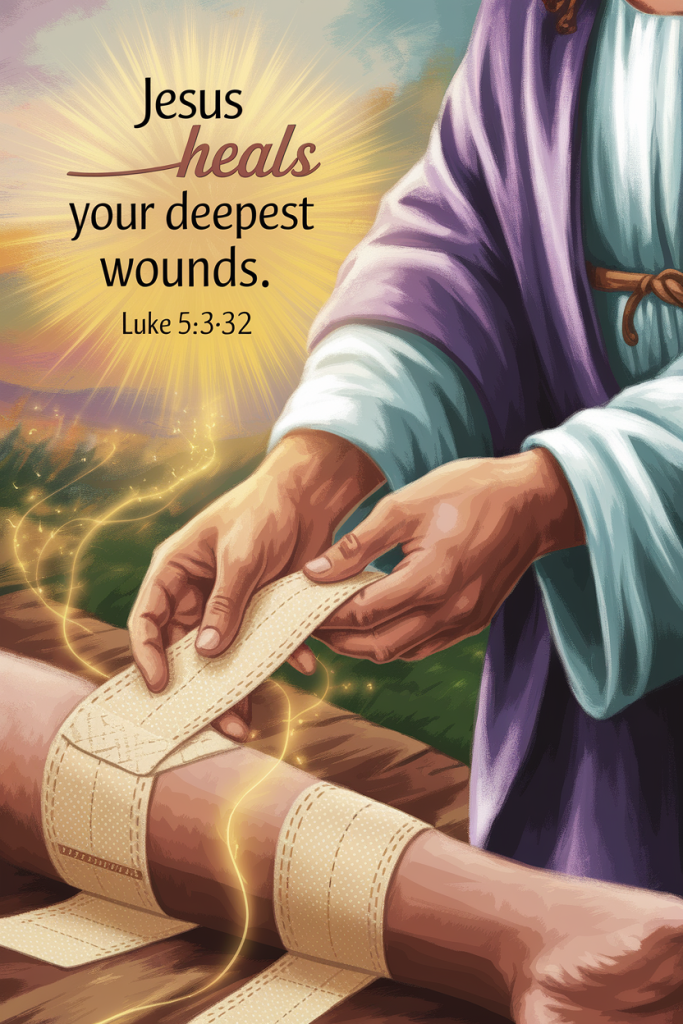
But more importantly, He healed hearts. Jesus explicitly compared His mission to a doctor’s work.
When criticized for eating with notorious sinners, Jesus replied, “Those who are well have no need of a physician, but those who are sick. I have not come to call the righteous, but sinners to repentance.” (Luke 5:31-32 KJV - And Jesus answering said unto them, - Bible Gateway).
In other words, Jesus is the doctor for our souls. Sin is the sickness; repentance and faith in Him bring healing.
The early church carried on this idea: the apostle James encouraged anointing and praying for the sick that the Lord might raise them up (James 5:14-16).
While physicians treat the body, Christ treats the whole person. Luke, as a physician, surely appreciated how Jesus the Great Physician healed both body and soul.
Thus, the occupation of physician reminds us that we all need healing – and Jesus is the one who cures our deepest wounds.
Musician (Singer)

Practical Role: Music was an important occupation, especially in worship. In the Old Testament, King David appointed musicians and singers in the house of God – men like Asaph and Jeduthun who led choirs and played harps, lyres, and cymbals (1 Chronicles 25:1-7).
There were also professional singers at celebrations (Occupations and Professions in the Bible - Holman Bible Dictionary - ).
For example, when Jerusalem’s wall was dedicated, Nehemiah brought in singers to rejoice (Nehemiah 12:27-28). The Psalms mention various musical terms, showing skilled musicians were involved.
Even outside worship, music was present – shepherds played flutes, women sang at feasts, etc.
In the New Testament, although there’s less mention of professional musicians among the disciples, Jesus and His disciples sang a hymn at the Last Supper (Mark 14:26), showing music’s continued role.
Spiritual Significance: Music in the Bible often accompanies praise and prophecy. In 2 Chronicles 20:21-22, singers led Judah’s army into battle, and God fought for them as they sang – indicating the power of worship.
Many psalms were written by David, who was both king and skilled musician on the harp. He calmed King Saul’s tormenting spirit with music (1 Samuel 16:23).
This illustrates how God uses music to minister to hearts. Musicians in the temple were said to serve “day and night,” symbolizing continuous praise (1 Chronicles 9:33).
New Testament and Beyond: The New Testament church continued the musical worship tradition: Paul urged believers to speak and sing to one another “in psalms, hymns, and spiritual songs” (Ephesians 5:19).
While early Christians had no temple choir, every believer became a participant in spiritual song. Music is portrayed as part of the eternal worship of heaven – Revelation describes the redeemed singing a new song and the voice of harpists before God’s throne (Revelation 14:2-3).
Thus, the occupation of musician, explicitly noted in Scripture (Occupations and Professions in the Bible - Holman Bible Dictionary - ), carries great spiritual weight.
It reminds us that worship through music is not just art; it’s ministry. A song of praise can invite God’s presence, teach truth (Colossians 3:16), and unite believers in one voice.
The Bible’s many musician figures (from Miriam with her timbrel, to the Levitical choirs, to the Apostle Paul singing in prison) encourage us to “make a joyful noise to the Lord” and value the ministry of music.
Tentmaker

Practical Role: Tentmakers wove goat hair or leather to create tents and canopies, a vital trade in a land where many people lived in tents.
The skill dates back to the patriarchs who dwelt in tents, and it continued through Israel’s history (Occupations and Professions in the Bible - Holman Bible Dictionary - ).
In the Book of Acts, we learn that the Apostle Paul’s occupation was tentmaking. Paul, along with Aquila and Priscilla, were tentmakers by trade, and he used this skill to support himself during missionary travels (Acts 18:1-3) (Occupations and Professions in the Bible - Holman Bible Dictionary - ).
By working with his hands, Paul could earn a living and not be a burden on the young churches (2 Thessalonians 3:8-9).
Spiritual Meaning: Tents in Scripture symbolize the transient, pilgrim nature of life. The patriarchs Abraham, Isaac, and Jacob “lived in tents” as they looked forward to God’s promised land (Hebrews 11:9-10).
God’s own presence dwelt in a tent (the Tabernacle) during Israel’s wilderness journey, showing His willingness to travel with His people.
Paul, the tentmaker, uses tent imagery for our mortal life: “If the earthly tent we live in is destroyed, we have a building from God, an eternal house in heaven” (2 Corinthians 5:1). Our bodies are like temporary tents, but God has an eternal home for us.
New Testament Application: Paul’s tentmaking also set an example that ministry and “secular” work can go hand in hand. He writes, “These hands of mine have supplied my own needs” (Acts 20:34).
This teaches the value of hard work and humility in service. The church has often used the term “tentmaker” for missionaries or pastors who work a normal job to support their ministry financially.
Spiritually, it reminds believers to live ready to move as God leads, just as a tent-dweller is mobile.
It also challenges us to remember that our present life is temporary – like a tent – and our true citizenship is in heaven.
In summary, the humble tentmaker’s trade, explicitly mentioned in Scripture (Occupations and Professions in the Bible - Holman Bible Dictionary - ), carries lessons of provision, humility, and pilgrimage, exemplified by Paul’s life and ultimately by Jesus, who “tabernacled” (dwelt in a tent of human flesh) among us (John 1:14).
Servant (Slave)

Practical Role: In Bible times, a servant or slave was an occupation in the sense of being someone’s full-time worker, often with no personal freedom. Slavery in the ancient world was common; people could become slaves through debt, poverty, or conquest.
The Old Testament Law gave regulations to protect Hebrew servants from harsh treatment (Exodus 21:2-6, Leviticus 25:39-43).
Faithful servants like Eliezer (Abraham’s servant in Genesis 24) or the servant of Naaman’s wife (2 Kings 5) could play important roles.
In the Roman era, up to one-third of the population were slaves serving in households, fields, or trades.
While this is not a “job” one would choose, it was a reality of the social structure, and the Bible addresses both slaves and masters in their conduct (Ephesians 6:5-9).
Spiritual Paradox: The Bible uses servant language to describe the ideal relationship with God. In the Old Testament, some of the greatest figures are called “servants of God” – Moses, Joshua, David, and the prophets (Joshua 1:2, 2 Samuel 7:5, Amos 3:7).
Being God’s servant was a title of honor, implying obedience and humility under God’s authority. Isaiah prophesied about a mysterious “Suffering Servant” of the Lord who would save people through His sacrifice (Isaiah 53:11), pointing to the Messiah.
New Testament Teaching: Jesus fulfilled the role of the Suffering Servant. Though He is Lord of all, Jesus “made Himself nothing, taking the form of a servant” (Philippians 2:7).
He even performed the lowly servant’s task of washing His disciples’ feet, saying, “I am among you as one who serves” (Luke 22:27, John 13:4-5).
By His example, Jesus taught that true greatness is found in servanthood: “Whoever wants to be first must be slave of all. For even the Son of Man came not to be served, but to serve, and to give His life as a ransom for many.” (Mark 10:44-45).
The early Christians, even those who were literally masters or free, proudly called themselves “bondservants of Christ” (Romans 1:1, James 1:1).
This means they considered Jesus their true Master and themselves His willing slaves – bound to Him in love.
Paradoxically, the Bible says that everyone is a slave to something: either a slave to sin or, once freed by Christ, a slave to righteousness (Romans 6:16-18).
Choosing to serve God leads to perfect freedom, whereas serving sin leads to death.
Thus, the concept of a servant/slave, an often difficult station in life, becomes a picture of the highest calling – to serve God and others in love.
Every Christian is called to be a servant, following the footsteps of Jesus, the ultimate servant leader.
Merchant (Trader)

Practical Role: Merchants bought and sold goods, engaging in trade locally and internationally. The Bible describes merchants trading spices, cloth, livestock, and other commodities.
For example, the Book of Genesis records how Joseph was sold to Midianite merchants traveling to Egypt with spices and balm (Genesis 37:25-28).
In Solomon’s era, Israelite and Phoenician merchants sailed ships to bring back gold, silver, ivory, and exotic animals (1 Kings 10:22).
In the marketplace, merchants would set up stalls to sell grain, oil, pottery, and more (Occupations and Professions in the Bible - Holman Bible Dictionary - ).
Some merchants became wealthy, though their business could be risky (ships might sink, goods could be stolen). The presence of merchants showed the growing economy and connections between nations.
Spiritual Insights: Commerce in the Bible is sometimes used as a metaphor for wisdom and folly.
Proverbs compares seeking wisdom to seeking fine goods, saying it is better than gaining silver or profit (Proverbs 3:14-15).
On the other hand, greed in trade is condemned; dishonest scales and cheating to gain wealth are denounced (Proverbs 11:1).
The prophets warned that worldly wealth can puff people up – the city of Tyre’s merchant princes boasted in their riches but would fall (Ezekiel 28:5-8). Thus, the merchant’s wealth is shown to be uncertain and not to be idolized.
New Testament Parables: Jesus gave a short parable about a merchant searching for fine pearls. “On finding one pearl of great value, he went and sold all that he had and bought it.” (Matthew 13:45-46).
This merchant recognized the supreme value of the rare pearl, which represents the Kingdom of Heaven.
The lesson: we should be like that merchant, willing to give up everything to gain the priceless treasure of knowing Christ.
Also, in Revelation 18, when Babylon (symbolizing the corrupt world system) falls, the merchants of the earth weep because no one buys their cargo anymore (Occupations and Professions in the Bible - Holman Bible Dictionary - ).
This vividly shows that material luxury is fleeting; only God’s kingdom endures.
Application: The occupation of merchant reminds believers to value what truly matters.
Earthly business can be honorable when done with integrity and generosity. Lydia, a merchant of purple cloth in Acts 16, is a positive example – she was a successful businesswoman who opened her heart to Paul’s message and then opened her home to host the first church in Europe.
Making a living is necessary, but the Bible asks, “What will it profit a man if he gains the whole world and forfeits his soul?” (Mark 8:36).
The merchant who finds the pearl of great price is wise: he rearranges all his priorities to obtain the one thing of eternal value.
In the same way, we are called to “store up treasures in heaven” (Matthew 6:20) rather than trust in the uncertain riches of worldly trade.
Conclusion: From shepherds and farmers to kings and carpenters, the Bible’s mention of occupations is never random. God uses the ordinary jobs of life to teach extraordinary spiritual truths.
Old Testament roles often foreshadow New Testament fulfillments: a priest points to Christ’s priesthood, a king points to Christ’s kingship, a shepherd finds fulfillment in the Good Shepherd.
Even those with humble or despised jobs (fishermen, tentmakers, tax collectors, slaves) found dignity and purpose in God’s plan.
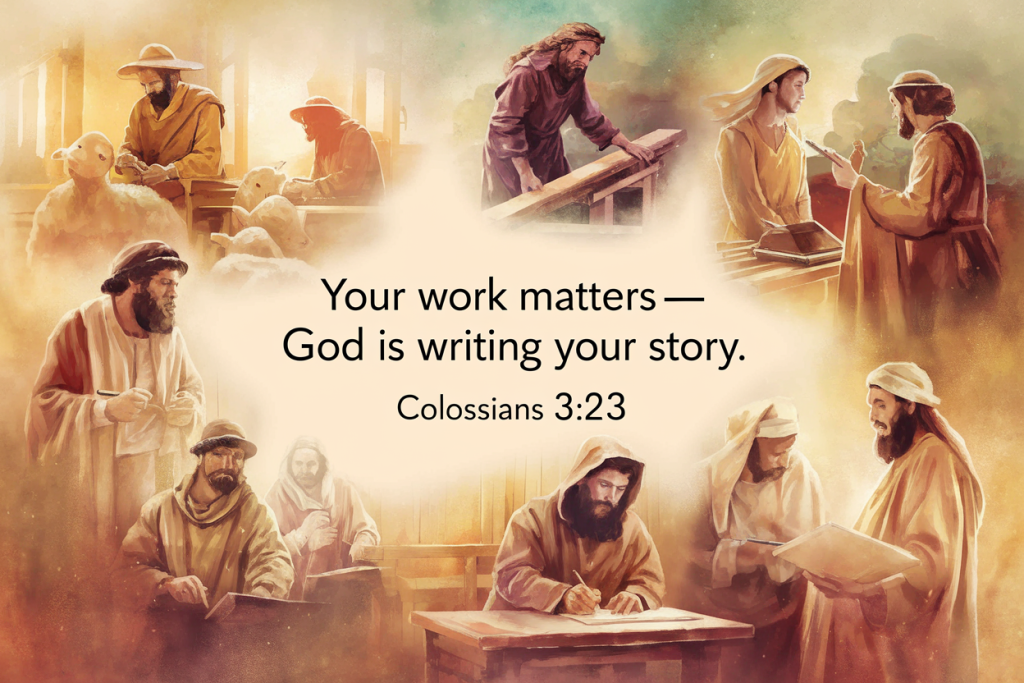
Ultimately, whether we are tending sheep or teaching classes, building tables or building relationships, the Bible reminds us that our work matters to God.
Each occupation carries values like diligence, honesty, and service that honor God. And many of these roles become rich metaphors for aspects of God’s character and the gospel message.
We learn that God is our Shepherd, King, Physician, Teacher, Potter, and Master, and we are His sheep, subjects, patients, students, clay, and servants.
Knowing this, we can find spiritual significance in our own work today, doing everything “as unto the Lord” (Colossians 3:23) and seeing our daily labors as part of the larger story God is writing through history.
Call to Action: The Question That Demands an AnswerIn Acts 2:37 Peter and the Apostles were asked the question – What Shall We do? And in Acts 2:38 Peter answered, Repent, and be baptized every one of you in the name of Jesus Christ for the remission of sins, and ye shall receive the gift of the Holy Ghost. For the promise is unto you, and to your children, and to all that are afar off, even as many as the Lord our God shall call. Do you understand this? After hearing the gospel and believing, they asked what should would do. The answer hasn’t changed friend, Peter clearly gave the answer. The question for you today is, Have you receieved the Holy Spirit Since you believed? If you’re ready to take that step, or you want to learn more about what it means to be born again of water and Spirit, visit: Come, and let the Spirit make you new. |