A Kingdom Without a King
The war was over, but peace had not come. Saul was dead. His sons were dead. Only one remained – Ishbosheth, the man who inherited a crown no one truly wanted. The smoke of battle still hung in the hills of Gilboa, and the nation was torn between loyalty to a fallen house and longing for God’s chosen king. Somewhere south, David was waiting on God’s timing, refusing to grasp what God had already promised him. But north of him, Saul’s surviving son sat trembling in Mahanaim, called “king” by men who needed a figurehead more than a leader.
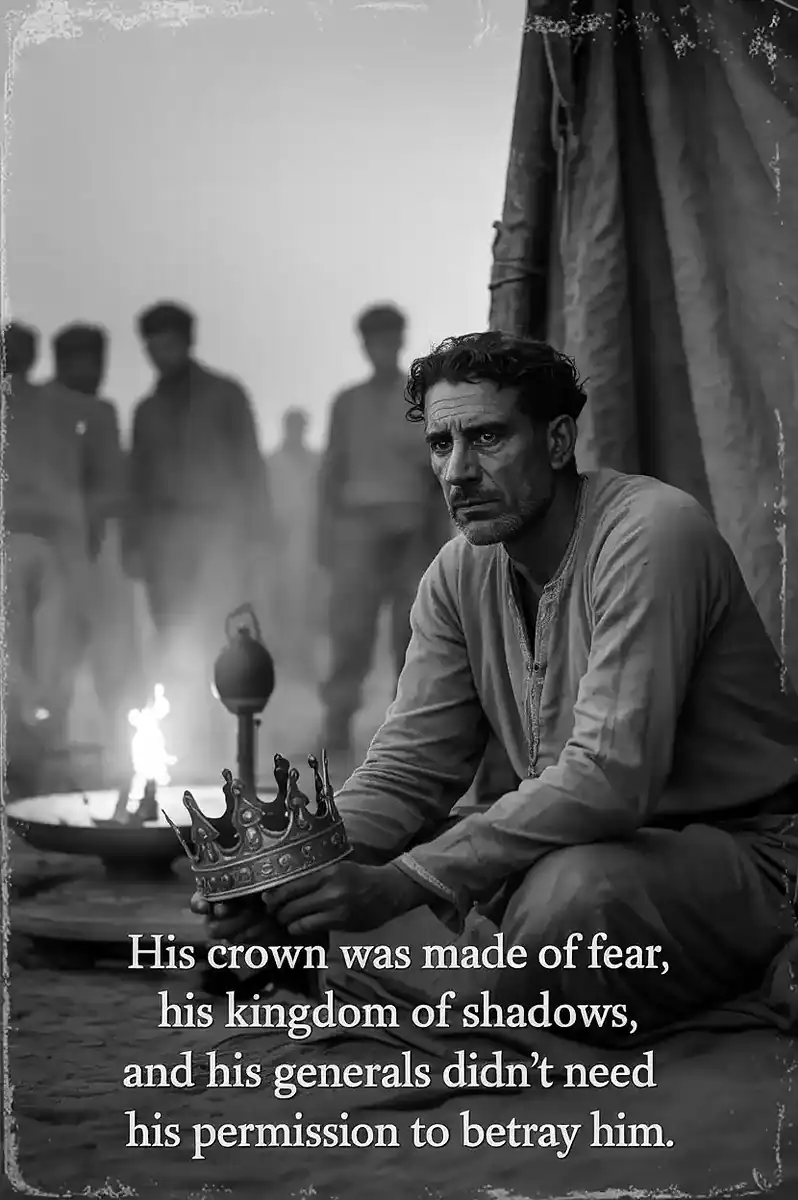
It was never Ishbosheth’s desire to reign. He had lived his life in the shadow of stronger men – his father Saul, his brothers Jonathan and Abinadab, and even Abner, his father’s fierce captain. When Abner told him, “You shall be king,” Ishbosheth likely nodded because saying no would’ve been too costly. He wore a crown of obligation, not conviction. His throne was propped up by politics, not purpose.
The Shadow of a Dead Legacy
Mahanaim was no Jerusalem. It was a refugee’s city – safe, distant, uncertain. The sound of swords still echoed in the distance as tribes swore allegiance to the house of Saul. To them, Ishbosheth represented continuity, a memory of the man who had once stood taller than any in Israel. But inside his tent, Ishbosheth probably heard the same whispers that haunted his father – “What if I’m not enough?” The ghost of Saul’s disobedience lingered over every decision, every fearful glance. And fear is a terrible counselor.
Abner led his armies while Ishbosheth held the title. The people bowed, but they did not believe. The ark of God was still far from them, and David’s songs were rising from Hebron, filling Israel with a sound Ishbosheth could never produce. Where David had worship, Ishbosheth had worry. Where David had promise, Ishbosheth had politics.
The House Built on Sand
When Abner took one of Saul’s concubines, it was more than scandal – it was a power move. Ishbosheth confronted him, trembling, not from righteousness but from fear. Abner’s anger flared: “Am I a dog’s head, that you charge me today with this fault?” In that moment, Ishbosheth’s illusion of authority shattered. Scripture says, “He could not answer Abner again because he feared him.”
That one verse reveals the truth – he was a king afraid of his own general. Authority without courage collapses quickly, and a throne without conviction is already empty. Abner left in fury, swearing to give the kingdom to David. Ishbosheth didn’t pursue, didn’t pray, didn’t even plead. He simply sat. Frozen leadership at the edge of collapse.
The Quiet Before the Fall
Rumors spread faster than ravens. Abner had defected. David had received him kindly. Ishbosheth’s soldiers grew restless, and the people’s hearts wavered. The same men who had crowned him began planning who to follow next. Scripture says Ishbosheth’s hands “were feeble, and all Israel was troubled.”
Every crown built on human approval will eventually shake. Without God’s favor, strength leaks from the soul like water from a cracked jar. Ishbosheth had never sought the Lord; he merely inherited a position. And positions without purpose become prisons.
The Death That Came in Sleep
It happened quietly. Two captains, men Ishbosheth trusted, came by day pretending to deliver wheat. They found him lying on his bed at noon – alone, unguarded, unaware. They stabbed him where he lay and brought his head to David as a trophy, expecting a reward.
But David, who once cut the corner of Saul’s robe rather than harm him, was horrified. He rebuked the murderers and ordered their execution. David said, “When one told me, saying, ‘Behold, Saul is dead,’ thinking to have brought good tidings, I took hold of him and slew him. How much more, when wicked men have slain a righteous person in his own house upon his bed?”
Even in death, Ishbosheth became a lesson in misplaced loyalty. His killers thought David would celebrate, but the man after God’s own heart mourned yet another casualty of man’s ambition.
The Fragile Crown
Ishbosheth’s story is a tragedy of silence. He spoke little, acted less, and trusted the wrong men. His name meant “man of shame,” though it once was “Eshbaal” – “man of the Lord.” The shift in his name mirrored the shift in his life. What began with promise ended in fear.
He lived beneath his father’s failures and died beneath another man’s sword. And yet, even in this sad chapter, God was working. Ishbosheth’s death cleared the path for the anointed shepherd to rise. The fragile throne fell so the eternal one could stand.
Lessons in Leadership and Faith
There’s something painfully familiar about Ishbosheth’s story. Maybe you’ve felt like him – called to something but unsure you belong there. Maybe you’ve worn a title, kept the peace, played the part, but deep down knew your strength was slipping. Ishbosheth’s fear reminds us what happens when we live on borrowed faith.
The man who never sought God’s voice became a puppet for the loudest one in the room. Without God’s Spirit, even a crown becomes a burden. The truth is, the throne never belonged to him – it belonged to God. And when we try to hold what heaven hasn’t given, it will always fall through our hands.
From Fragile Thrones to Firm Foundations
David’s rise wasn’t just political – it was spiritual. The kingdom was never meant to rest on charisma, lineage, or appearance. It was meant to rest on God’s covenant. Ishbosheth tried to rule from inheritance; David ruled from intimacy. One sat in fear; the other stood in faith.
The story forces us to ask: where do we draw our strength? From position or from presence? From human security or from divine calling? Ishbosheth’s downfall whispers a warning to every believer – don’t build your life on fragile foundations. What is propped up by people’s approval will collapse when the wind shifts. What is planted by God will stand through every storm.
The Greater King to Come
Generations later, another Son of David would stand before rulers, mocked as a “king” with a crown of thorns. Unlike Ishbosheth, Jesus did not fear the powerful or cling to borrowed thrones. He laid His life down willingly, knowing that the true kingdom would not come by force but by faith.
Ishbosheth’s crown broke, but Christ’s crown endures forever. His throne cannot be taken, His rule cannot be questioned, and His peace cannot be overthrown. The fragile kingdom of men crumbled so that the everlasting kingdom of God could rise.
And that’s the hope for every trembling heart today. God doesn’t need your throne – He offers you His. He lifts the fearful and crowns them with mercy.
The story of Ishbosheth ends in silence, but the story of Christ ends in resurrection. The fragile throne could not hold a kingdom, but the cross held the King of all eternity.
Call to Action: The Question That Demands an AnswerIn Acts 2:37 Peter and the Apostles were asked the question – What Shall We do? And in Acts 2:38 Peter answered, Repent, and be baptized every one of you in the name of Jesus Christ for the remission of sins, and ye shall receive the gift of the Holy Ghost. For the promise is unto you, and to your children, and to all that are afar off, even as many as the Lord our God shall call. Do you understand this? After hearing the gospel and believing, they asked what should would do. The answer hasn’t changed friend, Peter clearly gave the answer. The question for you today is, Have you receieved the Holy Spirit Since you believed? If you’re ready to take that step, or you want to learn more about what it means to be born again of water and Spirit, visit: Come, and let the Spirit make you new. |