A Banquet Beneath the Torches
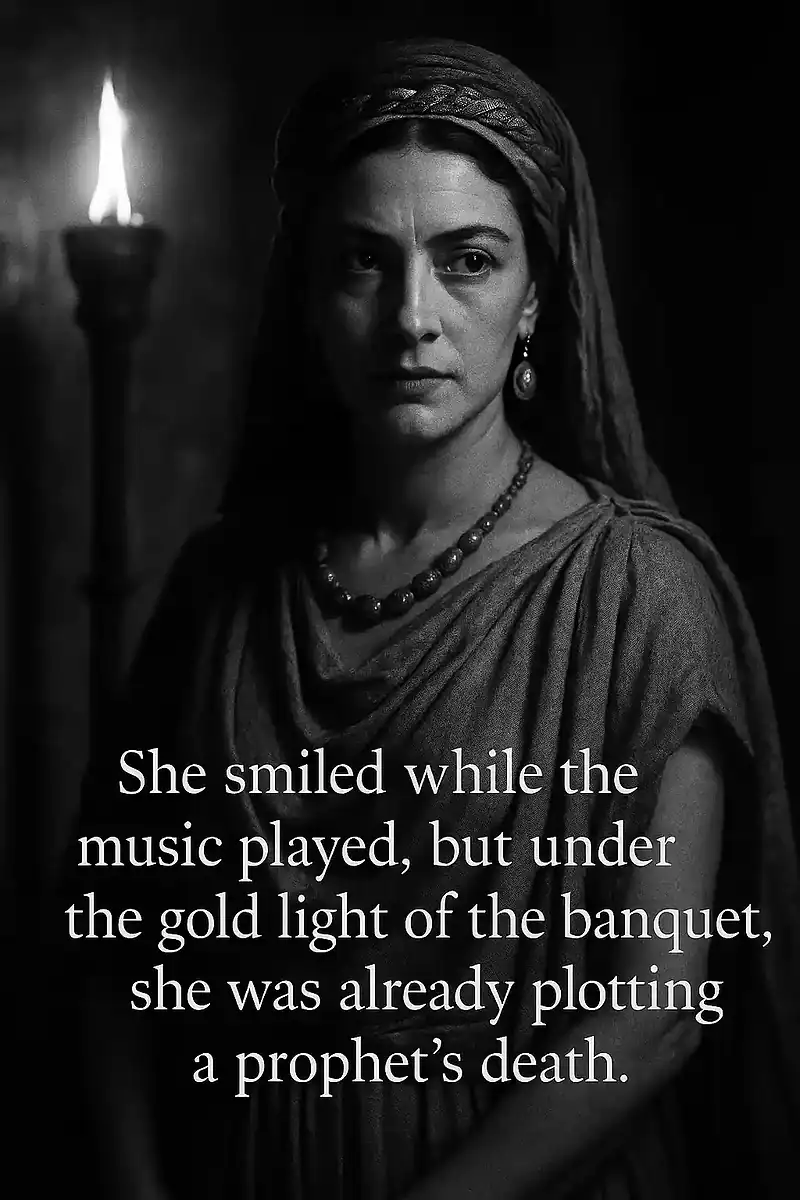
The hall shimmered with gold and laughter, the kind that hides something rotten beneath its perfume. Plates overflowed, wine spilled, and music echoed through Herod’s palace like a heartbeat too loud. Yet behind every smile sat tension – Herod’s, forced and cautious; Herodias’s, calculated and sharp. She was beautiful, yes, but beauty can be a mask. And hers hid years of bitterness, festering like a wound that refused to heal.
Her marriage to Herod was a scandal whispered across Judea. She had left one brother to marry another, and John the Baptist – the desert prophet with eyes like judgment itself – had dared to say it was not lawful. His words pierced her pride. That day, she didn’t just get angry. She got even.
The Seed of Resentment
Herodias couldn’t forget his voice. “It is not lawful for thee to have thy brother’s wife.” It replayed like a curse. She wanted peace, but she wanted it on her own terms, not God’s. So she rehearsed revenge in her mind as others might hum a tune. Every feast, every idle hour, she sharpened her memory against John’s words.
Meanwhile, John sat in a dungeon below the palace, surrounded by stone and silence. Herod, oddly enough, liked to hear him speak. “He feared John,” the Scripture says, “knowing he was a just man and holy.” But fear alone never made a man righteous. It only kept him uneasy. And Herod’s unease was Herodias’s opportunity.
A Birthday and a Trap
The night of Herod’s birthday was meant for pleasure. Nobles, soldiers, and men of influence filled the room, their laughter rising higher with every cup. Herod sat on his throne, pride mixing with intoxication. That’s when she sent in her daughter – Herodias’s daughter by her former husband, Philip.
Salome danced. And the room stilled. The firelight caught her bracelets; the music softened. Herod leaned forward, half-drunk and fully captivated. When she finished, he stood and shouted, “Ask of me whatsoever thou wilt, and I will give it thee – unto the half of my kingdom!”
The girl hesitated, uncertain. So she did what she always did – she ran to her mother. Herodias’s eyes gleamed. Finally, the moment she’d waited for. No crown, no treasure, no land – just a head. “The head of John the Baptist,” she said. “Now.”
The Silence Before the Sword
Herod froze. The wine soured in his throat. He had made a promise before his guests. His pride chained him tighter than any dungeon bars ever could. “The king was exceeding sorry,” the Gospel tells us, “yet for his oath’s sake… he would not reject her.”
So he sent the executioner. Down into the cold corridors of the prison, through the damp air where the prophet prayed. John’s faith didn’t tremble. He had faced desert hunger, storms, and solitude. Now he would face the blade. Somewhere above, music and laughter drowned out the sound of boots approaching his cell.
When the head was brought on a platter, the room went quiet. Even the boldest guests looked away. Herodias smiled, but it wasn’t joy. It was relief mixed with emptiness – the kind that always follows vengeance. The grudge had been fed, but the hunger only grew.
The Prophet Still Speaks
They thought the story ended that night, but truth has a way of outliving its executioners. Herod’s conscience turned restless. He heard rumors of a new preacher by the Jordan, one performing miracles. Terrified, he whispered, “It is John, whom I beheaded; he is risen from the dead.”
Herodias’s plan silenced a voice, but it couldn’t silence conviction. You can’t bury the word of God. You can only bury your peace trying to fight it. The woman who schemed in candlelight became a prisoner of her own heart.
The Mirror of Our Own Hearts
Her story isn’t just ancient palace drama – it’s a mirror. Every believer knows what it’s like to feel wronged, to crave justice, to replay someone’s words in our head until they echo louder than God’s truth. Herodias teaches us where that road leads: to spiritual ruin disguised as satisfaction.
Grudges promise control but deliver bondage. We justify them, we name them “righteous anger,” but underneath is pride whispering, “I deserve to see them pay.” God’s way is different. He doesn’t settle scores – He transforms souls. “Vengeance is mine; I will repay, saith the Lord.”
When Jesus stood silent before His accusers, He showed us what victory really looks like. Not the satisfaction of revenge, but the freedom of forgiveness.
The Kingdom’s Inversion
John lost his head, but kept his integrity. Herod kept his throne, but lost his peace. That’s how the Kingdom of God flips every equation. The one who appears weak often stands tallest in eternity’s light. The one who silences truth ends up haunted by its echo.
In that dim palace, Herodias held what she thought was triumph. But somewhere in heaven, John gained what she could never touch – everlasting honor. His voice still cries from the pages of Scripture, pointing forward to the Lamb of God.
Christ, the Greater Witness
John’s death foreshadowed another unjust execution. A King far greater than Herod would one day be pressed by a crowd’s demand and hand over an innocent man to death. But unlike Herod, God’s purpose was redemption, not regret.
At Calvary, the wrath of man met the mercy of God – and mercy won. Herodias’s bitterness cost a prophet his life; God’s forgiveness gave the world eternal life. That’s the Gospel’s reversal – grace rising where hatred once ruled.
Reflection and Awe
Every time we choose forgiveness over revenge, we undo a little of Herodias’s legacy. We say to bitterness, “You don’t get the last word.” We follow the path John paved – the narrow way of truth and courage – and the footsteps of Jesus, who never let pain make Him cruel.
And maybe, in those quiet moments when the memory still stings, we remember: no head on a platter ever healed a heart, but a Savior on a cross did.
Final Sentence (Reverent Awe):
Herodias’s grudge ended in darkness, but the light John bore still burns – unchained, undimmed, and forever testifying that truth cannot die, because Christ lives.
Call to Action: The Question That Demands an AnswerIn Acts 2:37 Peter and the Apostles were asked the question – What Shall We do? And in Acts 2:38 Peter answered, Repent, and be baptized every one of you in the name of Jesus Christ for the remission of sins, and ye shall receive the gift of the Holy Ghost. For the promise is unto you, and to your children, and to all that are afar off, even as many as the Lord our God shall call. Do you understand this? After hearing the gospel and believing, they asked what should would do. The answer hasn’t changed friend, Peter clearly gave the answer. The question for you today is, Have you receieved the Holy Spirit Since you believed? If you’re ready to take that step, or you want to learn more about what it means to be born again of water and Spirit, visit: Come, and let the Spirit make you new. |