The Moment Before the Miracle
The story begins in silence – the kind of silence that follows sin too long ignored. The fields outside Nob, the city of priests, were still. David, weary and hungry, stood at the doorway of the tabernacle. His eyes darted, his heart raced. He wasn’t running toward God that day – he was running for his life. Saul’s jealousy had grown into madness, and David was now the hunted instead of the hero. Yet standing in that holy place, a shadow watched him – a man with a cold stare and a calculating mind. His name was Doeg the Edomite. And while David sought bread, Doeg saw an opportunity.
A Sanctuary Turned Snare
The tabernacle in Nob should’ve been a place of mercy, not betrayal. The golden lamp glowed softly, the bread of the Presence freshly laid out on the table. Ahimelech, the priest, trembled slightly when David appeared. “Why art thou alone?” he asked, uneasy. David lied – he said the king had sent him on a secret mission. It wasn’t a proud moment for the man after God’s own heart. Hunger, fear, and weariness had clouded his discernment. But God, in mercy, still provided. The priest handed over the consecrated bread and Goliath’s sword – the same one David once used to claim victory.
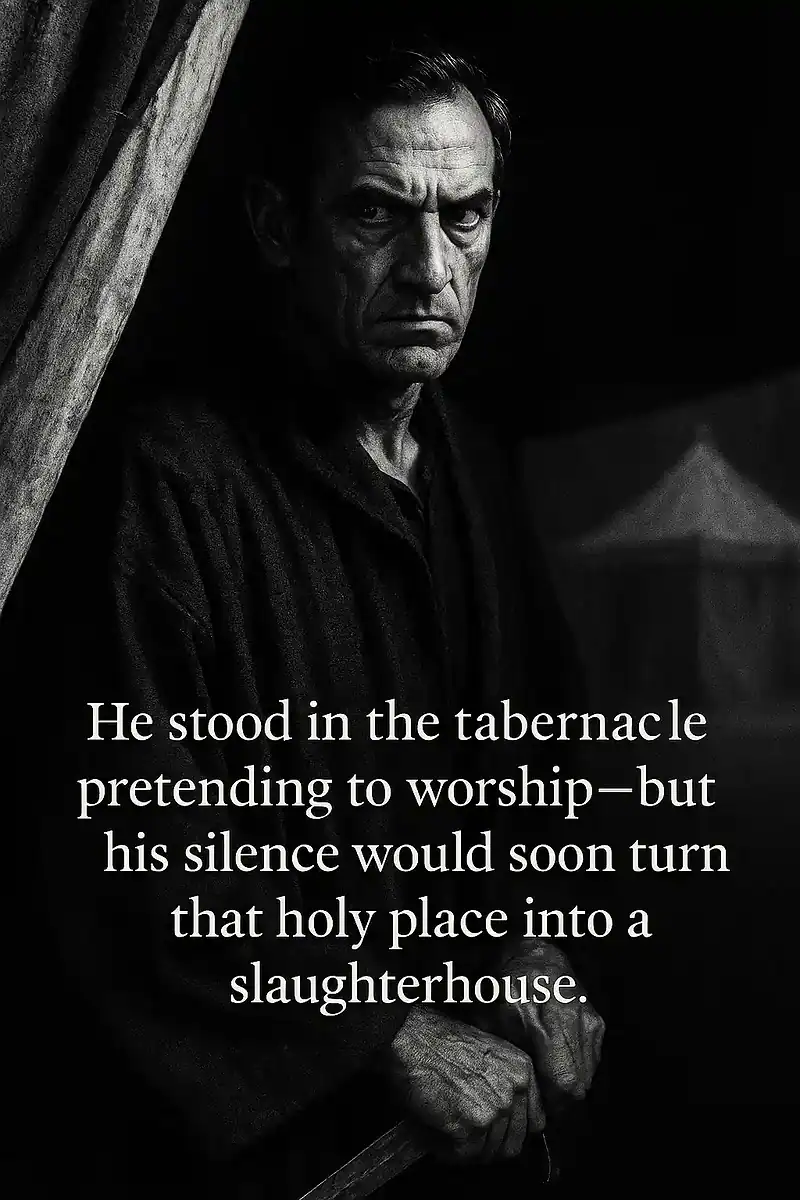
In the corner, Doeg watched. An Edomite in Israel, chief of Saul’s herdsmen, standing where only the clean should stand. He said nothing, but his silence spoke of schemes forming like a storm on the horizon.
The Man with a Divided Heart
Doeg’s name means “fearful,” and it fit him well. He was a man of ambition cloaked in service, loyalty without love. His heart bowed to power, not to God. He knew what Saul wanted most – to crush David – and Doeg saw his moment to rise. Have you ever met someone who uses other people’s righteousness as their ladder? That was Doeg. He watched, waited, and when the timing was right, he opened his mouth – and hell followed.
The Whisper That Became a Wound
When Doeg returned to Saul’s court, he carried poison in his tongue. “I saw the son of Jesse come to Nob,” he told Saul, “and Ahimelech inquired of the Lord for him, gave him victuals, and the sword of Goliath.” Half-truths dressed as loyalty. Saul’s rage ignited. He summoned the priests and accused them of treason. Ahimelech pleaded innocence – “Did I then begin to inquire of God for him? Be it far from me.” But Saul’s mind was too clouded to hear reason. When he ordered his guards to kill the priests, they refused. Even soldiers had a line they would not cross. But Doeg – oh, Doeg didn’t hesitate.
He drew his sword and turned the house of God into a slaughterhouse. Eighty-five priests fell that day, men clothed in linen ephods. Their wives, children, and livestock perished too. The city of Nob became a graveyard, not because of Saul’s command alone – but because of one man’s willingness to obey evil for reward.
The Hinge of Heaven
Some stories in Scripture burn because of their horror – but they also whisper redemption through contrast. While Doeg swung his sword, one priest escaped. Abiathar fled to David, breathless, broken, his garments stained with loss. When he told David what happened, the shepherd-warrior dropped his head in grief. “I knew it that day,” David said, “when Doeg the Edomite was there, that he would surely tell Saul. I have occasioned the death of all the persons of thy father’s house.”
It was one of David’s lowest confessions. But even in that sorrow, God’s plan did not collapse. Out of tragedy, the priesthood moved from Saul’s reach to David’s refuge. Abiathar stayed with David, carrying the ephod – the symbol of prayer and God’s guidance. The line of spiritual leadership passed quietly from a slaughtered city to a fugitive’s camp. The light hadn’t gone out – it had simply moved.
When Judgment Feels Like Silence
Psalm 52 was born from this blood-soaked moment. David wrote it with anger and heartbreak in equal measure. “Why boastest thou thyself in mischief, O mighty man? the goodness of God endureth continually.” He called Doeg a “deceitful tongue” that loved evil more than good. Yet even as David lamented, his psalm turned toward faith: “But I am like a green olive tree in the house of God: I trust in the mercy of God for ever and ever.”
Do you see the contrast? One man trusted in deceit and died forgotten. Another trusted in mercy and lived to write songs that would outlast kingdoms.
The Echo of Every Betrayal
Doeg’s story is hard to read because it mirrors something in all of us – the temptation to trade righteousness for approval, to please power instead of truth. He wasn’t born a monster. He became one the moment he chose self-interest over fear of God. Betrayal never begins as a blade – it begins as a whisper of compromise.
And yet, the same God who saw Doeg’s treachery also saw David’s guilt. Both men sinned under the same sky. But only one repented. That’s the difference between ruin and redemption.
From Edomite to Everyman
The Edomites descended from Esau, Jacob’s brother – the line that often stood against Israel. Doeg represents more than one man; he’s a picture of what happens when resentment festers and reverence fades. He was close enough to truth to hear it but far enough from grace to ignore it. How many stand in church today, near the bread and the sword, yet remain unmoved? Proximity to holiness means nothing without surrender.
The Blood in the Tabernacle
The slaughter at Nob wasn’t the end of the story – it was a foreshadowing. Centuries later, another priest would be struck down in innocence, and His blood would also stain holy ground. But this time, the death would not end mercy – it would begin it. Jesus Christ, the true High Priest, was betrayed by another informant, sold for silver, and delivered to slaughter by those who claimed to serve God. The parallel is chilling but divine: where Doeg’s sword ended life, Christ’s sacrifice opened eternal life.
The Reflection in Our Time
Every generation meets its Doegs – voices that twist truth, tongues that wound the innocent, hearts that seek gain over grace. But every generation also meets its Abiathars – survivors who carry the ephod, who keep prayer alive when the world falls apart. If you’ve ever been betrayed, you understand the ache of Nob. If you’ve ever been forgiven, you understand David’s tears. And if you’ve ever run to Jesus after both, you know what grace really means.
The God Who Keeps His Witness
Even in the blood and ashes, God preserved a remnant. Nob’s fire couldn’t silence His voice. Out of that grief came songs of trust, and out of that horror came a deeper understanding of mercy. Doeg’s name faded into judgment, but David’s psalms still rise like incense in the hearts of believers.
Evil may swing its sword in the sanctuary, but heaven keeps a witness. The bread of God’s presence may be taken from one table, but it will always appear on another. Truth is never silenced – it is only waiting for resurrection.
Final Reflection: The Shadow and the Cross
Doeg stood in a holy place and brought death. Jesus stood in a place of death and brought holiness. That’s the reversal of redemption. The first shed blood that silenced worship; the second shed blood that restored it. And even now, when you see injustice and wonder where God is – remember Nob. The Lord misses nothing. He turns even betrayal into the backdrop of salvation.
And one day, every Doeg will bow before the same King David once worshiped – the Son of God, whose mercy endures forever.
Call to Action: The Question That Demands an AnswerIn Acts 2:37 Peter and the Apostles were asked the question – What Shall We do? And in Acts 2:38 Peter answered, Repent, and be baptized every one of you in the name of Jesus Christ for the remission of sins, and ye shall receive the gift of the Holy Ghost. For the promise is unto you, and to your children, and to all that are afar off, even as many as the Lord our God shall call. Do you understand this? After hearing the gospel and believing, they asked what should would do. The answer hasn’t changed friend, Peter clearly gave the answer. The question for you today is, Have you receieved the Holy Spirit Since you believed? If you’re ready to take that step, or you want to learn more about what it means to be born again of water and Spirit, visit: Come, and let the Spirit make you new. |