The Glow of Early Ministry
There was a time when Demas’s name meant something. In the earliest days of the gospel’s spread, when the ink of Paul’s letters was still wet and the churches met by candlelight, Demas was one of the names read aloud with gratitude. “Luke, the beloved physician, and Demas, greet you.” Those few words carried warmth, belonging, and shared purpose. He had traveled beside Paul, heard the prison chains rattle, and seen the power of God turn Gentiles from idols to the living Christ. He wasn’t a casual believer on the sidelines – he was in the story, right in the heart of God’s movement.
Maybe he once stood in that dim prison cell, handing Paul water, watching the apostle’s hands tremble with age and wear. Maybe he heard Paul’s low, fervent voice praying for churches that would never know his face. There was love in those walls – costly love, enduring love. Demas felt it. He even shared it. But something in him quietly started to shift.
The Spark That Started to Fade
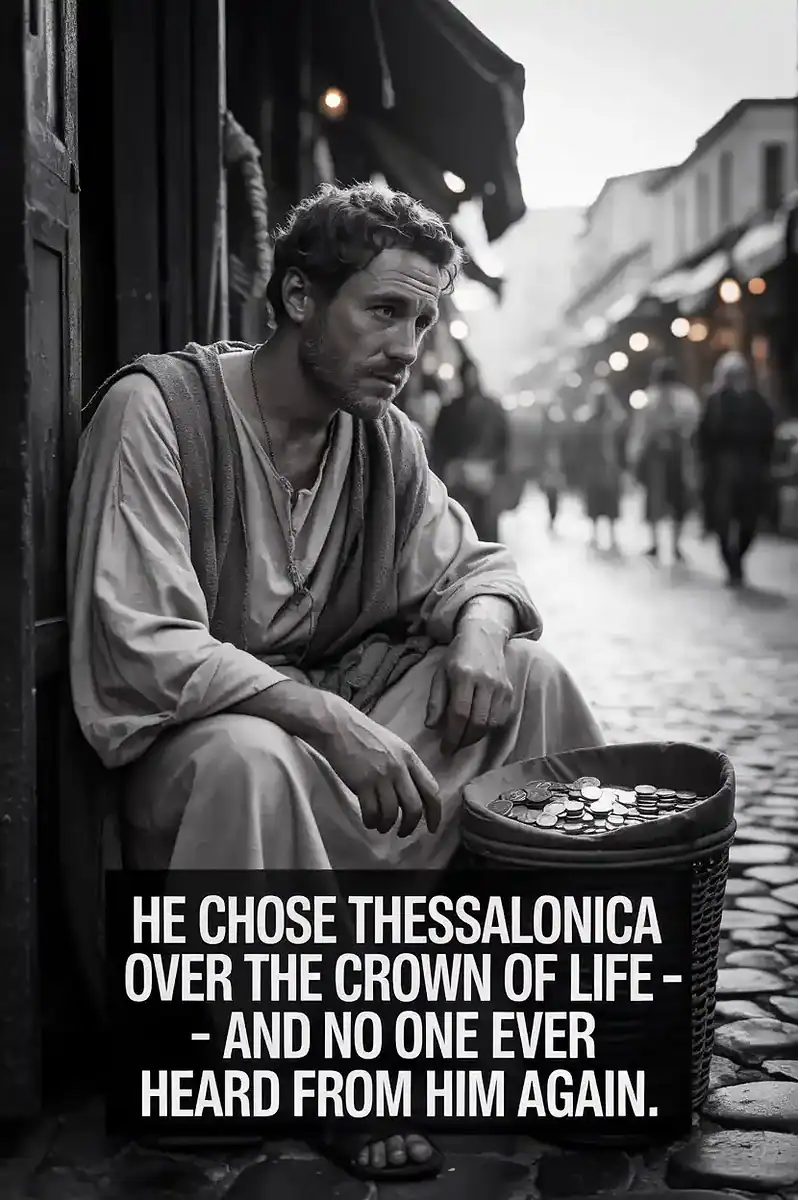
Demas had begun with fire, but the world has a way of cooling zeal. The Roman Empire offered comforts and distractions that the cramped cell of ministry could not. The food tasted better in Thessalonica. The roads were safer. The air was freer. And after years of hardship, who wouldn’t want to breathe a little? Maybe he told himself he’d take a short break, just to clear his head. Maybe he thought he could serve the Lord better from a distance.
But the heart is tricky when it starts negotiating with comfort. Somewhere between the call of eternity and the pull of today, Demas began to prefer the scent of the marketplace over the musty prison, the sound of coins over chains, applause over obscurity. Paul would later write, with a sorrow only an old missionary could feel, “Demas hath forsaken me, having loved this present world.” It wasn’t just that Demas left the mission – it was that the mission left his heart.
The Pull of Two Kingdoms
To understand Demas, you have to feel the tension that lives in all of us. The world doesn’t always come dressed as sin; it often comes wrapped in opportunity. It promises comfort, security, and a future that feels safe. For Demas, maybe it was a home he longed for, a business that finally took off, or a circle of friends who didn’t ask about persecution. The same world that once hated him for following Christ now smiled and welcomed him back. That’s a powerful temptation – to be accepted again.
Yet every pleasure without purpose leaves an aftertaste. He must have heard news later that Paul was executed, beheaded on a Roman road. Perhaps he sat up late that night, staring into a lamp’s flickering light, wondering what his old mentor’s last words were. Did Paul forgive him? Did God?
The Silence After Walking Away
The Bible doesn’t tell us what happened to Demas after that. His name fades into silence. That silence says more than a thousand verses could. It’s the silence of unfinished stories, of men and women who start well but never finish the race. Once, Paul had written of fighting the good fight, keeping the faith, finishing the course. Demas had run beside him – but somewhere along the road, he took an exit that led away from the cross.
We can almost see him in Thessalonica – prosperous, respectable, respected – but inwardly restless. He might have tried to forget the way Paul’s prayers once filled the night. Yet the echo of that cell – the songs, the faith, the joy in suffering – wouldn’t die so easily. Sometimes walking away doesn’t give peace; it just gives noise.
The Hinge of Heaven
Imagine that one night, years later, the Spirit whispered to him again. Maybe he dreamed of Paul, still smiling even in chains. Maybe he woke up with tears he couldn’t explain. Because the mercy of God is like that – it doesn’t stop calling when we wander. It doesn’t erase our name when we fall. Even if Demas never returned, the invitation was always open. The same Lord who restored Peter after his denial could have restored Demas after his desertion.
We’ll never know if he came back. But the lesson he left behind still speaks volumes: love for this world always costs more than it promises. The very things that feel so urgent – success, comfort, ease – become dust when compared with the eternal weight of glory.
The Mirror of Our Own Hearts
It’s easy to judge Demas until we realize how many times we’ve stood in his shoes. Every believer faces crossroads where faith demands sacrifice. There’s always a Thessalonica calling somewhere – a career, a relationship, a comfort that tempts us to compromise. But the Lord keeps calling us higher, to live like the apostles who counted not their lives dear, because they’d already given them away.
Demas’s story warns us that walking with God requires endurance, not just enthusiasm. Emotion can ignite the journey, but only obedience keeps it burning. Paul’s chains weren’t beautiful; they were brutal. Yet to the eyes of heaven, they glittered more than any Roman gold. The true measure of faith isn’t how loudly we start – it’s how faithfully we finish.
The Unfinished Letter
When Paul wrote to Timothy near the end, his words carried both heartbreak and hope. He mentioned Demas’s desertion, but he also spoke of the crown of righteousness laid up for those who love Christ’s appearing. Maybe, just maybe, Paul still prayed for him – that the same mercy that caught the thief on the cross would someday catch the helper who loved this world too much.
The early church would remember the name “Demas” as a cautionary tale. But God remembers names differently. He doesn’t file them under failures; He files them under “redeemable.” If Demas ever whispered a prayer in repentance, heaven would have heard it instantly.
The Parallel to Christ
At the center of every story of failure stands the cross. While Demas turned away for the love of this world, Christ turned toward the cross for love of the world. Demas fled from chains; Jesus embraced them. Demas sought comfort; Jesus chose suffering. Demas loved this present world; Jesus gave Himself to save it. The difference between ruin and redemption is not the size of the sin – it’s the direction we turn after it.
Maybe that’s why Paul’s final message to Timothy still rings true for us: “Do thy diligence to come shortly unto me.” Don’t delay obedience. Don’t let the world’s call drown out heaven’s voice. Come quickly. Return while mercy is still extended.
Because the saddest story isn’t the man who failed – it’s the one who could have turned back and didn’t.
Call to Action: The Question That Demands an AnswerIn Acts 2:37 Peter and the Apostles were asked the question – What Shall We do? And in Acts 2:38 Peter answered, Repent, and be baptized every one of you in the name of Jesus Christ for the remission of sins, and ye shall receive the gift of the Holy Ghost. For the promise is unto you, and to your children, and to all that are afar off, even as many as the Lord our God shall call. Do you understand this? After hearing the gospel and believing, they asked what should would do. The answer hasn’t changed friend, Peter clearly gave the answer. The question for you today is, Have you receieved the Holy Spirit Since you believed? If you’re ready to take that step, or you want to learn more about what it means to be born again of water and Spirit, visit: Come, and let the Spirit make you new. |