The Weight Before the Wound
Long before the blood, there was pressure. The world was young but already broken. Adam and Eve lived with the ache of memory – paradise once known but lost. The air still smelled faintly of mercy; God had clothed them before sending them out. Their sons, Cain and Abel, grew up in the shadow of both judgment and grace. They were taught that sin had a price, that a covering came only by the shedding of blood.
Cain learned to till the ground – the very soil that bore his father’s curse. Abel tended flocks and watched life in motion. Two brothers, two callings, two hearts learning how to worship a God who still spoke, but from a distance.
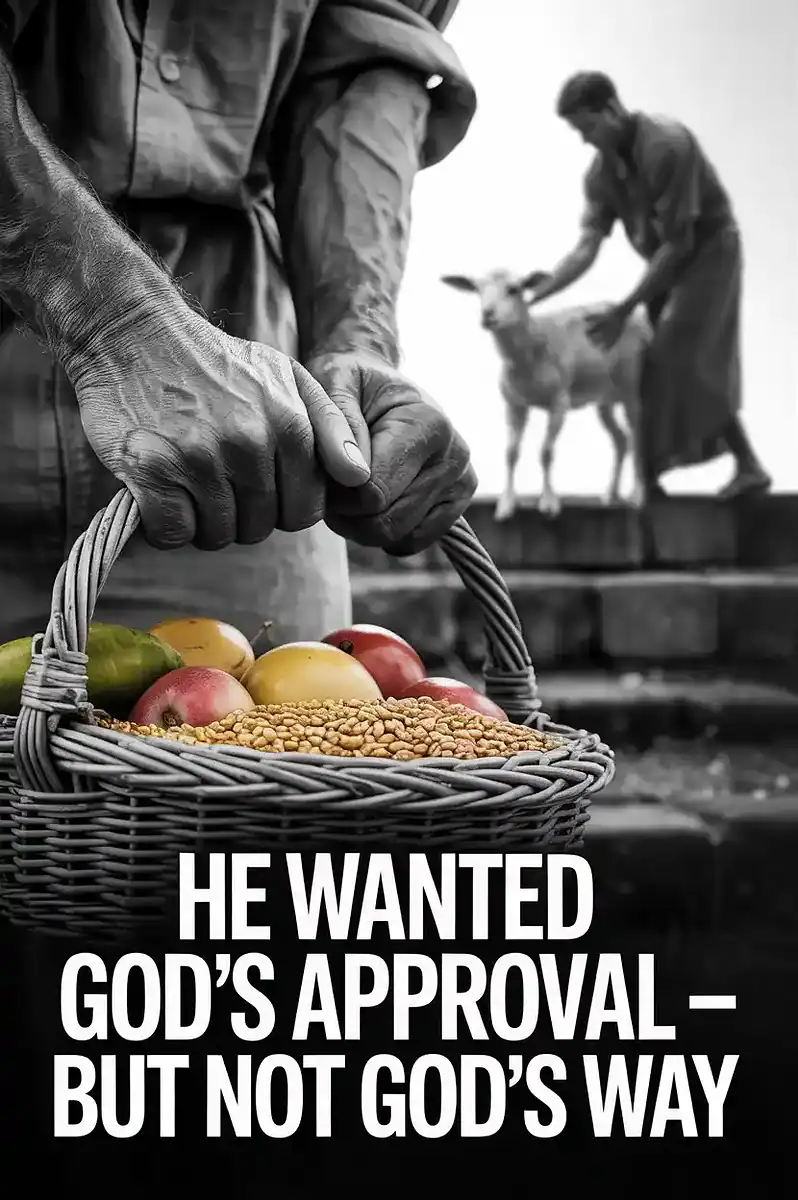
It began not with anger, but with disappointment. Cain’s offering was beautiful, the best of his crops, but not what God had required. Abel’s lamb, slain and offered with humility, spoke of blood atonement – the language of redemption. God looked with favor on Abel’s gift, but not on Cain’s. And in that look, Cain felt something sharp pierce his chest.
The Garden’s Echo Still Haunting
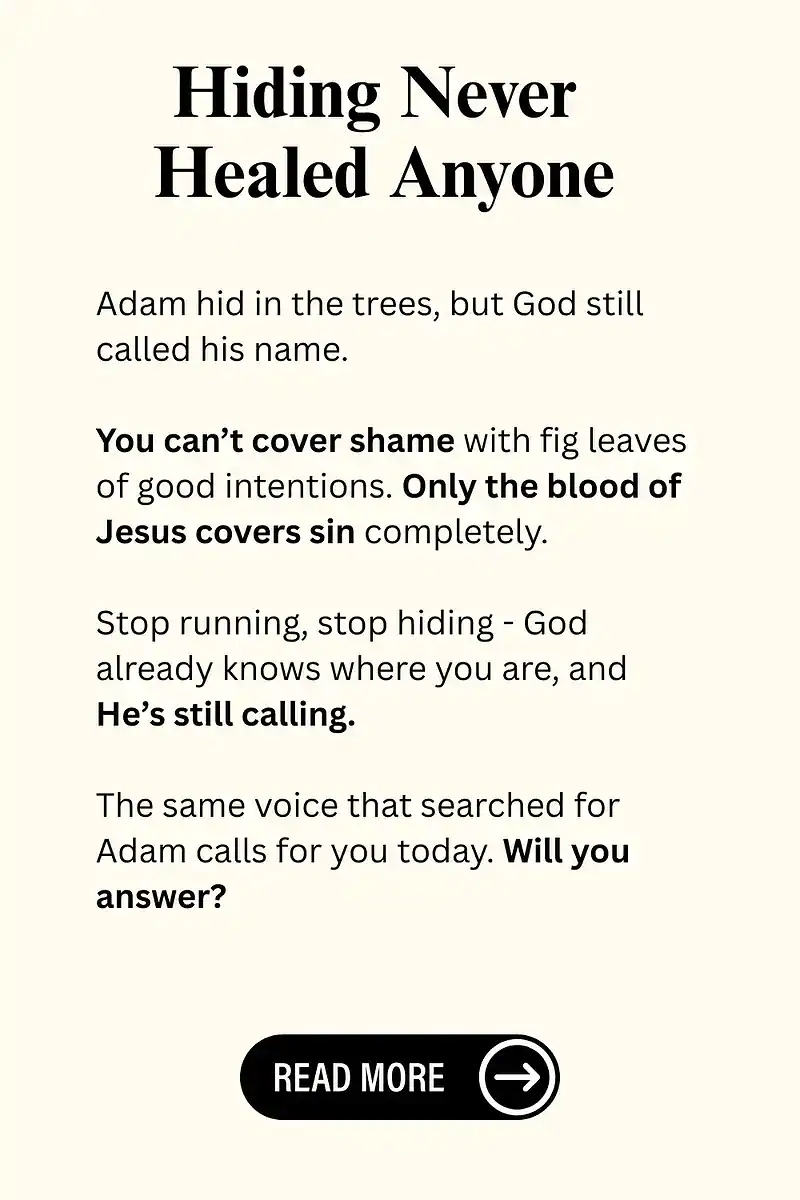
Rejection is an old wound. His parents knew it; the flaming sword at Eden’s gate still burned in memory. Now their son carried that same feeling – unwanted, unseen, unworthy. But this wasn’t God’s rejection of Cain as a person; it was God’s correction of his approach. Still, Cain heard only silence and saw only the shadow of his brother’s success.
The soil he worked began to feel heavier, almost mocking him. Every furrow reminded him that he’d offered the fruit of his own labor. It wasn’t laziness – it was pride. He wanted God’s approval without God’s way.
And so began the slow boil of resentment. Envy whispered its poisonous logic: “If Abel weren’t here, the blessing would be mine.” How quickly worship turns into war when pride isn’t confessed.
A Conversation Before the Crime
God came to him, not with thunder, but tenderness. “Why are you angry? Why is your face fallen?” The Lord asked questions Cain didn’t want to answer. “If you do well, shall you not be accepted?”
Those words were mercy dressed as a warning. God wasn’t just addressing Cain’s act – He was reaching for Cain’s heart. “Sin lies at the door,” God said, “and its desire is for you, but you must rule over it.”
Imagine it – the Creator of the universe stooping down to counsel a man whose heart was hardening. Yet Cain said nothing. Silence became agreement with the serpent’s old whisper: “You shall not surely die.”
He didn’t realize God’s voice was his lifeline, not his lecture.
The Field of No Return
It happened suddenly, but it had been building all along. One day, he spoke softly to Abel, inviting him into the field. Maybe Abel smiled, unaware that jealousy had become murder’s midwife.
There were no witnesses – only the sky, the soil, and God. A cry went up that wasn’t human: Abel’s blood spoke. It was the sound of injustice, and heaven heard it. The ground, cursed once for Adam’s sin, now drank its first blood.
When God called, “Where is Abel thy brother?” Cain deflected, “Am I my brother’s keeper?” But God already knew. The Lord doesn’t ask questions for His sake – He asks them for ours. Cain’s deflection only deepened the tragedy.
The Curse That Echoed
God’s sentence wasn’t vengeance; it was consequence. “Now art thou cursed from the earth,” He said, “which hath opened her mouth to receive thy brother’s blood.” The very soil that Cain once trusted now turned against him. No matter how hard he worked, it would yield no strength.
His punishment was more than exile – it was identity loss. Cain would be a wanderer, a restless soul marked by what he’d done. Yet even in judgment, God’s mercy showed up. When Cain cried out, “My punishment is greater than I can bear,” God marked him – not for destruction, but for protection. The mark of Cain was a sign that vengeance belonged to God alone.
Even in wrath, mercy lingered.
A World East of Eden
Cain built a city. Isn’t that something? A man who could not rest tried to build permanence with his own hands. The city stood as a monument to the ache of separation – a restless soul trying to fill a God-shaped void with human achievement.
His descendants became innovators – musicians, craftsmen, builders. Civilization advanced, but hearts remained estranged. Sin spread faster than progress. Yet even from that broken line, the story of redemption marched on.
Eve bore another son, Seth, and through him, men began to call upon the name of the Lord again. God’s story didn’t end with Cain’s failure; it moved forward with His grace.
Lessons in the Mirror
Cain’s story is every believer’s mirror. We may not lift a weapon, but who among us hasn’t wrestled with jealousy when someone else’s sacrifice seems to bring more favor? How often do we give God what we want instead of what He asks?
Sin still crouches at the door of our hearts, waiting for an unguarded moment. But so does grace. The voice that warned Cain still whispers to us, “If you do well, shall you not be accepted?” The Lord is not against us; He’s inviting us back into alignment.
Worship is not about impressing God – it’s about trusting Him. Abel’s blood cried out for justice; Jesus’ blood cries out for mercy. That’s the difference between religion and redemption.
The Voice That Still Speaks
In Hebrews, we read that “the blood of sprinkling speaketh better things than that of Abel.” Better things – mercy instead of condemnation, reconciliation instead of revenge. Christ became the final Abel, the innocent slain whose blood doesn’t accuse but atones.
Cain’s hands were stained with his brother’s blood. Christ’s hands were pierced for His brothers. Cain’s mark was a warning; Christ’s wounds are an invitation.
The story that began with a curse ends with a cross.
And somewhere east of Eden, grace still calls the wanderer home.
Call to Action: The Question That Demands an AnswerIn Acts 2:37 Peter and the Apostles were asked the question – What Shall We do? And in Acts 2:38 Peter answered, Repent, and be baptized every one of you in the name of Jesus Christ for the remission of sins, and ye shall receive the gift of the Holy Ghost. For the promise is unto you, and to your children, and to all that are afar off, even as many as the Lord our God shall call. Do you understand this? After hearing the gospel and believing, they asked what should would do. The answer hasn’t changed friend, Peter clearly gave the answer. The question for you today is, Have you receieved the Holy Spirit Since you believed? If you’re ready to take that step, or you want to learn more about what it means to be born again of water and Spirit, visit: Come, and let the Spirit make you new. |