The Moment Before the Miracle
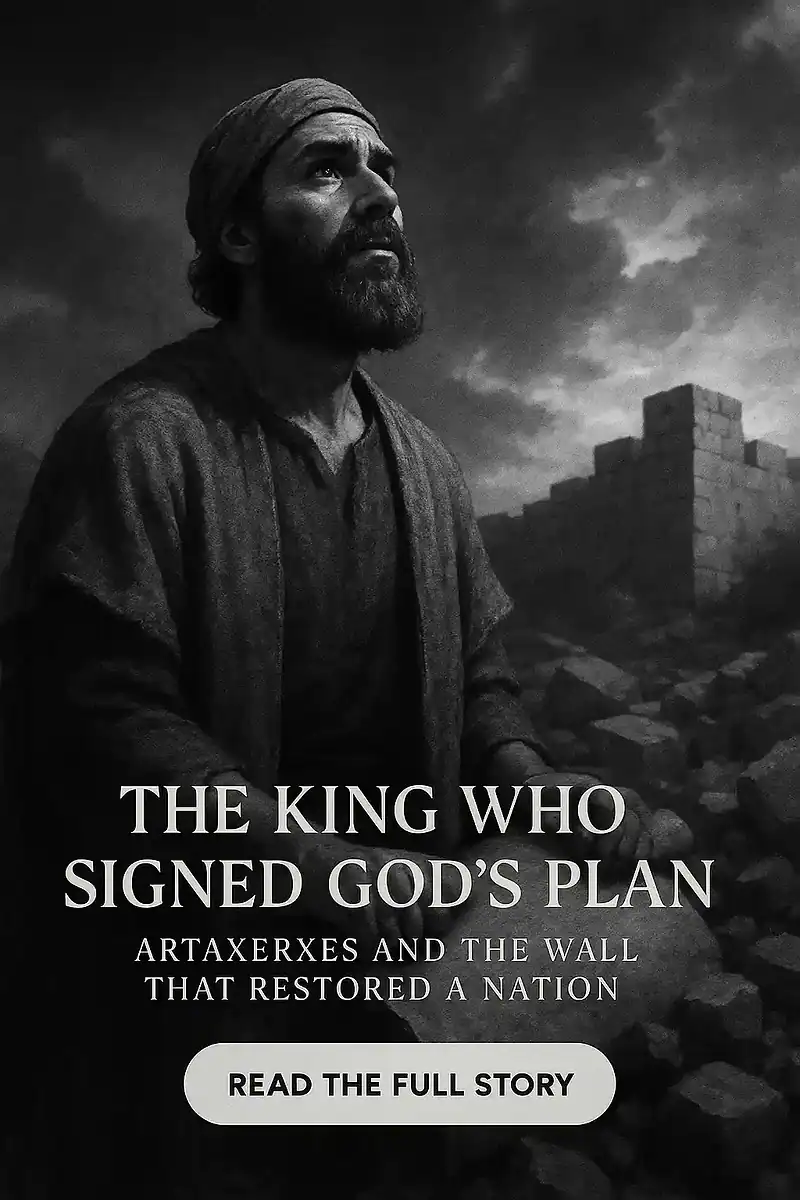
Jerusalem was still in ruins. The once-great city of David looked like a battlefield long after the war had ended. Stones that had once stood proud now lay scattered like forgotten memories.
The gates had been burned with fire, and what should have been the center of worship now whispered only loss. For those who had returned from exile, rebuilding had begun – but something vital was missing. The walls were down. The people were vulnerable. Their identity as God’s chosen nation hung by a thread.
Far away in Persia, a Jewish cupbearer named Nehemiah served King Artaxerxes in the royal palace. He wasn’t a soldier or a prophet. He was a servant in the shadows, trusted with the king’s safety, yet burdened with the pain of his homeland.
When his brother Hanani brought news from Jerusalem, Nehemiah’s heart broke. He sat down and wept, mourning for days, fasting and praying before the God of heaven. His tears didn’t make the news. No one in the palace noticed. But heaven did.
The Palace and the Burden
Susa, the winter palace of Artaxerxes, gleamed with gold and order. The king ruled over an empire so vast it reached from India to Ethiopia. Persian luxury surrounded Nehemiah – silk, silver, and servants everywhere – but his heart lived among the ashes of Jerusalem.
Every day he poured wine before a man who could change his people’s future with one command, yet Nehemiah dared not speak his pain.
He prayed instead. “O Lord, I beseech Thee, let Thine ear be attentive to the prayer of Thy servant.” That prayer rose higher than the Persian throne. And when God opens a door, not even an empire can keep it shut.
The Cupbearer’s Trembling Moment
One day, as Nehemiah stood before the king, his sorrow showed. The king noticed what few ever dared to ask. “Why is thy countenance sad, seeing thou art not sick? This is nothing else but sorrow of heart.”
Imagine the moment – the air in the room still, guards at attention, and the most powerful man on earth watching his servant closely. Nehemiah says, “Then I was very sore afraid.” Who wouldn’t be? This was no friendly boss.
This was Artaxerxes, ruler of the known world. Yet faith speaks when fear says, “Stay silent.” Nehemiah lifted his eyes and answered, “Let the king live forever. Why should not my face be sad, when the city, the place of my fathers’ sepulchres, lies waste?”
The Signature That Changed History
Artaxerxes asked the question that must have sounded like a miracle: “For what dost thou make request?”
That’s when heaven leaned closer. Nehemiah breathed a silent prayer – “So I prayed to the God of heaven” – and then he spoke the unthinkable: “If it please the king, send me unto Judah, unto the city of my fathers’ sepulchres, that I may build it.”
This was no small ask. To rebuild Jerusalem’s walls meant political risk. It could be seen as rebellion. Yet the heart of a pagan king softened at the whisper of a God he didn’t even know.
Artaxerxes not only agreed – he gave letters of authority, timber from the royal forests, and safe passage across the empire. A single signature turned mourning into mission.
That’s the power of God’s timing. He didn’t raise a prophet or a warrior for this task – He moved the heart of a king through the faith of a servant.
Faith Meets the Impossible
When Nehemiah arrived in Jerusalem, he didn’t announce his mission with fanfare. By night, he rode around the ruined city, inspecting the broken walls by torchlight. The moon cast long shadows over burnt gates and fallen stones.
What others saw as hopeless, he saw as holy ground waiting for obedience. He didn’t come with an army – just letters, lumber, and faith.
Soon, he rallied the people with a bold declaration: “Come, let us build up the wall of Jerusalem, that we be no more a reproach.” Hope that had long slept in ashes began to rise again. And so the work began.
But when faith starts to build, opposition starts to talk. Sanballat and Tobiah mocked them, threatened them, and plotted against them. They laughed, saying, “What do these feeble Jews?” But Nehemiah’s answer still echoes through the centuries: “The God of heaven, He will prosper us; therefore we His servants will arise and build.”
The Battle Between Work and Fear
Day by day, the people built with one hand while holding weapons in the other. Every sound of hammer and chisel was a statement of defiance against despair. The wall began to rise – stone by stone, prayer by prayer.
Nehemiah stationed families together, each defending their section. When fear spread, he reminded them, “Be not ye afraid of them: remember the Lord, which is great and terrible, and fight for your brethren, your sons, and your daughters, your wives, and your houses.”
It wasn’t just a construction project. It was a spiritual resurrection. And every time an enemy scheme failed, the people saw what happens when obedience meets divine favor.
The Wall That Heaven Built
Fifty-two days later, the impossible stood finished. The wall was complete. The gates were restored. The nations around them “perceived that this work was wrought of our God.” It wasn’t just about stones and mortar – it was about covenant and identity. The people who once lived in fear now stood secure, worshipping again in the city of God.
Artaxerxes’ ink had built more than a wall. It had financed a revival.
Reflection and Modern Connection
Sometimes God’s answers come from unexpected places. Nehemiah didn’t need a burning bush or a parted sea – he needed favor in the presence of power. The same God who turned Pharaoh’s heart centuries earlier turned the heart of Artaxerxes for His purpose.
That’s still true today. The promotion, the decision, the signature you’ve been praying for – God can move it in a moment. The king’s heart is in His hand.
Maybe you’re standing in your own “ruined Jerusalem.” Something precious in your life lies broken, and you can’t see how it could ever be rebuilt. Take courage from Nehemiah.
God still rebuilds what’s been burned down. He still gives purpose to those who feel small in palaces of power. And when you move in obedience, He funds the impossible.
The Restoration That Pointed to Christ
Nehemiah’s wall didn’t just protect a city – it preserved a promise. Jerusalem’s walls had to stand because one day, within those walls, a Savior would walk. The same God who moved Artaxerxes to rebuild stone walls would later send His Son to tear down the wall between God and man.
Christ is our true Nehemiah – the restorer of what sin destroyed, the builder of a kingdom that cannot be shaken. Where Nehemiah held a cup for a king, Jesus drank the cup of suffering for us all. Where Artaxerxes’ signature funded the rebuilding of a city, the blood of Jesus signed our eternal redemption.
A Timeless Final Sentence
The story of Artaxerxes and Nehemiah reminds us that God writes restoration into history with invisible ink – and when His hand moves, even kings sign His will into being.
MANIFESTO – The God Who Moves Kings
When God has a plan, no earthly power can stop it. Artaxerxes’ royal decree wasn’t just ink on parchment – it was heaven’s handwriting disguised as a signature. What looked like politics was actually providence. A pagan king became a vessel for divine purpose, and a cupbearer became a builder of destiny. That’s the kind of God we serve.
He doesn’t need perfect circumstances. He doesn’t wait for ideal timing. He moves in palaces while His people pray in ruins. He turns the heart of rulers and opens doors no human hand could ever force. One moment of favor can undo years of frustration. One divine whisper can bend the will of power toward His purpose.
So if you’re staring at broken walls in your life – dreams that seem too damaged, prayers that feel too delayed – don’t give up. Pray like Nehemiah. Wait like Nehemiah.
And when the moment comes, step forward in faith. God still funds restoration through unexpected hands. The same Lord who stirred Artaxerxes to build Jerusalem is still signing off on miracles today.
Call to Action: The Question That Demands an AnswerIn Acts 2:37 Peter and the Apostles were asked the question – What Shall We do? And in Acts 2:38 Peter answered, Repent, and be baptized every one of you in the name of Jesus Christ for the remission of sins, and ye shall receive the gift of the Holy Ghost. For the promise is unto you, and to your children, and to all that are afar off, even as many as the Lord our God shall call. Do you understand this? After hearing the gospel and believing, they asked what should would do. The answer hasn’t changed friend, Peter clearly gave the answer. The question for you today is, Have you receieved the Holy Spirit Since you believed? If you’re ready to take that step, or you want to learn more about what it means to be born again of water and Spirit, visit: Come, and let the Spirit make you new. |