The Day Strength Failed
He was a man who believed iron never breaks. His chariots clattered like thunder across the plains of Canaan, his soldiers feared by all. To every trembling village, Sisera was the unstoppable storm – the general whose wheels crushed resistance under the weight of nine hundred iron chariots. But one day, that storm met its stillness. And the man who commanded armies found himself running on foot through the dust, desperate, thirsty, and defeated – not by soldiers, but by a woman in a quiet tent.
When Fear Wore Iron
The story unfolds in the days when Israel once again cried out to the Lord. They’d wandered far from God, chasing idols that promised pleasure but delivered pain. So the Lord allowed Jabin, king of Canaan, to oppress them through his mighty captain, Sisera. The Israelites had no weapons, no army, and no courage left. For twenty years, Sisera’s name was the sound of fear itself.
In Harosheth of the Gentiles, his chariots gleamed under the sun like burning mirrors. Villagers would hush their children when they heard the grinding wheels echo from afar. Every clang of iron was a reminder that Israel’s freedom had been traded for rebellion.
The Prophetess and the Warrior
But somewhere under a palm tree in Mount Ephraim, a woman named Deborah was listening to God. She wasn’t armored. She wasn’t a soldier. She was a prophetess and judge, discerning heaven’s command. And one day, she sent for Barak from Kedesh in Naphtali. Her words were not strategy – they were revelation.
“The Lord, the God of Israel, commands you,” she said. “Go, gather ten thousand men, and I will draw Sisera to the river Kishon – and I will deliver him into your hand.”
Barak hesitated. Maybe he’d seen too much death to believe such words could stand against iron. “If you go with me, I’ll go,” he said, “but if you don’t, I won’t.”
Deborah agreed – but added, “The journey you take will not bring you glory. The Lord will deliver Sisera into the hand of a woman.”
No one could have imagined how literal that would become.
The Storm No One Saw Coming
When Barak led Israel’s forces to Mount Tabor, Sisera heard of it and gathered his chariots, nine hundred of them, rolling like thunder toward the Kishon. He was confident. He had the numbers, the technology, and the terror of reputation. But heaven had its own weapon – the weather.
As the battle began, a sudden storm broke loose. The skies darkened, and the river Kishon overflowed. Those iron chariots – the pride of Canaan – sank into the mud. Wheels jammed, horses panicked, and soldiers drowned. What once symbolized strength became Sisera’s downfall. God had turned creation itself into an army.
Barak pursued, and Sisera fled on foot. The mighty general who once thundered in iron now stumbled through wet earth and thorn bushes, alone, without armor, without honor.
A Tent and a Stranger
Exhausted, he reached the tent of Jael, the wife of Heber the Kenite. She stepped out to greet him with calm eyes and quiet voice. “Turn in, my lord,” she said. “Don’t be afraid.”
It was an odd place for refuge. The Kenites were neutral – descendants of Moses’ father-in-law, friendly with both sides. But Jael’s loyalties weren’t bound by politics. She offered him milk instead of water, a covering instead of suspicion. The general relaxed. After all, what danger could come from a woman’s tent?
He lay down, commanding, “Stand in the door of the tent, and if any man comes asking for me, say, ‘There is no man here.’”
Then, the one who had commanded thousands fell asleep in her shadow, trusting his life to the wrong hands.
The Quiet Act That Shook Nations
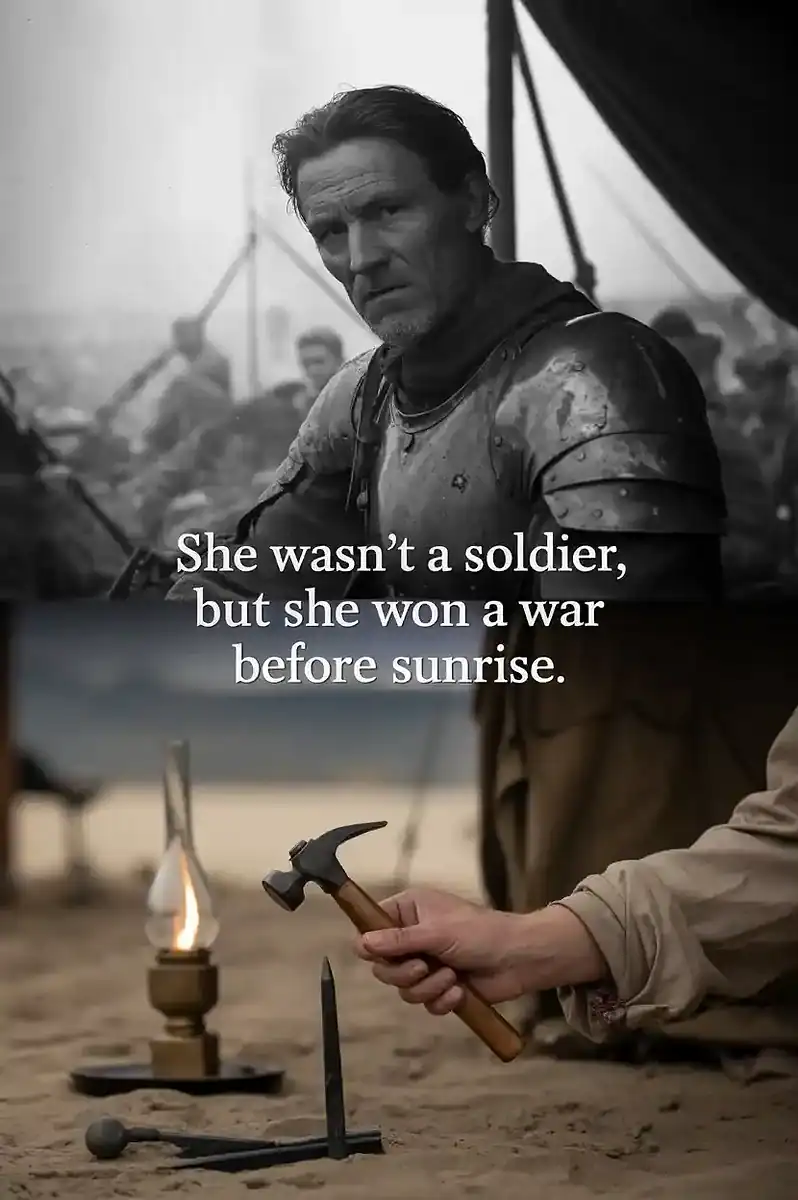
Jael waited. The air was thick with silence. In her hand was a hammer and a tent peg. This wasn’t an act of rashness; it was purpose. The Lord had already declared through Deborah that the enemy would fall by a woman’s hand. Now, the fulfillment stood in this humble place – no battlefield, no sword, no cheering crowd.
She approached quietly and drove the peg through his temple into the ground. It was brutal, final, and strangely holy. The war that had lasted twenty years ended not in a clash of armies, but in a single, decisive act of obedience inside a quiet tent.
When Barak arrived moments later, Jael stepped out and said, “Come, and I’ll show you the man you’re looking for.” And there lay Sisera – still, lifeless, conquered not by might, but by God’s design.
The Song That Shook the Heavens
Later, Deborah and Barak sang a song that still echoes through Scripture – a song of triumph, gratitude, and awe. They sang of the stars fighting from heaven, of the river sweeping enemies away, and of Jael, “blessed above women in tents.” The world would remember her not for her gender or gentleness, but for her courage to align with the Lord when the world trembled.
For Israel, that victory wasn’t just freedom from oppression – it was revival. The people turned back to God, realizing that deliverance doesn’t depend on what we wield, but on whom we trust.
The Fall of the Iron Heart
Sisera’s fall was more than military defeat – it was the collapse of pride. Iron rusts, but the word of the Lord endures. The man who trusted in chariots learned the hard way that no strength outlasts God’s sovereignty. Every human fortress – whether built of metal, money, or might – eventually meets its moment of surrender.
In Sisera’s downfall, we see our own. How often do we run from the consequences of disobedience, seeking comfort in places that can’t save us? How often do we rest in temporary shelters, thinking they’ll hide us from the justice of God?
The Tent and the Cross
Jael’s hammer wasn’t just an instrument of death – it was a symbol of divine justice. In that tent, God used what was weak to shame the strong. Years later, on another hill, God would use what seemed weak again – a wooden cross – to break the power of sin forever. Christ’s victory came not through violence, but through surrender. The nails that pierced His hands finished the greater war once and for all.
Sisera fell under judgment. Jesus fell under wrath so we wouldn’t have to. The tent became a shadow of the cross – a place where evil met its end and redemption began to sing.
A Final Word of Awe
From a prophetess under a palm tree to a warrior on a mountain, from a fleeing general to a quiet woman with a hammer – every piece of this story testifies that God reigns. His plans unfold through unexpected hands. His strength hides in humility. And when all seems lost, He moves through the ordinary to perform the extraordinary.
The chariots of men still roll, the proud still boast – but the same God still rules from heaven. And He still delivers His people, not by might, nor by power, but by His Spirit.
Call to Action: The Question That Demands an AnswerIn Acts 2:37 Peter and the Apostles were asked the question – What Shall We do? And in Acts 2:38 Peter answered, Repent, and be baptized every one of you in the name of Jesus Christ for the remission of sins, and ye shall receive the gift of the Holy Ghost. For the promise is unto you, and to your children, and to all that are afar off, even as many as the Lord our God shall call. Do you understand this? After hearing the gospel and believing, they asked what should would do. The answer hasn’t changed friend, Peter clearly gave the answer. The question for you today is, Have you receieved the Holy Spirit Since you believed? If you’re ready to take that step, or you want to learn more about what it means to be born again of water and Spirit, visit: Come, and let the Spirit make you new. |