
Faith That Quietly Moved Mountains
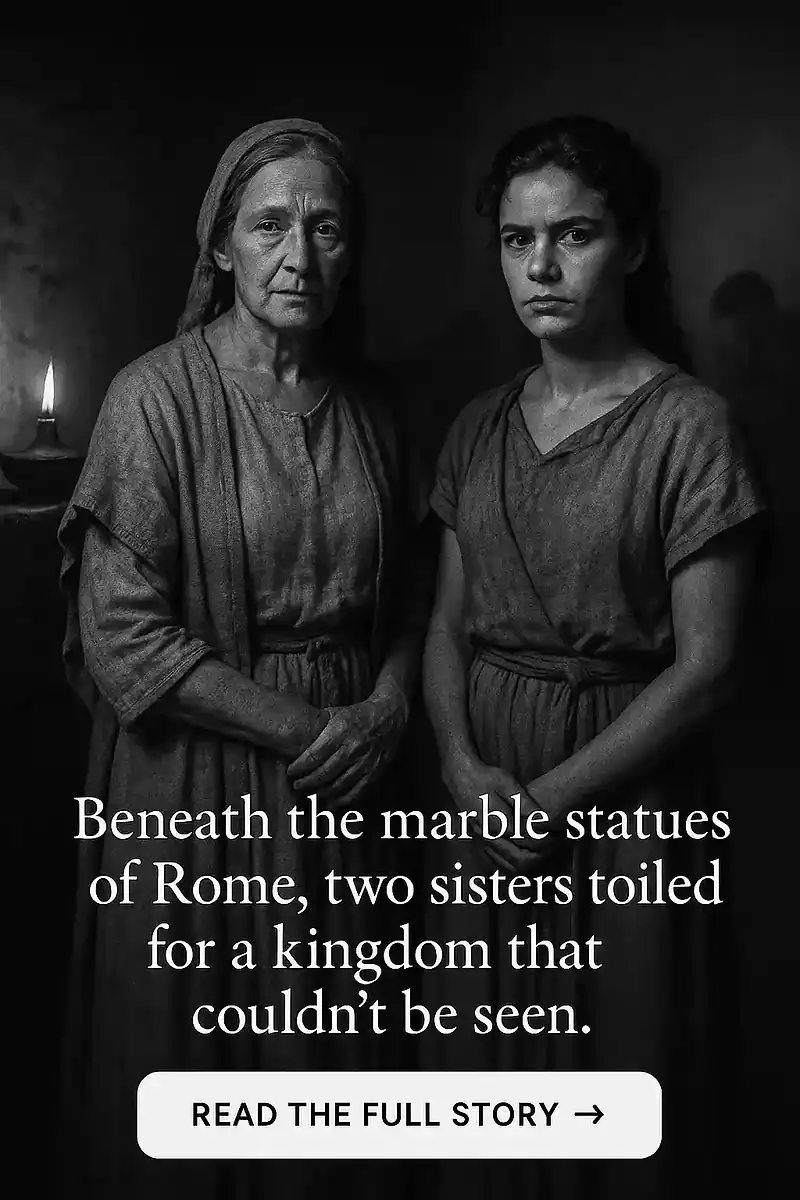
Before there were pulpits, microphones, or livestreams, there were hands – worn, calloused, unseen – working behind the scenes for the glory of God. In the bustling heart of Rome, where marble gleamed and idols lined every corner, two women were known not for their beauty or wealth but for something far rarer: their tireless devotion to the Lord. Tryphena and Tryphosa weren’t apostles, prophets, or preachers. They were sisters who simply refused to stop serving.
They’re mentioned only once in the Bible – a single greeting tucked into Paul’s letter to the Romans – yet that one verse tells a world of story. “Salute Tryphena and Tryphosa, who labour in the Lord” (Romans 16:12). No spotlight, no title, no fanfare – just a simple nod from the apostle who knew the cost of true ministry.
And somehow, that single sentence carries the weight of a lifetime of faithfulness.
The Streets of Rome and the Weight of Faith
Rome wasn’t kind to followers of Christ. The empire tolerated gods by the dozens, but the message of one risen Savior who claimed all authority was dangerous talk. The small gatherings of believers often met in the shadows – candlelight flickering on cracked plaster walls, prayers whispered as guards patrolled outside. It was in that atmosphere that the sisters labored.
Tryphena, the elder, was known for her quiet resolve. Her hands were rough from years of preparing meals for the hungry and washing the feet of travelers who’d come in secret to worship. Tryphosa, younger and fiery, was the voice that encouraged weary hearts when fear crept in. Together, they made the gospel tangible.
They didn’t just talk about faith – they cooked it, stitched it, carried it, lifted it, and shared it until there was nothing left in them but joy.
Laboring in Love
When Paul called them “laborers,” he used a word that meant toil to the point of exhaustion. They weren’t just helping occasionally – they were pouring themselves out daily. Their work wasn’t glamorous. It was the quiet, repetitive, exhausting kind of obedience that few ever see but God always notices.
Maybe they cleaned the homes where believers met. Maybe they tended to the sick or gathered food when others were imprisoned. Perhaps they risked their safety delivering letters or hosting secret meetings. Whatever their tasks, Paul saw their hearts – and that’s why their names are etched into Scripture for eternity.
Their example whispers to us across centuries: ministry isn’t measured in applause but endurance.
Wounds, Wants, and Weaknesses
Faithful workers often bear unseen scars. Tryphena and Tryphosa must have known what it was to lose friends to persecution. They likely wept at empty places where others once sat. They must have felt the weariness of carrying burdens that weren’t theirs but were carried anyway for love’s sake.
And yet, they kept going. Not because they had endless strength, but because they drew from the same well of grace Paul did – the strength of Christ within. Their names, meaning “delicate” and “dainty,” seem almost ironic, because their spirits were anything but fragile. In God’s kingdom, the delicate become durable, and the overlooked become the backbone of the mission.
The Silent Conflict
They lived in a city built on pride, violence, and spectacle. The Roman Empire celebrated power; Christ called for humility. Rome demanded loyalty to Caesar; the sisters pledged allegiance to the Lord. Every prayer they whispered was an act of rebellion against a system that worshiped itself.
Maybe there were days they questioned whether their work mattered. Maybe their labor felt invisible – the kind no one writes songs about. But every loaf baked, every cloak sewn, every tear wiped away was a testimony of the living Christ. Their quiet persistence became a sermon Rome could not silence.
When Faith Meets the Impossible
There must have been moments when fear knocked louder than faith. Perhaps the authorities grew suspicious of their gatherings. Perhaps friends urged them to stop before it was too late. But like Paul, they understood that the Lord’s work wasn’t optional; it was life itself.
So, they labored still. And somewhere in that hidden faithfulness, miracles happened – not the kind that make headlines, but the kind that keep the gospel alive in a hostile world.
Because of people like Tryphena and Tryphosa, the early church survived. Their strength held the seams together when the world tried to tear them apart.
After the Storm
When persecution finally reached its height, and believers were scattered, stories of the sisters’ steadfastness traveled farther than they ever did. Some said they kept a table open even when food was scarce. Others said they sang hymns as soldiers searched the streets. They had learned what Paul preached – that “in due season we shall reap, if we faint not.”
And they didn’t faint.
Their legacy wasn’t built in a moment but in countless small choices to keep loving, keep serving, and keep trusting. When the letters were burned and the temples fell, their labor in the Lord still stood.
Reflection: Ordinary Women, Eternal Impact
Sometimes we imagine God’s heroes as loud, visible, and mighty. But often, they’re hidden. They’re the women praying in kitchens, the men volunteering quietly, the saints no one notices until heaven opens the books.
Tryphena and Tryphosa remind us that the kingdom of God runs on unseen service. Their story is proof that the smallest act of obedience can echo through generations.
They didn’t preach to crowds – they strengthened the hands that did. They didn’t lead revivals – they prepared the space for revival to happen. And that’s what Paul honored.
The Connection to Christ
In their labor, we see the reflection of Jesus Himself – the One who came not to be served, but to serve. He knelt to wash feet, carried burdens not His own, and finished His work though it cost everything. Tryphena and Tryphosa lived that same pattern of love: invisible but eternal.
Their story ends where all true service does – in the joy of hearing, “Well done, good and faithful servant.”
And somewhere in eternity, two sisters still smile, their hands finally at rest, their labor remembered forever.