The King Who Couldn’t Sleep
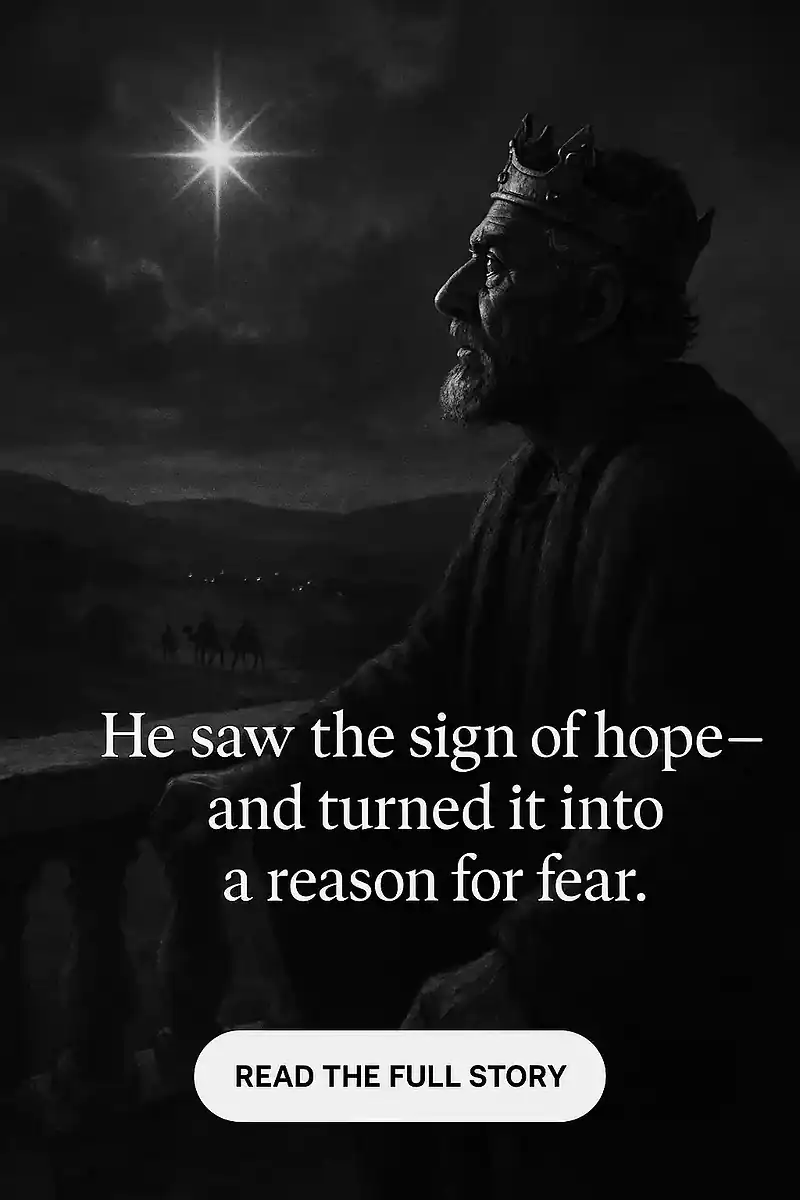
Jerusalem glittered with marble palaces, echoing halls, and torches burning through the night. Yet in the royal chambers of Herod the Great, there was no peace. He had built cities that bore his name, theaters that rivaled Rome, and fortresses carved into the desert rock. His ambition touched everything – except rest. Power had made him king, but fear kept him awake.
Rumors swirled through the streets. Magi from the East had arrived, asking a question that sent a chill down Herod’s spine: “Where is he that is born King of the Jews?” For all his soldiers, all his wealth, all his bloodshed, nothing frightened Herod more than that word – born. Not crowned, not appointed, but born. This wasn’t a rival he could bribe or banish. This was prophecy walking toward fulfillment.
Palaces Built on Fear
Herod had clawed his way to power under the shadow of Rome. He’d been named “King of the Jews” by Caesar himself, a title that sounded holy but was soaked in politics.
He ruled with brilliance and brutality – a master builder with blood on his hands. He rebuilt the temple, not for worship, but for legacy. He was half-Edomite, half-Jew, and wholly insecure. The people didn’t love him; they feared him.
When the Magi came, following a strange star across the desert, Herod pretended to smile. He called for the priests and scribes to search the Scriptures. They read the words of Micah: “And thou Bethlehem, in the land of Judah, art not the least among the princes of Judah: for out of thee shall come a Governor, that shall rule my people Israel.”
Herod dismissed them, his mind already turning toward calculation. If prophecy pointed to Bethlehem, then Bethlehem must be watched.
The Lie Behind the Smile
Herod welcomed the Magi with feigned reverence. “Go and search diligently for the young child,” he said, “and when ye have found him, bring me word again, that I may come and worship him also.” The mask of piety hid a heart of poison. He didn’t want to worship; he wanted to wipe the promise off the map.
But the Magi, warned by God in a dream, did not return to Herod. They slipped out by another road, carrying their worship home. When Herod discovered their silence, something inside him snapped. Rage became his counselor. If he couldn’t find the child, he would destroy them all.
The Cry of Bethlehem
That night, Bethlehem’s peace was shattered by soldiers’ boots and mothers’ screams. Herod’s command was unthinkable: every male child, two years old and under, was to be slain.
The prophecy of Jeremiah came alive in horror – “A voice was heard in Ramah, lamentation, and weeping, and great mourning, Rachel weeping for her children.” The streets of Bethlehem became a cradle of blood.
While soldiers carried out his orders, Herod sat in silence, convinced he had secured his throne. But in truth, he had written his own judgment. For every innocent life taken, heaven took notice. And the true King – the one he feared – was already gone, hidden safely in Egypt under the watchful hand of God.
The Builder of Tombs
Herod built cities, fortresses, and palaces to outlast his mortality. He built Masada’s heights and Herodium’s grandeur. Yet even as his monuments rose, his body and mind decayed. Paranoia became his companion. He murdered his own sons, fearing they would take his crown. He executed his beloved wife Mariamne. He trusted no one, not even himself.
Near the end, Herod was a shadow of his former might – diseased, delirious, and haunted by ghosts. The same man who tried to kill the promised child was now trapped in a body that refused mercy. History remembers his architecture, but heaven remembers his choices.
The Child He Couldn’t Stop
Far from his palaces, in the stillness of Egypt, a young family lived under divine protection. Joseph had obeyed the angel’s warning: “Arise, and take the young child and his mother, and flee into Egypt.” There, among foreign voices and dusty roads, the Son of God learned to walk. The King Herod feared most grew up not in power but in humility.
When the angel spoke again, Herod was gone. His body lay in a fortress tomb, surrounded by the very stones he had set up to prove his greatness. But greatness isn’t measured in marble. It’s measured in mercy – and Herod had none.
The Legacy of Two Kings
Herod’s kingdom was made of walls; Christ’s was made of hearts. Herod ruled by fear; Christ reigns by love. Herod took life to protect his crown; Christ gave His life to give us a crown. Herod’s name survives in history books; Christ’s name is written on the hearts of believers across every generation.
It’s striking how power can deceive. Herod thought he was untouchable, yet a baby wrapped in swaddling clothes shook his empire. The same God who protected Jesus in infancy now guards every believer who trusts Him. No ruler, no system, no darkness can overthrow what God has promised.
When Fear Meets Faith
Herod’s story isn’t just ancient history – it’s a mirror. Fear of losing control can drive anyone to madness if left unchecked. We build our own “Herodian fortresses” when we cling to power, status, or pride instead of surrendering to God’s rule. But the manger reminds us: God’s strength shows up where the world least expects it.
Every generation faces a choice between Herod’s way and heaven’s way. One leads to restless striving and paranoia; the other leads to peace that passes understanding. Christ’s throne isn’t threatened by our weakness. In fact, His kingdom grows through surrendered hearts, not defended crowns.
The Kingdom That Cannot Fall
The child Herod tried to destroy became the Savior who would die for those very soldiers who obeyed his order. The man who built temples to impress men tried to silence the living Temple of God Himself. And yet, centuries later, only one throne stands.
The same Bethlehem that once echoed with grief became the birthplace of eternal joy. The same Jesus that Herod sought to kill now rules forever – King of kings, Lord of lords. Herod’s palaces crumbled, his monuments eroded, but Christ’s kingdom is still expanding, one heart at a time.
The Final Word
So what do we learn from Herod the Great? That greatness without God rots into fear. That building without faith ends in ruin. That no matter how powerful the opposition, God’s promise stands unshaken. The manger was the beginning of the end for every false kingdom, including Herod’s.
And somewhere, beyond the ruins of his empire, the echo of angelic words still rings true: “Glory to God in the highest, and on earth peace, goodwill toward men.”
Even the mightiest builders fall, but the Child he feared still reigns forever.
MANIFESTO: WHEN EARTHLY THRONES TREMBLE BEFORE HEAVEN’S CHILD
Power without God always ends in panic. Herod sat on a golden throne but couldn’t sleep at night. He built fortresses high enough to touch the clouds, yet one star in the sky made him tremble. The same man who could command armies fell apart at the whisper of a baby’s birth. That’s what happens when pride meets prophecy. You can silence prophets, you can build walls, you can write your own laws – but you can’t stop God’s plan.
The story of Herod isn’t just about a cruel king; it’s a warning to every heart that clings to control. When fear rules, compassion dies. When power replaces prayer, judgment isn’t far behind. Herod tried to secure his throne through blood, yet lost everything that mattered. God’s kingdom, on the other hand, began in a manger – with no guards, no gold, no glory – just peace wrapped in humility. That’s how Heaven wins.
We live in a world that still bows to its own Herods: ambition, ego, and fear of losing control. But there’s another way. Christ’s kingdom doesn’t need to crush others to stand tall. It grows quietly in surrendered hearts, outlasting every empire built on pride. Herod’s marble cracked, his legacy faded, his name became a cautionary tale. But the name he tried to erase – Jesus – became the hope of nations.
Let every believer remember this: the enemy still fears the sound of a promise being born. Every time faith rises where fear once ruled, hell shakes again. You don’t need a crown to have authority; you need surrender. You don’t need to build monuments to prove your worth; you need to build altars. Herod built tombs. Jesus built life.
So stand firm. The kingdoms of this world may roar, but they always crumble. The King that Herod feared still reigns – and He reigns forever.