

Celebrate the joy of Jesus’ birth with “The Savior’s Song of Joy,” a powerful worship song inspired by Luke 2:10 and Psalm 98, rejoicing in the Savior who brings salvation to the world. This video explores the biblical story of Christmas, incorporating Scripture into a dramatic and heartfelt song of praise.
Experience the shepherds’ awe, the angelic proclamation, and the joyful response of creation as they glorify the newborn King. Perfect for worship, Bible study, or personal reflection, this song captures the true meaning of Christmas in a way that inspires faith and celebration.
Make Sure You Watch My Video: I would love for you to subscribe to my YouTube channel as well…
Song Lyrics: The Savior’s Song of Joy
Verse 1:
A light has dawned where shadows fall,
Good tidings echo, a Savior for all.
Fear not, O world, let joy increase,
The Prince of Heaven has brought us peace.
Verse 2:
The angel’s song fills the shepherd’s ears,
A melody of hope through the years.
“Rejoice, O earth, the King is near,
Salvation’s joy for all to hear!”
Chorus:
Sing, O heavens, and let the earth proclaim,
The Savior has come; we exalt His name!
Joy unending, let the nations sing,
The Savior’s song of joy we bring!
Verse 3:
The hills arise and clap their hands,
The seas resound, all life commands.
Trumpets call with voices raised,
Creation trembles with songs of praise.
Verse 4:
The nations gather, a mighty throng,
Before the Lamb, they lift their song.
From every tongue, a joyful word,
“Salvation belongs to Christ, the Lord!”
Chorus:
Sing, O heavens, and let the earth proclaim,
The Savior has come; we exalt His name!
Joy unending, let the nations sing,
The Savior’s song of joy we bring!
Verse 5:
A child is born, a gift of love,
Heaven’s glory sent from above.
The joy of the Lord fills hearts anew,
A promise fulfilled, both faithful and true.
Verse 6:
Let every heart prepare Him room,
For joy has banished death and gloom.
The King of kings, the Lord of all,
Has come to redeem from Adam’s fall.
Chorus:
Sing, O heavens, and let the earth proclaim,
The Savior has come; we exalt His name!
Joy unending, let the nations sing,
The Savior’s song of joy we bring!
Outro:
From Bethlehem’s night to eternity’s dawn,
The Savior’s song of joy lives on.
O sing, O sing, let the anthem rise,
For Christ the King reigns in the skies.
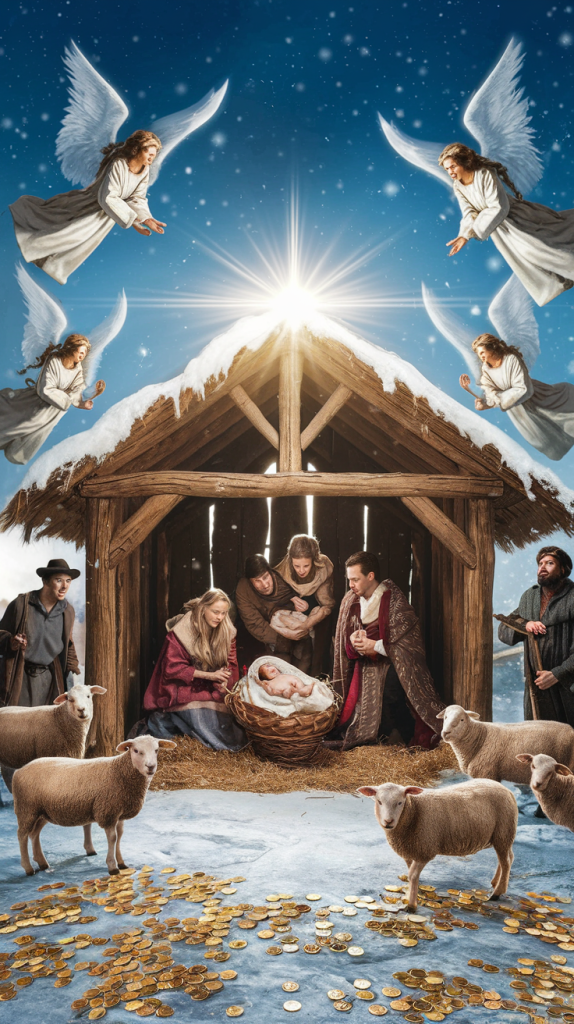
The Story Behind “The Savior’s Song of Joy”
“The Savior’s Song of Joy” is a powerful anthem that celebrates the arrival of Jesus Christ, the fulfillment of centuries of prophecy, and the boundless joy He brings to the world. Each verse and chorus reflects profound biblical truths, echoing the Scriptures and recounting the extraordinary story of salvation. Let us journey through the song and uncover its meaning, marveling at how Christ fulfilled God’s promises.
Introduction: The Song’s Central Theme
At its heart, “The Savior’s Song of Joy” captures the essence of Christmas—God stepping into humanity through Jesus, His only Son. It draws heavily from Luke 2:10-11, where the angel announced good news of “great joy” to the shepherds, and Psalm 98, where all creation is called to “make a joyful noise” before the Lord. This song connects these moments with a narrative that rejoices in Christ’s birth and reflects on its impact for all people.
Verse 1: Light Breaking into Darkness
“A light has dawned where shadows fall,
Good tidings echo, a Savior for all.”
This verse recalls Isaiah 9:2, where the prophet declared, “The people that walked in darkness have seen a great light.” Jesus’ birth marked the beginning of God’s plan to bring light into a dark and sinful world. His arrival fulfilled the ancient promise that salvation would come, not only to Israel but to all nations.
The phrase “a Savior for all” reminds us of John 3:16: “For God so loved the world, that He gave His only begotten Son.” This is a declaration of inclusivity, affirming that Christ’s mission was for every person, regardless of background or status.
Verse 2: The Angel’s Proclamation
“The angel’s song fills the shepherd’s ears,
A melody of hope through the years.”
Here, we reflect on Luke 2:8-14, where the angelic host announced Christ’s birth to shepherds—humble, ordinary men. The shepherds’ lowly status foreshadows Christ’s ministry, where He often uplifted the marginalized, saying, “Blessed are the poor in spirit” (Matthew 5:3). The angels’ declaration, “Glory to God in the highest, and on earth peace,” heralded a new era of hope and reconciliation.
Chorus: Universal Joy and Worship
“Sing, O heavens, and let the earth proclaim,
The Savior has come; we exalt His name!”
The chorus draws inspiration from Psalm 98:4-6, which calls for all creation to rejoice before the Lord. This imagery evokes Isaiah 55:12, where the mountains and hills “break forth into singing” and the trees “clap their hands.” The coming of Christ is not just a human celebration—it is a cosmic event that stirs the heavens and the earth.
The Savior’s arrival is not a quiet event; it is the fulfillment of God’s plan foretold since Genesis 3:15, where God promised the serpent’s defeat through the seed of the woman. This moment is the culmination of that promise.
Verse 3: Creation Joins the Song
“The hills arise and clap their hands,
The seas resound, all life commands.”
This verse vividly describes the joy of creation, echoing Psalm 98 and Isaiah 55. It reflects Romans 8:19-22, where Paul describes creation longing for redemption. Christ’s birth is a foretaste of the restoration that all creation eagerly awaits—a time when the curse of sin will be lifted, and everything will be made new.
Verse 4: The Nations Rejoice
“The nations gather, a mighty throng,
Before the Lamb, they lift their song.”
This verse highlights the universal nature of Christ’s mission, fulfilling prophecies like Isaiah 49:6: “I will also give thee for a light to the Gentiles.” Jesus’ birth wasn’t just for Israel; it was for all nations and peoples. Revelation 7:9-10 envisions this truth fulfilled, with people from every tribe and tongue worshiping the Lamb.
The nations’ joy also mirrors the wise men’s journey (Matthew 2:1-12). Their gifts and worship signified the recognition of Christ’s kingship beyond Israel.
Chorus: The Savior’s Joy Amplified
The repeated chorus amplifies the song’s central message: the arrival of the Savior is cause for boundless joy. The inclusion of all creation and all nations underscores the completeness of Christ’s mission and the magnitude of His impact.
Verse 5: The Gift of Love
“A child is born, a gift of love,
Heaven’s glory sent from above.”
This verse reflects Isaiah 9:6: “For unto us a child is born, unto us a son is given.” Jesus’ birth was the ultimate gift—Heaven’s answer to humanity’s deepest need. John 1:14 reminds us that “the Word was made flesh, and dwelt among us,” showing God’s willingness to enter our brokenness to redeem us.
Verse 6: Hearts Prepare Him Room
“Let every heart prepare Him room,
For joy has banished death and gloom.”
This verse echoes the carol “Joy to the World,” inspired by Psalm 98, and brings to mind Revelation 21:4: “God shall wipe away all tears… there shall be no more death.” It reminds us that Jesus’ birth was not the end of the story but the beginning of the ultimate victory over sin and death.
The call to “prepare Him room” reflects John the Baptist’s message in Luke 3:4-6, urging repentance and readiness for the coming of the Lord.
Outro: The Eternal Song
“From Bethlehem’s night to eternity’s dawn,
The Savior’s song of joy lives on.”
The outro beautifully ties the narrative together, showing that the joy of Christ’s birth is eternal. It points forward to the day when Jesus will reign forever, fulfilling Revelation 11:15: “The kingdoms of this world are become the kingdoms of our Lord.”
The Fulfillment of Prophecy
Each verse of “The Savior’s Song of Joy” illuminates how Christ fulfilled prophecy, from His birth in Bethlehem (Micah 5:2) to His mission for all nations (Isaiah 49:6). The song reminds us that Jesus is the ultimate expression of God’s love and faithfulness, bringing joy, salvation, and hope to a broken world.
This story is one of celebration—of a God who keeps His promises, a Savior who brings light into darkness, and a creation that rejoices in redemption. “The Savior’s Song of Joy” invites us to join this eternal chorus, lifting our voices in gratitude and praise for the One who has come to save us all.
How Does “Humble Hearts Heard the Heavens Sing” Relate to “The Savior’s Song of Joy”?
“Humble Hearts Heard the Heavens Sing” beautifully ties to “The Savior’s Song of Joy” as both celebrate divine connection through purity of spirit. When humble hearts hear heavenly melodies, they resonate with the sacred joy offered by the Savior, uniting earth and heaven in a harmonious symphony of grace and hope.
FAQ: 10 Interesting Facts About the Story of “The Savior’s Song of Joy”
- What is the significance of Bethlehem in Jesus’ birth?
Bethlehem was prophesied as the birthplace of the Messiah in Micah 5:2. Known as the City of David, it symbolized Jesus’ royal lineage. Despite its small size, Bethlehem was chosen to host the arrival of the Savior, showing God’s preference for humble beginnings. - Why did the angels announce Jesus’ birth to shepherds?
The angels first appeared to shepherds (Luke 2:8-11), a group often overlooked in society. This choice highlights that Jesus came for all people, including the humble and marginalized. It also aligns with Jesus’ later teachings, such as “Blessed are the poor in spirit” (Matthew 5:3). - How does the song reflect Old Testament prophecies?
The song incorporates multiple prophecies, such as Isaiah 9:6-7 (the coming child who will rule) and Psalm 98 (creation rejoicing before the Lord). These prophecies emphasize that Jesus’ birth was not random but a fulfillment of God’s eternal plan. - What role does light play in the story?
Isaiah 9:2 proclaims, “The people that walked in darkness have seen a great light.” Jesus’ birth is symbolized as the dawn of salvation, bringing hope to a world in spiritual darkness. The “light” theme also connects to John 1:9, where Jesus is described as the “true Light.” - Why is joy central to the story?
Luke 2:10-11 declares “good tidings of great joy,” emphasizing that Jesus’ birth brings ultimate happiness. This joy stems from the salvation He offers and is reflected throughout Scripture, such as in John 15:11: “That your joy may be full.” - How does creation respond to Jesus’ birth?
Psalm 98 and Isaiah 55:12 describe creation rejoicing with singing, clapping trees, and resounding seas. This imagery symbolizes how Jesus’ arrival affects not just humanity but all creation, foreshadowing the restoration promised in Romans 8:19-22. - What is the connection to the wise men and their gifts?
Though not directly referenced in this story, the wise men (Matthew 2:1-12) symbolize the nations’ acknowledgment of Jesus. Their gifts of gold, frankincense, and myrrh honor His kingship, divinity, and sacrifice, reflecting the universal scope of His mission. - How does Jesus’ birth fulfill the promise of Genesis 3:15?
In Genesis 3:15, God promised that the seed of the woman would crush the serpent’s head. Jesus’ birth in Bethlehem marks the fulfillment of this promise, as He came to defeat sin and death, fulfilling God’s redemptive plan. - What does the phrase “Prepare Him room” mean?
This phrase echoes the call of John the Baptist in Luke 3:4-6, urging people to make their hearts ready for the Lord. It also invites reflection on whether we, today, have made space in our lives for Christ’s rule and presence. - Why is Jesus called the Savior of the world?
Jesus’ mission extends beyond Israel, fulfilling Isaiah 49:6: “I will also give thee for a light to the Gentiles.” His birth, life, death, and resurrection bring salvation to all nations, as affirmed in Revelation 7:9-10, where people from every tribe worship the Lamb.
Call to Action: The Question That Demands an AnswerIn Acts 2:37 Peter and the Apostles were asked the question – What Shall We do? And in Acts 2:38 Peter answered, Repent, and be baptized every one of you in the name of Jesus Christ for the remission of sins, and ye shall receive the gift of the Holy Ghost. For the promise is unto you, and to your children, and to all that are afar off, even as many as the Lord our God shall call. Do you understand this? After hearing the gospel and believing, they asked what should would do. The answer hasn’t changed friend, Peter clearly gave the answer. The question for you today is, Have you receieved the Holy Spirit Since you believed? If you’re ready to take that step, or you want to learn more about what it means to be born again of water and Spirit, visit: Come, and let the Spirit make you new. |