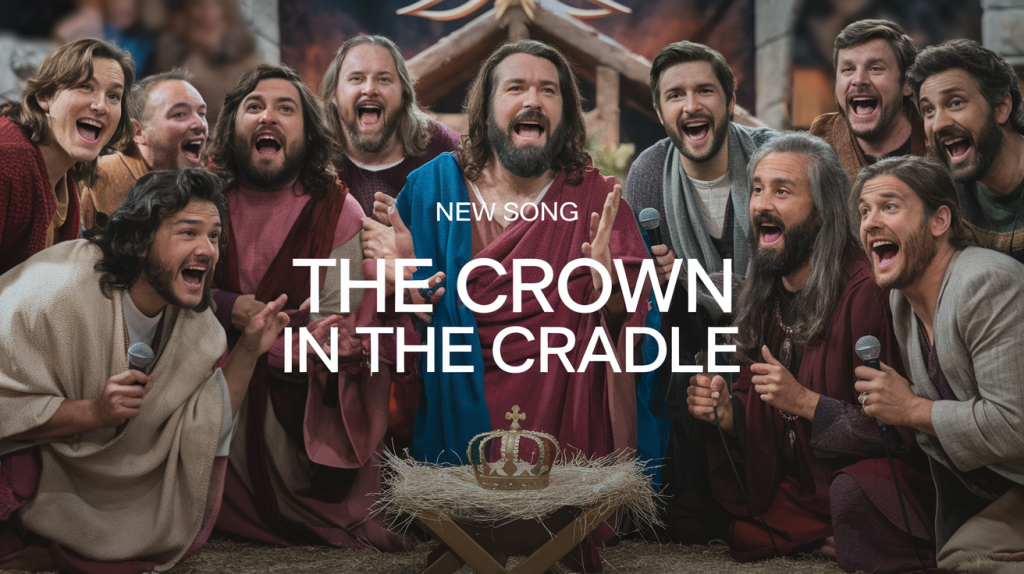
The song The Crown in the Cradle tells the incredible story of Jesus’ birth from the perspective of Scripture. It focuses on the arrival of the King of Kings, a moment both humble and majestic, and explores its significance in the context of biblical prophecy and fulfillment.
Make Sure You Watch My Video: I would love for you to subscribe to my YouTube channel as well…
How Does “Born in Bethlehem” Relate to “The Crown in the Cradle” as a Christmas Message?
“The Christmas message is beautifully portrayed through ‘born in bethlehem,’ signifying humility and divine purpose. It connects seamlessly with ‘The Crown in the Cradle,’ symbolizing how the infant Jesus carried the destiny of kingship, merging the simplicity of His birthplace with the profound glory of His mission to redeem the world.
Song Lyrics
Verse 1:
Across the horizon, a star brightly burned,
A sign to the wise, a promise affirmed.
The King of all ages, His reign has begun,
In a cradle so humble lies God’s own Son.
Verse 2:
The wise men departed, their treasures in hand,
Through deserts and valleys, they followed His plan.
To Bethlehem’s streets, the prophecy told,
A King for the nations, more precious than gold.
Chorus:
The Crown in the Cradle, the Savior divine,
Heaven rejoices, the stars give a sign.
Bow down in worship, the King has been born,
The ruler eternal, in this glorious morn.
Verse 3:
Herod, in anger, sought power and pride,
But no force of darkness could ever divide.
The throne of this King is eternal and sure,
His light overcomes, His kingdom endures.
Verse 4:
With gifts they adored Him—gold for the King,
Frankincense rising, their praises to bring.
Myrrh for the Savior, who’d one day redeem,
The cradle now crowned, fulfilling the dream.
Chorus:
The Crown in the Cradle, the Savior divine,
Heaven rejoices, the stars give a sign.
Bow down in worship, the King has been born,
The ruler eternal, in this glorious morn.
Verse 5:
From east to the west, His name will resound,
The earth bows before Him, the heavens astound.
No palace of splendor, yet angels proclaim,
The King everlasting, all glory to His name.
Verse 6:
The star in the heavens, it shines ever bright,
A beacon of hope in the stillness of night.
All nations will gather, His praises to sing,
For there in the cradle lies Heaven’s true King.
Outro:
The Crown in the Cradle, the story is clear,
The King has arrived, salvation is near.
In Bethlehem’s silence, a song has begun,
The cradle now crowned—our Savior, God’s Son.
The Meaning of “The Crown in the Cradle”

Introduction: The Majesty of a Humble Beginning
Each verse reveals a layer of this miraculous event, while the chorus exclaims the triumph of Christ’s arrival as the Savior of the world. Let’s explore its rich meaning verse by verse, from a Christian perspective, with excitement and reverence.
Verse 1: A Star Signals His Coming
“Across the horizon, a star brightly burned,
A sign to the wise, a promise affirmed.
The King of all ages, His reign has begun,
In a cradle so humble lies God’s own Son.”
This verse sets the stage with the appearance of the star, described in Matthew 2:1-2. The star guided wise men from the East to find Jesus, fulfilling Old Testament prophecies about the Messiah’s arrival being marked by a sign (Numbers 24:17: “A star will come out of Jacob”). This was not just any star but a divine signal proclaiming the King’s birth.
What makes this moment extraordinary is the juxtaposition of grandeur and humility. The King of all ages—God Himself—did not arrive in royal splendor but in the humblest of settings: a manger. This echoes themes throughout Scripture, where God often works through the humble and the lowly to accomplish His great purposes (e.g., David as a shepherd boy).
Verse 2: The Journey of Faith
“The wise men departed, their treasures in hand,
Through deserts and valleys, they followed His plan.
To Bethlehem’s streets, the prophecy told,
A King for the nations, more precious than gold.”
This verse emphasizes the journey of the wise men, often referred to as the Magi. These men traveled a great distance, demonstrating faith and determination. Their journey fulfilled prophecies like Isaiah 60:3: “Nations will come to your light, and kings to the brightness of your dawn.”
Their path to Bethlehem mirrored the journey of faith all believers take: trusting in God’s guidance even when the way seems unclear. It also reflects the universal reach of Christ’s kingship, showing that He came not just for Israel but for the nations, fulfilling God’s promise to Abraham in Genesis 22:18: “Through your offspring all nations on earth will be blessed.”
Chorus: The Triumphant Declaration
“The Crown in the Cradle, the Savior divine,
Heaven rejoices, the stars give a sign.
Bow down in worship, the King has been born,
The ruler eternal, in this glorious morn.”
The chorus bursts forth in triumphant praise, capturing the awe of heaven and earth at Christ’s birth. This moment reflects the angelic proclamation in Luke 2:14: “Glory to God in the highest, and on earth peace to men on whom His favor rests.” The image of a crown in a cradle signifies that Jesus, even as a newborn, was King—a truth that defies earthly expectations of power and authority.
This declaration of worship is a call to all believers to bow before Him, echoing Philippians 2:10-11: “At the name of Jesus every knee should bow… and every tongue confess that Jesus Christ is Lord.”
Verse 3: Herod’s Fury and God’s Sovereignty
“Herod, in anger, sought power and pride,
But no force of darkness could ever divide.
The throne of this King is eternal and sure,
His light overcomes, His kingdom endures.”
This verse recounts King Herod’s fear and rage, as described in Matthew 2:3-8. Herod’s attempt to destroy the Christ-child highlights the spiritual battle at play. Yet, the verse proclaims that no earthly power or darkness can thwart God’s eternal plan. This parallels other biblical narratives where God’s plans prevail despite opposition, such as Pharaoh’s resistance to Moses in Exodus.
Jesus’ eternal kingship fulfills 2 Samuel 7:16: “Your house and your kingdom will endure forever before me; your throne will be established forever.”
Verse 4: Worship and Treasures
“With gifts they adored Him—gold for the King,
Frankincense rising, their praises to bring.
Myrrh for the Savior, who’d one day redeem,
The cradle now crowned, fulfilling the dream.”
The wise men’s gifts (Matthew 2:11) symbolize aspects of Jesus’ identity and mission:
- Gold: A gift for a king, signifying His authority.
- Frankincense: Used in worship, signifying His divinity.
- Myrrh: A burial spice, foreshadowing His sacrificial death.
These gifts underscore Jesus’ dual role as King and Savior. The “dream fulfilled” refers to the hope of redemption that Jesus embodied, promised as far back as Genesis 3:15.
Chorus: Revisited with Greater Awe
The repetition of the chorus reminds us of the overarching truth: Jesus is both the humble child in a manger and the King of glory. The star, the worship, and the gifts converge to affirm His identity as the Savior of the world.
Verse 5: The Universal King
“From east to the west, His name will resound,
The earth bows before Him, the heavens astound.
No palace of splendor, yet angels proclaim,
The King everlasting, all glory to His name.”
This verse emphasizes Jesus’ universal kingship. Psalm 72:8-11 foreshadows this: “May all kings bow down to Him and all nations serve Him.” The absence of earthly grandeur contrasts with His heavenly authority, reflecting themes from Isaiah 53:2-3 about the Messiah’s humble appearance.
Verse 6: A Guiding Light for All
“The star in the heavens, it shines ever bright,
A beacon of hope in the stillness of night.
All nations will gather, His praises to sing,
For there in the cradle lies Heaven’s true King.”
The star serves as a symbol of hope and guidance, much like the pillar of fire in Exodus 13:21, which led the Israelites through the wilderness. This verse also points to the ultimate gathering of nations in Revelation 7:9: “After this I looked, and there before me was a great multitude… from every nation, tribe, people, and language.”
Outro: The Fulfillment of Hope
“The Crown in the Cradle, the story is clear,
The King has arrived, salvation is near.
In Bethlehem’s silence, a song has begun,
The cradle now crowned—our Savior, God’s Son.”
The outro reflects on the fulfillment of hope and prophecy, celebrating that the Savior has come. Jesus, born in Bethlehem, fulfills the promise of salvation (Luke 2:30-32) and the eternal kingship of David’s line (Isaiah 9:7). Bethlehem, the humble city, becomes the birthplace of eternal glory.
This song beautifully weaves Scripture and prophecy into a triumphant anthem that exclaims, with excitement, the wonder of Jesus’ birth. It reminds us that in Christ, God has fulfilled every promise, bringing hope, salvation, and eternal reign to a world longing for redemption.

FAQ: 10 Interesting Facts About “The Crown in the Cradle” Story
1. Why was Jesus born in Bethlehem?
- Fulfilled Prophecy: Micah 5:2 prophesied that the Messiah would be born in Bethlehem: “But you, Bethlehem Ephrathah, though you are small among the clans of Judah, out of you will come for me one who will be ruler over Israel.”
- Related Scriptures: Bethlehem was the city of David, linking Jesus to the Davidic covenant in 2 Samuel 7:16, which promised an eternal kingdom through David’s lineage.
2. What is the significance of the star?
- Fulfilled Prophecy: Numbers 24:17 predicted a star rising from Jacob, symbolizing the coming of a ruler. The star seen by the Magi confirmed this prophecy.
- Related Scriptures: Matthew 2:2 mentions the star as a divine sign guiding the wise men to Jesus. The star also echoes the “pillar of fire” in Exodus 13:21, symbolizing God’s guidance.
3. Who were the wise men, and why did they visit?
- Fulfilled Prophecy: Isaiah 60:3 foreshadowed nations and kings bringing gifts to honor the Messiah: “Nations will come to your light, and kings to the brightness of your dawn.”
- Related Scriptures: Matthew 2:1-12 describes the wise men bringing gold, frankincense, and myrrh, symbolizing Jesus’ kingship, divinity, and sacrificial death.
4. Why was Herod troubled by Jesus’ birth?
- Prophetic Conflict: Herod’s fear of losing power mirrors Pharaoh’s actions in Exodus 1, when he sought to destroy Israel’s deliverer.
- Related Scriptures: Matthew 2:3-16 shows Herod’s plot to kill Jesus, fulfilling Jeremiah 31:15: “A voice is heard in Ramah, mourning and great weeping, Rachel weeping for her children.”
5. What do the gifts of the Magi symbolize?
- Gold: Represents Jesus’ kingship.
- Frankincense: Symbolizes His divinity and priestly role (Exodus 30:34).
- Myrrh: Foreshadows His death and burial (John 19:39-40).
- Related Scriptures: Isaiah 60:6 also prophesies gifts being brought to the Messiah.
6. How does Jesus’ birth connect to the Davidic covenant?
- Fulfilled Prophecy: Jesus’ birth in Bethlehem ties Him to King David, fulfilling 2 Samuel 7:12-16, which promises a ruler from David’s lineage.
- Related Scriptures: Luke 2:4 emphasizes Joseph’s lineage, linking Jesus to David through His earthly family.
7. Why were the shepherds chosen to hear the angel’s announcement?
- Symbolic Significance: Shepherds represent humility and foreshadow Jesus’ role as the Good Shepherd (John 10:11).
- Related Scriptures: Luke 2:8-20 describes the angelic message of peace and joy, echoing Isaiah 9:6-7: “For to us a child is born… and He will be called Prince of Peace.”
8. Why is Bethlehem called “small among the clans of Judah”?
- Fulfilled Prophecy: Micah 5:2 highlights Bethlehem’s insignificance in worldly terms, showcasing God’s preference for using the humble to accomplish His plans.
- Related Scriptures: This theme is repeated in 1 Samuel 16, where God chooses David, the youngest and least significant of Jesse’s sons.
9. What is the significance of the angelic announcement?
- Fulfilled Prophecy: The angels proclaim peace to those on whom God’s favor rests (Luke 2:14), fulfilling Isaiah 52:7: “How beautiful… are the feet of those who bring good news.”
- Related Scriptures: The announcement also reflects God’s covenant with Abraham (Genesis 22:18), where all nations would be blessed through his offspring.
10. How does Jesus’ birth reflect God’s plan for all nations?
- Fulfilled Prophecy: The wise men’s journey and worship fulfill Psalm 72:10-11: “May the kings of Tarshish and of distant shores bring tribute to Him… may all kings bow down to Him.”
- Related Scriptures: Revelation 7:9 looks forward to the ultimate gathering of people from every nation and tribe worshiping Jesus, tying the birth story to His eternal reign.
These fascinating facts showcase how Jesus’ birth fulfilled ancient prophecies, connected to broader biblical themes, and set the stage for His mission as the Savior of the world.
Call to Action: The Question That Demands an AnswerIn Acts 2:37 Peter and the Apostles were asked the question – What Shall We do? And in Acts 2:38 Peter answered, Repent, and be baptized every one of you in the name of Jesus Christ for the remission of sins, and ye shall receive the gift of the Holy Ghost. For the promise is unto you, and to your children, and to all that are afar off, even as many as the Lord our God shall call. Do you understand this? After hearing the gospel and believing, they asked what should would do. The answer hasn’t changed friend, Peter clearly gave the answer. The question for you today is, Have you receieved the Holy Spirit Since you believed? If you’re ready to take that step, or you want to learn more about what it means to be born again of water and Spirit, visit: Come, and let the Spirit make you new. |