
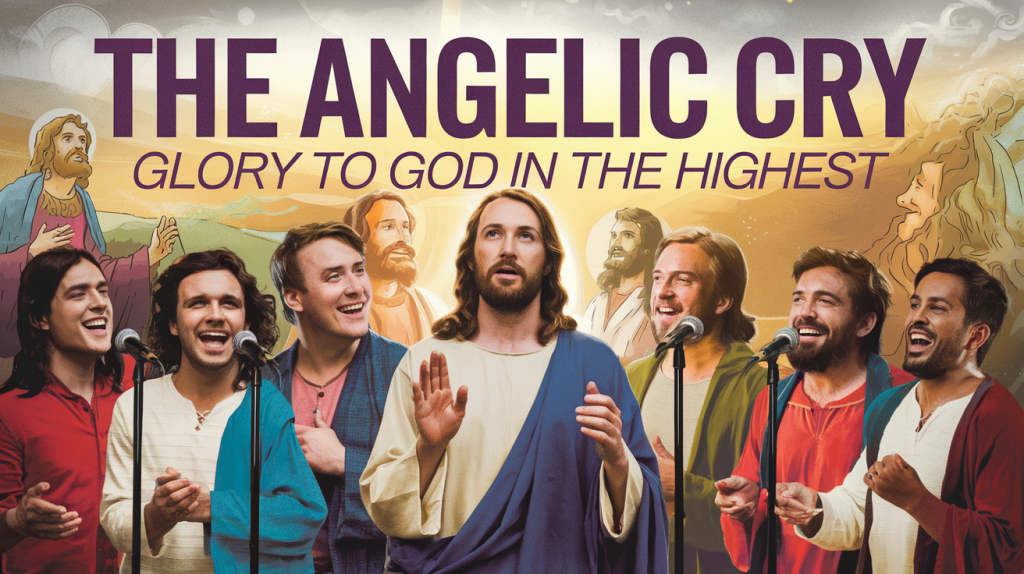
“The Angelic Cry” is more than a retelling of the Christmas story—it is a celebration of God’s faithfulness, His fulfilled promises, and the joy of salvation. Through every verse and chorus, we are reminded of Christ’s mission, from His humble birth to His eternal reign.
The angels’ cry is not just a moment in history; it is a call for all creation to glorify God and rejoice in the peace brought through Jesus Christ. Let us join this song with hearts full of gratitude, echoing their proclamation: “Glory to God in the highest!”
Make Sure You Watch My Video: I would love for you to subscribe to my YouTube channel as well…
Song Lyrics
Verse 1:
Out in the fields on a cold quiet night,
Shepherds were watching by flickering light.
Suddenly glory lit up the skies,
A heavenly host with an angelic cry.
Verse 2:
“Fear not, for I bring you good news today,
A Savior is born who will show you the way!
In the city of David, a child you will find,
Wrapped in a manger, salvation divine.”
Chorus:
Glory to God in the highest, we sing,
Peace on the earth through the birth of the King!
Heaven and earth in harmony rise,
Joining the chorus, the angelic cries.
Verse 3:
With trembling hearts, the shepherds drew near,
To Bethlehem’s stable, where hope would appear.
There lay the baby, the Savior, the Light,
The promise of heaven on this sacred night.
Verse 4:
The angels’ song echoed high and wide,
Through valleys and mountains, all nations abide.
“Glory to God, let His praises resound,
His peace and goodwill forever abound!”
Chorus:
Glory to God in the highest, we sing,
Peace on the earth through the birth of the King!
Heaven and earth in harmony rise,
Joining the chorus, the angelic cries.
Verse 5:
Let every heart lift a song of delight,
For God has delivered the world from its plight.
From shepherds to kings, all voices combine,
Proclaiming His glory, eternal, divine.
Verse 6:
The heavens declare, and the earth bows low,
The gift of the Savior, His love we now know.
From the cradle to cross, His mission was clear,
The angelic cry rings for all to hear!
Chorus (x2):
Glory to God in the highest, we sing,
Peace on the earth through the birth of the King!
Heaven and earth in harmony rise,
Joining the chorus, the angelic cries.
Outro:
Glory to God, the song never ends,
Through ages eternal, His kingdom extends.
Lift up your voice, let the whole world reply,
“Glory to God in the highest on high!”
The Story Behind “The Angelic Cry”
This song, inspired by the angelic proclamation in Luke 2:14, tells the story of the shepherds who were among the first to hear the good news of Christ’s birth. It unfolds the wonder of God’s glory, the peace brought through Christ, and the fulfillment of ancient prophecies. Let’s walk through the meaning and biblical connections of each verse and chorus, reflecting on the amazing truth of Christ’s fulfillment.

Introduction to the Song
The title, “The Angelic Cry,” captures the essence of heaven’s proclamation on the night Jesus was born. The angels declared, “Glory to God in the highest, and on earth peace, goodwill toward men” (Luke 2:14). This wasn’t just a heavenly announcement—it was a declaration of God’s plan for redemption reaching its climax. Every line of the song celebrates this momentous event, connecting the joy of Christ’s birth to the promises of Scripture.
Verse 1
“Out in the fields on a cold quiet night,
Shepherds were watching by flickering light.
Suddenly glory lit up the skies,
A heavenly host with an angelic cry.”
This verse sets the scene in Luke 2:8-9, where shepherds, ordinary workers, witnessed an extraordinary moment. God didn’t announce the Savior’s birth to kings or nobles first; He chose humble shepherds. This reflects the recurring biblical theme of God exalting the lowly (Psalm 113:7-8, Luke 1:52). The sudden appearance of the angelic host mirrors similar moments of divine intervention, like when the angel of the Lord appeared to Gideon (Judges 6:11-12). It shows that God often works in unexpected ways to accomplish His purposes.
Verse 2
“Fear not, for I bring you good news today,
A Savior is born who will show you the way!
In the city of David, a child you will find,
Wrapped in a manger, salvation divine.”
This verse draws directly from Luke 2:10-12. The angel’s message to the shepherds echoes the fulfillment of Micah 5:2, where Bethlehem is prophesied as the birthplace of the ruler of Israel. The reference to the Savior being “wrapped in a manger” highlights Jesus’ humility and God’s grace in coming as a servant (Philippians 2:6-8). This foreshadows His later ministry, where He would say, “I am the way, the truth, and the life” (John 14:6). The “good news” proclaimed here is the gospel itself, the foundation of Christianity.
Chorus
“Glory to God in the highest, we sing,
Peace on the earth through the birth of the King!
Heaven and earth in harmony rise,
Joining the chorus, the angelic cries.”
The chorus captures the core of Luke 2:14, emphasizing the twin themes of glory and peace. God’s glory is revealed in Christ, who fulfills the promises of Isaiah 9:6—He is the “Prince of Peace.” The line “heaven and earth in harmony” reminds us of the reconciliation brought by Jesus (Colossians 1:20). The angels’ cry is an invitation for all of creation to worship, much like the psalmist calls, “Let everything that hath breath praise the Lord” (Psalm 150:6).
Verse 3
“With trembling hearts, the shepherds drew near,
To Bethlehem’s stable, where hope would appear.
There lay the baby, the Savior, the Light,
The promise of heaven on this sacred night.”
This verse recounts the shepherds’ journey to Bethlehem, described in Luke 2:15-16. Their trembling hearts reflect awe and wonder, much like Moses before the burning bush (Exodus 3:6). The reference to Jesus as “the Light” connects to John 1:9, where Christ is called the “true Light” that came into the world. The imagery of hope and promise fulfilled ties back to Isaiah 7:14, where the virgin birth of Immanuel was foretold.
Verse 4
“The angels’ song echoed high and wide,
Through valleys and mountains, all nations abide.
‘Glory to God, let His praises resound,
His peace and goodwill forever abound!’”
This verse expands the reach of the angelic proclamation, showing that the message of Christ’s birth isn’t limited to one moment or group. It echoes the global promise of Genesis 22:18, where God tells Abraham that through his offspring, “all nations of the earth shall be blessed.” The spreading of this message foreshadows the Great Commission, where Jesus commands His followers to take the gospel to all nations (Matthew 28:19).
Verse 5
“Let every heart lift a song of delight,
For God has delivered the world from its plight.
From shepherds to kings, all voices combine,
Proclaiming His glory, eternal, divine.”
This verse reflects the universal call to worship Jesus as King, a theme found in Psalm 86:9: “All nations whom You have made shall come and worship before You, O Lord.” The “plight” mentioned refers to the sin and separation from God that Jesus came to redeem (Romans 3:23-24). The uniting of “shepherds to kings” reminds us of the wise men who later visited Jesus, showing that both humble and great are called to worship Him (Matthew 2:1-2).
Verse 6
“The heavens declare, and the earth bows low,
The gift of the Savior, His love we now know.
From the cradle to cross, His mission was clear,
The angelic cry rings for all to hear!”
This verse ties Jesus’ birth to His ultimate purpose: salvation through the cross. The “heavens declare” reflects Psalm 19:1, where creation itself proclaims God’s glory. The line “from cradle to cross” captures the entirety of Jesus’ mission, prophesied in Isaiah 53:5: “He was wounded for our transgressions.” The angelic cry is now extended to all humanity, reminding us of the joy and hope we have in Christ.
Outro
“Glory to God, the song never ends,
Through ages eternal, His kingdom extends.
Lift up your voice, let the whole world reply,
‘Glory to God in the highest on high!’”
The outro reflects the eternal nature of Christ’s reign, fulfilling the prophecy of Isaiah 9:7: “Of the increase of His government and peace there will be no end.” It also looks forward to Revelation 5:13, where every creature will sing, “Blessing and honor and glory and power be to Him who sits on the throne.” This is the ultimate fulfillment of the angelic proclamation—a song that will never cease.
How Does “Jesus The Light Has Arrived” Relate to the Message of “Glory To God In The Highest”?
“Jesus the light arrived” signifies the fulfillment of divine promise, resonating with the message of “Glory to God in the Highest.” It represents the arrival of hope, salvation, and the radiance of God’s love on Earth, inspiring angels and humanity to glorify God with unceasing praise and deep reverence.
FAQ: 10 Interesting Facts About the Story Behind “The Angelic Cry”
Here are 10 fascinating facts about the story of the angelic proclamation in Luke 2:8-14, which inspired the song:
1. Why were shepherds chosen to receive the angelic announcement?
Shepherds were considered lowly and humble in society, yet God chose them to be the first to hear the news of Christ’s birth. This reflects God’s consistent pattern of exalting the humble (Luke 1:52) and His desire to make salvation accessible to all, not just the powerful or elite.
2. What does “Glory to God in the highest” mean?
This phrase (Luke 2:14) is a declaration of God’s supreme majesty. It acknowledges that Jesus’ birth glorifies God by fulfilling His promises of redemption, as seen in Isaiah 9:6-7 and Micah 5:2. It also highlights that this event is the ultimate expression of God’s love and faithfulness.
3. What is the significance of “peace on earth”?
The “peace” proclaimed by the angels is not merely the absence of conflict but the restoration of humanity’s relationship with God through Christ. This peace, foretold in Isaiah 53:5, is spiritual and eternal, brought through Jesus’ sacrifice.
4. How does the angel’s proclamation fulfill Old Testament prophecy?
The angel’s announcement confirms the fulfillment of several prophecies:
- Micah 5:2 predicted Bethlehem as the Messiah’s birthplace.
- Isaiah 7:14 foretold the virgin birth of Emmanuel (God with us).
- Isaiah 9:6 prophesied the birth of the Prince of Peace, bringing hope to all nations.
5. Why did the angels appear with a “heavenly host”?
The term “heavenly host” refers to an army of angels. Their appearance symbolizes the magnitude of this event: the birth of Jesus is not just a historical moment but a cosmic one, celebrated by the armies of heaven. This echoes Psalm 103:20-21, where angels are described as praising God’s works.
6. How does this story connect to the Davidic Covenant?
The reference to Bethlehem as “the city of David” (Luke 2:4) ties Jesus’ birth to the Davidic Covenant in 2 Samuel 7:12-16. This covenant promised that a ruler from David’s line would establish an eternal kingdom, fulfilled in Christ.
7. What is the role of the star in this story?
Although the star is not directly mentioned in Luke 2, it plays a key role in the visit of the wise men (Matthew 2:2). The star is a sign of God’s guidance, much like the angelic announcement. It also fulfills Numbers 24:17, which prophesied a star rising from Jacob.
8. How does the angelic song compare to other moments of worship in the Bible?
The angels’ proclamation mirrors other heavenly songs of praise, such as:
- The seraphim in Isaiah 6:3, who cry, “Holy, holy, holy is the Lord Almighty!”
- The worship in Revelation 5:13, where every creature sings, “To Him who sits on the throne and to the Lamb be praise and honor.”
These moments emphasize the universal recognition of God’s glory.
9. Why does the story emphasize humility?
Jesus’ birth in a manger, the shepherds as the first witnesses, and Bethlehem’s small stature all highlight the theme of humility. This contrasts with worldly expectations of grandeur and shows God’s way of working through the meek, as seen in 1 Corinthians 1:27: “God chose the weak things of the world to shame the strong.”
10. What is the significance of the shepherds spreading the word?
After seeing the baby, the shepherds shared the good news with others (Luke 2:17-18). This foreshadows the role of all believers in spreading the gospel (Matthew 28:19). Their joyful response demonstrates how encountering Christ transforms lives and compels people to share His story.
Conclusion
The story of the angelic proclamation is rich with meaning, tying together humility, fulfilled prophecy, and the universal offer of peace through Christ. Each detail—from the shepherds to the heavenly host—points to God’s love, power, and faithfulness. This story remains a cornerstone of the Christmas message, inviting everyone to join in the angelic cry: “Glory to God in the highest!”
Call to Action: The Question That Demands an AnswerIn Acts 2:37 Peter and the Apostles were asked the question – What Shall We do? And in Acts 2:38 Peter answered, Repent, and be baptized every one of you in the name of Jesus Christ for the remission of sins, and ye shall receive the gift of the Holy Ghost. For the promise is unto you, and to your children, and to all that are afar off, even as many as the Lord our God shall call. Do you understand this? After hearing the gospel and believing, they asked what should would do. The answer hasn’t changed friend, Peter clearly gave the answer. The question for you today is, Have you receieved the Holy Spirit Since you believed? If you’re ready to take that step, or you want to learn more about what it means to be born again of water and Spirit, visit: Come, and let the Spirit make you new. |