Quick Overview of This Bible Study…
Short on time? I have created a short slide show presentation of some key takeaways in our study. The complete, more comprehensive bible study is below…
In the King James Bible, stones aren't just rocks—they carry deep spiritual meanings that connect the Old and New Testaments.
This look at stones in the Bible will show how they changed from everyday objects used for jewelry, memories, and God's laws to powerful symbols representing God's promises, salvation, and His everlasting kingdom.
Join us as we explore the Bible's stone stories, seeing how the ancient stone markers connect to Jesus as the "cornerstone" of faith, and discovering the lasting messages hidden in these timeless stories.
Key Takeaways: A Glimpse into the Stones' Stories
- The twelve precious stones adorning Aaron's breastplate represented the twelve tribes of Israel, symbolizing their unique identities and collective importance before God, foreshadowing the beauty and diversity of God's people.
- The foundation stones of the New Jerusalem, described in Revelation, echo the imagery of Aaron's breastplate, signifying the continuity of God's glory and the representation of His people in the ultimate culmination of His plan.
- The metaphor of Jesus Christ as the rejected cornerstone, prophesied in the Old Testament and fulfilled in the New, highlights His foundational role in the Church and the paradoxical nature of His triumph through rejection.
- The stone tablets inscribed with the Ten Commandments symbolize the divine origin and enduring nature of God's law, later contrasted with the New Covenant where the law is written on the hearts of believers.
- Stones were often used as memorials throughout the Old Testament, serving as tangible reminders of God's faithfulness and powerful acts, emphasizing the importance of remembrance in maintaining a relationship with God.
The Priestly Gems: Stones of the Old Covenant
The Old Testament is rich with mentions of precious stones, particularly within the descriptions of the Tabernacle and the garments of the high priest.
These stones were not simply decorative; they held deep symbolic meaning, representing various aspects of God's relationship with His people.

Aaron's Breastplate: A Mosaic of Divine Representation
Central to the high priest's attire was the breastplate of judgment, an elaborate piece adorned with twelve precious stones, each representing one of the twelve tribes of Israel. The detailed instructions for its creation are found in Exodus.
The First Row: Sardius, Topaz, and Carbuncle
The first row of the breastplate featured the sardius, the topaz, and the carbuncle. The sardius is often associated with carnelian, a reddish stone, though some suggest it could have been a ruby or garnet.
This stone was positioned first, potentially representing the tribe of Reuben.
The topaz is largely believed to be peridot, a yellowish-green gem, and might have represented Simeon.
The carbuncle's identity is more debated, with possibilities including emerald, ruby, or garnet. It was placed third in the first row and could have represented Levi or Judah.
The lack of definitive identification for these stones across different translations and interpretations suggests that the emphasis in ancient times might have been on the general color and type of stone rather than precise mineralogical accuracy.
The Second Row: Emerald, Sapphire, and Diamond
The second row held an emerald, a sapphire, and a diamond. The emerald, a brilliant green stone, is understood to be a green variety of beryl. It potentially represented Judah or Issachar.
The sapphire, renowned for its beautiful blue color, is largely considered to be lapis lazuli in the biblical context, as true sapphires were not known before the Roman Empire.
This stone may have represented the tribe of Dan.
The inclusion of the diamond, a notably hard and precious stone, in this row suggests the inherent value and enduring nature associated with these representations of the tribes. It might have represented Zebulun.
The Third Row: Ligure, Agate, and Amethyst
The third row contained a ligure, an agate, and an amethyst. The ligure's identity is particularly uncertain, with possibilities ranging from amber to jacinth (red zircon) or even amazonite.
This ambiguity across translations highlights the challenges in pinpointing ancient gemstone names and the potential for linguistic evolution. It could have represented Gad or Naphtali.
The agate, a form of chalcedony often translucent and banded in various colors, might have represented Asher.
The amethyst, a brilliant purple stone, was thought to prevent intoxication and symbolize deep love. It is associated with the tribe of Issachar or Naphtali.
The Fourth Row: Beryl, Onyx, and Jasper
The final row featured a beryl, an onyx, and a jasper. Beryl encompasses a range of colors from pale blue to yellowy green, and even white or rose. It may have represented Benjamin.
The onyx, characterized by its white and black bands, is associated with marital happiness and could have represented Joseph.
Jasper, an opaque stone coming in most colors, was believed to give courage and wisdom. It was the final stone in the breastplate, potentially representing Zebulun or Benjamin.
Their Significance and Connection to the Tribes of Israel
Each of these twelve stones, set in gold, was engraved with the name of one of the tribes of Israel, symbolizing their unique identities and their collective importance before God.
The breastplate itself was known as the "breastplate of judgment" or "decision," indicating its role in seeking divine guidance.
The first-century Jewish historian Josephus believed these twelve stones corresponded to the twelve months of the year and the twelve signs of the zodiac.
Notably, Aaron bore the names of the children of Israel over his heart on this breastplate whenever he entered the Holy Place, serving as a continual memorial before the Lord [Exodus 28:29].
This act of the high priest carrying the tribes' names before God foreshadows the ultimate intercessor, Jesus Christ, who bears His people in His heart.
Shoulder Stones of the Ephod: A Memorial Before the Lord
In addition to the breastplate, the high priest's ephod, another significant garment, featured two onyx stones set on the shoulder pieces [Exodus 28:9-12] .
These stones were also engraved with the names of the tribes, six names on each stone according to their birth order.
Their purpose was explicitly stated as being "stones of memorial unto the children of Israel".
The placement of the tribal names on both the heart (breastplate) and the shoulders (ephod) of the high priest underscores the comprehensive representation of the people before God.
This signifies a representation marked by both love and strength, as the heart often symbolizes affection and the shoulders denote the bearing of burdens.
A City Built on Jewels: The New Testament Vision
The New Testament culminates in a breathtaking vision of the New Jerusalem in the Book of Revelation, a city whose splendor is described in terms reminiscent of the precious stones adorning the high priest in the Old Testament.
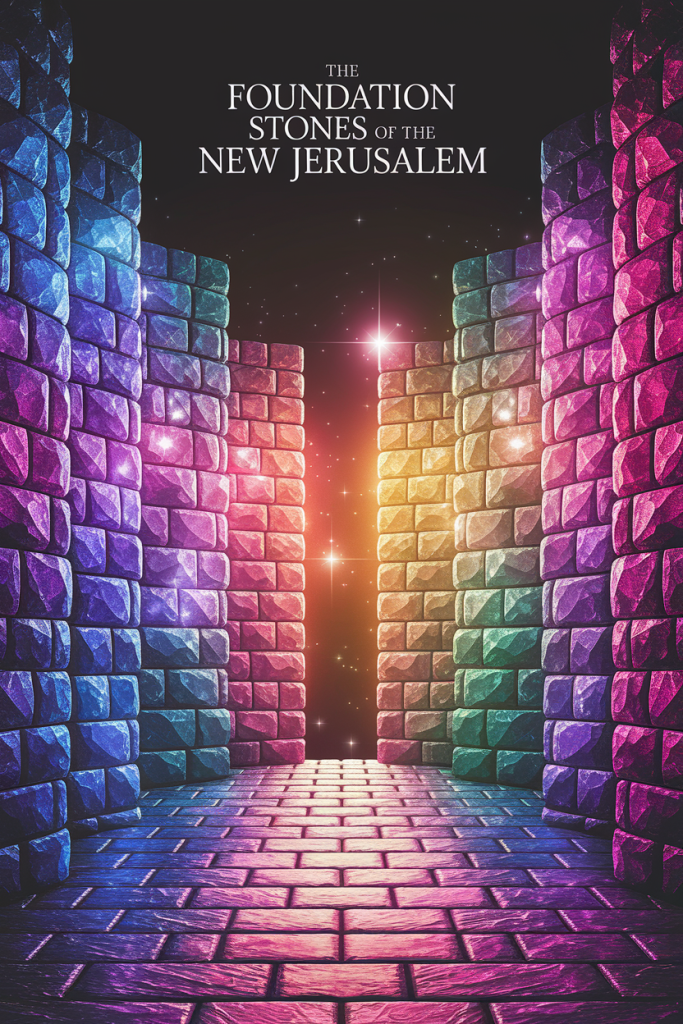
The Foundation Stones of the New Jerusalem: Reflecting Heavenly Glory
The wall of this celestial city had twelve foundations, each adorned with a different precious stone .
- The first foundation was jasper, a stone often associated with clarity and brilliance.
- The second was sapphire, symbolizing truth and constancy.
- The third was chalcedony, sometimes described as having a milky or grayish translucence.
- The fourth was emerald, signifying immortality and incorruptibility.
- The fifth was sardonyx, a red and white variety of onyx.
- The sixth was sardius, similar to carnelian, often red in color.
- The seventh was chrysolyte, likely peridot, associated with joy.
- The eighth was beryl, connected to happiness and everlasting youth.
- The ninth was topaz, signifying friendship and happiness.
- The tenth was chrysoprasus, a green agate.
- The eleventh was jacinth, reddish-orange in color.
- The twelfth was amethyst, representing deep and pure love.
Connecting the Old Testament Gems to the New Testament Foundations
The striking similarity between the precious stones listed for Aaron's breastplate and those forming the foundations of the New Jerusalem is significant.
This repetition suggests a continuity of God's glory, beauty, and the representation of His people throughout the unfolding of His redemptive plan.
Many believe that these twelve foundation stones also symbolically represent the twelve apostles of the Lamb.
Furthermore, the wall of the city itself is described as being made of jasper. Given jasper's characteristics of strength and clarity, this could symbolize the enduring and transparent nature of God's eternal kingdom.
The Rejected Cornerstone: A Stone of Redemption
Beyond the symbolism of precious adornment, the Bible also employs the image of a stone to represent the Messiah, particularly in the metaphor of the rejected cornerstone.

Psalm 118: The Prophecy of Rejection and Triumph
Psalm 118:22-23 declares, "The stone which the builders refused is become the head stone of the corner. This is the LORD'S doing; it is marvellous in our eyes".
This passage is widely understood as a messianic prophecy, foretelling the rejection of the Messiah by the religious leaders of Israel, the "builders," and His subsequent exaltation as the most important stone, the "head stone of the corner" or "chief cornerstone".
This imagery presents a powerful paradox: the one deemed useless becomes the essential foundation.
Matthew 21, Acts 4, and 1 Peter 2: Jesus, the Stone the Builders Refused
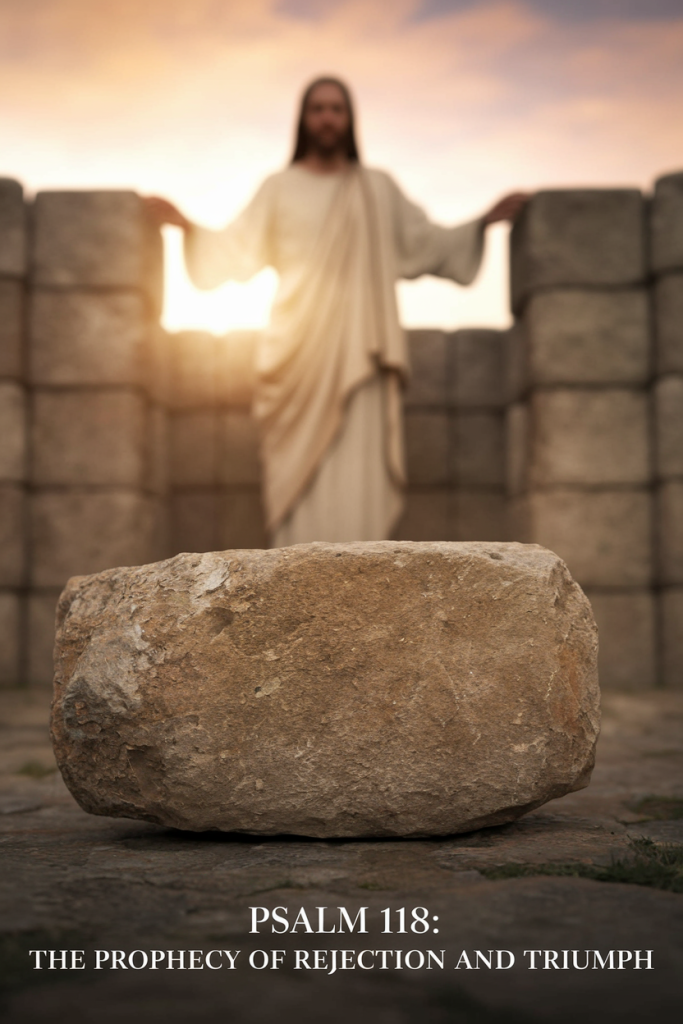
Jesus Himself quoted this very verse in Matthew 21:42 when confronting the chief priests and Pharisees, directly applying the metaphor to His own rejection by them.
Similarly, the apostle Peter, in Acts 4:11, proclaimed that Jesus is "the stone which was set at nought of you builders, which is become the head of the corner".
He further reinforces this in 1 Peter 2:7, stating that for those who disbelieve, Jesus is "the stone which the builders disallowed, the same is made the head of the corner".
The New Testament writers consistently utilize this "rejected cornerstone" imagery to affirm Jesus's identity as the Messiah, whose rejection by humanity did not derail God's plan but was, in fact, a crucial part of its fulfillment.
The cornerstone is the foundational and unifying element, holding the entire structure together, and in Ephesians 2:20, Christ is explicitly identified as the cornerstone of the Church.
The Significance of the Cornerstone in God's Plan
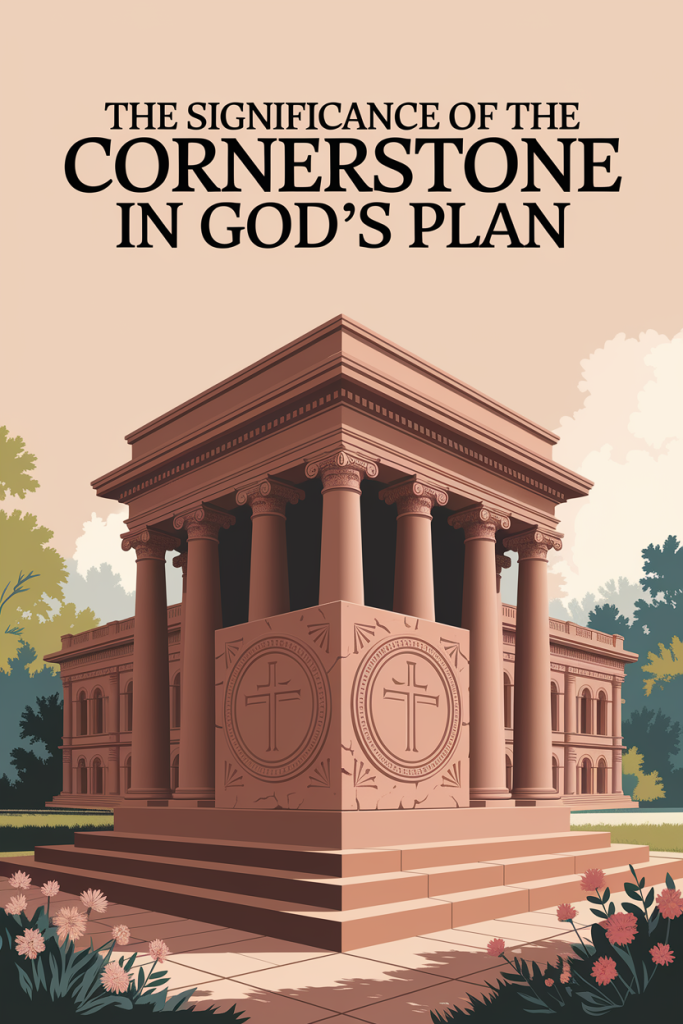
In ancient construction, the cornerstone was the first and most crucial stone laid, providing the foundation and alignment for the entire building.
The metaphor of Jesus as the cornerstone underscores His fundamental importance for the entire Christian faith and the Church, providing stability and holding everything together.
Just as a flawed cornerstone would compromise the entire structure, the rejection of Jesus by those who should have recognized Him did not diminish His divinely ordained role as the foundation of salvation.
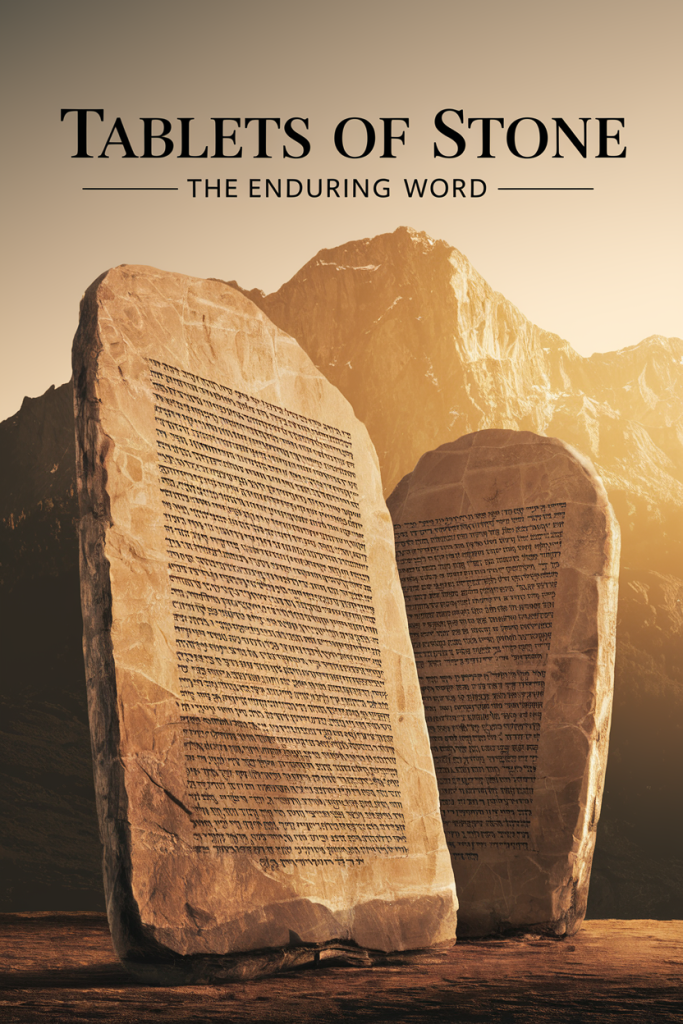
Tablets of Stone: The Enduring Word
Stones also played a pivotal role in the giving of the Law to Moses on Mount Sinai.
Exodus 24 and 31: The Law Inscribed
After God delivered the Ten Commandments, He instructed Moses, "Come up to me into the mount, and be there: and I will give thee tables of stone, and a law, and commandments which I have written; that thou mayest teach them" [Exodus 24:12].
Exodus 31:18 records that "he gave unto Moses, when he had made an end of communing with him upon mount Sinai, two tables of testimony, tables of stone, written with the finger of God".
Some traditions within Judaism believe these tablets were made of sapphire, connecting them to the vision of God's throne. The act of God inscribing the commandments on stone signifies the divine origin and permanence of the Law.
The Symbolism of Stone for God's Commandments
The choice of stone as the medium for the Law was likely due to its durability and permanence, symbolizing the enduring nature of God's commands.
Just as stone withstands the elements and the passage of time, the principles embodied in the Ten Commandments are presented as unchanging and eternally relevant.
2 Corinthians 3 and Hebrews 8: The Law Written on Hearts

However, the New Testament introduces a significant shift in this imagery. In 2 Corinthians 3:3, Paul writes that believers are "the epistle of Christ ministered by us, written not with ink, but with the Spirit of the living God; not in tables of stone, but in fleshy tables of the heart".
Hebrews 8:10 echoes this, quoting God as saying, "I will put my laws into their mind, and write them in their hearts".
This contrast highlights the internal transformation brought about by the New Covenant, where God's principles are internalized rather than merely externally observed.
Jesus himself stated that He came not to destroy the law but to fulfill it [Matthew 5:17]. This fulfillment involves a deeper understanding and application of God's will, moving beyond the letter of the law to its spirit.
Stones of Remembrance: Marking God's Faithfulness
Throughout the Old Testament, stones were often erected as memorials to commemorate significant acts of God, serving as tangible reminders of His faithfulness and power.
Joshua 4: The Memorial at the Jordan River
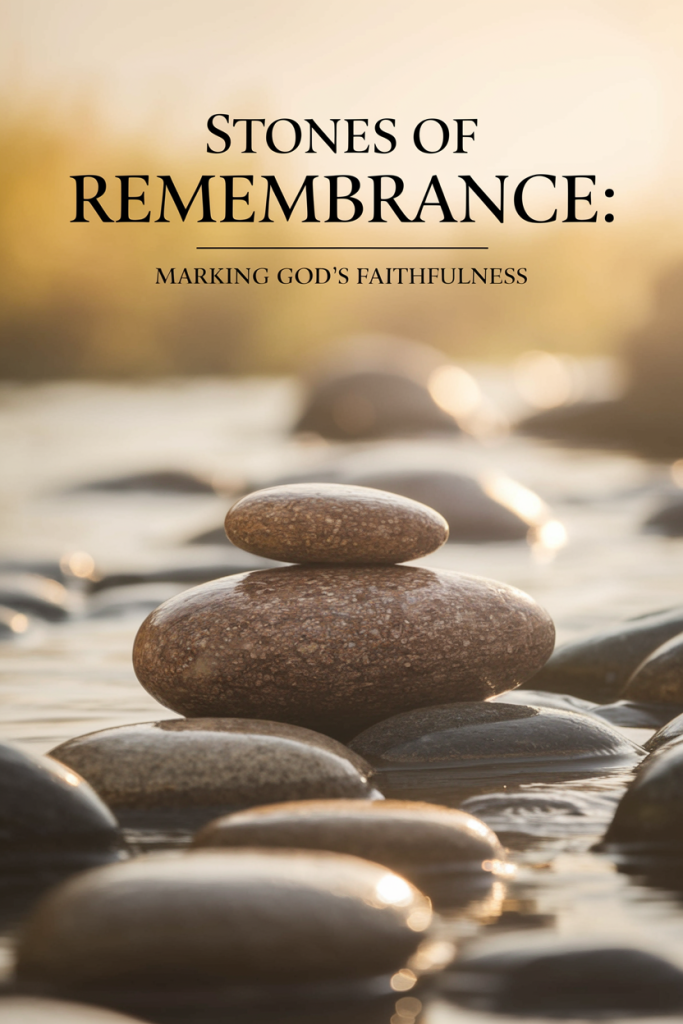
A prominent example is found in Joshua chapter 4. After the Israelites miraculously crossed the Jordan River on dry ground, God commanded Joshua to select twelve men, one from each tribe, and instruct them to take twelve stones from the middle of the riverbed and set them up as a memorial at Gilgal [Joshua 4:1-9].
These stones were intended to serve as a sign for future generations. When their children would ask, "What mean ye by these stones?" the Israelites were to explain how the waters of the Jordan were cut off before the ark of the covenant, signifying God's power and faithfulness in bringing them into the Promised Land.
This memorial served as a tangible reminder of a pivotal moment in Israel's history, reinforcing their identity as God's people and His ongoing provision.
Genesis 28: Jacob's Pillar at Bethel

Another significant instance is Jacob's pillar at Bethel in Genesis 28.
After experiencing a profound dream of a ladder reaching to heaven with angels ascending and descending, Jacob took the stone he had used as a pillow and set it up as a pillar [Genesis 28:18-22].
He poured oil on it and named the place Bethel, meaning "house of God," recognizing it as a holy place where he had encountered the divine.
Jacob's pillar marked a personal encounter with God and served as a reminder of God's promises and presence in his life, transforming an ordinary location into a sacred one.
The Purpose and Significance of Memorial Stones
In general, memorial stones in the Bible served as visual aids to remember God's mighty acts, His faithfulness to His promises, and the covenant relationship He had with His people.
They prompted reflection and storytelling, ensuring that future generations would know the works of the Lord.
These stones highlight the importance of remembrance in the life of faith, helping individuals and communities maintain a connection with God's past interventions and fostering hope for the future.
Other Notable Stone Mentions:
Beyond these central themes, stones appear in other significant contexts throughout the KJV Bible.
Ezekiel 28: The Adornment of the King of Tyre in Eden
Ezekiel 28:13 describes the King of Tyre as having been in Eden, the garden of God, and adorned with "every precious stone," including the sardius, topaz, diamond, beryl, onyx, jasper, sapphire, emerald, and carbuncle.
This list bears a striking resemblance to the stones on Aaron's breastplate and the foundations of the New Jerusalem, suggesting a connection to themes of divine favor and glory.
However, the context of Ezekiel 28 indicates that this description is likely allegorical, referring to Lucifer's original, exalted state before his fall. The precious stones symbolize the great beauty, wealth, and honor that were initially bestowed upon him.
Symbolic Use of Stones in Prophecy and Parables
Stones are also used symbolically in various prophecies and parables. For instance, Isaiah 54:11-12 speaks of a future glorious Jerusalem with foundations of sapphires and pinnacles of agate, symbolizing divine favor and restoration.
In Revelation 2:17, overcomers are promised a white stone with a new name written on it, signifying acceptance and a personal relationship with God.
These instances demonstrate the versatility of stones as metaphors for strength, stability, value, and divine promises throughout Scripture.
Joining the Threads: The Unifying Symbolism of Stones
The narrative of the KJV Bible reveals a consistent and profound use of stones, weaving a thread of symbolism that connects the Old and New Testaments.
From the literal stones adorning the high priest and marking historical events to the metaphorical cornerstone of our faith and the enduring tablets of the Law, stones serve as tangible representations of spiritual realities.
They embody themes of representation (Aaron's breastplate), covenant (tablets of stone), redemption (the rejected cornerstone), remembrance (memorial stones), and permanence (foundation stones of the New Jerusalem).
Table 1: Significant Stones in the KJV Bible
| Stone Name (Commonly Known) | Old Testament Mention(s) | Old Testament Significance | New Testament Fulfillment/Symbolic Connection | New Testament Significance |
| Precious Stones (General) | Exodus 28 (Breastplate), Ezekiel 28 (Tyre) | Representation of tribes, beauty, wealth, honor | Revelation 21 (New Jerusalem Foundations) | Continuity of God's glory, representation of God's people |
| Cornerstone | Psalm 118:22 | Prophecy of Messiah's rejection and exaltation | Matthew 21:42, Acts 4:11, 1 Peter 2:7 (Jesus) | Jesus as the foundation and unifying element of the Church, redemption |
| Stone Tablets | Exodus 24, 31 | Divine origin and permanence of God's Law | 2 Corinthians 3:3, Hebrews 8:10 (Law on hearts) | Internal transformation, fulfillment of the Law's intent |
| Memorial Stones | Joshua 4, Genesis 28 | Remembrance of God's faithfulness and acts | 1 Peter 2:5 (Believers as living stones) | Importance of remembering God's acts, believers as part of God's spiritual house |
Conclusion: Stones as Testaments to God's Promises
The stones mentioned in the King James Version Bible are far more than mere geological formations. They are enduring testaments to God's promises, His unwavering faithfulness, and His ultimate plan of redemption.
From the intricate details of the high priest's garments to the glorious vision of the New Jerusalem, and from the solid foundation of the Law to the cornerstone of our salvation, these stony references provide a rich tapestry of meaning that continues to resonate with believers today.
They remind us of our place in God's story, the importance of remembrance, and the enduring nature of His love and grace.
Bible and Gemstones Resources
General Gemstone Information
- Gemstones in the Bible - Wikipedia
- Biblical Gemstones - Cooper's Gem Mine
- Stones in the Bible - Oak Rocks
- Precious Stones - Bible Topics
- God's Use of Precious Stones in the Bible
- Gems and Minerals in the Bible
- Symbolism of Precious Stones - Topical Bible
- The Symbolism and Significance of Stones in the Bible
Specific Biblical Stone References
- Ezekiel 28:13 - Precious Stones in Eden
- The Ten Commandments Were Written on Sapphire Tablets
- Tablets of Stone - Wikipedia
- Exodus 31:18 - Tablets of the Testimony
- Exodus 32:15-20 - Moses and the Tablets
- Why the Law was Written on Stone
Christ as the Cornerstone
- Psalm 118:22 - The Stone the Builders Rejected
- Matthew 21:42 - Jesus Quotes Psalm 118
- 1 Peter 2:7 - Peter References the Cornerstone
- Acts 4:11 - Peter Preaches About the Cornerstone
- What Did Jesus Mean By Saying He Was the Stone the Builders Rejected?
- Rejected Stone, Included Stones - Psalm 118, Ephesians 2
Memorial Stones
- Joshua 4:6-9 - Stones of Remembrance
- What Do These Stones Mean?
- The Meaning of these Stones
- Jacob's Pillar at Beth-El
- Memorial Stones in the Bible
- The Significance of the Stone, the Pillar, the House of God
- What is the significance of the stones of remembrance in Joshua 4:9?
- Genesis 28:10-19a Commentary
Priestly Garments and Stones
- Exodus 28 - Priestly Garments
- Exodus 28:12 - Stones on the Ephod
- The Breastplate is Central Point of the Priesthood
- What the 12 gems on Aaron's breastplate meant
- The High Priest's Breastplate
- Priestly breastplate - Wikipedia
- Exodus 28:29 - Names on the Breastpiece
New Jerusalem and Precious Stones
- Revelation 21:18-22 - The Foundations of the New Jerusalem
- Revelation 21:19-21 - Foundations Garnished with Precious Stones
- The Foundation Stones of the New Testament
- What does Revelation 21:19 mean?
- The Sacred Gemstones of Revelation
- Revelation 21:18-21 - Sunday School Notes
Call to Action: The Question That Demands an AnswerIn Acts 2:37 Peter and the Apostles were asked the question – What Shall We do? And in Acts 2:38 Peter answered, Repent, and be baptized every one of you in the name of Jesus Christ for the remission of sins, and ye shall receive the gift of the Holy Ghost. For the promise is unto you, and to your children, and to all that are afar off, even as many as the Lord our God shall call. Do you understand this? After hearing the gospel and believing, they asked what should would do. The answer hasn’t changed friend, Peter clearly gave the answer. The question for you today is, Have you receieved the Holy Spirit Since you believed? If you’re ready to take that step, or you want to learn more about what it means to be born again of water and Spirit, visit: Come, and let the Spirit make you new. |