The Empire That Worshiped Its Own Power
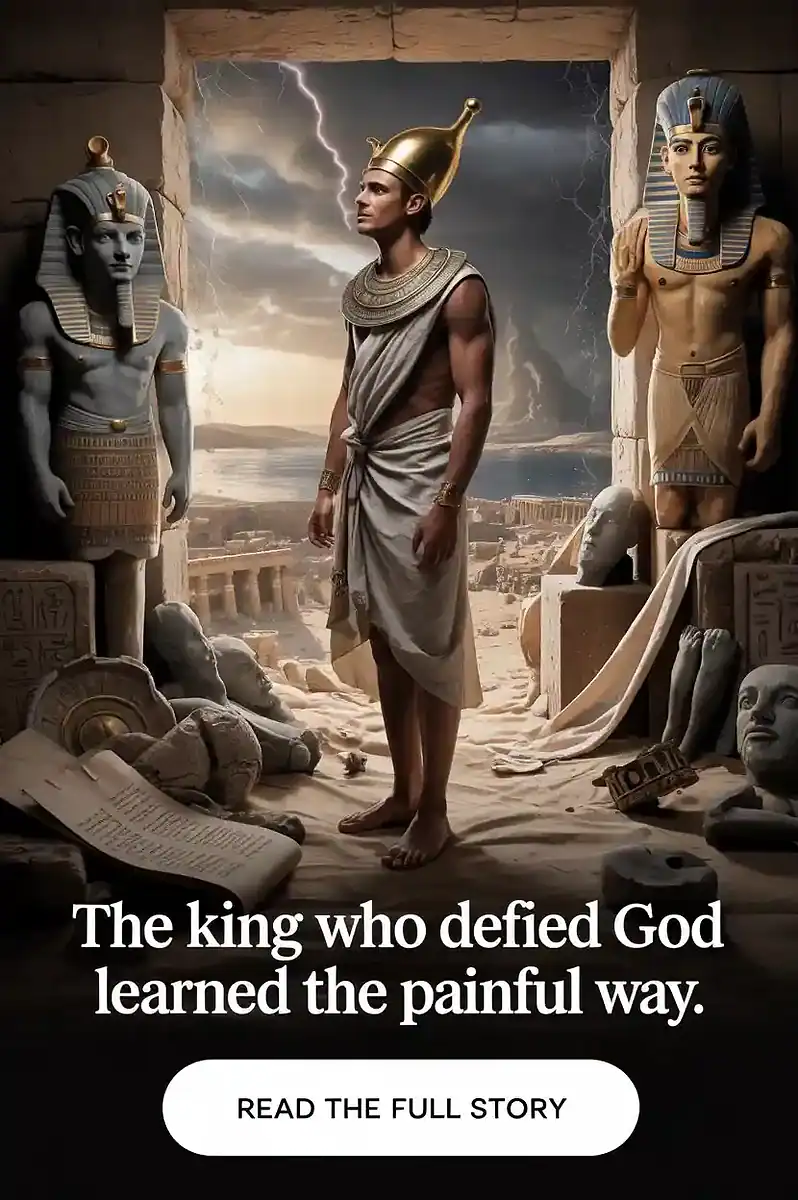
The Nile shimmered like molten gold in the Egyptian sun. The air was thick with incense and pride. Pharaoh sat high upon his throne, clothed in linen and arrogance, the supposed son of Ra, the living god of Egypt. Beneath him, servants moved like shadows, obeying without question. To them, Pharaoh was not merely a man – he was a divine decree wrapped in flesh.
But power does strange things to the human heart. It hardens it, brick by brick, until compassion becomes weakness and pride becomes armor. Pharaoh ruled over a people he enslaved and mocked a God he did not know. His kingdom was built on the backs of Hebrews who prayed to a silent heaven – or so he thought.
What Pharaoh couldn’t see was that heaven had been listening all along.
The Cry That Reached the Throne of God
In the fields of Goshen, the crack of the whip echoed. Dust and sweat clung to weary backs. Mothers whispered to their children that the God of Abraham still remembered them. Fathers prayed in silence, their hands rough from forced labor.
Then came a burning bush in the wilderness and a man who once wore royal robes now carrying a shepherd’s staff. Moses, trembling but chosen, returned with a simple message from the Almighty: “Let My people go.”
Pharaoh laughed. One man against an empire? The Nile itself seemed to mock such faith. But God wasn’t negotiating. He was introducing Himself – to Pharaoh, to Egypt, and to every watching soul.
When Pride Met the Living God
Pharaoh’s first answer was defiance. “Who is the Lord, that I should obey His voice?” he sneered. He’d soon learn.
The river he worshiped turned to blood. Frogs filled his chambers, gnats infested the land, flies swarmed through the streets. Each plague was a sermon – a declaration that Egypt’s gods were powerless. The idols were silent, but heaven was loud.
Still Pharaoh’s heart stiffened. He saw miracles but felt no reverence. Each time he promised to yield, pride pulled him back. It’s what pride does – it convinces us that surrender is loss, even when surrender is the only way to live.
The Battle No Man Could Win
By the time the livestock died, the hail fell, and darkness swallowed Egypt, Pharaoh had been given every chance to bend. But he chose instead to break. Egypt’s wealth couldn’t buy mercy. His magicians couldn’t imitate holiness. Every “No” hardened into rebellion until he could no longer hear the warnings.
And then came the night that broke history in two.
The firstborn of Egypt died while Israel’s doors were marked with blood. The same Pharaoh who once drowned Hebrew babies in the Nile now wept over his own dead son. It wasn’t vengeance – it was revelation. God had not been silent. He had been patient. But patience eventually calls for justice.
That night, the pride of Egypt fell silent, and Pharaoh finally said the words he had resisted: “Go, serve the Lord.”
A Heart Still Chasing Control
But even broken pride has a pulse. As Israel marched toward freedom, Pharaoh’s regret twisted into rage. He harnessed his chariots, his horses, his soldiers – every symbol of his control – and charged into the desert to bring them back.
The sand thundered beneath wheels and hooves. In the distance, the sea glimmered like glass. The Israelites stood trapped between Pharaoh’s army and the impossible. And that’s exactly where God loves to show His strength.
When the Sea Remembered Its Maker
The wind began to howl. Moses lifted his staff. The waters rose, forming walls of liquid crystal. The children of Israel stepped forward – dry ground where there should have been none.
Behind them, Pharaoh’s army surged into the path, confident, furious, blind to the fact that they were charging straight into God’s judgment.
When the last Israelite stepped through, the sea remembered its Maker. The walls collapsed, and Egypt’s pride was buried beneath the waves.
The same water that had once carried their oppression now carried their deliverance.
The Silence After the Storm
On the far shore, Moses stood, staff in hand, the salt wind in his face. The people sang, their voices trembling with awe and relief. Pharaoh’s army was gone, swallowed by the God he had mocked.
The lesson was written in water and grief: no throne stands higher than heaven’s will. Pharaoh had learned God’s name – but the painful way.
And the world would never forget it.
What the Hard Heart Still Teaches
Pharaoh’s story is not just ancient history – it’s a mirror. We may not wear crowns or command empires, but we all know what it’s like to cling to control. We resist God’s nudges, justify our stubbornness, pretend our pride is strength. But the same God who turned rivers to blood can soften stone hearts today.
Sometimes the plagues aren’t locusts – they’re lost peace, broken relationships, or sleepless nights. God doesn’t send them to destroy us but to deliver us from ourselves.
Pharaoh’s tragedy wasn’t that he fought God – it’s that he could have known God and didn’t want to.
The Greater Deliverer
Centuries later, another Deliverer stood before a ruler – Jesus before Pilate. The pattern was the same: power against humility, pride against surrender, empire against heaven. But this time, the innocent One didn’t call down plagues. He bore them.
Where Pharaoh’s rebellion brought death to others, Christ’s obedience brought life to all. The blood on the doorposts pointed to His blood on the cross – the sign that judgment had passed and freedom had come.
Reverent Awe
Pharaoh’s crown sank beneath the Red Sea, but God’s name rose higher than ever. The same God who shattered Egypt’s pride still humbles kings, softens hearts, and sets captives free.
Every heart that resists Him eventually learns His name. Some through surrender. Others through the storm.
But blessed are those who learn His name the merciful way.
Call to Action: The Question That Demands an AnswerIn Acts 2:37 Peter and the Apostles were asked the question – What Shall We do? And in Acts 2:38 Peter answered, Repent, and be baptized every one of you in the name of Jesus Christ for the remission of sins, and ye shall receive the gift of the Holy Ghost. For the promise is unto you, and to your children, and to all that are afar off, even as many as the Lord our God shall call. Do you understand this? After hearing the gospel and believing, they asked what should would do. The answer hasn’t changed friend, Peter clearly gave the answer. The question for you today is, Have you receieved the Holy Spirit Since you believed? If you’re ready to take that step, or you want to learn more about what it means to be born again of water and Spirit, visit: Come, and let the Spirit make you new. |