
Quick Overview of One People, One Promise…
Short on time? Here’s a concise slide show of key takeaways. The full whitepaper follows below…
The Children of the Promise Are Counted for the Seed...
The belief that the Church is the continuation of Israel—rather than a mere replacement—has deep roots in both Scripture and Christian tradition.
From the apostolic writings through the early church fathers and later theologians, a consistent theme emerges: God’s covenantal promises to Israel find their fulfillment in Christ and are extended to all who belong to Him.
Passages such as Galatians 3:7, 29; Romans 9–11; Ephesians 2; and 1 Peter 2:9–10 (KJV) show that the faithful—both Jews and Gentiles—now share in Abraham’s inheritance by virtue of their union with Christ.
Patristic authors like Justin Martyr, the writer of the Epistle of Barnabas, and Augustine spoke of the Church inheriting Israel’s status as God’s chosen people, while major Christian traditions (Catholic, Orthodox, and Protestant) affirm one continuous covenant people across the Old and New Testaments.
Modern biblical scholars reinforce this unity, pointing out that the New Testament interprets Old Testament prophecies about Israel’s restoration as coming to pass in the multi-ethnic Body of Christ.
Thus, a robust body of evidence—exegetical, historical, and theological—supports the conclusion that the Church embodies Israel’s spiritual legacy, inheriting and actualizing the ancient promises under the new covenant in Christ.
Scriptural Evidence
Galatians 3:7, 29 (KJV) – The Apostle Paul teaches that those who have faith in Christ are the true descendants of Abraham.

“Know ye therefore that they which are of faith, the same are the children of Abraham” (Galatians 3 KJV). He concludes, “if ye be Christ's, then are ye Abraham's seed, and heirs according to the promise” (Galatians 3 KJV).
In other words, believers in Christ (the Church) are counted as Abraham’s offspring and heirs of the promises given to Abraham, underscoring the continuity of Israel’s promises in the Church.
Ephesians 2:12–13, 19 (KJV) – Paul addresses Gentile Christians, reminding them that formerly they were “aliens from the commonwealth of Israel, and strangers from the covenants of promise” (Ephesians 2 KJV).

But through Christ’s blood, they have been “made nigh” and are “no more strangers and foreigners, but fellowcitizens with the saints, and of the household of God” (Ephesians 2 KJV) (Ephesians 2 KJV).
This passage explicitly describes the Church (Jewish and Gentile believers united in Christ) as one people with the saints of Israel, sharing in Israel’s covenants and commonwealth.
The “middle wall of partition” between Jew and Gentile is broken down so that the two become “one new man” in Christ (Eph 2:14-15), indicating the Church continues Israel’s community on a new footing.
Romans 9:6–8 (KJV) – Paul explains that mere physical descent from Israel is not what makes someone part of God’s true Israel:

“For they are not all Israel, which are of Israel… That is, They which are the children of the flesh, these are not the children of God: but the children of the promise are counted for the seed” (Romans 9 KJV).
He teaches that God’s covenant promises to Israel were always intended for the faithful “children of promise.”
In the context of Romans 9–11, Paul identifies the Church (composed of believing Jews and Gentiles) as those promise-children.
Thus the Church is the continuation of the true, faithful Israel – the “remnant according to the election of grace” (Rom 11:5) – inheriting the promises.
Romans 11:17–24 (KJV) – Using the metaphor of an olive tree, Paul describes Gentile believers as wild branches grafted in to the rich root of Israel.
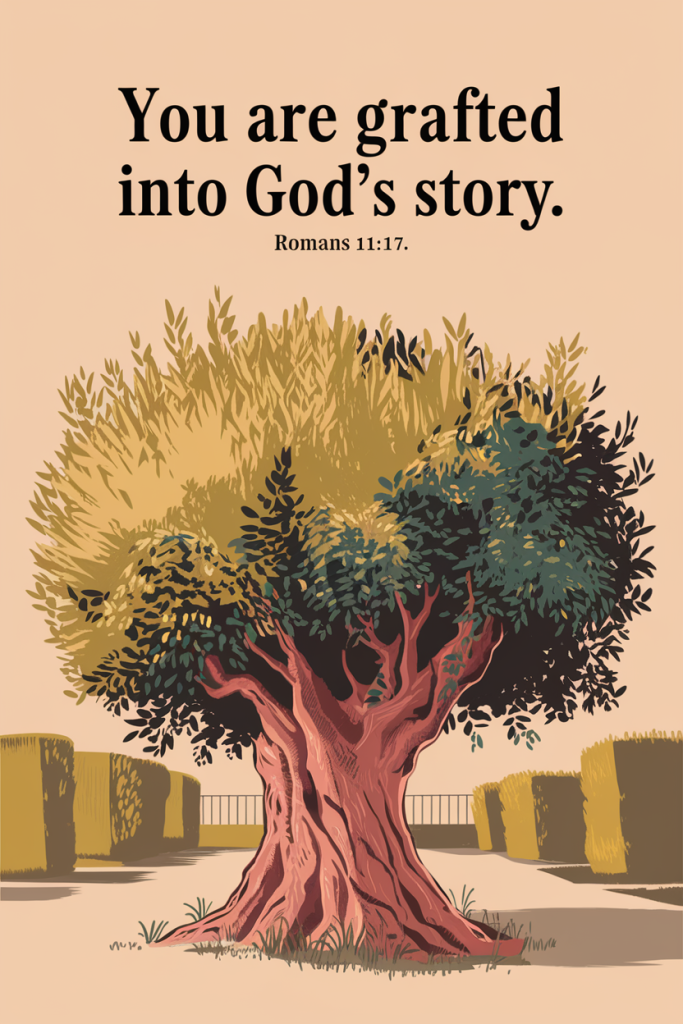
Some unbelieving Jews were broken off, and Gentiles have been grafted among the remaining branches to “partakest of the root and fatness of the olive tree” (Romans 11 KJV).
Significantly, the root (the patriarchal promises and covenantal life of Israel) remains the same – the Gentile believers do not form a separate tree, but join Israel’s tree.
Paul calls the Gentile Christians not to boast, for they do not support the root, “but the root [supports] thee” (Romans 11 KJV).
He also holds out hope that Jews (the natural branches) will be grafted back in if they come to faith (Rom 11:23-24).
This imagery strongly supports the idea that the Church is continuous with Israel: it shares in Israel’s covenantal root rather than replacing it. The people of God remain one cultivated olive tree, now comprising all in Christ.
1 Peter 2:9–10 (KJV) – The Apostle Peter applies to the Church titles that were originally given to Israel.

He writes to the predominantly Gentile believers: “But ye are a chosen generation, a royal priesthood, an holy nation, a peculiar people” (1 Peter 2 KJV).
These phrases echo God’s words to Israel in Exodus 19:5–6. Peter continues, “Which in time past were not a people, but are now the people of God” (1 Peter 2 KJV), alluding to Hosea’s prophecy about Israel (Hos 2:23, 1:10) and applying it to the Church.
By calling the Church the “people of God” and “holy nation,” Peter affirms that the New Testament community of believers fulfills the identity and role of Israel as God’s covenant people.
The once “not a people” (Gentiles outside the old covenants) have now, in Christ, become God’s people – demonstrating the fulfillment of Israel’s promise of restoration in the Church.
Galatians 6:15–16 (KJV) – Paul concludes his letter to the Galatians by referring to the Church in covenantal terms:

“For in Christ Jesus neither circumcision availeth any thing, nor uncircumcision, but a new creature. And as many as walk according to this rule, peace be on them, and mercy, and upon the Israel of God” (Galatians 6:16 KJV: And as many as walk according to this rule, peace be on them, and mercy, and upon the Israel of God.).
Many interpreters understand “the Israel of God” here as a reference to the Church – namely, those (Jewish or Gentile) who are a “new creation” in Christ and follow the gospel rule (Galatians 6:16 KJV: And as many as walk according to this rule, peace be on them, and mercy, and upon the Israel of God.).
Paul’s benediction of peace and mercy on the Church as “the Israel of God” suggests that the community of Christ fulfills the title of Israel in the new covenant era.
In other words, the blessing that would be appropriate for faithful Israel is now pronounced upon the Church, implying continuity of identity.
Romans 2:28–29 (KJV) – Paul defines Jewish identity in spiritual terms that include Gentile believers:
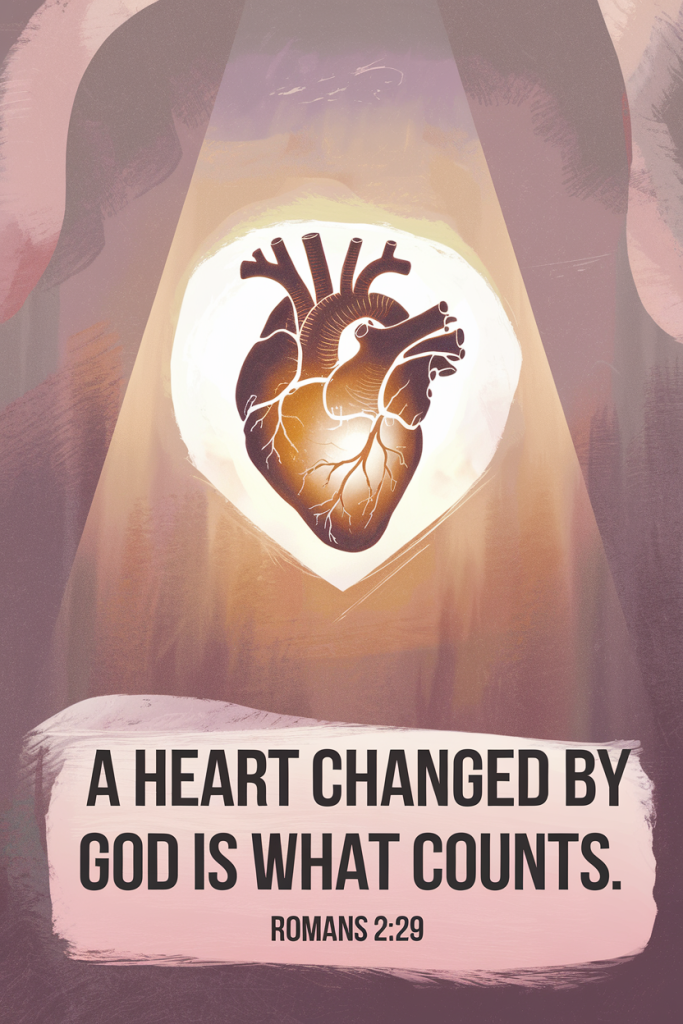
“For he is not a Jew, which is one outwardly… But he is a Jew, which is one inwardly; and circumcision is that of the heart, in the spirit…” (Romans 2 KJV).
True membership in God’s covenant people is based on inward, spiritual transformation rather than ethnicity or mere law-keeping.
By saying a person with a circumcised heart is a Jew, Paul effectively extends the title of “Jew” (and thus the privileges of Israel) to all who belong to Christ by the Spirit.
This supports the idea that the Church constitutes the true “inward” Jews – the continuation of Israel on a spiritual plane.
Philippians 3:3 (KJV) – Paul explicitly includes the predominantly Gentile church among “the circumcision,” a term of honor for God’s people:

“For we are the circumcision, which worship God in the spirit, and rejoice in Christ Jesus, and have no confidence in the flesh” (Philippians 3:3 For it is we who are the circumcision, we who worship by the Spirit of God, who glory in Christ Jesus, and who put no confidence in the flesh--).
Here the Church is identified as the genuine circumcised people, not because of a mark in the flesh, but because of faith in Christ and the Spirit’s work.
In the Old Testament, “the circumcision” was a designation for Israelites; Paul now says we (the Church) are the circumcision. This is a direct affirmation that the Church inherits the status of God’s covenant people Israel in the new era.
Hebrews 8:6–10 (KJV) – The author of Hebrews quotes the prophet Jeremiah’s promise of a “new covenant” with “the house of Israel and the house of Judah” and applies it to the community of Christ.

Jesus is described as “the mediator of a better covenant, which was established upon better promises” (Hebrews 8 KJV).
The text then cites Jeremiah 31: “Behold, the days come, saith the Lord, when I will make a new covenant with the house of Israel and with the house of Judah… For this is the covenant that I will make with the house of Israel… I will put my laws into their mind, and write them in their hearts… and I will be to them a God, and they shall be to me a people” (Hebrews 8 KJV) (Hebrews 8 KJV).
Christians understand this prophecy to be fulfilled in the Church through Christ’s blood (cf. Luke 22:20).
Although Jeremiah addressed “Israel and Judah,” the recipients of the New Covenant are the followers of Christ – showing that the Church partakes in Israel’s promised New Covenant relationship.
The very covenant that defined Israel’s future is now possessed by the Church, indicating that the Church is living in the fulfillment of Israel’s covenants (not as a separate replacement, but as Israel renewed in Christ).
Summary: The New Testament writers consistently identify the Church with the fulfillment of Israel’s calling and promises.
- Believers in Christ are Abraham’s seed and are counted as God’s people Israel (Galatians 3 KJV) (Galatians 6:16 KJV: And as many as walk according to this rule, peace be on them, and mercy, and upon the Israel of God.).
- Through union with Christ, Gentiles have been brought into the one people of God, the covenant community of Israel (Ephesians 2 KJV) (Ephesians 2 KJV).
- The Church is described with Israel’s titles – “chosen people,” “holy nation,” “children of Abraham,” “circumcision,” “people of God” (1 Peter 2 KJV) (Galatians 3 KJV) (Philippians 3:3 For it is we who are the circumcision, we who worship by the Spirit of God, who glory in Christ Jesus, and who put no confidence in the flesh--) – demonstrating that in God’s redemptive plan, the Church stands as the continuation of Israel.
- All the promises made to Israel (the Abrahamic blessing, the New Covenant, inclusion among God’s children, etc.) find their Yes and Amen in Christ and thus belong to those who are in Christ (2 Cor 1:20).
This unified people of God spans both Old and New Testaments, with the Church of Jesus Christ now inheriting and embodying the covenants and promises originally given to Israel.
Patristic Support
Early Christian writers affirm that the Church is the rightful heir to Israel’s identity and promises. The Apostolic and Church Fathers often explicitly taught that Christians constitute the “true Israel” in God’s eyes:
Justin Martyr (c. 160 AD) – In his Dialogue with Trypho, Justin (an early Christian apologist) argues that the Church is the new spiritual Israel. He writes: “For the true spiritual Israel… are we who have been led to God through this crucified Christ” (JUSTIN MARTYR, "The Dialogue with Trypho" (ca. 160) - excerpts).
Justin confronts the Jew Trypho with the claim that because the Jews as a nation rejected Jesus, the blessings of the covenant have passed to the followers of Christ – both Jews and Gentiles – who form the new people of God. He even says that Christians, as followers of the Messiah, inherit the name and identity of Israel (Justin Martyr on Israel, Jews, Christians, and the Old and New Covenants | Citizen of New Jerusalem).
Justin’s view was that the Church is the continuation of the Israel of God, now redefined around Jesus the Messiah.
For example, he states plainly: “We, who have been quarried out from the bowels of Christ, are the true Israelitic race” (Quote/s of the Day – 19 June - AnaStpaul) (a paraphrase of his argument in the Dialogue). This shows an early patristic understanding that the Church stands in direct continuity with biblical Israel.
Epistle of Barnabas (c. 70–130 AD) – This early Christian text (once considered for inclusion in the New Testament by some) explicitly teaches that Christians are now the sole heirs of God’s covenant.
Barnabas writes: “See if this people [the Jews] is the heir, or the former (Christians), and if the covenant belongs to us or to them. … Christians, and not Jews, [are] the heirs of the covenant.” (CHURCH FATHERS: Epistle of Barnabas).
According to Barnabas, because Israel failed to keep the covenant, the covenant promises “are ours” (the Church’s) and no longer belong to unbelieving Israel.
He uses strong terms: “they thus finally lost it… and their covenant was broken, in order that the covenant of the Beloved Jesus might be sealed upon our heart” (CHURCH FATHERS: Epistle of Barnabas).
Although Barnabas’s tone is polemical, the thrust is that the Church is the continuation of God’s covenant people – Israel’s role and promises now find fulfillment in the Christian community.
The Epistle of Barnabas shows that, from a very early stage, Christians saw themselves as the true people of God in place of – or rather in continuation of – Old Israel.
Irenaeus of Lyons (c. 180 AD) – While Irenaeus does not use the exact phrase “new Israel,” his writings imply the Church’s inheritance of Israel’s promises.
In Against Heresies, he teaches that the Church “received the promises of God” originally given to Abraham and Israel, through Christ. He emphasizes the unity of God’s plan, saying the Church existed “from the beginning” in a sense, as all righteous people since Abel are part of it (Supersessionism - Wikipedia).
Irenaeus viewed the New Covenant instituted by Christ as the fulfillment of the covenants to Israel, with the Church as the gathering of all peoples into the family of Abraham.
Tertullian (c. 200 AD) – This Church Father also argued that the legal and prophetic privileges of Israel now belong to Christians.
In his work An Answer to the Jews, Tertullian wrote that “the Greeks (Gentiles) and not the Jews were meant to receive the Law… and the promise of the new law… and the recognition of spiritual sacrifices” (CHURCH FATHERS: An Answer to the Jews (Tertullian)).
He cites Old Testament prophecies of a coming “new covenant” and applies them to the Church, insisting that “the ancient law is abolished and the new law’s observance has shone out” (CHURCH FATHERS: An Answer to the Jews (Tertullian)) among those who have faith in Christ.
Tertullian explicitly states that the promises to Israel find their realization in the Christian church.
For example, commenting on Isaiah’s prophecy, he says the Church is “the mount of the Lord” exalted above others, where a new law goes forth to all nations (CHURCH FATHERS: An Answer to the Jews (Tertullian)).
In Tertullian’s understanding, the old Israel has been superseded by a new, universal Israel (the Church) that lives under the new covenant of Christ.
Augustine of Hippo (late 4th – early 5th c.) – Augustine affirmed that the Church is the continuation of Israel in a spiritual sense. He taught that the promises of the earthly Jerusalem and people find their true fulfillment in the “heavenly Jerusalem” which is the Church.
For instance, Augustine wrote that the term “Israel” in prophecy often refers to the Church, the people of God comprising both Jews and Gentiles in Christ (Augustine on Israel and Jerusalem - Taylor and Francis).
He argued that the Church is the “Israel of the spirit,” while those who cling to the earthly, fleshly status are “Israel according to the flesh.” Augustine explicitly rejected the idea of a separate destiny for ethnic Israel apart from the Church.
In his City of God and other writings, he describes the Christian Church as the heir to Israel’s scriptures and promises, cautioning that when the Old Testament speaks of Israel’s glory, it should be understood as being fulfilled in the Church of Christ (Augustine on Israel and Jerusalem - Taylor and Francis) (Supersessionism - Wikipedia).
Augustine’s influential theology solidified the view that the Church is truly the new Israel, journeying toward the heavenly promised land, with the carnal Israel having lost its exclusive claim to the covenants.
In sum, the Patristic consensus (Eastern and Western) held that the Church of Jesus Christ is the legitimate continuation of Old Testament Israel. The early fathers – from the post-apostolic age through the Nicene era – taught that all the blessings, titles, and roles of Israel now belong to the Church.
The Church was frequently called the “new Israel” or “true Israel” by early Christian writers (JUSTIN MARTYR, "The Dialogue with Trypho" (ca. 160) - excerpts) (CHURCH FATHERS: Epistle of Barnabas).
This did not mean that Jewish people could not be saved – indeed, many fathers hoped for the conversion of Jews – but it meant that God’s redemptive focus had moved to the Christian assembly, which comprised believing Jews and Gentiles.
They saw the Church as inheriting the covenants (Abrahamic, Mosaic, Davidic, New Covenant) and the identity of God’s chosen people.
As Justin Martyr boldly stated, Christians are the new spiritual Israel, the people foretold by the prophets, now brought into the covenant through Christ (JUSTIN MARTYR, "The Dialogue with Trypho" (ca. 160) - excerpts).
Theological Commentary
Historic Christian theology across various traditions affirms the continuity of Israel in the Church – not as a mere replacement, but as a fulfillment and expansion.
Below is commentary from Protestant, Catholic, and Eastern Orthodox perspectives that reinforces the view of the Church as the continuation of Israel, inheriting Israel’s covenants and promises:
Protestant (Reformed) Perspective: The Reformed tradition has long taught that the Church is the heir to Israel’s promises. John Calvin and other Reformers frequently identified the Old Testament church (Israel) and the New Testament church as one continuous people of God.
For example, Calvin wrote that “the covenant made with the fathers in Israel [is] in substance and reality the very same as that which we have” (Institutes, II.10).
In modern Reformed commentary, pastor-theologian John Piper explicitly states that the Church fulfills the role of Israel.
Expounding Ephesians 2, Piper writes: “The true Israel becomes the church of Christ and the church of Christ emerges as the true Israel.” ( Why I Am Not Reformed (2): Israel & The Church | Truth & Tidings)
He also notes on Romans 2: “A Gentile who fulfills the requirements of the law will be counted as a true Jew – a true member of God’s chosen people, Israel.” ( Why I Am Not Reformed (2): Israel & The Church | Truth & Tidings).
In other words, those who belong to Christ by faith (regardless of ethnicity) are counted as part of God’s “chosen people, Israel.”
This encapsulates the Protestant covenantal view: the Church is not a separate entity that replaces Israel, but rather Israel enlarged – the natural olive tree now encompassing wild branches grafted in (Romans 11 KJV).
Prominent Reformed confessions echo this: the Westminster Confession (1646) speaks of one Church under both Old and New testaments, and many Protestant theologians (Charles H. Spurgeon, B.B. Warfield, Louis Berkhof, etc.) have affirmed that all who believe in Christ are the true Israel of God.
As one Reformed author puts it, “the Israel of God is not defined by ethnicity, but by faith in the Messiah” (A Review of O. Palmer Robertson's The Israel of God).
Thus, in Protestant theology, every promise God made to Israel (e.g. the blessing to Abraham, the covenant of grace) belongs to the Church in Christ, because the Church is the continuation of Israel in the new covenant age.
Catholic Perspective: The Catholic Church also teaches that it is the new People of God, continuous with the people of Israel.
The Second Vatican Council’s document Nostra Aetate (1965) explicitly stated, “Although the Church is the new people of God, the Jews should not be presented as rejected or accursed by God” (Why Israel Matters: The Biblical Roots of Catholic Zionism - Homiletic & Pastoral Review).
Here the Catholic Church affirms that by God’s design the Church has taken up Israel’s mantle as God’s covenant community (hence “new people of God”), inheriting Israel’s spiritual role.
The Catechism of the Catholic Church likewise refers to the Church as “the new Israel” (CCC 877) (Why Israel Matters: The Biblical Roots of Catholic Zionism - Homiletic & Pastoral Review).
Catholic theology emphasizes that the Church is built upon the covenants God made with Israel, brought to fulfillment in Christ. Pope St. John Paul II taught that the Old Covenant was never revoked but finds its fulfillment in the New Covenant of the Church.
The Church, in Catholic understanding, is Israel transformed: initially formed from the remnant of faithful Israel (the Jewish apostles and disciples of Christ) and enlarged to include Gentiles.
The Catechism (§781) quotes 1 Peter 2:9 regarding the Church: “[The Church is] a chosen race, a royal priesthood, a holy nation, God’s own people”, directly applying Israel’s titles to itself.
Catholic commentators often call the Church “the Israel of the Spirit” – the fulfillment of what Israel was always meant to be. All the promises of God find their “Yes” in Christ (2 Cor 1:20) and thus accrue to the Church, Christ’s Body. Importantly, while affirming the Church as new Israel, Catholic teaching also holds that God has not abandoned the Jewish people.
They are loved “for the sake of their fathers” (Rom 11:28-29) and the Church looks forward to the eventual inclusion of Israel in salvation (cf. Rom 11:12, 26).
But with respect to covenant status and promise, the Catholic position is clear: the Church is the continuation of the people to whom the covenants were given, now living in the era of fulfillment.
Eastern Orthodox Perspective: Eastern Orthodox theology likewise views the Church as the continuation and fulfillment of Israel.
While the term “supersessionism” is not commonly used in Orthodoxy, the concept that the Church is the New Israel is deeply embedded in Orthodox thought and liturgy.
Orthodox writings frequently call the Church “the new Israel” or “Israel according to the Spirit.”
A modern Orthodox commentator, Herman Blaydoe, succinctly explains: “The Church is the continuation of Israel. We call it the New Israel, not because it no longer includes the Jewish people, but because it now includes all people. It goes beyond what it was; it does not replace what was before.” (Supersessionism - OrthodoxWiki) (emphasis added).
This statement captures the Orthodox understanding: the Church encompasses and transcends ethnic Israel, rather than simply pushing Israel aside.
The Orthodox liturgy itself identifies the Christian assembly as the new Israel – for example, at the Feast of the Meeting of the Lord, the hymn refers to the Church as “thy people Israel” seeing their Messiah in Jesus (Supersessionism - OrthodoxWiki).
The 2nd-century Epistle to Diognetus (an early Christian text respected in the Orthodox tradition) describes Christians as “the holy people” whom God has now sent into the world, implying they hold the status once held by Israel.
Eastern Church Fathers like St. Cyril of Jerusalem and St. John Chrysostom taught that the Church inherits the promises to Abraham and that the unbelief of Jewish authorities led to “the Church of the nations taking the place of the synagogue.”
However, consistent with Romans 11, Orthodoxy also prays for the eventual salvation of the Jews, seeing the Church as open to receive Israel in Christ.
In summary, the Orthodox stance (as articulated by modern theologians and ancient hymnography) is that the Church is Israel renewed and expanded – the same olive tree of God’s people, now with the wild branches grafted in, exactly as Paul taught (Romans 11 KJV) (Romans 11 KJV).
All three major branches of Christianity – Catholic, Orthodox, and Protestant – thus converge on the view that the Church is the continuation of Old Testament Israel in God’s redemptive plan.
They may express it with different nuances, but each affirms that the covenant people of God in the New Testament age (the Church) stands in direct continuity with the covenant people of God in the Old Testament (Israel).
The Church inherits the identity (“people of God,” “children of Abraham,” “chosen nation”) and the spiritual privileges of Israel, because through Christ the promises to Israel have been extended to encompass the nations.
This is not conceived as a mere replacement that deletes Israel, but as a fulfillment and inclusion – Israel’s destiny flowered into the multi-ethnic community of the Church, in which believing Jews and believing Gentiles are one in Christ Jesus (Eph 2:14-16, Gal 3:28).
Scholarly Insights
Biblical scholars and theologians across the centuries have provided extensive support for the idea that the Church fulfills the promises made to Israel. Here are a few key insights and quotations that affirm this position:
“One People of God” – Biblical Theology Consensus: Modern evangelical scholarship often emphasizes the unity of God’s people across the testaments.
As theologian Jared Compton summarizes, “the Old Testament promises about Israel’s salvation are, by and large, fulfilled by Israel – and that all this happens inside of the church.” (The Relationship between Israel and the Church - The Gospel Coalition).
In an essay on Israel and the Church (The Gospel Coalition), Compton explains that in Romans 9–11 Paul envisions the salvation of Israel happening through their incorporation into the Church (rather than apart from it) (The Relationship between Israel and the Church - The Gospel Coalition).
In other words, when prophecy is fulfilled (“all Israel shall be saved,” Rom 11:26), it is fulfilled within the context of the Church, the family of God in Christ.
This reflects a broad scholarly agreement that the New Testament presents one people of God, continuous from Abraham to the end of the age – with the Church age being the era when God’s ancient promises to Israel come to fruition (see also Eph 2:12-22, where Gentiles join the “commonwealth of Israel” in the Church).
“The Church has become God’s true Israel” – Church Historical View: Church historian and scholars note that virtually all historic Christian denominations taught the continuity of Israel in the Church.
The Wikipedia article on “Supersessionism” observes: “Supersessionists hold that the universal Church has become God’s true Israel and so Christians, whether Jew or Gentile, are the people of God.” (Supersessionism - Wikipedia).
This line encapsulates the classic doctrine: the Church is viewed as “Israel” in the truest sense (spiritually renewed and faithful).
It is supported by the fact that “Most historic Christian churches, including the Eastern Orthodox, Roman Catholic, [and] Reformed Churches” have traditionally seen the Church as the new Israel (Supersessionism - Wikipedia).
This consensus is sometimes called “fulfillment theology” or “covenant theology,” stressing that the coming of Christ and the establishment of the New Covenant fulfilled the Old Covenant promises to Israel in the establishment of the Church.
As evidence, scholars point to the New Testament’s liberal application of Old Testament Israel language to the Church (as detailed in the Scriptural Evidence section above).
The early Christians saw themselves as the continuation of Israel’s story – the true “remnant” of Israel plus the Gentiles grafted in – rather than a brand new religion disconnected from Israel’s scriptures.
Early Church Fathers on Prophecy: Scholarly studies of early Christian interpretation show that the Fathers routinely interpreted Old Testament prophecies about Israel’s restoration or about Zion’s glory as referring to the Church.
For example, Justin Martyr, Origen, and Augustine are noted as reading promises of a “new covenant” or a renewed Jerusalem in a spiritual sense, fulfilled in the Christian Church (Supersessionism - Wikipedia).
Patristics scholar Stewart Means writes, “Church fathers such as Justin Martyr and Origen taught variations on supersessionism” (Supersessionism - Wikipedia), meaning they believed the Church possessed the legacy of Israel.
Melito of Sardis (2nd c.) in his Paschal Homily starkly said that Israel “was divorced for having slain the Lord” and now “the Church is an elect people” – indicating that in his view the Church now occupied the place of Israel as God’s elect.
While the tone towards Jews was often polemical in that era, the underlying interpretive principle was that the Christian ecclesia is the true continuation of the Israel of God. Modern scholars recognize this as the dominant view until recent times.
“The Church is Israel… not by carnal descent but by promise” – Dr. O. Palmer Robertson: In his book The Israel of God, Reformed theologian O. Palmer Robertson concludes that “the Israel of God is no longer defined by ethnicity, but by union with Christ.”
He argues that all promises (land, covenant blessings) are fulfilled in Christ and dispensed to those united to Him (the Church) (A Review of O. Palmer Robertson's The Israel of God).
He points to Galatians 6:16 as Paul’s climactic redefinition of Israel to include Gentile believers as part of “the Israel of God.”
Similarly, N.T. Wright, a prominent biblical scholar, notes that throughout Galatians and Romans, Paul is reshaping the concept of Israel around Jesus the Messiah and the Spirit.
Wright comments that in Christ, the boundary markers of Israel (circumcision, food laws, etc.) fall away, and what emerges is a single multi-ethnic family of Abraham – effectively, Israel transformed.
This scholarly perspective sees continuity: God has one covenant people – first mostly ethnic Israelites, now an international community in Christ, but continuous in covenant relationship.
Restoration in the Church: Scholars also highlight how New Testament writers depict Old Testament restoration prophecies as coming true in the Church.
For instance, Amos 9:11-12 (the raising of David’s fallen tent and inclusion of Gentiles) is cited in Acts 15:14-18 as being fulfilled in the Church’s expansion to the Gentiles.
This indicates that the apostles understood Israel’s prophesied restoration under David’s heir to be happening as Jews and Gentiles were gathered into the Church under Christ’s lordship (The Relationship between Israel and the Church) (Israel, the Church, and the Promised Land - Fairview Baptist Church).
Similarly, the “New Jerusalem” of Revelation 21 – with gates named after Israel’s tribes – is interpreted by most Christian theologians as a symbol for the glorified Church.
Gerhard Kittel, in Theological Dictionary of the NT, writes that the Church is “the historical continuation of the people of God in the Old Testament, now defined no longer by descent from Abraham but by faith in Christ.”
All such scholarly analyses reinforce that the Church inherits Israel’s identity: the Old Testament hopes for Israel (a people for God’s name, a spirit-filled community, a restored temple/house of David, etc.) are understood to be realized in the Church of Christ (The Relationship between Israel and the Church - The Gospel Coalition).
In conclusion, the weight of scriptural evidence, patristic testimony, and theological reflection all converge on the affirmative view that the Church is the continuation of Israel, not a separate plan of God.
The Church is Israel reconstituted in the Messiah: expanded to include believers from all nations, built on the foundation of the Jewish patriarchs and prophets, and recipient of all the covenant promises given throughout Scripture.
This view – held by the early Fathers, medieval Doctors, Reformers, and many modern scholars – insists that God’s promises have not failed but have found (and continue to find) their fulfillment in the Church, the Israel of the New Covenant (Galatians 6:16 KJV: And as many as walk according to this rule, peace be on them, and mercy, and upon the Israel of God.).
As Paul declares, “There is neither Jew nor Greek… for ye are all one in Christ Jesus” and thus heirs according to the promise (Gal 3:28-29).
The unfolding of redemptive history reveals a single people of God: first typified by Israel according to the flesh, and now manifested as Israel according to the Spirit – the Church of Jesus Christ, in whom all the promises of God are Yes and Amen.
Sources for Further Study:
- Scripture: See the verses cited above (e.g. Romans 9–11, Galatians 3 and 6, Ephesians 2, 1 Peter 2, etc.) for primary biblical evidence of the Church’s continuity with Israel. Especially helpful are Romans 11 (the olive tree analogy) and Ephesians 2:11-22.
- Early Church Writings: Justin Martyr’s Dialogue with Trypho (JUSTIN MARTYR, "The Dialogue with Trypho" (ca. 160) - excerpts) and the Epistle of Barnabas (CHURCH FATHERS: Epistle of Barnabas) are key texts where the early church articulates this doctrine. Also see Irenaeus, Against Heresies (Book IV, ch. 21-32) and Augustine’s City of God (Book XVII) for how they connect Israel’s promises to the Church.
- Theological Works: “The Israel of God” by O. Palmer Robertson provides a book-length treatment of the issue from a Reformed perspective. Chapter 2 of Michael Horton’s Covenant and Eschatology also addresses how the Church inherits Israel’s mission. For a Catholic perspective, see the Catechism of the Catholic Church §§674- in conjunction with Vatican II’s Lumen Gentium §9 and Nostra Aetate §4 (Why Israel Matters: The Biblical Roots of Catholic Zionism - Homiletic & Pastoral Review). Eastern Orthodox insights can be found in Georges Florovsky’s essays on Israel and the Church, and the Orthodox Study Bible’s notes on passages like 1 Peter 2:9.
- Commentaries and Essays: Many Bible commentaries on Galatians, Ephesians, and Romans discuss the relationship between Israel and the Church. For example, F.F. Bruce’s commentary on Galatians (on 6:16) and Douglas Moo’s commentary on Romans (esp. Romans 9–11) affirm that the Church is the fulfillment of God’s Israel. The Gospel Coalition essay by Jared Compton (The Relationship between Israel and the Church - The Gospel Coalition) (“The Relationship between Israel and the Church”) is a concise overview. Additionally, Greg Beale’s work on the New Testament’s use of the Old (e.g., A New Testament Biblical Theology) emphasizes how the Church fulfills temple, land, and people motifs from the OT. All these sources build a cumulative case that the covenants and promises made to Israel have their rich and multi-faceted fulfillment in the Church of Jesus Christ.
Call to Action: The Question That Demands an AnswerIn Acts 2:37 Peter and the Apostles were asked the question – What Shall We do? And in Acts 2:38 Peter answered, Repent, and be baptized every one of you in the name of Jesus Christ for the remission of sins, and ye shall receive the gift of the Holy Ghost. For the promise is unto you, and to your children, and to all that are afar off, even as many as the Lord our God shall call. Do you understand this? After hearing the gospel and believing, they asked what should would do. The answer hasn’t changed friend, Peter clearly gave the answer. The question for you today is, Have you receieved the Holy Spirit Since you believed? If you’re ready to take that step, or you want to learn more about what it means to be born again of water and Spirit, visit: Come, and let the Spirit make you new. |