
Quick Overview of This Bible Study…
Short on time? I have created a short slide show presentation of some key takeaways in our study. The complete, more comprehensive bible study is below…
Have you ever noticed how often water shows up in the Bible? From the literal streams, rivers, seas, and storms to the rich symbolic images of “living water” and cleansing floods, the concept of water saturates Scripture.
As a follower of Christ, I find comfort and challenge in these water stories – they speak to my everyday thirsts and struggles.
Let’s dive in (pardon the pun!) and explore the various ways “water” is used in the Bible – literally, metaphorically, spiritually – and see what it means for us today.
Water as Life: A Precious Gift and Blessing
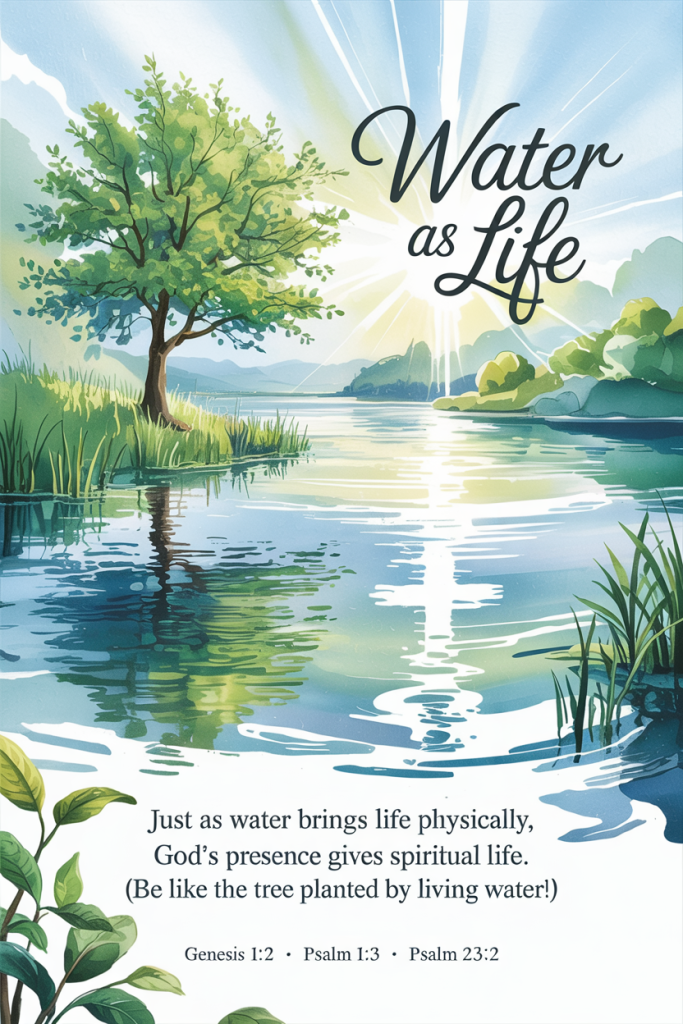
From the very beginning of the Bible, water is linked with life. In fact, the second verse of Genesis describes how “the Spirit of God moved upon the face of the waters” biblehub.com during creation.
I love that the first scene of God shaping the world involves water – it shows how essential and life-giving water is.
In our daily lives, we know we can’t survive without clean water; in the same way, spiritually we can’t thrive without the “living water” God provides.
In ancient times, water was a precious resource. People dug wells, built aqueducts, and even fought wars over access to rivers and springs cornerstoneverses.com, cornerstoneverses.com.
An abundance of water was understood as a sign of God’s blessing, while drought was seen as divine displeasure.
Scripture often makes this connection: when God blessed Israel, the rains came in season and the crops flourished, but when Israel strayed, the heavens turned to brass (as in the days of Elijah’s drought).
“Water is essential for sustaining life, and its abundance or scarcity often reflects God's blessing or judgment” biblehub.com.
Rain as Blessing:
In the Bible, rain is a gift from God. Moses told Israel that if they obeyed God, “the Lord will open unto thee his good treasure, the heaven to give the rain unto thy land in his season” (Deuteronomy 28:12, KJV).
The prophet Joel likewise spoke of God giving “the former rain and the latter rain” as a sign of restoration (Joel 2:23).
Even God’s teaching is compared to gentle rain: “My doctrine shall drop as the rain, my speech shall distill as the dew” cornerstoneverses.com – nourishing our souls the way showers refresh the ground.
A Tree by the River:
One of my favorite images of blessing is in Psalm 1, where the person who delights in God’s law is “like a tree planted by the rivers of water, that bringeth forth his fruit in his season” (Psalm 1:3, KJV).
That tree isn’t anxious about droughts – its roots reach the stream. It’s a reminder that when I stay rooted in God’s Word, drawing daily sustenance from Him, I remain fruitful and stable even in dry times.
We all long to be like that tree, constantly nourished by God’s life-giving water.
Still Waters of Peace:
In Psalm 23, David sings, “He leadeth me beside the still waters. He restoreth my soul.” We usually read this at funerals, but think about it in everyday terms: God wants to lead us to places of rest and refreshment.
Just as calm waters restore a weary traveler, God’s presence can restore a weary heart. When life’s chaos makes me feel parched and restless, picturing those still waters helps me pause and let the Shepherd refresh my soul.
Water, in its literal sense, was also central to many Bible narratives.
The Garden of Eden was watered by a river that split into four rivers, signifying the fullness of God’s provision at creation (Genesis 2:10-14).
Later, when God led His people through the wilderness, He provided water in miraculous ways – sweetening the bitter waters at Marah and bringing water from a rock at Meribah.
These stories show God as the ultimate provider of life’s necessities. “In the wilderness, God miraculously provides water from a rock to quench the thirst of the Israelites” biblehub.com – an act of mercy that the apostle Paul later saw as a picture of Christ, the Rock who gives us living water.
When Water Brings Judgment and Deliverance

Water doesn’t always appear as a gentle blessing; sometimes it comes as a flood of judgment or a force of chaos. This dual nature of water – to give life and to take it – is something the ancients understood well.
The same sea that carries a boat can also swallow it up. In the Bible, we see occasions when God used water to judge evil and at the same time save His people, showing His power over both life and death.
Noah’s Flood:
In Genesis, human wickedness became so great that God sent a flood to judge the earth. For forty days, water poured from the sky and burst from the deep, cleansing the world of its corruption.
Yet, in that very judgment, God provided a means of salvation – Noah’s ark floated atop the waters, preserving a faithful remnant.
The apostle Peter later noted that Noah’s family was “saved by water” (the ark buoyed by the flood) and likened the Flood to the cleansing waters of baptism that save us through Christ cornerstoneverses.com.
It’s sobering to realize that water can be God’s instrument of justice. Whenever I read about the Flood, I ask myself: am I safely in the “Ark” of Christ, or trying to tread water on my own?
The Red Sea:
One of the most dramatic water rescues is the parting of the Red Sea. Pursued by Pharaoh’s army, the Israelites seemed trapped between the soldiers and the sea – until God blew a wind and split the sea in two!
His people crossed safely on dry ground, but when the Egyptian chariots chased after, the waters came crashing down. The same path became deliverance for God’s children and destruction for their enemies cornerstoneverses.com.
“The same waters that cleansed and gave birth to the nation of Israel drowned the evil Pharaoh and his army” cornerstoneverses.com.
This story always gives me hope that no obstacle is too great when God is fighting for us. I also see a warning: just as prideful Pharaoh was swallowed in the waves, I need to humble myself before God’s mighty power.
Other Water Crossings:
This pattern of “crossing through water” as a transition repeats throughout Scripture cornerstoneverses.com.
- Joshua led the next generation of Israelites through the Jordan River into the Promised Land, as God miraculously stopped the river’s flow (Joshua 3–4).
- Centuries before, Jacob had crossed a river (the Jabbok) when returning to Canaan, on the night he wrestled with God and was changed (Genesis 32).
- Even the prophet Jonah was thrown into the sea during a storm and swallowed by a great fish – three days later he was spat up on land, a chastened man (Jonah 1–2).
Over and over, water serves as a boundary between an old life and a new one. It’s as if you have to go through the waters of death to experience a kind of resurrection or new beginning on the other side cornerstoneverses.com.
Christians see a parallel in baptism, which is a symbolic crossing from the old life of sin into a new life in Christ.
Just as Israel passed through the Red Sea and Jordan, we pass through the waters of baptism as a sign of leaving our slavery to sin and entering God’s promise cornerstoneverses.com.
Water as Chaos Tamed by God:
For ancient people, large bodies of water (like the sea) represented chaos, danger, and the unknown. Think of a tiny boat tossed by a huge storm – that’s how our human situation often feels apart from God.
Yet the Bible shows God’s authority over chaotic waters.
- In the book of Daniel, destructive beasts emerge from a stormy sea (symbolizing violent nations cornerstoneverses.com), but God ultimately judges them.
- In the Gospels, Jesus reenacted God’s mastery over the deep: He walked on the raging waves and calmed the storm with a word cornerstoneverses.com.
When Peter tried to walk on water to meet Jesus, he panicked and started sinking – I can relate to his lapse of faith! – but Jesus grabbed him, and together they stepped into the boat as the wind ceased cornerstoneverses.com.
These stories assure me that no matter how high the waves of life get, my Lord is higher still. He can bring peace in my chaos and pull me up when I’m drowning in fear or doubt.
In all these examples, water was an instrument of God – sometimes to wipe out evil, other times to save and transform. The Red Sea became a cradle of Israel’s faith and the grave of Egypt’s pride. The Flood wiped the slate clean for a fresh start.
When I face trials that feel like floodwaters, I remember God’s promise: “When thou passest through the waters, I will be with thee; and through the rivers, they shall not overflow thee” (Isaiah 43:2, KJV).
He can use even the overwhelming waters of life to deliver me and draw me closer to Him.
Cleansing Waters: Purification, Washing, and Baptism

One of the beautiful themes in Scripture is water as a means of cleansing and new life. Just as we use water to wash dirt from our bodies, God uses “water” imagery to talk about washing away sin and impurity from our hearts.
If you’ve ever come home grimy and sweaty and headed straight for a shower, you know how refreshing it feels to be clean. Spiritually, we all need that cleansing – regularly! – and the Bible assures us that God provides it.
Under the Old Testament law, ritual washings were common.
- Priests had to wash in a bronze basin before entering the Tabernacle to serve (Exodus 30:18-21).
- People who were ceremonially unclean (like lepers who were healed, or anyone who touched a dead body) had to bathe in water as part of the purification rites (Leviticus 14:8-9).
These practices taught Israel that God is holy and that we need to be clean to approach Him. The external washing symbolized an internal need: the removal of sin’s stain.
- As Job asked, “Who can bring a clean thing out of an unclean?” (Job 14:4) – implying only God can truly cleanse us.
The prophets later picked up this theme and pointed to a time when God would do a deep clean on His people.
“Then will I sprinkle clean water upon you, and ye shall be clean: from all your filthiness… will I cleanse you” (Ezekiel 36:25, KJV).
This promise in Ezekiel is coupled with God saying, “A new heart also will I give you, and a new spirit will I put within you” (36:26).
So water here is a picture of spiritual cleansing and renewal – God washing away idolatries and impurities and giving a fresh start.
When I first read that as a new Christian, it leapt off the page. I realized that God was not interested in ritual baths for their own sake; He wanted to wash my heart. And He has! Every time I confess my sins, it’s like He power-washes my soul with grace.
In the New Testament, baptism emerges as the definitive water rite for believers.
John the Baptist preached repentance and baptized people in the Jordan River as a sign of their sins being washed away.
- Even Jesus, though sinless, stepped into the Jordan’s waters to be baptized – validating this act of obedience and foreshadowing His own death and resurrection.
- Christian baptism is richly symbolic: going under the water represents dying (to sin) and burial; coming up from the water represents resurrection to new life in Christ (Romans 6:3-4).
The early church continued this practice, and we see explicit instructions about it.
- When Saul of Tarsus encountered Jesus and turned from persecutor to disciple, he was told: “And now why tarriest thou? arise, and be baptized, and wash away thy sins, calling on the name of the Lord” (Acts 22:16, KJV).
Baptism itself doesn’t magically remove sin (only Jesus’ blood can do that), but it’s an outward act of faith and obedience that affirms God’s cleansing work inside us.
Peter explains that baptism saves us “not by removing dirt from the body, but as a response to God from a clean conscience” (1 Peter 3:21, NLT) – it’s effective because of the resurrection of Jesus.
It’s amazing to me that God takes something so simple and common as water and uses it as a sacrament of His grace.
Beyond baptism, water continues to symbolize the ongoing cleansing in a believer’s life.
Jesus used a powerful object lesson when He washed His disciples’ feet at the Last Supper. Peter was scandalized at first – “Lord, you washing my feet?!” – but Jesus told him if he didn’t allow it, he’d have no part with Him.
Peter then asked for a whole bath, to which Jesus replied that one who has bathed only needs to wash his feet (John 13:9-10).
The meaning? Once we are saved (bathed all over), we still pick up dirt in daily life and need regular “foot-washing” – ongoing repentance, forgiveness, and sanctification.
In fact, Jesus said to the disciples, “ye ought also to wash one another’s feet” (John 13:14), meaning we should humbly serve each other and help each other stay accountable and clean in our walk.
How do we get this continual cleansing?
One way is through God’s Word, which is often compared to water. Ephesians 5:26 says Jesus sanctifies and cleanses the church “with the washing of water by the word”.
As I read and “soak” in Scripture, it has a purifying effect on my mind and heart – scrubbing away lies, convicting me of sin, and refreshing my perspective.
- Jesus told the disciples, “Now ye are clean through the word which I have spoken unto you” (John 15:3, KJV).
- Similarly, Psalm 119:9 asks, “Wherewithal shall a young man cleanse his way?” and answers, “By taking heed thereto according to thy word.”.
There have been times I’ve felt guilty or grimy inside, and a timely Bible passage was like a shower for my soul, assuring me of God’s love and setting me back on a clean path.
In summary,
God has given us many “waters” for our cleansing: the once-for-all washing of rebirth (Titus 3:5 speaks of “the washing of regeneration”), the continual cleansing of His Word, the confession and forgiveness process (1 John 1:9), and the fellowship of believers helping each other stay clean (James 5:16).
It’s up to us to step into those waters. We know what happens if you skip showers for too long – you (and others!) start to notice. In the same way, if I neglect prayer and Scripture and honest self-examination, the “dirt” of selfishness and bitterness builds up.
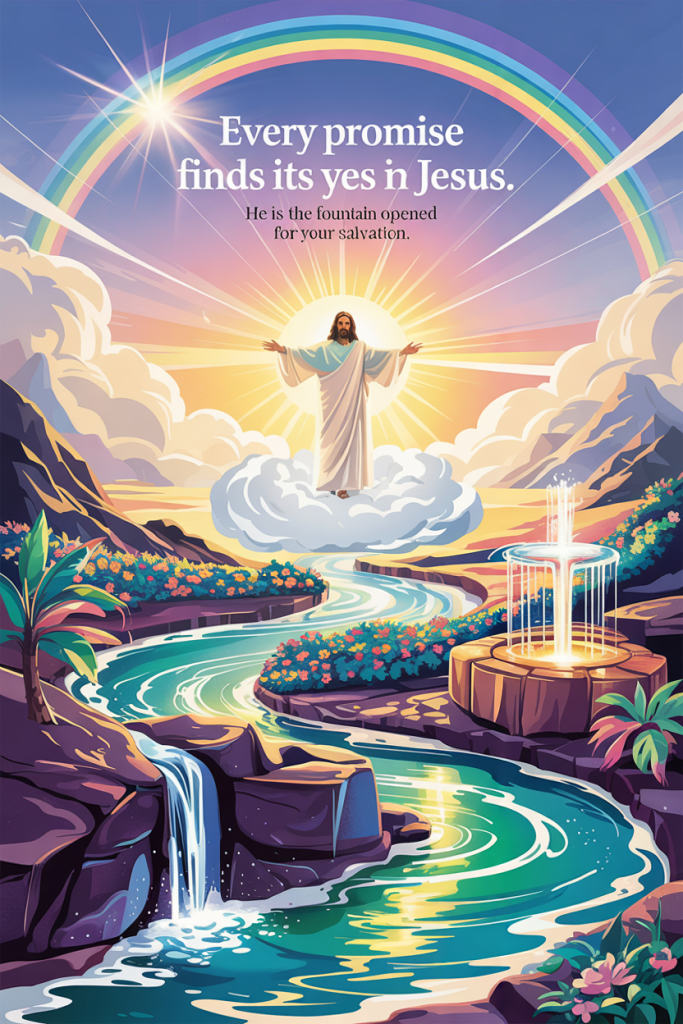
Thank God, He invites us to come and be washed anytime. There’s a “fountain opened… for sin and for uncleanness” (Zechariah 13:1, KJV) through Jesus’ sacrifice – an unending supply of grace to cleanse every stain.
“Living Water”: Satisfying Our Deepest Thirst

Perhaps the most beautiful and personal way the Bible speaks about water is as a symbol for the satisfaction and eternal life God offers. We all know what it’s like to be thirsty. (Growing up, I played sports in the hot sun and remember how parched I’d get – water never tasted so good as in those moments!)
The Bible uses that universal experience of thirst to illustrate our spiritual craving for God. As Augustine famously said, our hearts are restless until they rest in Him. In biblical terms, our souls are thirsty until we drink from His fountain.
One of the key phrases associated with this theme is “living water.” In Scripture, “living water” means flowing, fresh water (as opposed to stagnant pond water).
It becomes a powerful metaphor for the life and refreshment God gives. In the Old Testament, God calls Himself “the fountain of living waters” biblehub.com and laments that His people have foolishly abandoned Him to dig their own broken wells that can’t hold water (Jeremiah 2:13).
That image convicts me: how often have I tried to satisfy my heart with things that don’t hold water – leaky cisterns of career, entertainment, human approval – when all the while the true Fountain of life was right there, waiting for me to turn back?
God offers the real thing, but we sometimes settle for spiritual Kool-Aid and end up thirsty again.
In the New Testament, Jesus fulfills and amplifies the promise of “living water.” In the Gospel of John, chapter 4, Jesus meets the Samaritan woman at Jacob’s well.
This woman had come with her waterpot in the heat of noon, and Jesus asks her for a drink – which surprises her, since Jews didn’t usually chat with Samaritans. But Jesus quickly turns the conversation to a different kind of water.
“If thou knewest the gift of God,” He says, “and who it is that saith to thee, Give me to drink; thou wouldest have asked of him, and he would have given thee living water” (John 4:10, KJV).
I would have loved to see her face at that moment. She’s thinking physical water, so she retorts that the well is deep and He has no bucket. Then Jesus answers with words that thrill my soul every time I read them:
“Whosoever drinketh of this water [from the well] shall thirst again: But whosoever drinketh of the water that I shall give him shall never thirst; but the water that I shall give him shall be in him a well of water springing up into everlasting life” (John 4:13-14, KJV).
Wow. Jesus essentially says, “I can put a spring of eternal life inside of you, one that permanently quenches your deepest thirst.” He’s talking about eternal life – the Holy Spirit dwelling within us, bringing us into union with God.
The woman is so impacted by this encounter that she leaves her water jar (symbolic, isn’t it?) and runs to town to tell others about Jesus. What physical water can only satisfy temporarily, Jesus’ living water satisfies forever.
And it becomes a source within us – meaning we not only get filled, we can overflow to bless others.
Jesus later stood up at a feast in Jerusalem and cried, “If any man thirst, let him come unto me, and drink. He that believeth on me… out of his belly shall flow rivers of living water” (John 7:38). John explains, “This spake he of the Spirit, which they that believe on him should receive”.
In other words, the Holy Spirit is like a river of life inside believers.
When the Spirit came at Pentecost, that prophecy was set in motion – and to this day, every person who trusts in Christ receives the indwelling Holy Spirit, a divine wellspring within.
I have to ask myself and you: Have you experienced this living water? Do you know what it’s like to have your soul’s thirst quenched by Christ? I remember the season of my life before I yielded to Jesus – I was religious on the outside but inwardly parched, always seeking something to fill an emptiness.
When I finally cried out to Jesus to save me, I felt as if cool, clear water rushed into my heart.
That doesn’t mean I’ve never had dry spells; I certainly have. But in those moments, this promise draws me back: “He who drinks of Jesus’ water will never thirst.” It invites me to examine: am I drinking deeply of His presence and Word, or have I wandered to broken cisterns again?
The living water is free – Jesus gives it without cost – but I must come and drink. It’s an ongoing invitation. In fact, the Bible’s grand story ends on this note of invitation: “And let him that is athirst come. And whosoever will, let him take the water of life freely” (Revelation 22:17, KJV).
God, in the end, offers water to all who desire true life. What a gracious God! He knows we’re thirsty; He spread a feast for our souls and marked it “free admission.”
So when I find myself spiritually dehydrated – maybe discouraged, or numb, or tempted to find satisfaction in lesser things – I recall Jesus’ words: “If anyone thirsts… come to Me and drink.”
There’s nothing shameful about being thirsty; the shame would be in refusing the drink that is offered. As believers, we have a well within us, but we still need to draw from it daily by prayer, faith, and remembering His promises.
And if you’ve never come to Jesus in the first place, His arms are wide open, holding the cup of living water. He says in effect, “I know the muddy water you’ve been drinking. Come, I have something better.”
The Holy Spirit and the Water of Life

We’ve already touched on this, but let’s focus a bit more on the connection between water and the Holy Spirit, because it’s a key biblical theme. The Holy Spirit is the third Person of the Trinity – God living in us – and Jesus often described the Spirit’s work in terms of water.
Why? Possibly because water cleanses, refreshes, gives life, and satisfies – all things the Spirit of God does in a believer’s life.
Earlier, we mentioned Jesus’ promise of “rivers of living water” flowing from within believers, which John explicitly said referred to the Spirit. So one role of the Spirit is to be an ever-flowing source of life and power within us.
I think of times I’ve felt dry or weak in my Christian walk – trying to serve God in my own strength is like scooping from a puddle that soon dries up. But relying on the Holy Spirit is like tapping into an underground spring that never runs dry.
Jesus told the Samaritan woman the water He gives becomes a well inside us bubbling up continually. It’s the Holy Spirit who keeps bubbling up joy, love, and faith when my flesh would have given out.
- The Bible also talks about the Spirit “pouring” into our lives like water. In the Old Testament, God promised, “I will pour water upon him that is thirsty… I will pour my Spirit upon thy seed” (Isaiah 44:3, KJV).
Notice how water and Spirit are paralleled – the pouring of water on thirsty land symbolizes God pouring out His Spirit on people.
This happened dramatically at Pentecost (Acts 2), and it happens whenever someone trusts Christ and receives the Spirit.
Titus 3:5-6 echoes this by saying God saved us “by the washing of regeneration and renewing of the Holy Ghost; which he shed on us abundantly through Jesus Christ our Saviour” – the Spirit is “shed on us” (poured out) generously.
Another intriguing connection is being “born of water and of the Spirit.” Jesus said in John 3:5, “Except a man be born of water and of the Spirit, he cannot enter into the kingdom of God.”
There’s debate about what “water” means there – some think it refers to natural birth (amniotic fluid), others think it means the Word of God or baptism. (I'm convinced it's baptism)
Regardless, it’s clear that the Holy Spirit is the one who gives new birth, and water imagery is right there in the conversation.
The Spirit makes us a new creation, much like water in baptism symbolizes a new start. Every Christian has experienced this “wash and new life” through the Holy Spirit, even if the process was invisible.
I also think about 1 Corinthians 12:13, which says, “For by one Spirit are we all baptized into one body… and have been all made to drink into one Spirit.”
That verse portrays the Spirit like a drink we all share.
It’s a vivid image – we “drink” of one Spirit, meaning the Holy Spirit fills us internally. The unity believers have is because we’re all quenched by the same Spirit. It doesn’t matter our background; we found the same living water.
This has real practical meaning: when I meet another Christian, even from across the world, there’s an immediate bond because the Spirit in me recognizes the Spirit in them – we’ve both drunk from the same fountain.
Finally, think of the fruit of the Spirit (Galatians 5:22-23) – love, joy, peace, etc. How does fruit grow? It needs water!
A tree that lacks water withers and produces nothing. But a tree by streams of water yields fruit in season.
In the same way, when I’m daily yielded to the Holy Spirit, my life bears healthy fruit. When I “quench” the Spirit (ironically using a water term to mean the opposite – suppressing the Spirit’s flow), I end up spiritually parched and unfruitful.
So, the encouragement is to stay hydrated in the Spirit.
That might mean taking time each day to pray, “Holy Spirit, fill me afresh. I’m thirsty for your presence. Water the areas of my life that are dry and hard.” It might mean singing worship songs that invite the Holy Spirit’s work, or simply meditating on Scriptures about the Spirit.
Jesus said the Father is willing to give the Holy Spirit to those who ask (Luke 11:13). It’s like God saying, “The well is right here; just ask and I’ll let down the bucket.”
I try to remind myself: Don’t operate on yesterday’s drink. I need the Spirit’s filling continuously, just as I need water every day. The good news is, the supply is infinite and always available in Christ.
Water in Prophecy and Fulfillment: From the Old to the New
One of the joys of Bible study is seeing how the Old Testament foreshadows New Testament realities – and water is a great example of this. God used water imagery in many prophecies and types that find their fulfillment in Jesus Christ and the salvation He brought.
- Consider the water from the rock in the wilderness. When the Israelites were dying of thirst, God commanded Moses to strike a rock at Horeb, and water gushed out for the people to drink (Exodus 17:6).
- Later, Moses again brought water from a rock (Numbers 20:8-11), though that time he disobeyed by striking when he was told to speak.
- The apostle Paul sees a deeper meaning in that story: “They drank of that spiritual Rock that followed them: and that Rock was Christ” (1 Corinthians 10:4, KJV).
In other words, the rock that was struck to give life-giving water is a picture of Jesus. Jesus, our Rock, was struck (crucified) and from Him flows the water of life.
- In John 19:34, when Jesus died on the cross, a soldier pierced His side and “forthwith came there out blood and water.”
Many see significance in the blood and water – blood for atonement, water for purification and life. Whether or not John intended symbolic meaning there, it beautifully ties together the fact that Jesus’ death provides both cleansing (water) and forgiveness (blood) for us.
The old hymn says, “Let the water and the blood, from Thy riven side which flowed, be of sin the double cure.”
The prophets also spoke of water in ways that pointed to the coming Messiah and His kingdom.
- Isaiah, for example, prophesied: “With joy shall ye draw water out of the wells of salvation” (Isaiah 12:3, KJV).
What a picture – salvation is like a well and we get to draw water from it joyfully. Jesus made that a reality; we now draw from the well of salvation – Himself – with joy, knowing our sins are forgiven.
- Isaiah also wrote, “I will pour water upon him that is thirsty… I will pour my Spirit upon thy seed” biblehub.com as we saw, and that outpouring came true when Jesus sent the Spirit.
Ezekiel had an amazing vision in chapter 47 of his book: he saw water trickling from under the threshold of the Temple, and as it flowed out, it became a deepening river teeming with life – fish, trees with healing leaves, swarms of living creatures.
This river turned even the Dead Sea fresh.
It’s a picture of God’s life-giving presence expanding. Some interpret that literally for the future; others see it as an image of the gospel going forth or the Spirit giving life to dead souls.
In either case, it’s fulfilled in the sense that wherever God’s presence flows, it brings healing and life.
I’ve witnessed hardened hearts (as dead as the Dead Sea) become fresh and alive when Christ enters in – a personal fulfillment of Ezekiel’s river vision!
- Zechariah 13:1 is another prophetic gem: “In that day there shall be a fountain opened to the house of David… for sin and for uncleanness.”
Christians see this as a prophecy of Jesus’ sacrifice opening a fountain of cleansing. There is a never-ending supply of grace to wash away sin because of what Jesus did “in that day” (the day of the cross).
The fountain is open – any sinner can come for cleansing. I often imagine that fountain when I feel I’ve failed God yet again; I picture stepping under its flow and letting Jesus cleanse me once more, as He faithfully does.
- Zechariah also speaks of “living waters” going out from Jerusalem in the Messianic kingdom (Zechariah 14:8).
- This likely corresponds to the river of life described in the book of Revelation – a crystal-clear river flowing from the throne of God and the Lamb, coursing down the middle of the New Jerusalem (Revelation 22:1-2).
On each side of this river grows the tree of life, and the leaves are for the healing of the nations. It’s as if all the threads of the water motif converge at the end: God is on the throne, His people are with Him, and water of life flows freely, nourishing and healing everything.
The last chapter of the Bible shows a restored Eden-like scene, but even better – a city of God with a river and tree of life accessible to all His children.
- Notably, Revelation also says in the new creation there will be “no more sea” (Revelation 21:1).
To a first-century reader, the sea meant danger, separation, chaos. “No more sea” implies that in eternity, all the chaos and danger will be gone – no more tumult, just the peaceful river of life.
When I read those prophecies and their fulfillments, I can’t help but be in awe of God’s plan. Over thousands of years, He inspired different authors to use water imagery – and it all fits together like a beautiful tapestry.
The Living Water Himself (Jesus) stepped into history to fulfill the symbols:
- He was the greater Noah’s Ark (carrying us through judgment)
- the greater Moses (providing water in the desert)
- the source of the greater River (bringing healing and eternal life).
In Christ, every thirst of the Old Testament is finally quenched:
- The thirst for righteousness – He cleanses us and gives the Spirit to empower holy living.
- The thirst for God’s presence – He gives the living water of the Spirit indwelling us.
- The thirst for eternal life – He gives water that becomes a spring of eternal life.
- The thirst for peace – He calms the storms and will eliminate the raging sea in the end.
It’s incredible and faith-building to see these connections. It also reminds me that if God has been faithful to provide water for His people – both physically and spiritually – in every era, He will take care of me. I can trust His provision and His timing.
Sometimes I’m like Israel, panicking that I’m in a desert with no water, wondering if God has abandoned me.
But then I remember Hagar in the wilderness, who had given up hope until God opened her eyes to a well of water to save her and her son (Genesis 21:14-19).
God was there all along with the supply; she just didn’t see it at first. God always has a well, a spring, or a rain ready for His people at the right moment. He won’t let us die of thirst.
Living Out the Water Imagery: What It Means for Us

After surveying all these rich images and stories, the question is: So what? How do these truths about water in the Bible touch my day-to-day Christian life? For me, it’s deeply personal and immensely practical.
Here are a few takeaway thoughts and applications that I strive (imperfectly) to live out, and I encourage you to consider them as well:
Stay Thirsty for God:
It’s easy to get complacent and ignore our spiritual thirst, or mistakenly try to satisfy it with entertainment, work, or even family. These things, good as they can be, are like salt water – they don’t quench thirst, they actually can make it worse if they take God’s place.
- “Blessed are they which do hunger and thirst after righteousness: for they shall be filled” (Matthew 5:6, KJV).
God promises to fill the thirsty, but if I fill up on spiritual “snacks,” I won’t have room for the living water. So I want to cultivate a healthy thirst for God.
How? By admitting my need daily and spending time with Him. Sometimes I literally pray, “Lord, make me thirsty for You.” And He does – often by letting me feel the dryness of everything else.
Come to the Water Daily:
Drinking once a week is not enough for our bodies, and sipping faith just on Sundays isn’t enough for our souls.
- Isaiah 55:1 invites, “Ho, every one that thirsteth, come ye to the waters” – it’s an open invitation to come and keep coming.
- For me, this looks like setting aside a quiet time each day to “drink” from God’s Word and pray.
- Jesus said the Word is like water that cleanses us; I also find it refreshes and sustains me.
- When I skip those times, I notice I become more irritable, fearful, or worldly-minded – classic signs of spiritual dehydration!
- Like a beloved hymn says: “Fill my cup, Lord; I lift it up, Lord. Come and quench this thirsting of my soul.” I need that filling every day.
Remember Your Baptism (Identity):
If you’ve been baptized, think back to that moment – or if not, consider what baptism signifies. It’s not just a ritual; it’s a statement about who you are now.
You died with Christ and you’re raised with Him, washed and made new. When temptation or condemnation comes, I sometimes mentally picture the waters of baptism closing over the “old me” and then me stepping out in a clean white robe.
It’s a way of saying, “I’m not that old person anymore; I’ve passed through the Red Sea and I’m not going back to Egypt.”
Baptism also reminds us we are part of a community – we’ve all passed through the water and come out as the one Body of Christ. So, I’m not alone; I belong. And I have a responsibility to encourage others in the Body to live out their baptismal identity too.
Wash Each Other’s Feet (Serve and Forgive):
Jesus’ example of washing feet teaches us to humbly serve one another and to extend forgiveness and help in staying clean.
Maybe a friend confides they’re struggling with a sin or guilt; you have an opportunity to figuratively “wash their feet” by listening, sharing truth, praying with them, and assuring them of Christ’s cleansing.
It’s beautiful when Christians operate this way – instead of judging the dirt on each other, we take up the basin and towel to help restore each other gently. I’ve had brothers and sisters in Christ do that for me, and it’s incredibly healing.
Also, serving others in practical ways (making a meal, giving someone a ride, even giving a literal cup of water to the thirsty) is part of our calling.
Jesus said even a “cup of cold water” given in His name is noted in heavenquod.lib.umich.edu. No act of refreshment is too small in God’s eyes.
Trust God in the Storms:
When life’s “waters” rage – be it a health crisis, financial trouble, or emotional turmoil – remember who controls the waves. The disciples panicked in a storm even though Jesus was right there in the boat.
I can’t judge them, because I do the same. But every storm is an opportunity to see Jesus move in power. It might not always be a dramatic instant calm; sometimes He lets the storm rage but calms us instead.
Either way, He’s the Master of the seas. I’ve learned (and am still learning) to pray in the midst of panic, “Lord, I trust You. Help me ride these waves, or tell them to hush. Your will be done.”
It’s not easy, but there’s no safer place to be than in the boat with Jesus – or walking on the water toward Him, eyes locked on His, even if the spray is in my face.
Be a Conduit of Living Water:
Jesus said we who believe would have rivers of living water flowing from us. That tells me my faith isn’t just about me getting filled – I’m also meant to refresh others.
- Do people encounter God’s love and truth through me?
- Does my life water others in some way?
It could be through sharing the gospel (offering them the chance to drink of Christ), or through encouraging words, prayer, and acts of kindness that revive someone's weary spirit.
- Proverbs 11:25 says, “He that watereth shall be watered also himself.”
I’ve found that when I pour out love to others, God somehow refills me in the process.
On the flip side, if I dam up the river – keeping my faith to myself – I grow stagnant. We were never meant to hoard God’s blessings; like a lively stream, we’re meant to keep things flowing.
Keep Heaven in View:
Lastly, all the water imagery in the Bible points to the ultimate fulfillment in eternity – the river of life in God’s new world. Whenever I feel dry or discouraged now, I try to lift my eyes to that promise.
One day, all our thirst – physical, emotional, spiritual – will be perfectly and permanently quenched.
- “They shall hunger no more, neither thirst any more… for the Lamb… shall lead them unto living fountains of waters” (Revelation 7:16-17, KJV).
The Lamb (Jesus) Himself will lead us to those fountains. Can you imagine drinking in the presence of God, face to face? All the deserts we trudged through will be a distant memory.
Keeping this hope in mind gives me strength to press on. It’s like knowing there’s an oasis just over the next dune – it fuels the weary traveler to take another step.
Conclusion: Come to the Waters

In the end, the message of “water” in the Bible is an invitation – an invitation to life, cleansing, and communion with God.
- It calls to each of us: Come, drink freely!
- If you’re thirsty for meaning, come to the waters.
- If you need your sins washed away, the fountain is open.
- If you feel like you’re drowning in trials, the Lord will make a way through the sea.
- If you’re weary, He will lead you to still waters.
- And if you’ve experienced His grace already, He invites you to go deeper – ankle deep, knee deep, until you’re swimming in the river of His Spirit (see Ezekiel 47).
Every time you see water – whether it’s your morning shower, a glass of water at lunch, or rain on your window – let it remind you of these spiritual truths.
I do this often, and it turns the most ordinary act (drinking a cup of water) into a moment of prayer: “Thank you, Lord, for quenching my soul’s thirst.” Water is life to our bodies, and Jesus is life to our souls.
My prayer for you and me is that we never cease to “pant after” God like a deer for the water brooks (Psalm 42:1), and that we always run to Him for refreshment. He will satisfy – He promised, “never thirst” – and He never breaks His promises.
So, dear friend, the Spirit and the Bride (that’s God’s Spirit and the Church) say to you, “Come!” (Rev 22:17).
- Come to Jesus, the Living Water.
- Dive in, drink deep, and let His river carry you.
- There’s no risk of drinking too much of Him – only the risk of staying dry if you don’t come.
- The water is free and it’s abundant, and it’s flowing even now.
All you have to do is come. Jesus is waiting at the well in the heat of the day, smiling and ready to give you water that will become in you a spring of eternal life. Don’t leave Him waiting – come to the waters and live!
Call to Action: The Question That Demands an AnswerIn Acts 2:37 Peter and the Apostles were asked the question – What Shall We do? And in Acts 2:38 Peter answered, Repent, and be baptized every one of you in the name of Jesus Christ for the remission of sins, and ye shall receive the gift of the Holy Ghost. For the promise is unto you, and to your children, and to all that are afar off, even as many as the Lord our God shall call. Do you understand this? After hearing the gospel and believing, they asked what should would do. The answer hasn’t changed friend, Peter clearly gave the answer. The question for you today is, Have you receieved the Holy Spirit Since you believed? If you’re ready to take that step, or you want to learn more about what it means to be born again of water and Spirit, visit: Come, and let the Spirit make you new. |