The Weight Of A Nation
Moses had seen the impossible before – plagues that broke Egypt’s pride, a sea that split in two, bread falling from heaven. But this was a different kind of trial. Not one that thundered from the sky, but one that pressed quietly on his shoulders day after day. The people came to him from sunrise to sunset, each with a complaint, a question, or a cry for justice. And Moses, weary but faithful, stood from dawn until the stars blinked awake, answering them all.
The desert air shimmered with heat. Lines of Israelites stretched like rivers of dust, curling around his tent. He could hear the murmur of disputes – voices that rose and fell like restless waves. He didn’t complain. He believed this was his duty. After all, hadn’t God chosen him to lead? But beneath the surface, fatigue had begun its slow erosion.
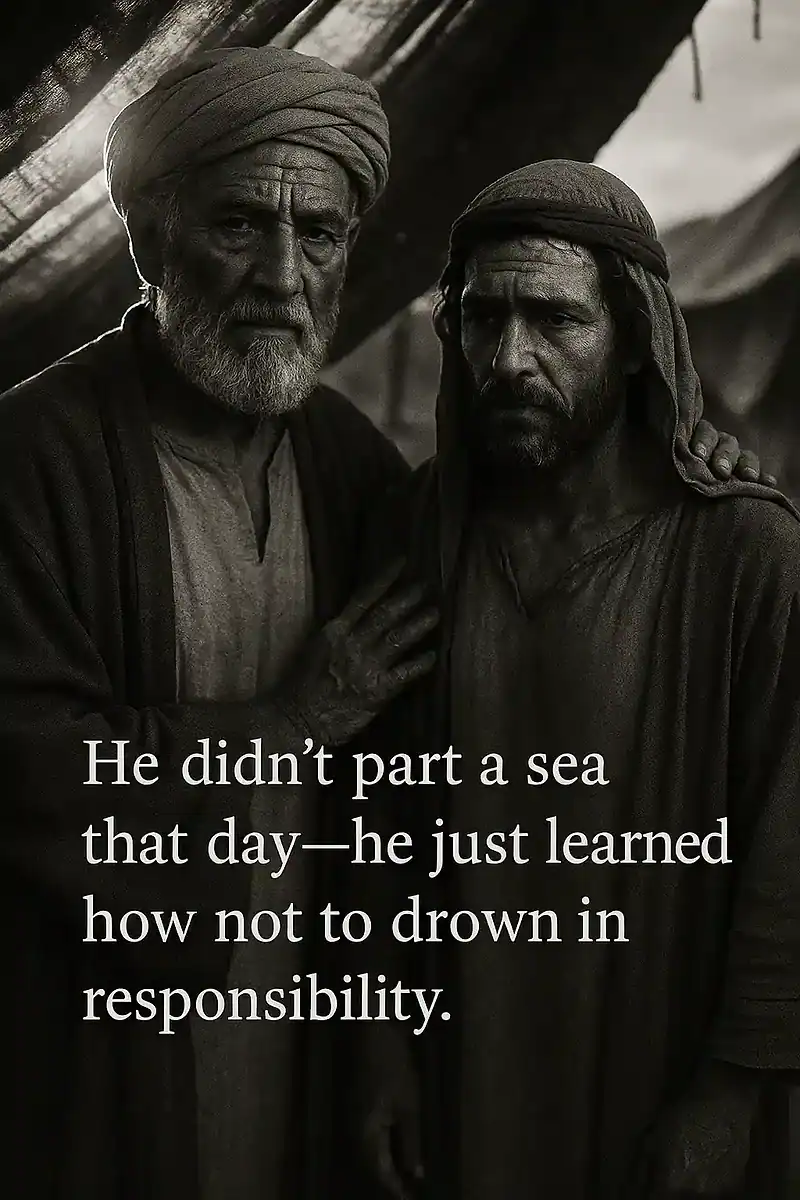
In the distance, another figure approached – older, calm, observant. His name was Jethro, priest of Midian, Moses’ father-in-law. He’d come not with fanfare or command but with the quiet authority of one who’d spent a lifetime listening to both men and God.
The Old Man Who Watched
Jethro stood back at first, watching how Moses handled the people. He saw his son-in-law’s face – drawn, strained, yet determined. He admired the zeal but saw the cost. This wasn’t sustainable. Jethro had lived long enough to know that zeal without wisdom eventually burns itself out.
That evening, when the campfire’s glow softened the desert edges, Jethro spoke gently. “What is this thing that thou doest to the people? Why sittest thou thyself alone, and all the people stand by thee from morning unto even?”
Moses, perhaps still too close to the problem to see it clearly, answered earnestly. “Because the people come unto me to enquire of God. When they have a matter, they come unto me; and I judge between one and another, and I do make them know the statutes of God, and His laws.”
It sounded noble. It even was noble. But noble doesn’t always mean wise.
The Counsel Of A Priest
Jethro nodded, then said words that would echo through leadership for generations. “The thing that thou doest is not good. Thou wilt surely wear away, both thou and this people that is with thee.”
He didn’t say Moses lacked faith. He didn’t accuse him of pride. He simply named the truth: this kind of burden was too heavy for one man, even a man of God.
Then came the advice that would change everything: “Hearken now unto my voice, I will give thee counsel, and God shall be with thee.”
Jethro proposed something radical – delegation under divine order. “Provide out of all the people able men, such as fear God, men of truth, hating covetousness; and place such over them.” Let them judge the small matters, he said, and bring only the great matters to you.
This wasn’t the sound of human management theory. It was the sound of spiritual endurance. It was God teaching through an old priest that even His chosen leaders must learn to rest, to trust others, to let go of control without letting go of calling.
The Turning Point In The Wilderness
Moses listened. And that may have been his greatest act of humility yet. This was the same man who’d faced Pharaoh, who’d lifted a staff and watched seas part – but here, before an elder’s quiet wisdom, he bowed his heart.
It’s one thing to listen when thunder falls from heaven. It’s another to listen when counsel comes softly from the mouth of a man.
And that’s where God was working – in the still, ordinary rhythm of advice, in the recognition that the work of God requires both strength and structure.
When Leadership Learns To Breathe
The next day, everything changed. Moses chose capable men – God-fearing, honest, trustworthy. They took up roles over thousands, hundreds, fifties, and tens. The people began to see order where there had been chaos. Disputes were handled quickly. The camp grew peaceful.
And Moses? He finally breathed. He was still the leader, still the prophet, still the shepherd – but now he could hear God more clearly again. The noise had been thinned out by obedience. The weight of leadership no longer crushed him; it steadied him.
The Ripple Of Obedience
It’s easy to forget that Jethro wasn’t an Israelite. Yet God used him to shape the structure of His chosen nation. The priest from Midian became the voice of divine balance, reminding Moses that burnout is not holiness, and exhaustion is not faithfulness.
When Jethro returned home, the desert camp was different. A once-overwhelmed leader now walked lighter. A nation that once depended on one man now moved as a body – each part serving, each part valuable.
Sometimes the miracle isn’t fire from heaven. Sometimes it’s the wisdom that keeps the fire from going out.
Modern Reflections
We live in a world that celebrates overwork as virtue. We think rest is weakness. But Jethro’s counsel whispers across centuries – God never called us to do everything; He called us to do our part faithfully and empower others to do theirs.
Maybe you’ve been there – trying to hold everything together, afraid that if you let go, the world will fall apart. But the truth is, if the work is truly God’s, it never depended solely on you.
Moses didn’t lose control when he shared responsibility; he found strength. He didn’t step back from his calling; he stepped deeper into it.
Christ, The Greater Example
When Christ walked among us, He too modeled this rhythm. He prayed alone but sent disciples two by two. He bore the cross but didn’t carry the mission alone. He trusted the Father, delegated to the Spirit, and taught us that rest is an act of faith.
Moses had Jethro. We have Jesus. The lesson remains the same: you cannot lead God’s people – or even your own family, ministry, or heart – without grace’s rhythm of rest and reliance.
Leadership without surrender becomes pride. But leadership that listens becomes worship.
And so the story of an old priest and a weary prophet still stands as a quiet monument in Scripture – proof that God doesn’t just call us to do His work. He teaches us how to survive it.
When we learn to lead without breaking, we learn to lead like Christ.
Closing Sentence
Because sometimes the greatest miracle isn’t parting the sea – it’s finding rest in the wilderness.
Call to Action: The Question That Demands an AnswerIn Acts 2:37 Peter and the Apostles were asked the question – What Shall We do? And in Acts 2:38 Peter answered, Repent, and be baptized every one of you in the name of Jesus Christ for the remission of sins, and ye shall receive the gift of the Holy Ghost. For the promise is unto you, and to your children, and to all that are afar off, even as many as the Lord our God shall call. Do you understand this? After hearing the gospel and believing, they asked what should would do. The answer hasn’t changed friend, Peter clearly gave the answer. The question for you today is, Have you receieved the Holy Spirit Since you believed? If you’re ready to take that step, or you want to learn more about what it means to be born again of water and Spirit, visit: Come, and let the Spirit make you new. |