

This article is part of my series Who Is God To You?
Life can get overwhelming, and it’s easy to feel lost. In our toughest moments, we search for comfort and reassurance. He is our Comforter, who consoles us in all our troubles, reminding us that we are never truly alone.
The Bible offers many verses that speak to the comfort we can find in faith. For instance, 2 Corinthians 1:3-4 tells us that God comforts us so that we can comfort others. This doesn’t just provide us with peace; it creates a cycle of support in our communities.
When we face challenges, remembering that we have a Comforter can change our perspective. This knowledge encourages us to lean on our faith and each other, helping us navigate life’s ups and downs with hope. Let’s explore how this comforting presence can guide us through any storm.
Make Sure You Watch My Video: I would love for you to subscribe to my YouTube channel as well…
Poem 1: The Lord’s Gentle Embrace
In life’s hardest moments, we often feel isolated, but God offers us His comforting embrace. This poem is a prayer, asking for the Lord’s compassion to surround us when we need it most.

Poem:
The Lord is my refuge, my constant guide,
In His loving arms, I can safely reside.
God, You are the Comfort I deeply seek,
Your strength, O Lord, uplifts the weak.
The Lord, in His mercy, wipes every tear,
God calms my spirit, quelling my fear.
In the shadow of grief, the Lord stands near,
God fills my heart when life’s burdens are severe.
Poem 2: God’s Unfailing Comfort
God’s comfort is always available to those who seek Him. This poem asks for God’s presence to be felt deeply, offering peace in the midst of trials.

Poem:
God of all comfort, I call on You today,
The Lord’s peace and love, never far away.
God, hold me close through storm and strife,
The Lord’s hand is steady in my troubled life.
When I’m weary and weak, I look to the Lord,
God’s faithful presence is my shield and sword.
In every hardship, Lord, You make me whole,
God, be the comfort that restores my soul.
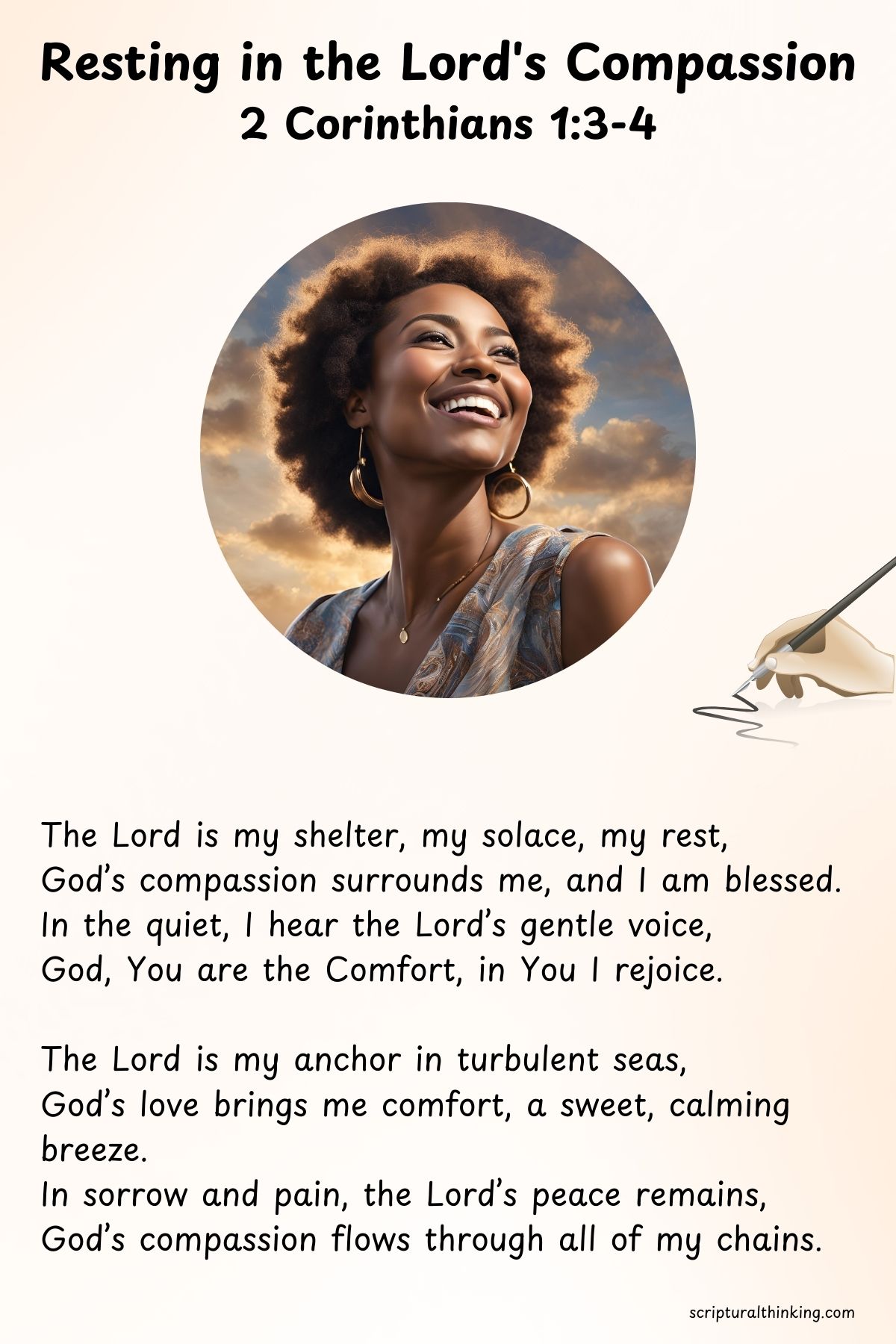
Poem 3: Resting in the Lord’s Compassion
Resting in God’s compassion brings peace beyond understanding. This poem seeks the fulfillment of God’s promise to be the compassionate Father who comforts us in every trial.
Poem:
The Lord is my shelter, my solace, my rest,
God’s compassion surrounds me, and I am blessed.
In the quiet, I hear the Lord’s gentle voice,
God, You are the Comfort, in You I rejoice.
The Lord is my anchor in turbulent seas,
God’s love brings me comfort, a sweet, calming breeze.
In sorrow and pain, the Lord’s peace remains,
God’s compassion flows through all of my chains.
These heartfelt poems and the accompanying song reflect a deep yearning for God’s comfort and compassion. Inspired by 2 Corinthians 1:3-4, they speak of a personal prayer to feel the Lord’s presence during life’s challenges.
Each verse highlights God’s ability to soothe, uplift, and restore the soul, reminding us that His love is a constant source of strength. The song beautifully intertwines these poetic expressions into a worshipful declaration, celebrating the peace, love, and comfort that only God can provide.
Exploring the Concept of Comfort
Comfort is a feeling that helps us through tough times. It can come from different sources, like cultural traditions or our own minds. Understanding these sources can help us find deeper peace in our lives.
Cultural Perspectives on Comfort
Different cultures see comfort in unique ways. For many, comfort comes from community and support during hard times. For example, in many African cultures, families gather to share stories and food to comfort each other. This practice reminds us that we are not alone.
In Western cultures, people often rely on personal space and self-care. Activities like meditation or journaling can offer comfort. The Bible also speaks to comfort. In 2 Corinthians 1:3-4, it says, “Praise be to the God and Father of our Lord Jesus Christ, the Father of compassion and the God of all comfort.” This shows us that comfort can be both a shared and personal experience.
Psychological View on Consolation
Psychologically, comfort plays an essential role in how we cope with stress. When we feel supported, our brains can handle challenges better. This support often comes from friends, family, or even faith.
In therapy, comforting techniques include positive affirmations and mindfulness exercises. For example, remembering past experiences where we overcame difficulties can be uplifting. The Bible encourages this too, as seen in Psalm 34:18, “The Lord is close to the brokenhearted and saves those who are crushed in spirit.” Comfort can reinforce our strength and help us face life’s trials head-on.
Historical and Religious Context
Throughout history, people have sought comfort in times of trouble. Our faith traditions offer many examples of how individuals find solace and support through religious texts and influential figures.
Comfort in Religious Texts
Religious texts often serve as a refuge during difficult times. In the Bible, for instance, Psalm 34:18 tells us, “The Lord is close to the brokenhearted and saves those who are crushed in spirit.” This statement highlights the caring nature of God. It reassures us that we are never alone in our struggles.
In addition, 2 Corinthians 1:3-4 speaks about God as the source of all comfort. The verse explains that we can comfort others with the comfort we receive. Our understanding of this concept can strengthen our community bonds and help each other during tough moments.
Historical Figures as Comforters
Throughout history, many leaders have provided comfort. For example, St. Teresa of Avila emphasized the importance of prayer. She encouraged people to seek God’s presence in their lives when facing hardships.
Another significant figure is Martin Luther King Jr. His speeches often resonated with messages of hope and strength. He inspired many during the civil rights movement by reminding us of our ability to create change together. These leaders showed us that comfort can come from faith and community support.
The Role of Language in Comfort
Language is a powerful tool that helps us express and receive comfort. It plays a key role in how we connect with others during tough times. The words we choose can uplift those who are hurting and create a sense of safety.
Words of Solace and Their Impact
Words carry weight. Simple phrases like “I understand” or “I’m here for you” can have a huge impact. They show empathy and support, which can make someone feel less alone. The Bible offers comfort through its verses. For example, Psalm 34:18 tells us that “The Lord is close to the brokenhearted.” This idea brings peace during hard moments.
We should also consider how we speak to ourselves. Positive self-talk can be a great source of comfort. Instead of focusing on our worries, we can remind ourselves of our strengths. Encouraging words help nurture our spirit and give us hope.
Poetry and Literature as Sources of Comfort
Poetry and literature often provide comfort during difficult times. They help us explore complex feelings and find meaning in our struggles. Reading a comforting poem can make us feel understood and connected. For instance, many people find solace in works like “The Road Not Taken” by Robert Frost.
Scriptures, too, read like poetry offering deep comfort. Verses like Isaiah 41:10 remind us not to fear, as we are not alone. These words encourage us to find strength in our faith and the relationships we build through language. Fostering connections through shared stories makes our experiences feel lighter.
Call to Action: The Question That Demands an AnswerIn Acts 2:37 Peter and the Apostles were asked the question – What Shall We do? And in Acts 2:38 Peter answered, Repent, and be baptized every one of you in the name of Jesus Christ for the remission of sins, and ye shall receive the gift of the Holy Ghost. For the promise is unto you, and to your children, and to all that are afar off, even as many as the Lord our God shall call. Do you understand this? After hearing the gospel and believing, they asked what should would do. The answer hasn’t changed friend, Peter clearly gave the answer. The question for you today is, Have you receieved the Holy Spirit Since you believed? If you’re ready to take that step, or you want to learn more about what it means to be born again of water and Spirit, visit: Come, and let the Spirit make you new. |