Quick Overview of This Bible Study…
Short on time? I have created a short slide show presentation of some key takeaways in our study. The complete, more comprehensive bible study is below…
The King James Version (KJV) Bible is filled with references to the natural world, and among the most frequently recurring elements are trees.
These arboreal figures serve not merely as a backdrop to the unfolding narratives but possess an intrinsic symbolic weight, functioning as powerful metaphors through which profound theological truths are conveyed.
From the earliest accounts in Genesis to the apocalyptic visions of Revelation, trees are employed to illustrate concepts of life, death, righteousness, judgment, and the very nature of God's relationship with humanity.
Understanding the multifaceted symbolism inherent in these botanical references is crucial to grasping the deeper theological meanings embedded within the scriptures and appreciating the remarkable unity that binds the Old and New Testaments.
The sheer volume of distinct tree species mentioned throughout the KJV—numbering thirty-seven according to some counts and thirty-six by others—underscores a deliberate and intricate symbolic language employed by the biblical authors .
This frequent recurrence indicates that trees were not merely incidental elements of the narrative landscape but were carefully chosen to communicate specific ideas about the divine, the human condition, and the intricate connections between them.
Furthermore, the historical context of the KJV translation, completed in 1611, predates the precise science of modern botany .
Consequently, the translators often used terminology that reflects the understanding of their time, sometimes leading to challenges in identifying the exact species intended by the original Hebrew and Greek terms.
This necessitates a careful consideration of these original terms, alongside their modern botanical equivalents, to accurately interpret the intended symbolism within an expert-level analysis.

Rooted in the Old Testament: Exploring the Significance of Trees
The Old Testament lays a foundational understanding of the symbolic significance of various trees, establishing patterns and meanings that often find resonance and transformation in the New Testament.
Acacia: In the Wilderness, God Provides Strength
The acacia tree, frequently referred to as Shittim wood in the KJV, holds a prominent place in the Old Testament narrative, particularly in the books detailing the construction of the Tabernacle .
This wood was the primary material commanded by God for the creation of the Tabernacle and its sacred furniture, including the Ark of the Covenant, the table for the showbread, and the altar of burnt offering . The Ark of the Covenant and numerous tabernacles were constructed from this significant wood .
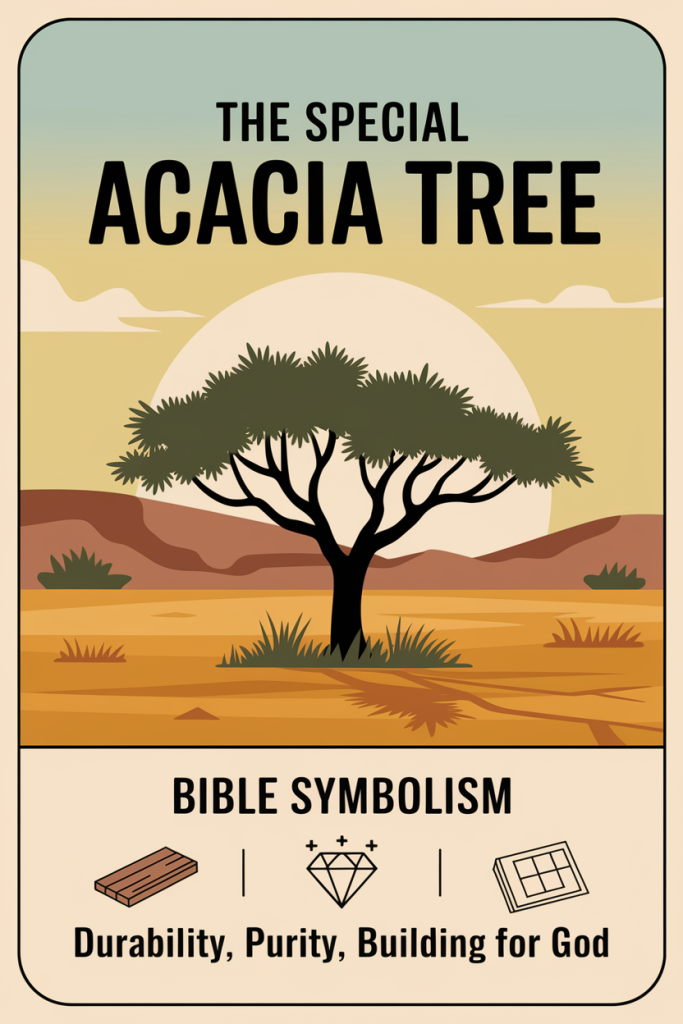
The instructions in Exodus meticulously detail the dimensions and the exclusive use of acacia wood for these holy objects, emphasizing its importance in the dwelling place of God.
Its prevalence in the arid wilderness regions traversed by the Israelites for forty years made it a readily available resource, suggesting God’s provision even in challenging environments.
Modern scholars believe "gopher wood," used for Noah's Ark, may refer to the durable wood of cypresses that, along with cedars and oaks, once covered the slopes of Lebanon.
The very name "Shittim," potentially meaning "piercing," coupled with the thorny nature of the acacia, could symbolize the pain, sacrifice, and commitment inherent in the covenant relationship with God .
This adds a profound layer to the symbolism, connecting the sacred objects not only with divine presence but also with the cost of that relationship.
The exclusive use of acacia wood in the Tabernacle's construction underscores its unique significance in representing the meeting point between the divine and the human.
The choice of this specific wood, readily available in the wilderness, further suggests God's accessibility and presence even in the most desolate and trying of circumstances.
Almond: God is Watching—His Promises Arrive Quickly
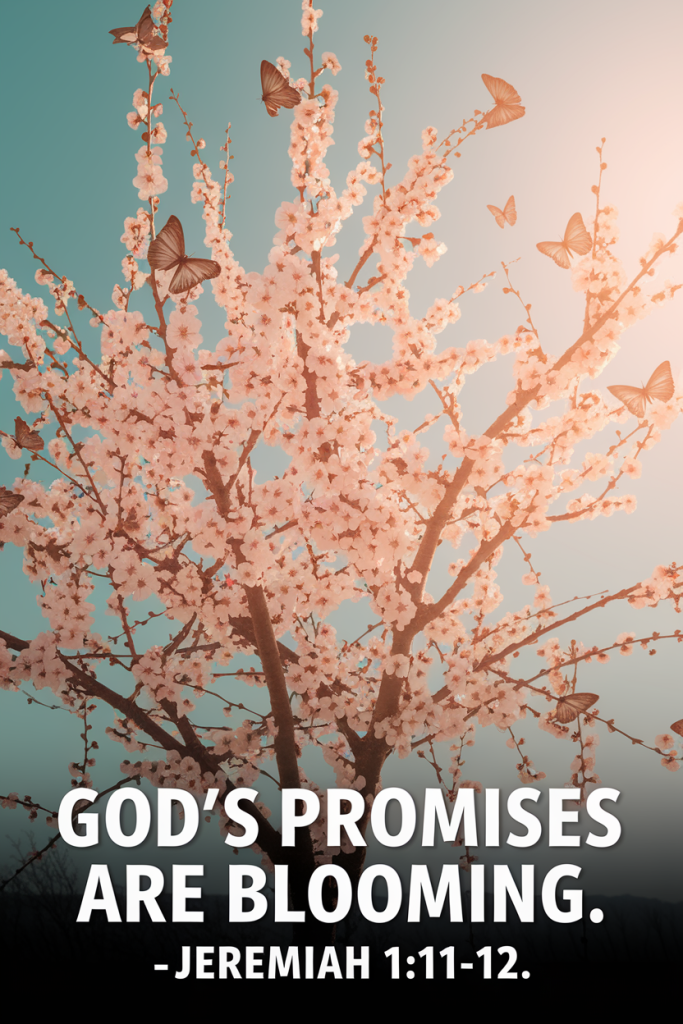
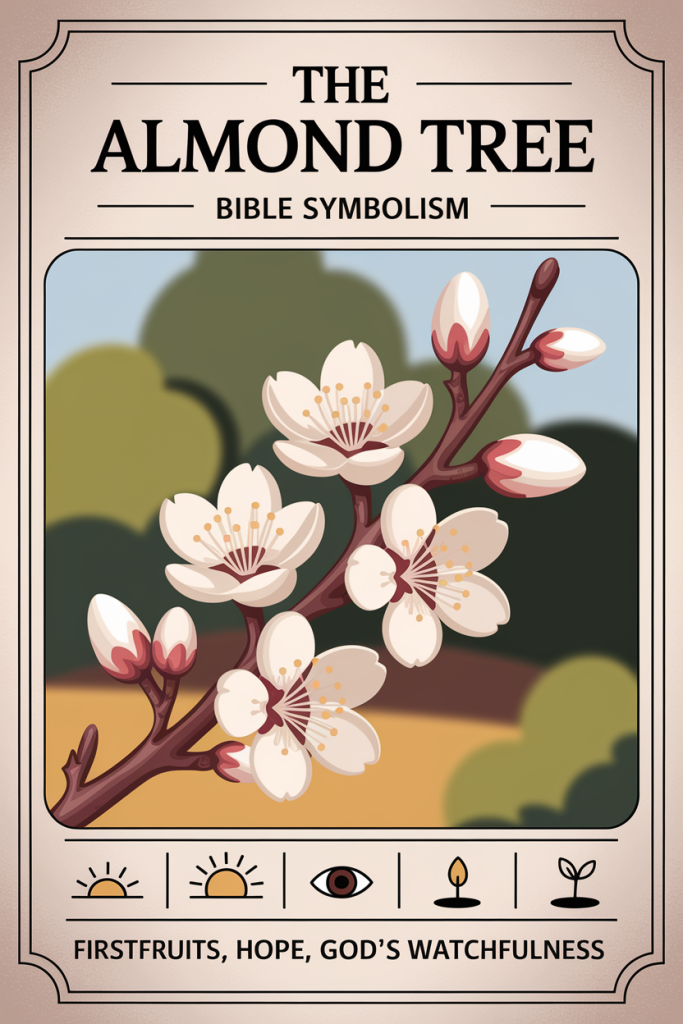
The almond tree carries a rich symbolic weight in the Old Testament, primarily linked to its early blossoming and the meaning of its Hebrew name, "shaked," which signifies both "almond" and "to watch" or "hasten".
This dual meaning is highlighted in Jeremiah 1:11-12, where the prophet's vision of an almond branch is directly connected to God's promise to watch over His word to perform it.
As the first tree to bud and bear fruit in Palestine, often as early as January or February, the almond tree serves as a herald of spring, symbolizing God's promptness and readiness to fulfill His promises.
This early blossoming is an emblem of promptitude, illustrating the haste with which God acts upon His word .
The almond tree's significance is further emphasized in the miraculous budding of Aaron's rod in Numbers 17:8, which bore blossoms and yielded almonds overnight, serving as divine confirmation of his priesthood.
The motif of the almond was also incorporated into the divine design for the lampstand in the Tabernacle, with its detachable lamps shaped as stylized almond blossoms, signifying beauty and divine light .
Interestingly, the almond tree is also used to symbolize the frailty of old age in Ecclesiastes 12:5, with its blossoming potentially representing the graying of hair.
The almond's dual symbolism of early blossoming yet sometimes later fruiting might represent the concept of firstfruits and the hope of life, as well as the potential delay between divine promise and its ultimate fulfillment.

This reminds me of James 5:7, Be patient therefore, brethren, unto the coming of the Lord. Behold, the husbandman waiteth for the precious fruit of the earth, and hath long patience for it, until he receive the early and latter rain.
Furthermore, the connection between the almond tree and the place name Luz, which was later renamed Bethel ("House of God"), suggests a deeper sacred association, linking the watchful nature of the almond to the dwelling place of God.
Cedar of Lebanon: Majesty, Durability, and Royal Symbolism
The Cedar of Lebanon stands as a majestic and highly valued tree throughout the Old Testament, renowned for its aromatic, durable, and beautiful wood.
This prized timber was extensively used in the construction of significant structures, including the palaces of King David and King Solomon, as well as Solomon's grand Temple in Jerusalem and the second Temple built under Zerubbabel.
The cedar tree's towering height and longevity naturally lent themselves to symbolize strength, loftiness, prosperity, and divine blessing' Psalm 92:12.
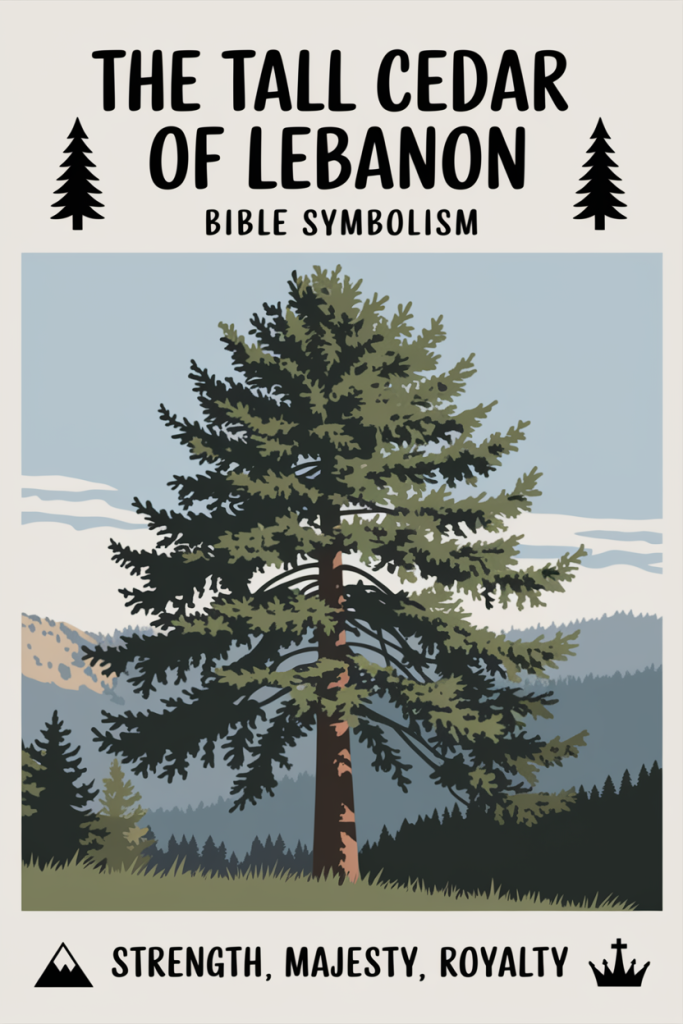
The righteous are even compared to cedars in Lebanon, signifying their spiritual vitality and enduring faithfulness.
However, the cedar's grandeur was also employed metaphorically to represent powerful, yet ultimately prideful, nations such as Assyria in the book of Ezekiel. Ezekiel 31:3.
This comparison highlights the nation's former greatness and the respect it commanded, but also foreshadows its eventual downfall due to its arrogance.
The Old Testament writers frequently contrasted the cedar's imposing presence with God's ultimate power, illustrating that even the mightiest earthly entities are subject to divine judgment, Zechariah 11:1, Isaiah 2:13, Isaiah 14:8, Isaiah 37:24.
Interestingly, cedarwood also played a role in certain Old Testament rituals, being mentioned as a substance for ritual cleansing in Leviticus and Numbers, adding a dimension of spiritual purification to its symbolism. Leviticus 14:4, Numbers 19:6.
Fig Tree: Fruitfulness, Prosperity, and the Emblem of Israel
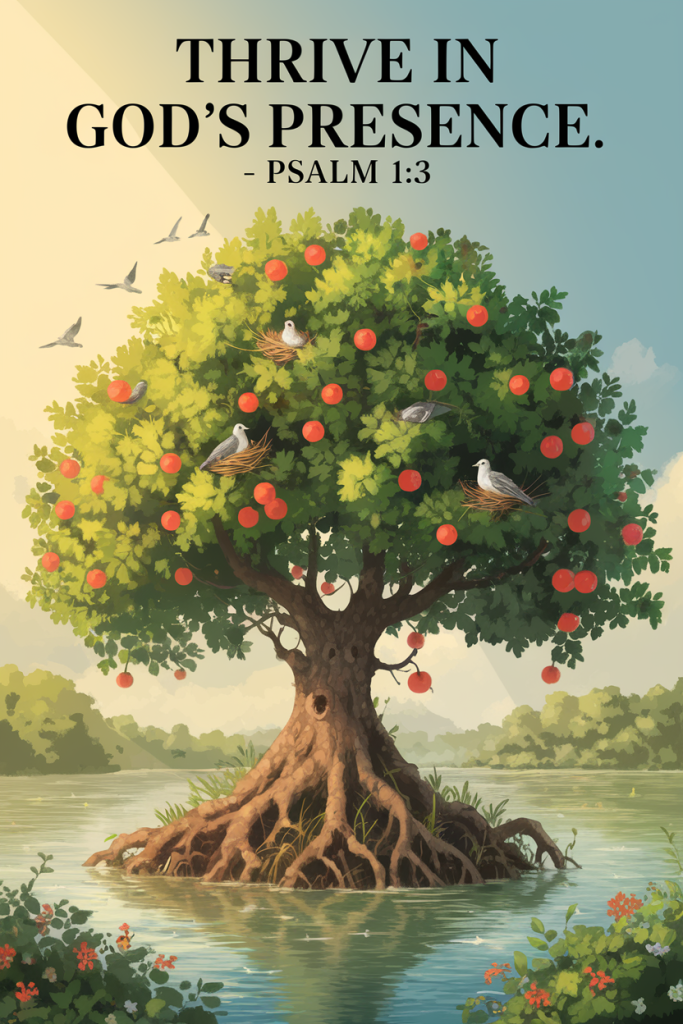
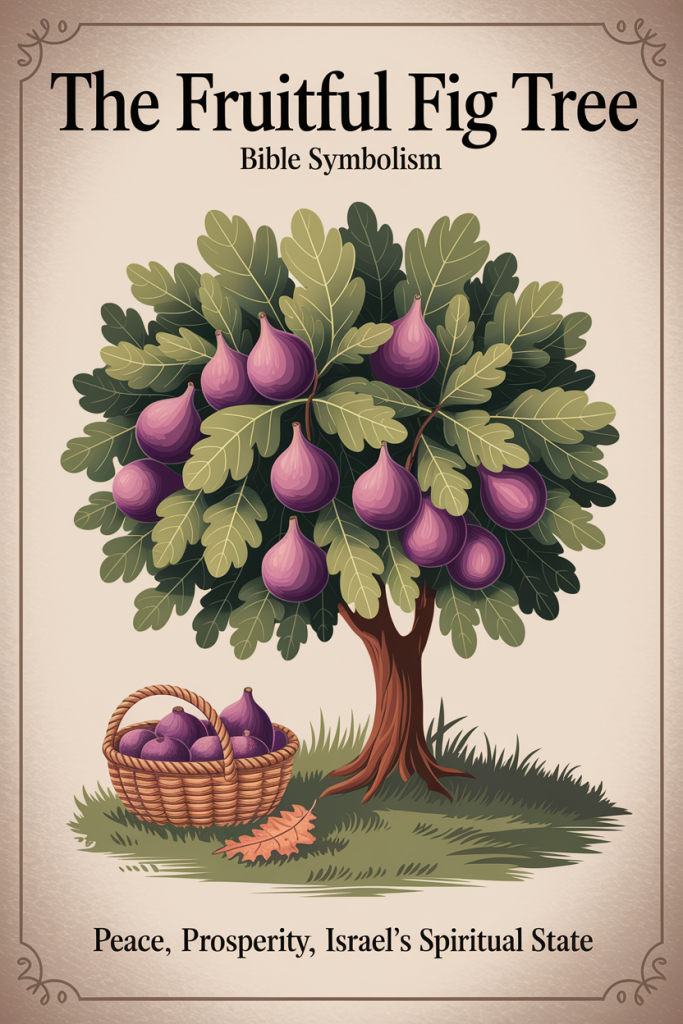
The fig tree is a recurring motif in the Old Testament, deeply intertwined with themes of fruitfulness, prosperity, and the very identity of the nation of Israel.
The image of individuals dwelling safely under their own vine and fig tree became a powerful symbol of peace, security, and God's blessing. 1 Kings 4:25, Micah 4:4, Zechariah 3:10.
The fig tree itself often served as a metaphor for the spiritual and physical well-being of Israel, with its fruitfulness reflecting the nation's obedience and favor with God. Hosea 9:10, Jeremiah 24.
Conversely, barren or withered fig trees were employed by the prophets to symbolize God's judgment upon Israel for their disobedience and lack of spiritual fruit. Jeremiah 8:13, Joel 1:7, Habakkuk 3:17-19, Haggai 2:19.
The fact that the fig tree typically produces two harvests of fruit each year could symbolize God's consistent provision and the recurring opportunities for spiritual growth and fruitfulness.
Furthermore, the very first instance of clothing in the Bible involves fig leaves, as Adam and Eve used them to cover their shame after the fall, introducing an early association of the fig tree with human vulnerability and the consequences of sin. Genesis 3:7.
Olive Tree: Peace, Anointing, and the Covenant People
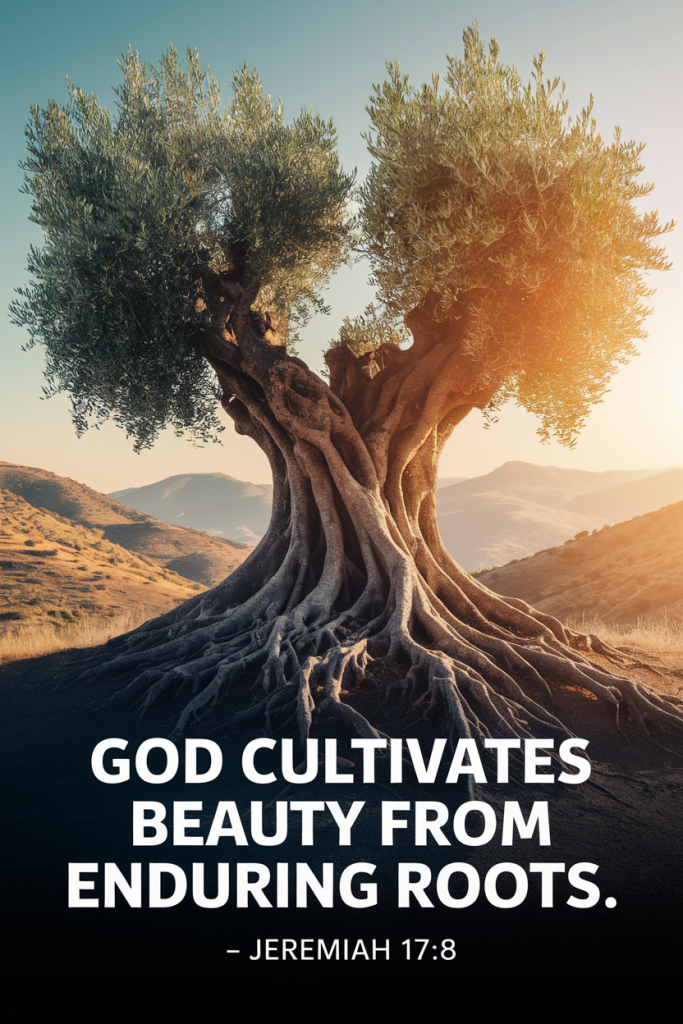
The olive tree holds a significant and multifaceted symbolism in the Old Testament, representing peace, anointing, and the covenant relationship between God and His people.
The iconic image of a dove returning to Noah's ark with an olive branch in its beak has become a universal symbol of peace and reconciliation, rooted in the Old Testament narrative. Genesis 8:11.
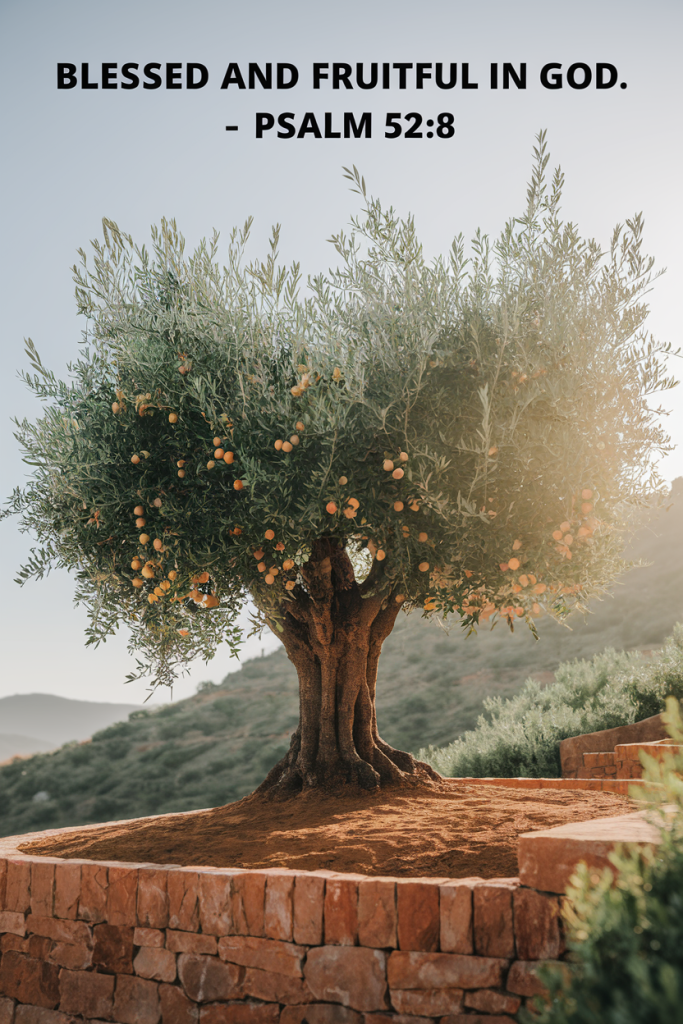
The olive tree was also a vital source of olive oil, a precious commodity used for fueling lamps in the Tabernacle, anointing kings and priests, medicinal purposes, and as a staple in the diet.
Consequently, the olive tree became an emblem of prosperity, beauty, and religious privilege. Psalm 52:8, Jeremiah 11:16, Hosea 14:6.
The righteous are often compared to flourishing olive trees, and their children to vigorous young olive plants, signifying fruitfulness and blessing. Psalm 128:3.
The use of olive oil in anointing ceremonies for kings and the Tabernacle foreshadows the anointing of Christ as the ultimate King and the role of the Holy Spirit, who is often symbolized by oil.
God Himself used the imagery of an olive tree to describe Israel, warning that disobedience could lead to the tree being cut down, highlighting the conditional nature of the Old Covenant. Jeremiah 11:16-17.
Palm Tree: Victory, Righteousness, and Triumphal Entry
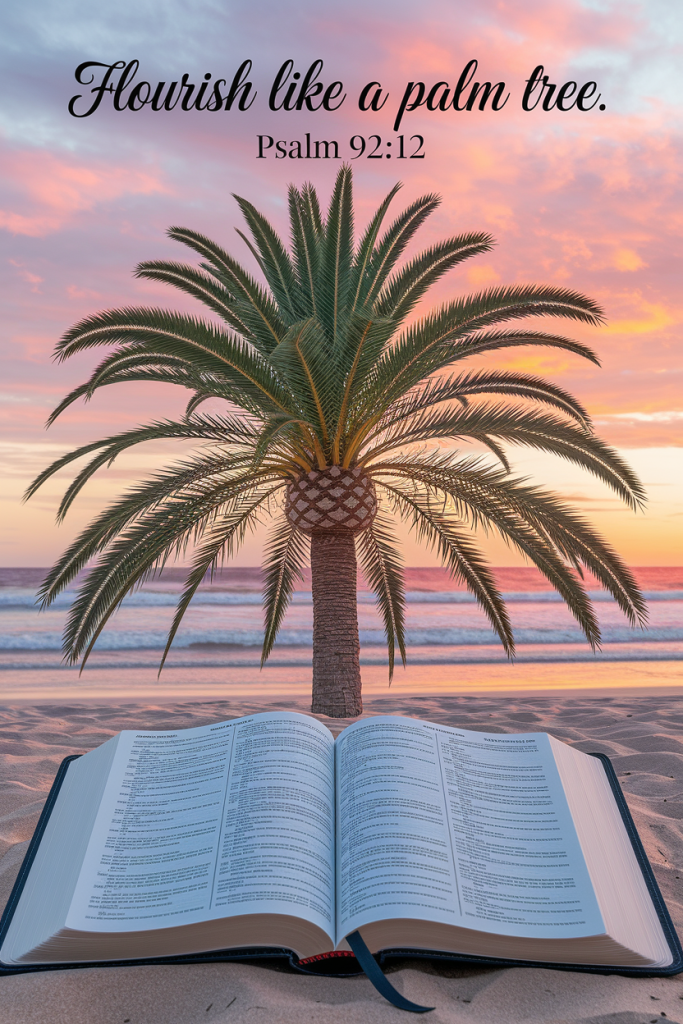
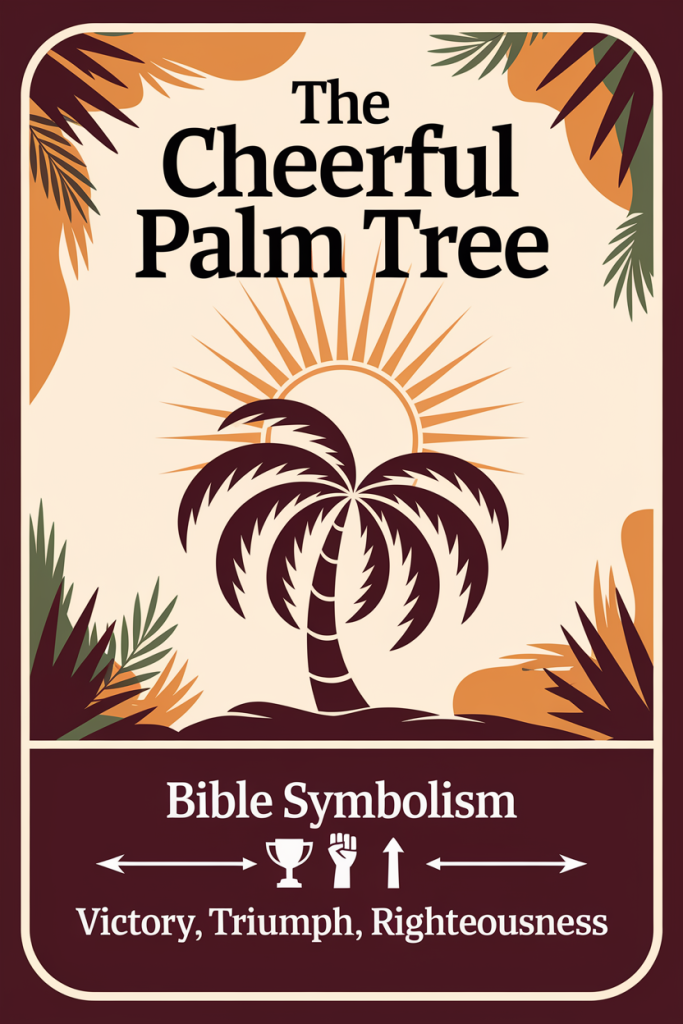
The palm tree stands as a striking symbol of victory, righteousness, and triumph throughout the Old Testament, with its imagery carrying significant weight into the New Testament.
Its tall, upright stature and the use of its branches as tokens of victory and rejoicing contributed to its symbolic meaning. The righteous are often compared to flourishing palm trees, signifying their spiritual vitality and uprightness Psalm 92:12.
Palm branches were also used in the Feast of Tabernacles for the construction of booths, symbolizing celebration and remembrance of God's provision Leviticus 23:40, Nehemiah 8:15.

The image of palm trees was even incorporated into the ornamentation of Solomon's Temple, signifying peace and victory 1 Kings 6:29, 32, 35, 2 Chronicles 3:5, Ezekiel 40:16, 41:18.
The palm tree's resilience and ability to thrive in harsh desert conditions could symbolize the enduring faith and strength of the righteous, finding nourishment even in difficult circumstances.
In contrast, idols are depicted as being upright like palm trees but lacking the ability to speak or move, highlighting the emptiness of false gods Jeremiah 10:5.
Oak and Terebinth: Strength, Endurance, and Sacred Sites
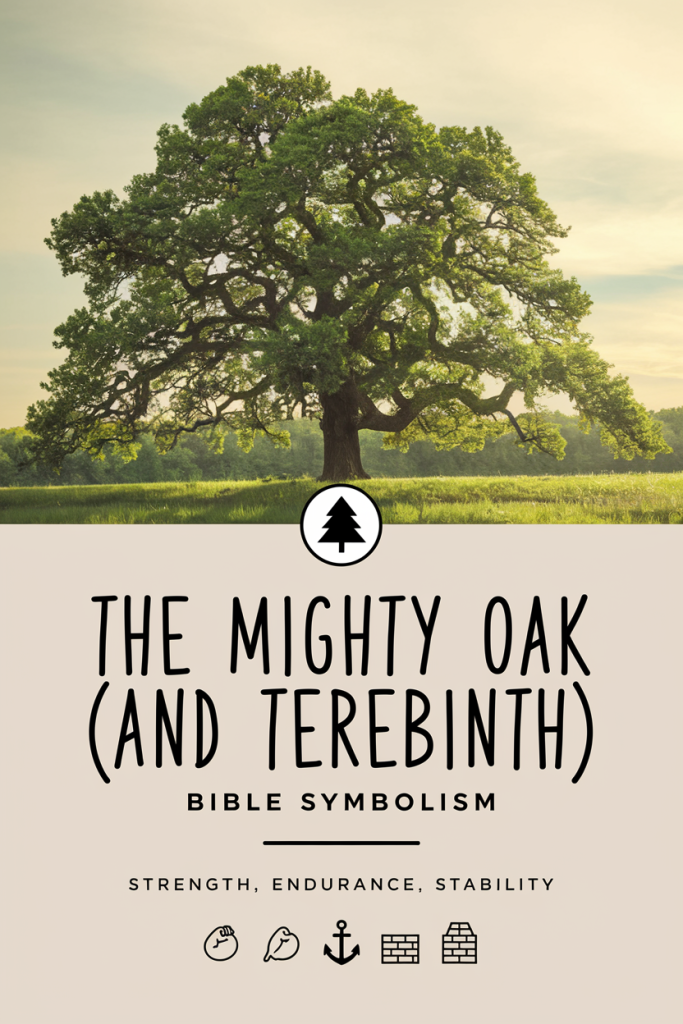
The oak and terebinth trees are often intertwined in the Old Testament, sometimes used interchangeably in translation, reflecting a potential lack of clear distinction between the two in the ancient Hebrew understanding.
Both trees are potent symbols of strength, might, and endurance due to their size, deep roots, and longevity.
These trees frequently marked sacred sites and were associated with significant events. Abraham encountered the Lord at the oaks of Mamre, a site of covenant and divine promise Genesis 18:1.
Jacob buried foreign idols under an oak near Shechem, symbolizing purification Genesis 35:4.
Deborah, Rebekah's nurse, was buried under an oak below Bethel, a place later known as Allon Bacuth, or "Oak of Weeping" Genesis 35:8.
The angel of the Lord appeared to Gideon under an oak, marking a pivotal moment in Israel's history Judges 6:11.
However, oaks and terebinths were also associated with idolatrous practices, serving as locations for pagan rituals, which the prophets condemned Isaiah 1:29, Hosea 4:13, Ezekiel 6:13.
The terebinth's remarkable ability to sprout again even after being cut down, leaving only a stump, provides a powerful image of hope and resurrection, particularly relevant in the context of divine judgment and the promise of a remnant Isaiah 6:13, Job 14:7-9.
The oak's role as a natural landmark for significant events further underscores its enduring presence and its symbolic witness to God's interactions with humanity Joshua 24:26.
Other Notable Trees
Beyond these major trees, the KJV Bible mentions a variety of others, each potentially carrying its own nuanced significance.
The difficulty in precise identification due to translation challenges is noted for trees like cypress, fir, and pine.
Almug wood was used in King Solomon's constructions. Carob trees are mentioned, with their seeds used as a measure of weight. The broom tree is associated with God's provision and shelter.
Tamarisk or salt cedar trees symbolize God's faithfulness and provision in difficult times.
Even these less prominent trees contribute to the rich tapestry of botanical imagery in the scriptures, suggesting a deliberate and multifaceted symbolic landscape.
Bridging the Testaments: Echoes and Transformations
The New Testament builds upon the foundational symbolism established in the Old Testament, often reinterpreting or fulfilling these arboreal metaphors in the context of Christ and the new covenant.
The Fig Tree in the Gospels: From Barrenness to a Sign of the Times
The fig tree continues to hold significant symbolic weight in the Gospels, with Jesus frequently using it to illustrate key spiritual truths.
In stark contrast to the Old Testament's often positive portrayal of the fig tree as a symbol of prosperity and Israel's well-being, Jesus employs it to represent the nation's lack of spiritual fruitfulness Mark 11:12-14, Matthew 21:18-22.
The cursing of the barren fig tree serves as a powerful visual parable of God's judgment on those who bear the outward signs of faith but lack genuine fruit.
Jesus also employs the fig tree in several parables, such as the one about the unfruitful tree in the vineyard (Luke 13:6-9) and the parable of the budding fig tree as a sign of the approaching end times (Matthew 24:32, Luke 21:29-33).
In this latter context, the fig tree becomes a metaphor for recognizing the signs of the times, particularly the imminence of God's kingdom.
The encounter between Jesus and Nathaniel in John's Gospel also features a fig tree, where Nathaniel is described as sitting under it, prompting Jesus to declare him a "true Israelite," possibly alluding to the Old Testament symbolism of peace and prosperity associated with the tree John 1:48-50.
The Olive Tree in Romans: Grafting Gentiles into God's Family
The Apostle Paul's allegory of the olive tree in Romans 11 provides a profound New Testament interpretation of this significant Old Testament symbol.
In this allegory, Paul uses the cultivated olive tree to represent Israel, the natural branches, and the wild olive branches to symbolize Gentile believers who have been grafted into the cultivated tree through faith in Christ.
This masterful use of imagery demonstrates the continuity of God's plan, extending salvation beyond national Israel to include Gentiles through their union with Christ, who is rooted in the heritage of Israel.
The grafting process illustrates how Gentiles, once considered outside the covenant, now share in the rich root of the olive tree, signifying the unifying work of Christ in creating a new covenant community.
The Palm Tree and the Triumphal Entry: A King's Welcome
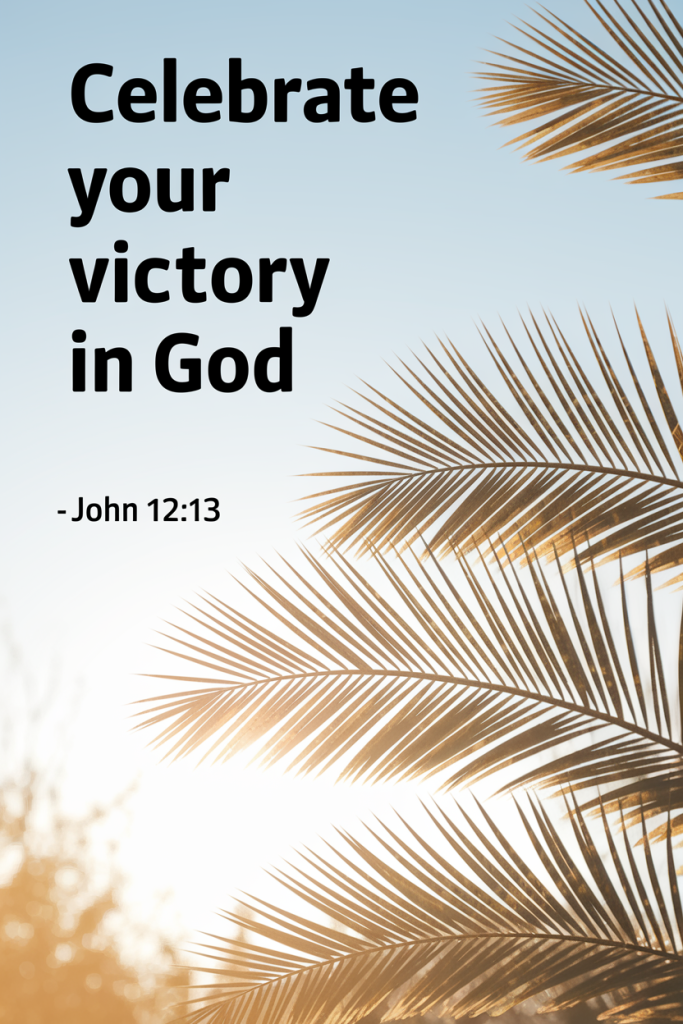
The Old Testament symbolism of the palm tree as a sign of victory and royalty finds a direct and powerful fulfillment in the New Testament account of Jesus' triumphal entry into Jerusalem Matthew 21:8, John 12:13.
The crowds who gathered to welcome Jesus as he rode into the city on a donkey waved palm branches and shouted "Hosanna," a term of praise and acclamation.
This act directly links the long-established Jewish tradition of using palm branches to signify victory and honor, particularly for royalty, to Jesus as the promised Messiah and King of Israel.
The scene serves as a clear visual representation of the fulfillment of Old Testament prophecies concerning the coming king, with the palm branches acting as tangible symbols of the people's recognition (at least for a time) of Jesus' messianic.
Sycamore: Repentance and Encounter with Christ

The sycamore tree, while perhaps less prominent than other trees, plays a significant symbolic role in the New Testament narrative of Zacchaeus' encounter with Jesus in Jericho Luke 19:4.
Zacchaeus, a wealthy tax collector, climbed a sycamore tree to get a better view of Jesus as he passed by. This seemingly simple act is often associated with repentance and a desire to see Christ despite social barriers.
The sycamore tree, though botanically distinct from the common fig tree (sometimes called fig-mulberry), becomes a symbol of a specific type of encounter with Christ, one marked by humility and a yearning for transformation.
Zacchaeus' willingness to climb the tree, overcoming his perceived dignity, signifies a turning point in his life, leading to his repentance and the declaration of salvation for his house.
Other Trees and their New Testament Context
While the major trees carry significant symbolic weight, other arboreal references in the New Testament also contribute to the overall theological tapestry.
The wood of the cross, the instrument of Jesus' crucifixion, though not specified by species in the KJV, remains the central "tree" of the New Testament, embodying sacrifice, redemption, and the fulfillment of God's plan for salvation.
Furthermore, the Tree of Life, first introduced in the Garden of Eden (Genesis 2:9), reappears in the book of Revelation (Revelation 2:7 and 22:2, 14, 19), symbolizing the ultimate restoration of eternal life in the presence of God for those who overcome.
This direct echo of the Genesis narrative underscores the overarching theme of redemption and the restoration of paradise.
Prophetic Woods: Trees as Foreshadowing and Fulfillment
The Old Testament prophets frequently employed trees in their prophecies, often using them to foreshadow events and figures that find their fulfillment in the New Testament.
The imagery of a "Branch" (Isaiah 11:1, Jeremiah 23:5, Zechariah 3:8, 6:12), often linked to trees like the cedar or olive, is widely interpreted as a Messianic prophecy, pointing to the coming of Christ from the lineage of David.
The consistent use of symbolic language, such as barren trees signifying judgment and fruitful trees representing blessing, continues across both testaments in prophetic contexts.
For example, the Old Testament prophets' warnings of barren fig trees (Habakkuk 3:17) find a parallel in Jesus' cursing of the fig tree, both serving as potent signs of spiritual unfruitfulness and divine judgment.
Notably, the "stump" imagery associated with the terebinth and oak in Isaiah 6:13 provides a powerful example of foreshadowing.
This image of a seemingly lifeless stump from which new life emerges can be seen as a prophecy of the remnant of Israel that would survive judgment and ultimately the lineage leading to Christ, the "holy seed," after periods of national devastation.
Parables and Comparisons: Lessons from the Arboreal World
Both the Old and New Testaments utilize parables and comparisons involving trees to impart spiritual lessons. In the Old Testament, Jotham's story in Judges 9 uses various trees to represent different types of leadership and their suitability for the role.
This allegorical tale conveys truths about humility, service, and the dangers of seeking power without qualification.
The New Testament continues this tradition, with Jesus employing numerous parables featuring trees, such as the parable of the mustard seed growing into a large tree (Matthew 13:31-32).
This parable illustrates the expansive growth of the Kingdom of Heaven from humble beginnings to a significant and influential entity.
The consistent use of trees in these literary forms across both testaments highlights their effectiveness in illustrating spiritual growth, the importance of bearing fruit, the consequences of judgment, and the fundamental nature of the Kingdom of God.
The shift observed in the symbolism of trees from primarily nationalistic representations in Old Testament parables to more individual and kingdom-focused symbolism in New Testament parables reflects the evolving nature of God's covenant and the expansion of His people to include all who believe.
Symbolic Arbor: Unifying Themes from Genesis to Revelation

Several unifying themes related to trees weave their way through the entirety of the biblical narrative, from Genesis to Revelation.
Trees are consistently presented as symbols of life, most notably with the Tree of Life appearing in both the Garden of Eden and the New Heavens and New Earth in Revelation.
Conversely, the Tree of Knowledge of Good and Evil is associated with temptation and the fall of humanity, while the "tree" of the cross in the New Testament becomes the symbol of redemption and reconciliation.
The concept of fruitfulness, consistently linked to trees throughout the Bible, serves as a central metaphor for the outworking of faith and obedience in the lives of believers in both testaments.
The stark contrast between fruit-bearing and barren trees is frequently used to represent righteousness and judgment, respectively.
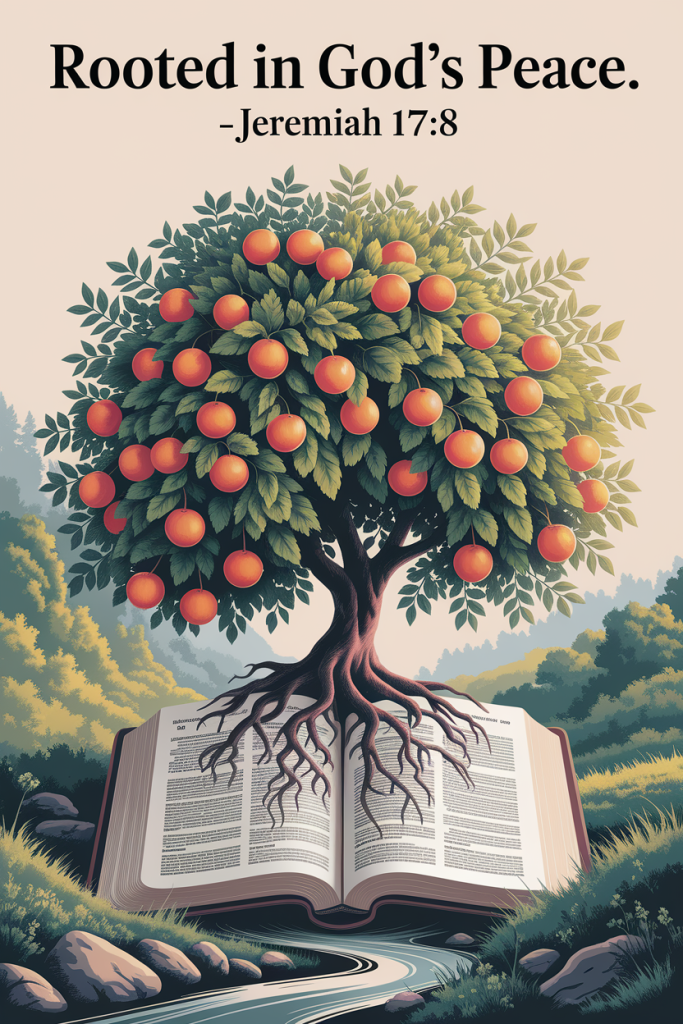
Furthermore, the image of being "planted" and bearing fruit is employed as a powerful metaphor for a life devoted to God, deeply rooted in His word and yielding spiritual fruit Psalm 1:3, Jeremiah 17:7-8.
Finally, the forest itself is sometimes used as a metaphor for nations and humanity, as seen in the imagery of the "forest of Lebanon," representing power and majesty.
Conclusion: The Enduring Legacy of Trees in Biblical Narrative
The analysis of trees in the King James Version Bible reveals a rich and multifaceted symbolic language that permeates both the Old and New Testaments.
From the acacia's representation of divine presence in the wilderness to the palm tree's association with Christ's triumphal entry, trees serve as enduring metaphors for key theological concepts.
The almond tree speaks of God's watchfulness, the cedar of royal majesty, the fig of national identity and fruitfulness, and the olive of peace and anointing.
The oak and terebinth stand as symbols of strength and markers of sacred encounters.
The transformation and fulfillment of these symbols in the New Testament, particularly in the person and work of Jesus Christ, highlight the remarkable unity and continuity of God's redemptive plan.
The consistent use of arboreal imagery in prophecies, parables, and comparisons underscores the profound lessons that can be gleaned from the natural world, reminding believers of the importance of fruitfulness, obedience, and unwavering faith.
The enduring legacy of trees in biblical narrative serves as a powerful testament to their significance as theological metaphors, enriching our understanding of scripture and deepening our appreciation for the intricate ways in which God communicates His truth.

Major Trees in the KJV Bible and their Primary Symbolism
| Tree Name (KJV) | Hebrew/Greek Term(s) | Primary Old Testament Symbolism | New Testament Significance/Connections |
| Acacia (Shittim) | šiṭṭāh/šiṭṭîym | Divine Presence, Purity, Endurance, God's Provision | Type of Christ (incorruptible), Material of the Tabernacle (God's dwelling) |
| Almond | šāqêḏ | Divine Watchfulness, Promptness, Herald of Spring, Old Age | Emblem of God's hastening word, Miraculous sign of divine approval |
| Cedar of Lebanon | ʾerez/kedros | Majesty, Strength, Durability, Royalty, Pride (sometimes) | Metaphor for Christ's strength and glory |
| Fig Tree (Sycamore) | təʾēnāh/sykomoros | Fruitfulness, Prosperity, Israel, Judgment (barrenness), Repentance (Sycamore) | Represents Israel's unfruitfulness (cursed tree), Sign of the times, Encounter with Christ |
| Olive Tree | zayit/elaia | Peace, Anointing, Prosperity, Covenant People, Righteousness | Symbol of the Holy Spirit's anointing, Israel (cultivated), Gentiles (wild grafted in) |
| Palm Tree | tāmār/phoinix | Victory, Triumph, Righteousness, Flourishing | Welcoming Jesus as King (Triumphal Entry), Symbol of heavenly victory |
| Oak/Terebinth | ʾēlāh/ʾallôn/terebinthos | Strength, Endurance, Sacred Sites, Divine Encounters, Hope (Terebinth stump) | Strength and steadfastness of believers |
Our Research Sources:
General Resources (Multiple Trees):
- euxton.com - The King James Version of the Bible mentions thirty-seven differently named trees.
- blog.advantagelumber.com - Woods of the Bible - AdvantageLumber Blog
- studylight.org - Hebrew Thoughts - StudyLight.org
Acacia (Shittim) Wood:
- biblehub.com - Exodus 25:23 KJV: Thou shalt also make a table of shittim wood - Bible Hub
- biblegateway.com - Exodus 27 KJV - And thou shalt make an altar of shittim - Bible Gateway
- biblestudytools.com - Exodus 37 KJV - "And Bezaleel made the ark of shittim wood: two cub..." - Bible Study Tools
- gotquestions.org - What is the significance of acacia wood in the Bible? | GotQuestions.org
- biblestudytools.com - Exodus 25:10 KJV - "And they shall make an ark of shittim wood - Bible Study Tools
- biblehub.com - Topical Bible: Acacia
- biblehub.com - Exodus 25:10 And they are to construct an ark of acacia wood, two and a half cubits long, a cubit and a half wide, and a cubit and a half high. - Bible Hub
- acts242study.com - The Acacia Tree - Acts 242 Study
- biblegateway.com - Exodus 37 KJV - And Bezaleel made the ark of shittim - Bible Gateway
- biblestudytools.com - The Ark of the Covenant - Bible Story and Meaning
- bible.com - Exodus 25:23-40 KJV - Bible.com
- wood-database.com - The Wood of the Ark of the Covenant and Other Bible Woods - The Wood Database
- bible.com - Exodus 25:8-22 KJV - Bible.com
- bibletruthpublishers.com - Exodus 25 (KJV) - Bible Truth Library
- kingjamesbibleonline.org - EXODUS 37:4 KJV "And he made staves of shittim wood, and overlaid them with gold." - King James Bible
- biblestudytools.com - Exodus 25:10 - “Have them make an ark of acacia wood—two and a ha... - Bible Study Tools
- bestirrednotshaken.com - Deep Roots in Times of Trouble: Lessons from the Acacia Tree (Jeremiah 17:7 & Psalm 1:3)
Almond Tree:
- biblestudytools.com - Almond Meaning - Bible Definition and References
- icej.org - The Lesson of the Almond Tree - ICEJ
- marcturnage.com - Learn The Lesson of the Almond Tree - Marc Turnage
- the-end-time.org - The Awake Tree - the-end-time.org
- kingjamesbibledictionary.com - Reference List - Almond - King James Bible Dictionary
- timesofisrael.com - Erupting with flowers before spring, almond tree a bounty of Jewish symbolism
- bibletruthpublishers.com - almond (tree) - Bible Truth Library
- hermeneutics.stackexchange.com - What does the "rod of an almond tree" in Jer 1:11 refer to?
- bibletruthpublishers.com - almond (tree) - BibleTruthLibrary.org - Bible Truth Publishers
- zianet.com - Almond Tree Theology
- lifeinthesecretplace.com - 11.1.19 – The Almond Tree (Again) - Life In the Secret Place
- kingjamesbibleonline.org - ECCLESIASTES 12:5 KJV "Also when they shall be afraid of that which is high, and fears shall be in the way, and the almond tree..." - King James Bible
- biblediscoverytv.com - Symbolism of Almonds - Bible Discovery TV
Cedar of Lebanon:
- biblegateway.com - Ezekiel 31 NET;KJV - A Cedar in Lebanon - In the eleventh - Bible Gateway
- biblegateway.com - Ezekiel 31:3-9 KJV - Behold, the Assyrian was a cedar in - Bible Gateway
- biblegateway.com - Zechariah 11 ISV - Destruction of Lebanon and Bashan - Bible Gateway
- bibleplaces.com - Cedar of Lebanon - BiblePlaces.com
- biblegateway.com - Zechariah 11 KJV - King James Version - Bible Gateway
- biblehub.com - Topical Bible: Cedar
- biblestudytools.com - Cedar - Meaning & Verses | Bible Encyclopedia
- biblehub.com - Isaiah 2:13 against all the cedars of Lebanon, lofty and lifted up, against all the oaks of Bashan, - Bible Hub
- gotquestions.org - What are the cedars of Lebanon the Bible mentions? | GotQuestions.org
- biblehub.com - Ezekiel 31:3 Look at Assyria, a cedar in Lebanon, with beautiful branches that shaded the forest. It towered on high - Bible Hub
- openbible.info - 100 Bible Verses about Cedars Of Lebanon For The Temple - OpenBible.info
- gotquestions.org - What is the significance of Lebanon in the Bible? | GotQuestions.org
- biblehub.com - Psalm 92:12 The righteous will flourish like a palm tree, and grow like a cedar in Lebanon.
- soh.church - Trees, God, and the Amazing Cedar of Lebanon - Sound of Heaven Church
- biblegateway.com - Ezekiel 31:3-17 KJV - Behold, the Assyrian was a cedar in - Bible Gateway
Fig Tree:
- oneforisrael.org - Fig tree in the bible - symbolism, meaning and prohpecy - ONE FOR ISRAEL Ministry
- bible.com - Matthew 24:32-34 Now learn a parable of the fig tree; When his branch is yet tender, and putteth forth leaves, ye know that summer is nigh: so likewise ye, when ye shall see all these things, know that it is near, eve | King James Version (KJV) | Download The
- newcovenantway.com - The Symbol of Israel the Fig Tree | Is It Biblical? - New Covenant Way
- biblegateway.com - Matthew 24:32-34 KJV - Now learn a parable of the fig tree; - Bible Gateway
- biblestudytools.com - The Top Bible Verses about Fig Tree in Scripture
- newdailycompass.com - The fig tree, present from Genesis to Revelation - Daily Compass
- biblehub.com - Matthew 24:32 Now learn this lesson from the fig tree: As soon as its branches become tender and sprout leaves, you know that summer is near. - Bible Hub
- blueletterbible.org - Clarence Larkin :: Chapter 29. The Trees to Which Israel Is Compared In Scriptures - Blue Letter Bible
- kingjamesbibleonline.org - BIBLE VERSES ABOUT FIG TREES
- hermeneutics.stackexchange.com - In Matthew 24:32-35, when Jesus tells the parable of the fig tree, is he referencing Habakkuk 3:17?
- mindrenewers.com - The Withered Fig Tree — The Old Testament Symbolism - Mind Renewers
- reddit.com - What is Jesus' problem with the fig tree? : r/Bible - Reddit
- kingjamesbibleonline.org - Parable Of The Fig Tree, Luke 13:6-9 KJV - King James Bible
- reddit.com - Can anyone help me with what does Fig Tree represent in the Bible? : r/AskAChristian
Olive Tree:
- gotquestions.org - What is the significance of the olive tree in the Bible? | GotQuestions.org
- thattheworldmayknow.com - Olive Tree Imagery - That the World May Know
- biblehub.com - Jeremiah 11:16 The LORD once called you a flourishing olive tree, beautiful with well-formed fruit. But with a mighty roar He will set it on fire, and its branches will be consumed. - Bible Hub
- josephprince.org - Understanding The Significance Of The Olive Tree And Anointing Oil
- olyvenbosch.co.za - Biblical Mystery of the Olive Tree - Olyvenbosch
- biblestudytools.com - Olive-tree Meaning - Bible Definition and References
- truthfortheworld.org - Olives and the Bible | Truth For The World
- kingjamesbibledictionary.com - Reference List - Olive - King James Bible Dictionary
- tyndalebulletin.org - 'THE ROOT' IN PAUL'S OLIVE TREE METAPHOR (ROMANS 11:16-24) | Tyndale Bulletin
- biblegateway.com - Olive, Olive Tree - Encyclopedia of The Bible
Call to Action: The Question That Demands an AnswerIn Acts 2:37 Peter and the Apostles were asked the question – What Shall We do? And in Acts 2:38 Peter answered, Repent, and be baptized every one of you in the name of Jesus Christ for the remission of sins, and ye shall receive the gift of the Holy Ghost. For the promise is unto you, and to your children, and to all that are afar off, even as many as the Lord our God shall call. Do you understand this? After hearing the gospel and believing, they asked what should would do. The answer hasn’t changed friend, Peter clearly gave the answer. The question for you today is, Have you receieved the Holy Spirit Since you believed? If you’re ready to take that step, or you want to learn more about what it means to be born again of water and Spirit, visit: Come, and let the Spirit make you new. |