

Do you think doubt is a sign of weakness or a lack of faith?
What if doubt could actually lead to profound spiritual lessons?
Unbelief in the Bible Lesson Generator
Use this tool to explore key examples of unbelief in the Bible, understand their consequences, and learn biblical lessons through quotes, affirmations, and fascinating facts. Click the buttons below to uncover significant stories of unbelief, the scriptures that describe them, and insights into overcoming doubt through faith.
In this article, we will delve into ten key stories in the Bible that revolve around unbelief. These pivotal moments of doubt and skepticism offer valuable insights and lessons that challenge common beliefs.
Throughout history, individuals like Adam and Eve, Sarah, and the disciples faced moments of doubt that ultimately shaped their faith. By exploring these stories of unbelief, we can gain a deeper understanding of our own doubts, learn to navigate them, and grow in our relationship with God.
Join us as we uncover these ten fascinating stories and discover the profound lessons they hold. Are you ready to challenge your preconceptions and deepen your faith?
Make Sure You Watch My Video: I would love for you to subscribe to my YouTube channel as well…
Adam and Eve’s Doubt (Genesis 3)
In the book of Genesis, the story of Adam and Eve serves as the first instance of unbelief in the Bible.
In the Garden of Eden, God gave Adam and Eve one command regarding the fruit of the tree of the knowledge of good and evil. However, their doubt and curiosity led them to question God’s word and ultimately disobey His command.
This act of disobedience was a pivotal moment in human history, known as the fall of humanity. As a consequence of Adam and Eve’s doubt, sin entered the world, and humanity was separated from God’s perfect presence. They experienced the consequences of doubting and going against God’s word.
Genesis 3:6 (NIV): “When the woman saw that the fruit of the tree was good for food and pleasing to the eye, and also desirable for gaining wisdom, she took some and ate it.”
“Did God really say, ‘You must not eat from any tree in the garden?'”
Adam and Eve’s doubting and subsequent disobedience had far-reaching consequences that affect the entire human race. It is a reminder to us about the importance of trust and faith in God’s word, as doubting can lead to grave consequences.
| Key Points | Lessons Learned |
|---|---|
| Adam and Eve doubted God’s command. | Doubting God’s word can lead to disobedience and negative consequences. |
| Their disobedience resulted in the fall of humanity. | Doubt can have far-reaching consequences that affect not only ourselves but also others. |
| Adam and Eve’s doubt and disobedience severed their relationship with God. | Trusting in God’s word is essential for maintaining a close relationship with Him. |
The Israelites at Kadesh-Barnea (Numbers 13-14)
In Numbers 13-14, the Israelites faced a crucial moment of decision. They stood at the threshold of the promised land, a land flowing with milk and honey. However, their fear of the inhabitants and their lack of faith in God’s promises led them to refuse entry into this land of abundance.
The Israelites’ refusal to enter the promised land showcased their unbelief and revealed the consequences of their fear. As a result, they were condemned to wander in the wilderness for forty years, carrying the weight of their doubt and insecurity.
| Fear of the Inhabitants | Consequences of Unbelief | Lessons Learned |
|---|---|---|
| The Israelites were paralyzed by the fear of powerful nations that dwelled in the land. Their apprehension overshadowed their trust in God’s ability to deliver them. | Their refusal to enter the promised land resulted in forty years of wandering in the desert. The generation that doubted God’s promises perished, and only their descendants inherited the land. | The Israelites’ unbelief serves as a cautionary tale, highlighting the importance of faith and trust in God. By succumbing to fear, they missed out on the blessings that awaited them. It teaches us the cost of letting doubt control our actions and the significance of wholeheartedly trusting in God’s plans. |
“Do not be afraid; do not be discouraged” (Deuteronomy 1:21). This command, given to the Israelites by Moses, echoes through the ages, reminding us to cast aside our fears and embrace God’s promises.
Although the Israelites’ lack of faith led to years of wandering, it also served as a valuable lesson for future generations. It exemplifies the importance of wholeheartedly trusting in God’s plans, even in the face of daunting challenges and intimidating circumstances.

As we reflect on the Israelites’ journey, may we learn from their unbelief and strive to cultivate unwavering faith in God’s promises. Let us trust in His guidance, surrender our fears, and embrace the abundant life He has prepared for us.
Sarah Laughs at God’s Promise (Genesis 18:9-15)
In Genesis 18:9-15, Sarah experiences a moment of doubt when she hears that she will bear a son in her old age. Faced with the seemingly impossible, Sarah laughs, expressing her disbelief in God’s promise. However, despite her initial skepticism, God proves Himself faithful and fulfills His promise to Sarah.
Through Sarah’s laughter and doubt, we are reminded of the importance of faith and trust in God’s ability to fulfill His word. Sarah teaches us that even when circumstances seem impossible, God is capable of bringing about the fulfillment of His promises. Her story serves as an inspiration to hold onto faith and believe in the miraculous power of God.
“Is anything too hard for the LORD? I will return to you at the appointed time next year, and Sarah will have a son.” – Genesis 18:14
Like Sarah, we may sometimes find ourselves doubting God’s promises and questioning His plans. However, Sarah’s story encourages us to have faith in God’s faithfulness and trust in His timing. Just as Sarah’s doubt was transformed into joy and fulfillment, our doubts can be overcome through a steadfast belief in the power of God.
So, when faced with uncertainty and disbelief, let us remember Sarah’s laughter and doubt and find hope in the fulfillment of God’s promise. For even in the midst of our doubts, God remains faithful and capable of bringing about the impossible.
| Key Lessons | Verse |
|---|---|
| In times of doubt, God remains faithful | Genesis 18:14 |
| God’s promises are not limited by human understanding | Genesis 18:14 |
| God’s timing is perfect | Genesis 18:14 |
| Our doubts can be transformed into faith | Genesis 18:15 |
Pharaoh’s Hardened Heart (Exodus 7-11)
In the compelling narrative of Exodus 7-11, we witness the profound consequences of Pharaoh’s refusal to believe and his stubborn unbelief despite witnessing miraculous signs from God. Pharaoh’s hardened heart serves as a cautionary tale, highlighting the dangers of resisting God’s will.
As Moses, under God’s instruction, brought forth miraculous signs and wonders to demonstrate God’s power and authority, Pharaoh’s heart remained unmoved. Blood turning to water, swarms of frogs, and even a devastating plague of locusts did not sway Pharaoh’s stubborn unbelief.
“Who is the Lord, that I should obey His voice to let Israel go? I do not know the Lord, nor will I let Israel go.” – Pharaoh (Exodus 5:2)
Despite the hardships that befell Egypt and the suffering endured by his people, Pharaoh’s pride and refusal to acknowledge the sovereignty of God continued to dominate his heart. Each miraculous sign served as a divine invitation for Pharaoh to recognize the power and authority of the God of Israel, yet he remained obstinate.

The consequences of Pharaoh’s unbelief were severe. The Egyptian people endured plagues, including the Nile turning to blood, the land being overrun by frogs, gnats, flies, and diseases afflicting their livestock. Yet, Pharaoh’s heart remained hardened, resulting in the ultimate tragedy of the death of the firstborns.
This account serves as a vivid reminder of the destructive power of stubborn unbelief. Pharaoh’s refusal to believe not only affected his own life but also brought immense suffering upon his nation. It highlights the importance of humility and submission to God’s will, showing us that resisting the voice of God ultimately leads to dire consequences.
Gideon’s Request for Signs (Judges 6:36-40)
In the biblical account of Judges 6:36-40, we encounter Gideon, a man plagued by doubt and unbelief. In a time of great uncertainty, Gideon sought confirmation from God to ensure he was following God’s will. His story serves as a valuable lesson on the importance of seeking confirmation when faced with doubt.
Gideon’s doubt and lack of faith led him to ask God for multiple signs. He sought reassurance through a supernatural demonstration, requesting that a fleece placed on the ground be wet with dew while the surrounding ground remained dry. God granted Gideon’s request, but Gideon still desired further confirmation, asking for the reverse to occur. Once again, God granted his request, leaving the fleece dry while the ground around it was covered in dew.
“Let not your anger burn against me; let me speak just once more. Please let me test just once more with the fleece. Please let it be dry on the fleece only, and on all the ground let there be dew.” (Judges 6:39)
Through Gideon’s story, we can learn the importance of seeking God’s confirmation in times of uncertainty. Gideon’s doubt was not met with condemnation but with patience and understanding from God. This highlights the compassionate nature of our Creator, who is willing to meet us where we are and provide the clarity we seek.
When facing doubts and uncertainties, it is crucial to immerse ourselves in prayer, seeking God’s will and asking for confirmation. Just as Gideon sought signs from God, we too can seek guidance through prayer and an open heart. God’s confirmation gives us the assurance we need to move forward in faith.
Lessons from Gideon’s Story:
- God’s patience and understanding in the face of doubt
- The importance of seeking confirmation from God
- Trusting in God’s faithfulness in times of uncertainty
- Recognizing that doubts can be addressed and overcome
In conclusion, Gideon’s request for signs exemplifies his doubt and unbelief. However, his story also reveals the confirmation of God’s will and the transformative power of faith. In times of doubt, let us remember Gideon’s journey and seek confirmation through prayer and an open heart.

| Gideon’s Doubt and Unbelief | Confirmation of God’s Will |
|---|---|
| Sought multiple signs from God | God granted his requests, providing confirmation |
| Expressed his doubts and uncertainties | God responded with patience and understanding |
| Learned the importance of seeking God’s guidance | Received clarity and direction through God’s confirmation |
| Transformed doubt into faith | Moved forward with confidence in God’s will |
Zechariah Doubts Gabriel’s Message (Luke 1:18-20)
In Luke 1:18-20, we encounter the story of Zechariah, a priest serving in the temple. When the angel Gabriel delivers the message that Zechariah’s wife Elizabeth will bear a son, Zechariah expresses disbelief. As a consequence of his unbelief, Zechariah is temporarily rendered mute.
This remarkable story serves as a powerful reminder of the importance of trusting in God’s promises without doubt. It shows us that even those who are devoted to their faith can struggle with unbelief when faced with extraordinary circumstances. Zechariah’s moment of doubt highlights the significance of having unwavering faith, especially in moments when it may seem impossible.
“Do not be afraid, Zechariah; your prayer has been heard. Your wife Elizabeth will bear you a son, and you are to call him John.”
Despite Zechariah’s temporary muteness, his disbelief is transformed into awe and gratitude when he witnesses the fulfillment of God’s promise. This story offers us a profound lesson in humility, trust, and the remarkable ways in which God works in our lives.
The Importance of Trusting in God’s Promises
Zechariah’s doubt teaches us that trusting in God’s promises, even when they seem impossible, is essential. It reminds us that our doubts can hinder us from fully experiencing the miraculous works of God. When we choose to let go of our unbelief and trust in His plans, we open ourselves to the abundance of blessings that He desires to pour out upon us.
Furthermore, Zechariah’s temporary muteness serves as a tangible consequence of his unbelief. It emphasizes the significance of embracing faith and the power of our words. Zechariah’s restored voice after the birth of John the Baptist symbolizes the transformative impact of wholeheartedly believing and speaking in accordance with God’s promises.
Trusting in God’s Promises Without Doubt
The story of Zechariah challenges us to examine our own doubts and unbelief. It encourages us to cultivate a mindset of trust and confidence in God’s faithfulness. By learning from Zechariah’s experience, we can begin to walk in unwavering faith, believing that God will fulfill His promises in His perfect timing.
“So the Lord had to silence Zechariah until the day of John’s birth. For God’s word will always come to pass.”
As we reflect on Zechariah’s journey and the temporary muteness he faced, we are reminded of the immense love and grace God extends to us. Despite our doubts and shortcomings, He remains faithful and continues to work in miraculous ways. It is through trust, obedience, and wholehearted belief that we can embrace the extraordinary plans that God has for our lives.
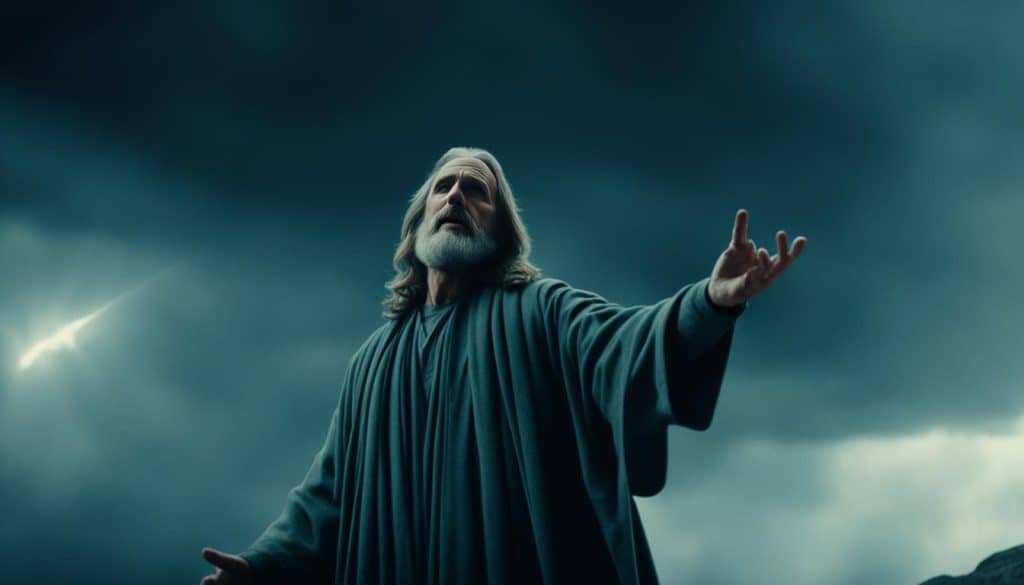
The Disciples’ Fear and Doubt (Matthew 8:23-27; Mark 4:35-41; Luke 8:22-25)
In Matthew 8:23-27, Mark 4:35-41, and Luke 8:22-25, we witness moments of fear and doubt among the disciples. When faced with a storm at sea, the disciples question Jesus‘ care for them, expressing their unbelief. However, Jesus, the master of the elements, responds with power and authority, calming the storm and rebuking their lack of faith.
This story serves as a powerful reminder for us to trust in Jesus, even in the face of uncertainty. It highlights the disciples’ human frailty and their struggle to fully comprehend the depth of Jesus’ love and power. Yet, in their questioning and doubt, they have the opportunity to witness a miraculous display of Jesus’ sovereignty over nature, revealing His care and protection.
Like the disciples, we too may find ourselves in storms of life, questioning whether Jesus is truly concerned for us. However, this story assures us that Jesus is present with us in the midst of our trials, ready to calm the raging storms of our lives and bring us peace.
“And he awoke and rebuked the wind and said to the sea, ‘Peace! Be still!’ And the wind ceased, and there was a great calm.” – Mark 4:39
Lessons from the Disciples’ Fear and Doubt
- Trusting in Jesus’ care: The disciples’ lack of faith in the storm reflects our own tendency to question whether Jesus cares about our struggles. This story challenges us to trust in His love and provision even when circumstances seem overwhelming.
- Overcoming doubt: Just as Jesus rebuked the disciples for their lack of faith, this story reminds us to confront our doubts and seek a deeper understanding of Jesus’ power and presence in our lives.
- Experiencing peace in the storm: When Jesus calmed the storm, He demonstrated His authority over nature and His ability to bring peace in the midst of chaos. This story encourages us to turn to Him in times of turmoil and find solace in His calming presence.
Related Bible Verses
| Verse | Scripture |
|---|---|
| Matthew 8:23-27 | The disciples’ fear and Jesus’ calming of the storm |
| Mark 4:35-41 | The disciples’ fear and Jesus’ calming of the storm |
| Luke 8:22-25 | The disciples’ fear and Jesus’ calming of the storm |

Thomas Doubts Jesus’ Resurrection (John 20:24-29)
John 20:24-29 tells the story of Thomas, a disciple who struggled with disbelief regarding Jesus’ resurrection. Despite the testimonies of his fellow disciples, Thomas insisted on seeing and touching Jesus’ wounds before accepting the truth. His doubt transformed into faith when Jesus appeared and invited Thomas to touch His scars.
Thomas’ experience teaches us that doubts can be overcome through personal encounters with Jesus. It reminds us that it’s natural to question and seek evidence, but true faith is born when we encounter Jesus for ourselves. It is through these encounters that our doubts are transformed into unwavering faith.
In the words of Thomas, as he witnessed Jesus’ wounds:
“My Lord and my God!”
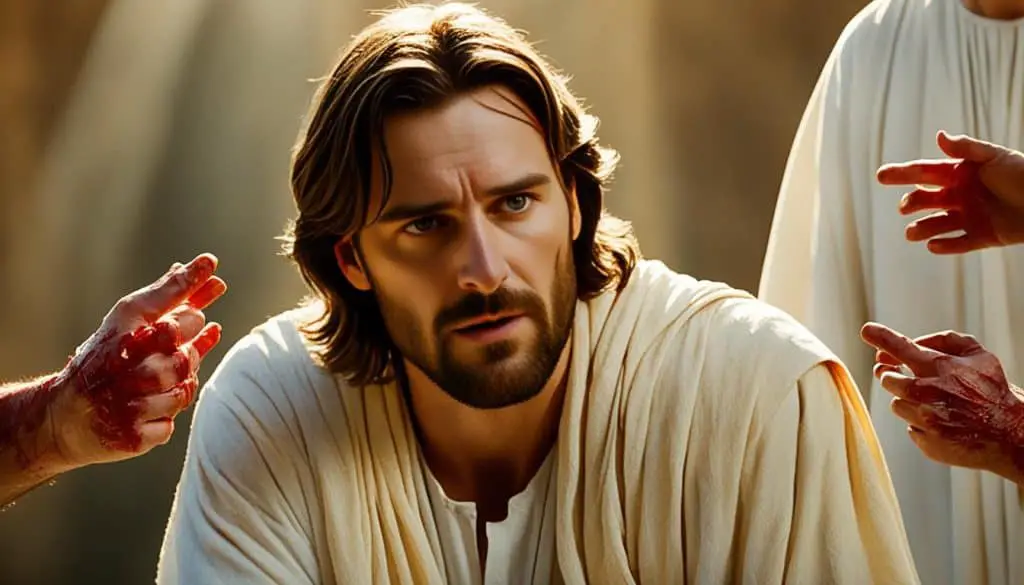
Thomas’s story serves as a powerful reminder that our faith journey may include moments of doubt and disbelief. However, just as Jesus patiently showed Thomas His wounds, He extends the same invitation to each of us. When we encounter the risen Christ, our doubts can be transformed into a deep and abiding faith.
The Rich Young Ruler (Matthew 19:16-22; Mark 10:17-22; Luke 18:18-23)
In the accounts found in Matthew 19:16-22, Mark 10:17-22, and Luke 18:18-23, we encounter the story of the rich young ruler, a man who approached Jesus seeking eternal life. However, his unwillingness to give up his possessions became a stumbling block to truly following Jesus. His unbelief and attachment to worldly wealth prevented him from experiencing the fullness of a life in Christ.
When the rich young ruler asked Jesus what he must do to inherit eternal life, Jesus responded by telling him to sell all his possessions and give to the poor. Sadly, the young man left disheartened because he was unwilling to part with his great wealth. The story serves as a powerful reminder that our relationship with material possessions can hinder our spiritual growth and commitment to following Jesus.
And Jesus, looking at him, loved him, and said to him, “You lack one thing: go, sell all that you have and give to the poor, and you will have treasure in heaven; and come, follow me.”
But the young man, disheartened by the saying, went away sorrowful, for he had great possessions. (Mark 10:21-22)
This story challenges us to examine our priorities and evaluate the role possessions play in our lives. It prompts us to ask ourselves if we are truly willing to surrender everything for the sake of following Jesus. Unbelief and a refusal to give up worldly attachments can hinder our spiritual journey and prevent us from experiencing the abundance of God’s blessings.
Jesus invites us to let go of anything that stands between us and Him so that we can fully embrace the transformative power of His love and grace. By trusting in Him and being willing to let go of our possessions, we open ourselves up to a deeper and more meaningful relationship with God.
Let us learn from the rich young ruler’s unbelief and seek to align our priorities with God’s will, putting our trust in Him above all else. Only then can we experience the joy and fulfillment that comes from following Jesus wholeheartedly.

Key Lessons:
- Material possessions can hinder our faith and commitment to following Jesus.
- Trusting in God and letting go of everything can lead to a deeper relationship with Him.
- Focusing on eternal treasures rather than worldly wealth brings true fulfillment.
How Do Stories of Persecution in the Bible Impact Unbelief in its Validity?
The persecution stories in the Bible often prompt unbelief in its validity among skeptics. Some question the credibility of these accounts, arguing that they could be exaggerated or fabricated. Others view these stories as evidence of the Bible’s enduring relevance, showcasing the trials faced by believers throughout history.
The People of Nazareth Reject Jesus (Matthew 13:53-58; Mark 6:1-6)
In Matthew 13:53-58 and Mark 6:1-6, we find the account of Jesus visiting his hometown of Nazareth, only to face rejection from the people due to their unbelief. Despite having performed numerous miracles in other places, Jesus was unable to do many miracles in Nazareth. This serves as a powerful reminder of the impact that unbelief can have on our lives.
The people of Nazareth had grown up with Jesus and knew him as a carpenter’s son, making it difficult for them to accept his divinity and the authority with which he spoke. Their unbelief limited their ability to fully experience the miracles and teachings that Jesus had to offer. It is a stark example of how our preconceived notions and lack of faith can hinder our spiritual growth and the blessings God wants to bestow upon us.
This story teaches us the importance of having faith and recognizing the significance of Jesus’ presence and teachings, regardless of our familiarity or personal biases. It encourages us to approach Jesus with an open heart, ready to receive the transformative power of his love and grace. By putting aside our doubts and embracing the truth of who Jesus is, we can experience the miracles and blessings that he desires to bring into our lives.
Call to Action: The Question That Demands an AnswerIn Acts 2:37 Peter and the Apostles were asked the question – What Shall We do? And in Acts 2:38 Peter answered, Repent, and be baptized every one of you in the name of Jesus Christ for the remission of sins, and ye shall receive the gift of the Holy Ghost. For the promise is unto you, and to your children, and to all that are afar off, even as many as the Lord our God shall call. Do you understand this? After hearing the gospel and believing, they asked what should would do. The answer hasn’t changed friend, Peter clearly gave the answer. The question for you today is, Have you receieved the Holy Spirit Since you believed? If you’re ready to take that step, or you want to learn more about what it means to be born again of water and Spirit, visit: Come, and let the Spirit make you new. |