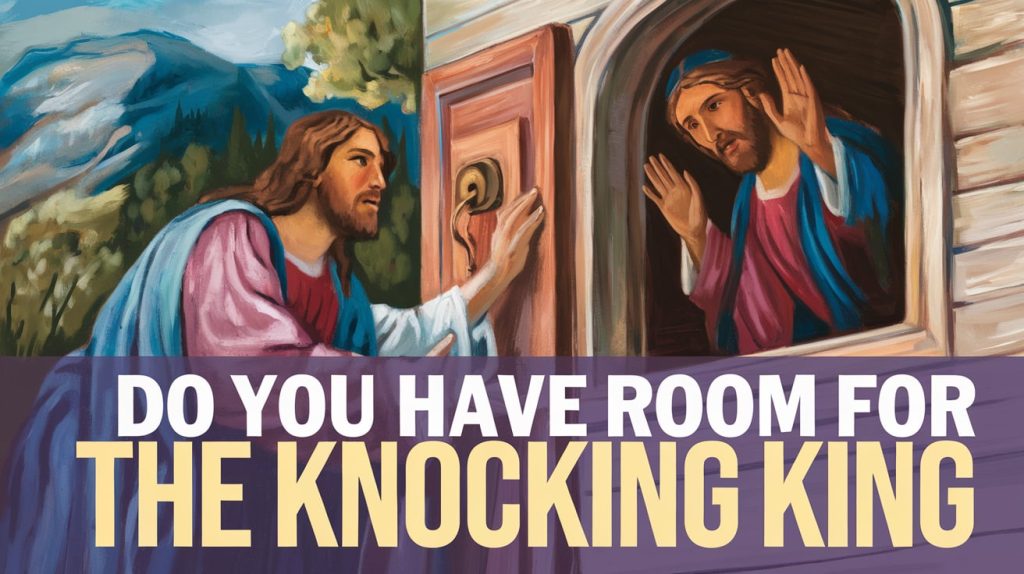
Experience the powerful story of Jesus’ birth through “Do You Have Room for the Knocking King,” a heartfelt worship song inspired by Scripture. This song reflects on the biblical invitation to prepare our hearts for Christ and welcome Him as the King who brings peace, joy, and salvation.
Inspired by passages such as Luke 2:10-12, Revelation 3:20, and Isaiah 40:3-5, the lyrics retell the nativity story and call every listener to reflect on their own readiness to receive Jesus into their lives. With dramatic storytelling and a deeply reverent tone, this original song connects the timeless truths of the Bible to our hearts today.
If you enjoy worship songs, Jesus songs, or exploring Scripture in song, this is for you. Let the lyrics move your spirit and draw you closer to the heart of Christ.
Make Sure You Watch My Video: I would love for you to subscribe to my YouTube channel as well…
Song Lyrics: Do You Have Room for the Knocking King
Verse 1:
A voice is crying in the wilderness clear,
“Prepare the way, the Lord is near!”
Mountains will crumble, valleys will rise,
The King is coming—lift up your eyes.
Verse 2:
The angels proclaimed with glorious light,
“Good news for all on this holy night!
A Savior is born in the city of kings,
Rejoice, O earth, as heaven sings!”
Chorus:
Do you have room for the Knocking King,
The Lord of lords, to whom angels sing?
He stands at the door, His love to bring—
Do you have room for the Knocking King?
Verse 3:
The babe in a manger, humble and small,
Is the King who created and rules it all.
He knocks on the door of every heart,
Will you let Him in and make a new start?
Verse 4:
The voice of John cried, “Repent, make way!”
The Lamb of God has come today.
Lift up your gates, lift up your soul,
The Knocking King will make you whole.
Chorus:
Do you have room for the Knocking King,
The Lord of lords, to whom angels sing?
He stands at the door, His love to bring—
Do you have room for the Knocking King?
Verse 5:
He came to His own, but they turned away,
Yet He calls to the willing every day.
To all who believe, He gives His grace,
To those who will seek His shining face.
Verse 6:
Lift up your heads, O gates of the soul,
The King of Glory makes broken hearts whole.
He brings His peace, His joy, His love,
A gift of grace from heaven above.
Chorus:
Do you have room for the Knocking King,
The Lord of lords, to whom angels sing?
He stands at the door, His love to bring—
Do you have room for the Knocking King?
Outro:
He knocks, He waits, His love still pure,
Do you have room? Will you be sure?
The King is calling; let praises ring—
Do you have room for the Knocking King?
The Meaning Behind “Do You Have Room for the Knocking King”
This song is an invitation, a call to every heart, inspired by the incredible story of Jesus’ birth and His message to humanity. Each verse, chorus, and outro carries a message rooted in Scripture, blending prophecy, fulfillment, and personal reflection. Let’s explore the deeper meaning of the song and how it connects to God’s redemptive plan.
Introduction: The Heart of the Song
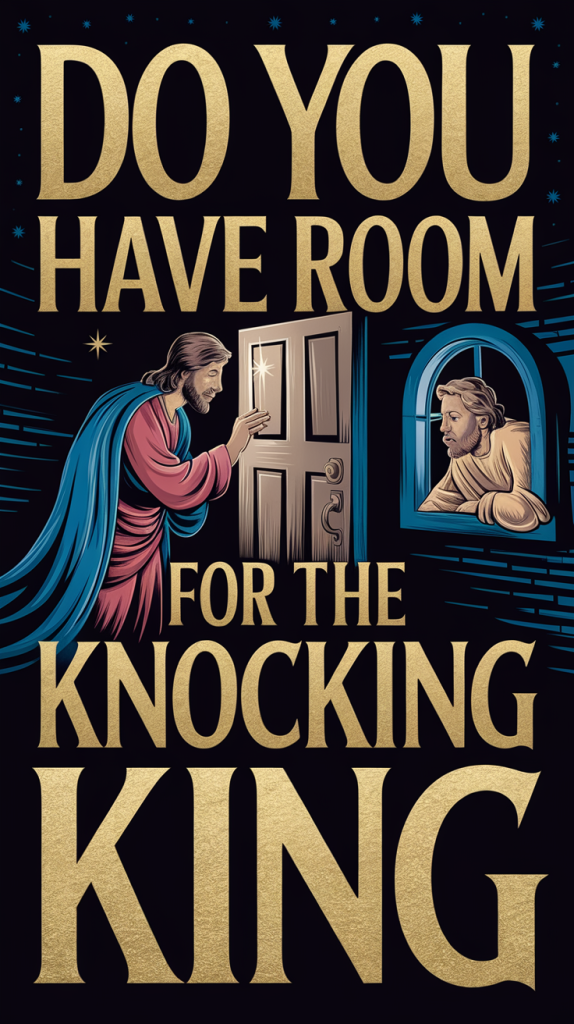
The title, “Do You Have Room for the Knocking King,” draws from Revelation 3:20, where Jesus says, “Behold, I stand at the door, and knock.” The song asks each of us to consider whether we’ve made room in our hearts for the Savior. Inspired by the nativity story, the song reminds us of the humility of Jesus’ birth, the fulfillment of prophecies, and the joyful proclamation of His arrival.
Verse 1: A Voice Crying in the Wilderness
“A voice is crying in the wilderness clear, ‘Prepare the way, the Lord is near!'”
This verse echoes Isaiah 40:3-5, which foretold John the Baptist’s mission to prepare the way for Jesus. John’s cry to “make straight in the desert a highway for our God” emphasizes the need for spiritual readiness. The mountains and valleys symbolize obstacles in our hearts that God will level to make room for His presence.
This imagery also reminds us of God’s power to transform chaos into beauty, just as He did in creation. The excitement here reflects the anticipation of the Messiah, the one who would bring salvation and peace to a broken world.
Verse 2: The Angels Proclaim Good News
“The angels proclaimed with glorious light, ‘Good news for all on this holy night!'”
Inspired by Luke 2:10-12, this verse captures the joy of the angelic announcement to the shepherds: “Fear not, for behold, I bring you good tidings of great joy.” The shepherds, humble and overlooked by society, were the first to hear the news of the Savior’s birth, showing God’s love for the lowly and outcast.
This moment foreshadows how Jesus’ ministry would welcome the poor in spirit, the meek, and those seeking peace (Matthew 5:3-9). The angels’ proclamation is a fulfillment of God’s promise of hope to all nations.
Chorus: The Knocking King
“Do you have room for the Knocking King, the Lord of lords, to whom angels sing?”
The chorus ties everything together with urgency and invitation. The phrase “Knocking King” directly refers to Revelation 3:20, where Jesus knocks at the door of our hearts, waiting for us to let Him in. This simple act—of making room for Jesus—represents salvation.
The joy of the angels echoes Psalm 24:7-9, where the King of Glory is welcomed into His rightful place. The excitement in the chorus reminds us that this King doesn’t demand grandeur; He seeks a humble, willing heart.
Verse 3: The Humble Birth of the Savior
“The babe in a manger, humble and small, is the King who created and rules it all.”
This verse marvels at the paradox of Jesus’ birth. The King of kings, the Creator of the universe (John 1:3), was born in a manger, a feeding trough for animals. This fulfills Micah 5:2, which prophesied that the ruler of Israel would come from the small town of Bethlehem.
The humility of His birth contrasts with His divine authority, reminding us of Philippians 2:6-8, where Paul describes how Jesus humbled Himself, taking the form of a servant to redeem humanity.
Verse 4: Prepare the Way for the Lamb of God
“The voice of John cried, ‘Repent, make way!’ The Lamb of God has come today.”
Here, the song circles back to Matthew 3:1-3, emphasizing John the Baptist’s role in preparing hearts for Jesus. John’s cry to “repent” is a timeless call for all believers to turn away from sin and make room for God’s transformative grace.
This verse also alludes to Jesus as the Lamb of God (John 1:29), the perfect sacrifice who takes away the sins of the world. It connects His birth to His ultimate mission: salvation through the cross.
Verse 5: Rejection and Redemption
“He came to His own, but they turned away, yet He calls to the willing every day.”
This verse draws from John 1:11-12, where it says, “He came unto His own, and His own received Him not.” The rejection of Jesus by many reflects the hardness of human hearts, yet His grace remains available to all who believe in Him.
This theme resonates with parables like the Prodigal Son (Luke 15:11-32), where forgiveness and welcome are offered even after rejection. It’s a reminder that Jesus knocks persistently, offering salvation to all who will listen.
Verse 6: Lift Up Your Gates
“Lift up your heads, O gates of the soul, the King of Glory makes broken hearts whole.”
Inspired by Psalm 24:7-9, this verse poetically invites us to open the gates of our hearts to the King of Glory. It reflects the healing and wholeness that Jesus brings to those who receive Him.
The imagery of gates being lifted also echoes the triumphal entry (Matthew 21:1-11), when Jesus entered Jerusalem as King. Just as the crowds shouted “Hosanna,” this verse encourages us to joyfully welcome Him into our lives.
Outro: The Final Call
“He knocks, He waits, His love still pure. Do you have room? Will you be sure?”
The outro brings the song to a personal and reflective close. It reminds us that Jesus, the Knocking King, continues to wait at the door, offering love and salvation. The question, “Do you have room?” is a direct challenge to each listener to respond to His call.
Conclusion: The Fulfilled Promises of Christ
From His prophesied birth in Bethlehem to His humble life, sacrificial death, and ongoing invitation to every heart, Jesus has fulfilled God’s promises with unwavering faithfulness. This song beautifully ties together the themes of prophecy, fulfillment, and personal reflection. It reminds us that while the King of Glory could command the heavens, He chooses to knock gently at the door of our hearts, waiting for us to prepare Him room.
Will you answer the call of the Knocking King? Will you open wide the door and welcome Him in?
How Does Working with Your Hands Relate to Making Room for The Knocking King?
When you work with your hands biblical, you are using a skill that has been valued throughout history. The act of creating and building with your hands can be a form of worship, allowing you to make room for the knocking king of your life. It connects you to the physical world and can be a source of spiritual fulfillment.
FAQ: 10 Interesting Facts About the Story Behind “Do You Have Room for the Knocking King”
1. Why is Jesus referred to as the “Knocking King”?
The title “Knocking King” is inspired by Revelation 3:20, where Jesus says, “Behold, I stand at the door and knock.” This imagery portrays Jesus as a King who patiently seeks entry into the hearts of individuals. Despite being Lord of all, He humbly waits for us to invite Him in.
2. Why is Bethlehem significant in the story of Jesus’ birth?
Bethlehem was prophesied as the birthplace of the Messiah in Micah 5:2, which says, “Out of you will come a ruler who will shepherd my people Israel.” Bethlehem, the City of David, highlights Jesus’ royal lineage and fulfills Old Testament prophecy about His origins.
3. What role do angels play in this story?
In Luke 2:10-12, angels announced Jesus’ birth to shepherds, declaring, “Good tidings of great joy.” The angels’ message underscores the universal nature of Jesus’ mission—bringing peace and salvation to all people, not just the powerful or privileged.
4. What does the imagery of opening doors and gates symbolize?
The open door from Revelation 3:20 symbolizes our willingness to welcome Jesus into our lives. Similarly, Psalm 24:7-9 calls, “Lift up your heads, O gates…that the King of glory may come in,” urging hearts to prepare for God’s presence and reign.
5. Why was Jesus born in a manger instead of a palace?
Jesus’ birth in a manger, as described in Luke 2:7, symbolizes His humility and accessibility to all people. His arrival in such a lowly setting highlights that salvation is available to everyone, regardless of status or wealth.
6. How does John the Baptist prepare the way for Jesus?
John the Baptist fulfills Isaiah 40:3-5, which prophesies, “Prepare the way of the Lord.” His message of repentance in Matthew 3:1-3 urged people to ready their hearts for the coming Messiah, mirroring the call for us to prepare room for Christ in our lives today.
7. How does Jesus’ rejection relate to this story?
In John 1:11, it says, “He came unto His own, and His own received Him not.” Despite this rejection, Jesus offers salvation to anyone who believes in Him (John 1:12). The story emphasizes the personal choice to welcome Him, a theme central to this song.
8. What is the significance of shepherds being the first to hear the good news?
Shepherds were among the lowest in society, yet they were the first to receive the angelic announcement in Luke 2:8-10. This foreshadows Jesus’ ministry, which prioritized the humble and marginalized, and emphasizes that His salvation is for all.
9. How does this story fulfill God’s promises?
From the virgin birth prophesied in Isaiah 7:14 to the announcement in Micah 5:2 of the Messiah coming from Bethlehem, the nativity fulfills numerous Old Testament prophecies. Jesus’ birth proves God’s faithfulness in keeping His promises to redeem His people.
10. What does this story teach about personal faith?
The repeated imagery of knocking, opening doors, and making room reminds us that faith is a personal choice. Revelation 3:20 and the nativity story invite us to respond actively to Jesus’ call, making room in our hearts for Him to reign as Lord.
Call to Action: The Question That Demands an AnswerIn Acts 2:37 Peter and the Apostles were asked the question – What Shall We do? And in Acts 2:38 Peter answered, Repent, and be baptized every one of you in the name of Jesus Christ for the remission of sins, and ye shall receive the gift of the Holy Ghost. For the promise is unto you, and to your children, and to all that are afar off, even as many as the Lord our God shall call. Do you understand this? After hearing the gospel and believing, they asked what should would do. The answer hasn’t changed friend, Peter clearly gave the answer. The question for you today is, Have you receieved the Holy Spirit Since you believed? If you’re ready to take that step, or you want to learn more about what it means to be born again of water and Spirit, visit: Come, and let the Spirit make you new. |