The Man Who Sat in the Front
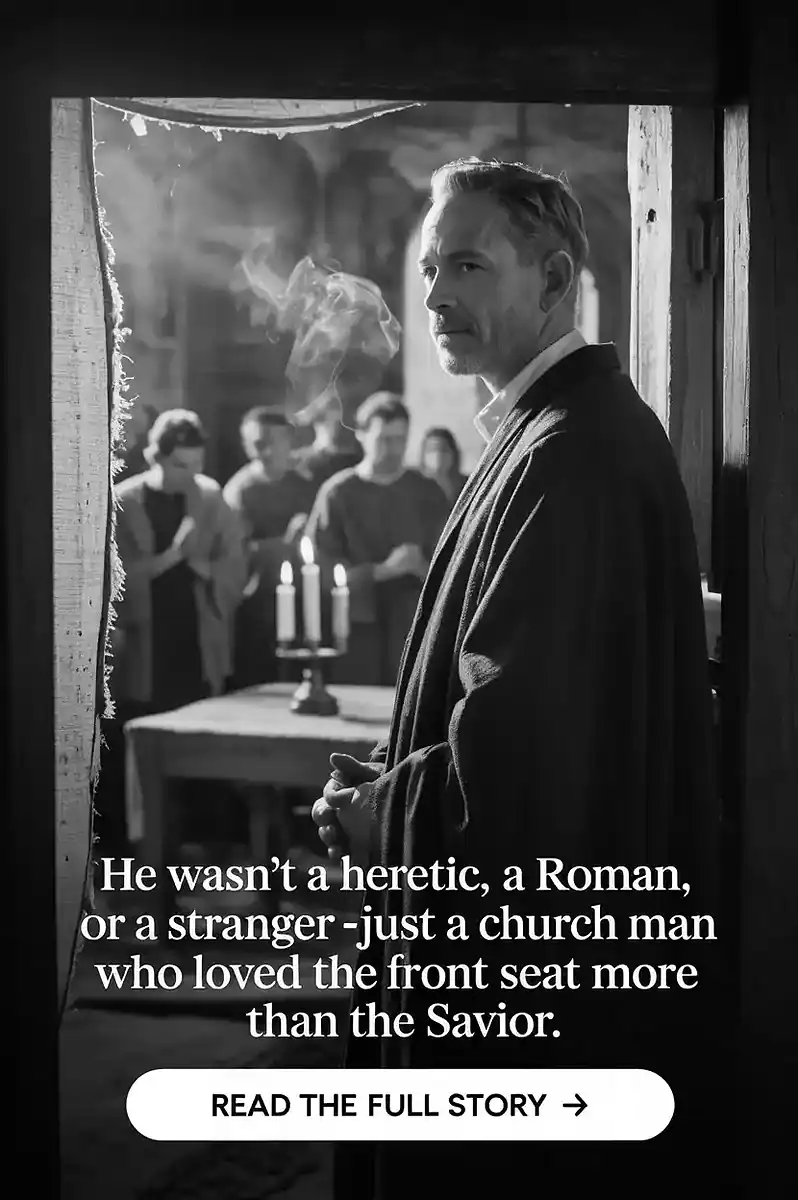
The small house-church was alive with whispered prayers and quiet greetings. Lamps flickered against clay walls as the early believers gathered – poor and rich, slave and free, all one in Christ. But not everyone in the room saw it that way. At the head of the gathering sat Diotrephes, a man whose name was known across nearby assemblies. He had the kind of presence that filled a room before he even spoke – tall, deliberate, and always the first to sit down at the front. His hands rested on the table like a ruler guarding his throne.
When John’s letter arrived, the people expected encouragement, perhaps a word of comfort or teaching. Instead, the messenger’s face carried tension. The elder had written with both grace and firmness – commending Gaius for walking in truth, warning against deceit, and calling out Diotrephes by name. The air in the room tightened. You could hear someone swallow. Then, Diotrephes stood up.
The Spirit That Craved Control
He wasn’t the kind of man who shouted right away. No, Diotrephes led with charm before he crushed opposition. He spoke with the smoothness of authority – measured, confident, untouchable. “We don’t need every traveler claiming to be an apostle,” he said, his tone calm but cutting. “This house must stay pure.”
But purity wasn’t what drove him. It was pride. The same poison that once whispered in Eden, “You shall be as gods,” had now found a home in a man who once claimed to serve the Lord. He had forgotten that the church wasn’t his house – it was Christ’s body. Diotrephes loved preeminence more than presence. He wanted the seat, not the Savior.
Those who dared to welcome John’s messengers faced consequences. He forbade them, insulted them, and even cast some out of the fellowship. The word “fellowship” meant little to him now. The door of the church had become a wall.
The Quiet Ones Who Stayed Faithful
Yet, not everyone bowed to his will. There were believers – unnamed, unseen – who still washed feet and shared bread quietly. They whispered prayers in courtyards, breaking bread in hidden corners of town. They remembered Jesus’ words: “He that is greatest among you shall be your servant.” They refused to answer control with hate, pride with pride.
One of them was Gaius, a man John called “beloved.” While Diotrephes built walls, Gaius opened doors. He received missionaries, gave shelter, and risked his place in the community to walk in truth. It wasn’t rebellion – it was obedience. He simply refused to let fear replace faith.
The Letter That Exposed the Heart
The letter spread quickly among believers in neighboring towns. John’s words echoed like thunder wrapped in love. “I wrote unto the church: but Diotrephes, who loveth to have the preeminence among them, receiveth us not.” No title, no position, no self-appointed authority could outshine the truth. God Himself had exposed what was hidden.
Imagine Diotrephes’ face when he heard those words read aloud. The veins at his temple pulsed; his jaw clenched. He was the man who had silenced others – but now, heaven was speaking his name in correction. Pride always promises control but ends in exposure. The same hands that once opened the scrolls of Scripture now trembled as the light of truth found him.
The Turning Point Nobody Saw
Maybe there was a night afterward – long after everyone left – when Diotrephes sat alone in the dim light of a dying lamp. The noise of control faded, replaced by the ache of conviction. Pride is loud, but guilt whispers. Did he remember the day he first believed? Did he recall the warmth of fellowship, when all that mattered was Jesus?
John had written another line, soft yet piercing: “Beloved, follow not that which is evil, but that which is good.” It wasn’t condemnation – it was an invitation. Even the man who loved first place could still bow at the feet of the One who took the lowest place of all. The door he had shut could still be opened from within.
When Faith Walks Through Closed Doors
The next Sabbath, some say a quiet woman arrived early and placed a loaf of bread by the doorway. No one dared take it at first. Then a small group came to pray, and they found the table set again. Without permission, without fanfare, the true fellowship had returned. Love had walked through a door pride had tried to seal.
The church was never about who held the keys; it was about who held the heart. They sang softly, “Blessed are the meek,” and they meant it. The Spirit filled the room – not through status, but through surrender.
The Warning That Became a Mirror
Centuries have passed, yet the spirit of Diotrephes still visits modern pulpits, meetings, and boardrooms. Whenever someone uses ministry to magnify self, shuts doors to protect their image, or refuses correction, the old shadow rises again. But the letter of John still speaks – both as a rebuke and a rescue.
God still exposes pride not to humiliate but to heal. For every Diotrephes who closes a door, there’s a Gaius who opens one wider. And for every self-exalting leader, there’s a quiet servant who keeps the light of truth burning, even when the world looks away.
The Lesson Written in the Dust
Power without humility collapses. Influence without love corrupts. But humility – real, Christlike humility – builds what pride destroys. The early believers didn’t need great cathedrals or fame; they needed hearts clean enough for God to dwell in. And He still chooses the lowly for that reason.
When the Apostle John later spoke of walking in truth, he wasn’t talking about theology alone. He meant walking in love, integrity, and grace – even when leadership gets messy, when personalities clash, when pride tempts us to push others aside. Truth walks humbly. Truth bends down and washes feet.
The Open Door of Grace
Some scholars wonder if Diotrephes ever repented. Scripture leaves the ending open. Maybe that’s intentional. Perhaps the Lord wanted the story to live as a mirror for each of us – to ask whether we love to serve or love to be seen serving. Pride shuts doors; grace keeps them open.
When Jesus said, “I am the door,” He meant more than access to salvation. He meant access to the heart of God – a doorway forever open. We can choose to guard our own little kingdoms, or we can step into His. One leads to isolation; the other to life.
Christ, the Servant of All
In every age, the church faces this test: Will we build our name or His? Diotrephes’ story isn’t just a warning – it’s a call to return. To wash feet again. To open the door again. To remember that the highest seat belongs to the One who knelt with a towel.
And when we look to Jesus – the true Head of the Church – we find the only kind of greatness worth having. Not power that demands attention, but love that stoops to serve. The King of kings made Himself the servant of all. The Son of God opened the very door that pride keeps closed.
The Final Sentence
The One who opened Heaven’s door still stands with His hand on the latch, whispering to every proud heart, “If any man hear My voice and open the door, I will come in.”
Call to Action: The Question That Demands an AnswerIn Acts 2:37 Peter and the Apostles were asked the question – What Shall We do? And in Acts 2:38 Peter answered, Repent, and be baptized every one of you in the name of Jesus Christ for the remission of sins, and ye shall receive the gift of the Holy Ghost. For the promise is unto you, and to your children, and to all that are afar off, even as many as the Lord our God shall call. Do you understand this? After hearing the gospel and believing, they asked what should would do. The answer hasn’t changed friend, Peter clearly gave the answer. The question for you today is, Have you receieved the Holy Spirit Since you believed? If you’re ready to take that step, or you want to learn more about what it means to be born again of water and Spirit, visit: Come, and let the Spirit make you new. |