Quick Overview of This Bible Study…
Short on time? I have created a short slide show presentation of some key takeaways in our study. The complete, more comprehensive bible study is below…
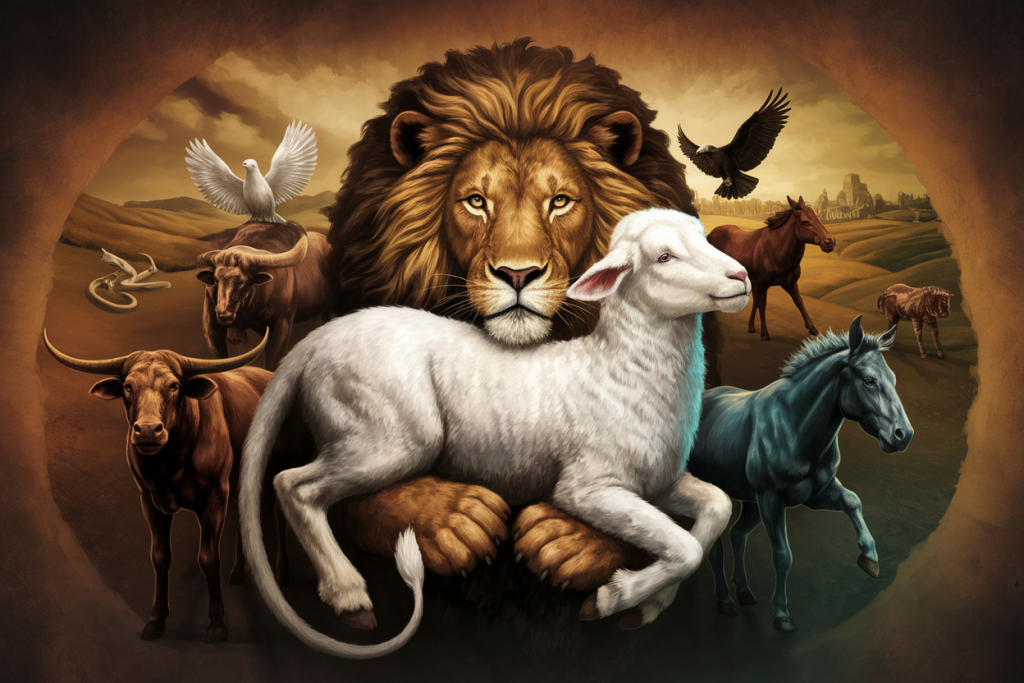
The biblical narrative is replete with symbolism, and within this rich tapestry, animals serve as potent vehicles for conveying profound spiritual truths.
These creatures are not merely part of the backdrop of biblical events but are intentionally employed to reflect aspects of human behavior, illustrate the attributes of God, and reveal the intricate relationship between the created order and the spiritual realm.
Understanding the symbolic significance of animals in Scripture offers a deeper appreciation for the multifaceted messages embedded within the text.
The consistent and deliberate use of the animal kingdom throughout the Old and New Testaments suggests a divine pedagogical approach, making abstract theological concepts more accessible and relatable to the human experience.
Just as analogies and metaphors drawn from the natural world aid comprehension, the characteristics and behaviors of animals provide tangible representations of complex spiritual ideas.
Lion:
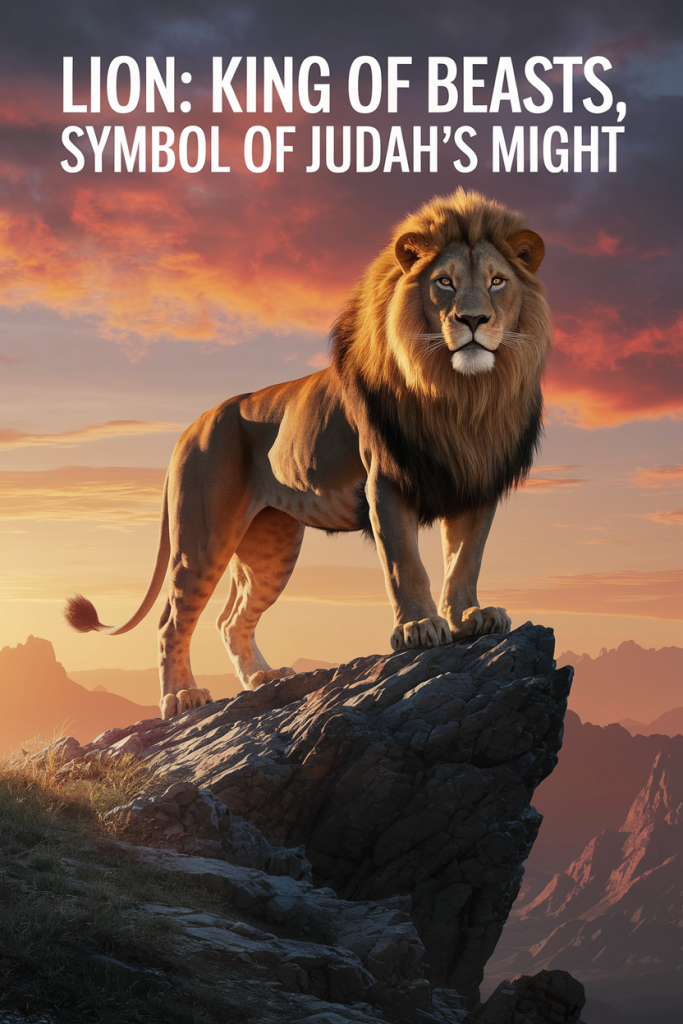
Revered for its strength, courage, and majestic bearing, the lion holds a prominent place in biblical symbolism, particularly in its representation of royalty and the Messiah.
In the Old Testament, the lion is frequently depicted as a symbol of strength, courage, and majesty.
The tribe of Judah is famously likened to a lion in Genesis 49:9, signifying its future leadership and dominance among the tribes of Israel, a lineage that would ultimately lead to King David and, according to prophecy, the Messiah.
Furthermore, the lion is used to symbolize the power and judgment of God, as seen in Hosea 11:10 and Amos 3:8.
Conversely, the formidable nature of the lion also makes it a symbol of destructive power and threat, as illustrated in Proverbs 30:30 and Jeremiah 4:7.
This dual representation underscores the multifaceted nature of divine power, capable of both protection and fierce judgment. In the New Testament, the symbolism of the lion reaches its zenith with the identification of Jesus Christ as "the Lion of the Tribe of Judah" in Revelation 5:5.
This title fulfills the Old Testament prophecies of a powerful, Messianic king who would emerge from Judah's lineage. In stark contrast, the devil is likened to a roaring lion seeking someone to devour in 1 Peter 5:8, representing spiritual danger and relentless opposition to God's people .
The New Testament thus builds upon the Old Testament symbolism, clearly associating Christ with the positive attributes of the lion – kingship and victory – while attributing its negative aspects, such as predatory nature and destruction, to Satan.
Lamb/Sheep:
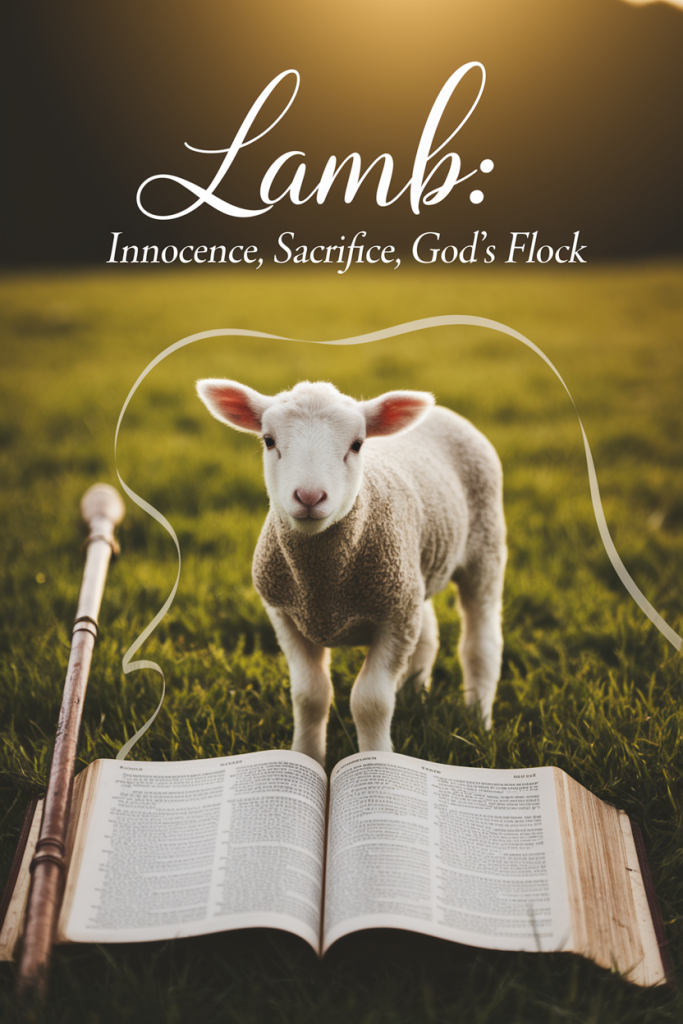
Throughout the Bible, the lamb and sheep serve as powerful symbols of sacrifice, innocence, and God's people.
In the Old Testament, the lamb is a central figure in the sacrificial system, representing innocence, purity, and meekness. Its role in sacrifices, as detailed in Exodus 12 and Leviticus 4, signifies atonement for sin.
The Passover lamb, in particular, foreshadows deliverance and redemption for the Israelites from slavery in Egypt [Exodus 12. Furthermore, God's people are often likened to sheep, emphasizing their need for guidance and protection, as beautifully portrayed in Psalm 23 and Psalm 100, and further elaborated in Ezekiel 34.
The consistent use of the sacrificial lamb in the Old Testament establishes the foundational concept of substitutionary atonement, where an innocent life is offered to cover sin, a concept crucial for understanding the New Testament's portrayal of Christ.
In the New Testament, Jesus Christ is explicitly identified as the "Lamb of God" who takes away the sin of the world in John 1:29 and 1:36.
This identification presents Jesus as the ultimate fulfillment of the Old Testament sacrificial system, as highlighted in Hebrews 9-10.
Believers are seen as sheep of Christ's flock, with Jesus himself as the Good Shepherd who lays down his life for them, as described in John 10, Matthew 18, Luke 15, and 1 Peter 2:25.
Even in the book of Revelation, the Lamb is depicted as both the one who was sacrificed and the triumphant conqueror. The New Testament unequivocally connects Jesus to the Old Testament symbolism of the lamb, presenting him as the perfect, sinless sacrifice that atones for the sins of all humanity.
Ox/Bull:
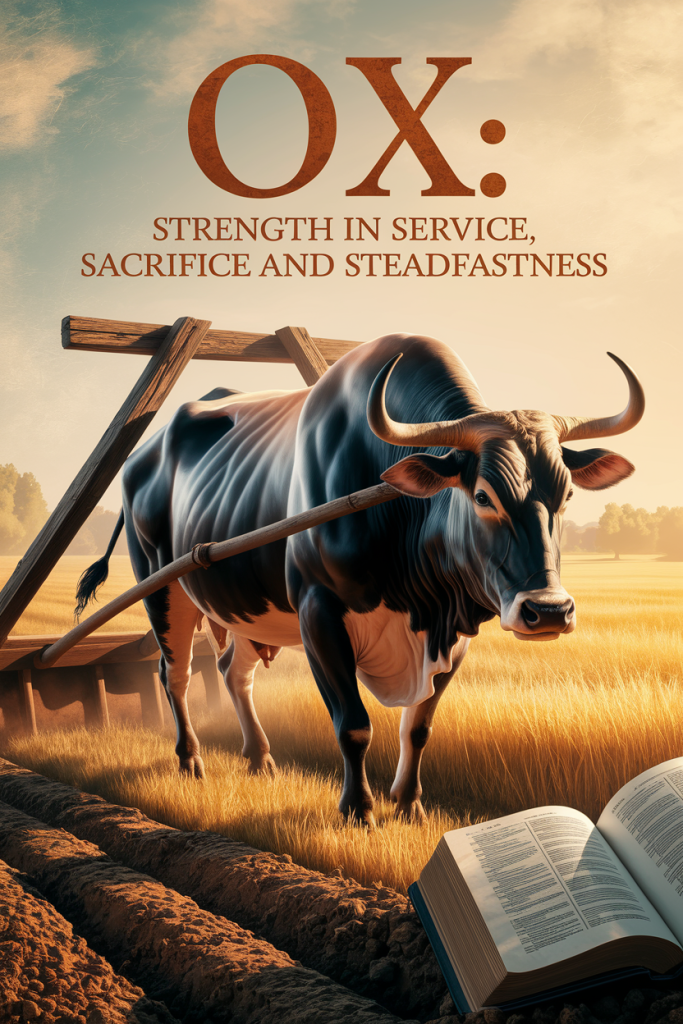
The ox, known for its strength and laborious service, carries significant symbolic weight in the Bible, representing strength, service, and sacrifice.
In the Old Testament, the ox symbolizes strength, power, and the diligent labor required in agricultural societies. Its use for plowing, threshing, and as a beast of burden underscores its role in service.
Furthermore, oxen were acceptable for burnt offerings and peace offerings, signifying dedication and atonement to God, as outlined in Leviticus 1 and 3.
The ox's importance in the Old Testament reflects the value placed on hard work and the willingness to offer even essential assets as sacrifices to God.
In the New Testament, one of the four living creatures around God's throne in Revelation 4:7 is described as having the face of an ox, a symbolic representation of strength and unwavering service within the heavenly realm.
This imagery suggests that the attributes of the ox – its power and dedication to service – are fundamental in the presence of God.
The symbolism of the ox thus carries through from the Old Testament emphasis on earthly labor and sacrifice to the New Testament portrayal of divine strength and heavenly service.
Camel:
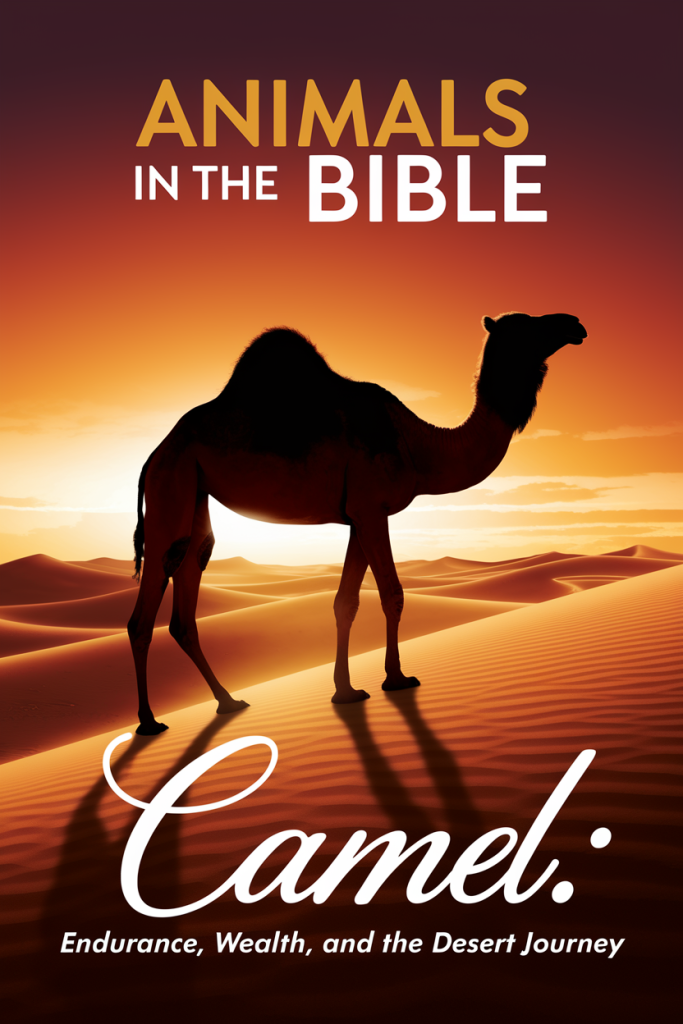
As a beast of burden uniquely adapted to arid environments, the camel in the Bible symbolizes wealth, endurance, and God's provision.
In the Old Testament, camels are frequently associated with wealth, prosperity, and social status, as seen in accounts involving Abraham (Genesis 24), the Queen of Sheba's visit to Solomon (1 Kings 10), and Job's extensive livestock (Job 1).
Their capacity for long journeys across desert regions highlights their role as symbols of endurance and perseverance [Genesis 24.
The presence of camels in Abraham's possessions further signifies divine blessing [Genesis 12, 24.
In the New Testament, while the association with material wealth persists, Jesus uses the camel in metaphors to illustrate spiritual challenges. In Matthew 19:24, Mark 10:25, and Luke 18:25, the difficulty for the rich to enter the kingdom of God is compared to a camel passing through the eye of a needle.
Additionally, in Matthew 23:24, Jesus uses the image of straining at a gnat and swallowing a camel to expose the hypocrisy of the Pharisees.
The attire of John the Baptist, made of camel's hair, symbolizes his austere lifestyle and detachment from worldly comforts [Matthew 3:4, Mark 1:6.
The New Testament thus shifts the symbolic emphasis of the camel from primarily representing literal wealth and endurance to illustrating spiritual obstacles and the nature of true devotion.
Bear:
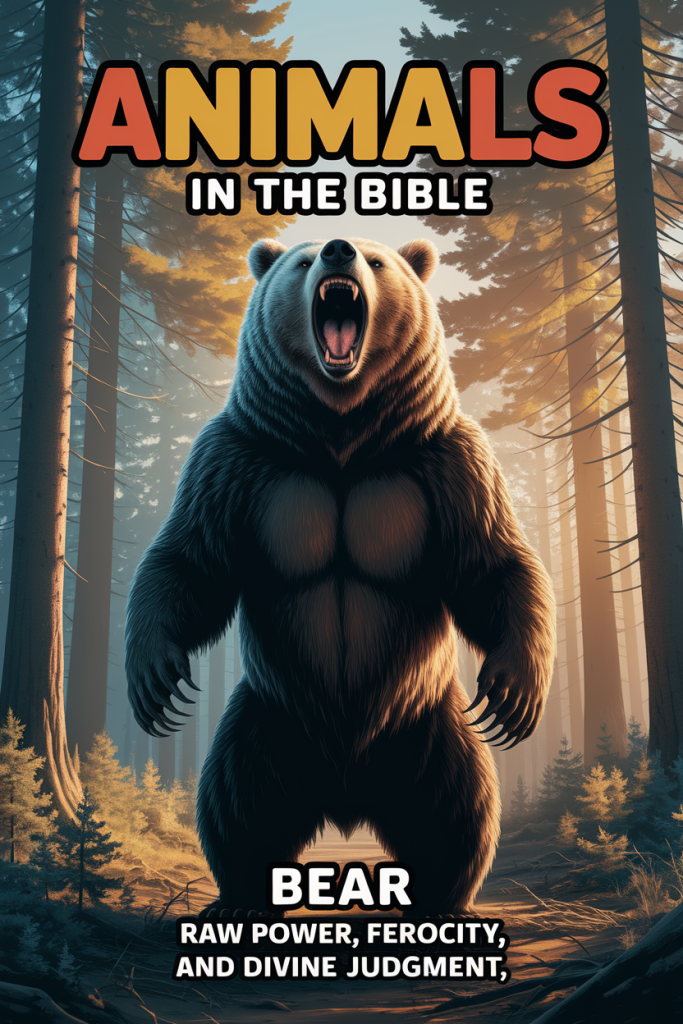
The bear, known for its raw power and unpredictable nature, symbolizes strength, ferocity, and, at times, divine judgment in the Bible.
In the Old Testament, the bear's strength and ferocity are evident in accounts like David's encounters with bears while tending sheep (1 Samuel 17:34-37) and the proverb comparing the danger of meeting a mother bear robbed of her cubs to dealing with a fool (Proverbs 30:12).
The bear also serves as an instrument of God's judgment, as seen in the story of the two she-bears who attacked the disrespectful youths who mocked the prophet Elisha (2 Kings 2:23-24) and in Hosea 13:8, where God likens his judgment to that of a bear robbed of her cubs.
Furthermore, wicked rulers are sometimes compared to charging bears in Proverbs 28:15.
In the New Testament, the beast that rises from the sea in Revelation 13:2 has feet like a bear, symbolizing its brutal and destructive power, echoing the Old Testament association of the bear with formidable force.
The bear's symbolism thus maintains a consistent thread throughout the Bible, representing untamed power often linked with danger and divine retribution.
Horse:
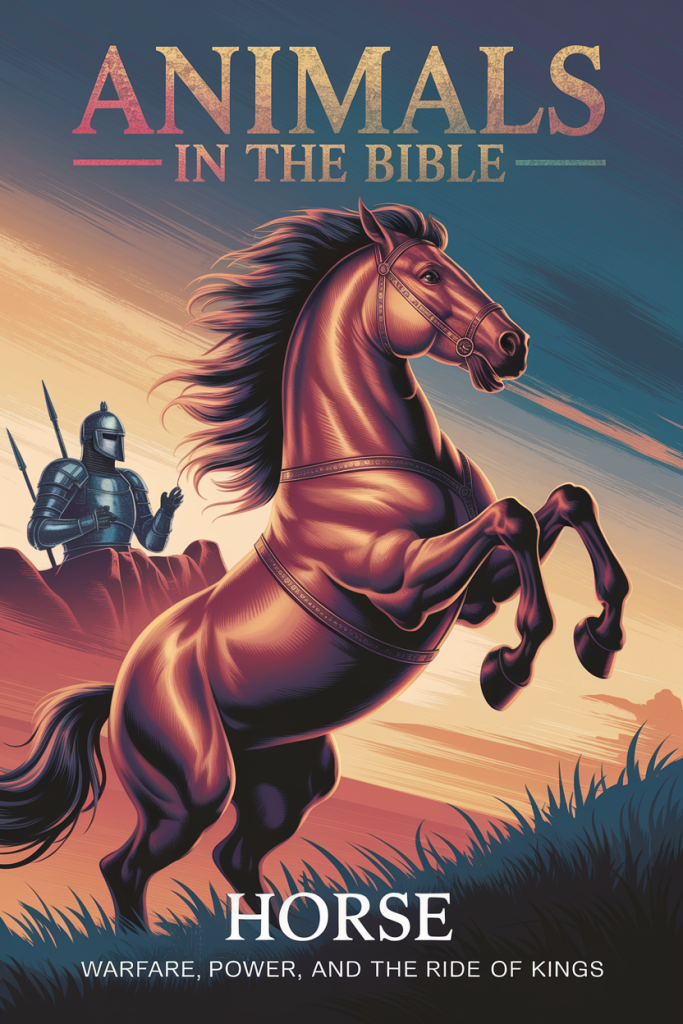
Throughout biblical history, the horse has been predominantly associated with warfare, power, and, in prophetic contexts, divine judgment.
In the Old Testament, horses are consistently linked to military might, as seen in descriptions of Pharaoh's chariots and horsemen (Exodus 14:9) and David's establishment of a cavalry force (2 Samuel 8:4).
They also symbolized royalty and wealth, particularly during Solomon's reign, when he amassed a large number of horses (1 Kings 4:26, 10:26).
However, the scriptures also caution against placing excessive trust in military strength, symbolized by horses, rather than in God (Psalm 33:17, Deuteronomy 17:16).
In the New Testament, the symbolism of the horse takes on a significant eschatological dimension with the appearance of the Four Horsemen of the Apocalypse in Revelation 6:1-8, representing conquest, war, famine, and death.
Furthermore, Christ's triumphant return is depicted with him riding a white horse in Revelation 19:11, symbolizing his ultimate victory and righteous judgment.
The analogy of a horse's bit controlling its entire body in James 3:3 illustrates the power of even small influences.
The symbolism of the horse in the Bible thus evolves from representing earthly military power in the Old Testament to embodying divine judgment and the ultimate triumph of Christ in the New Testament.
Donkey/Ass:
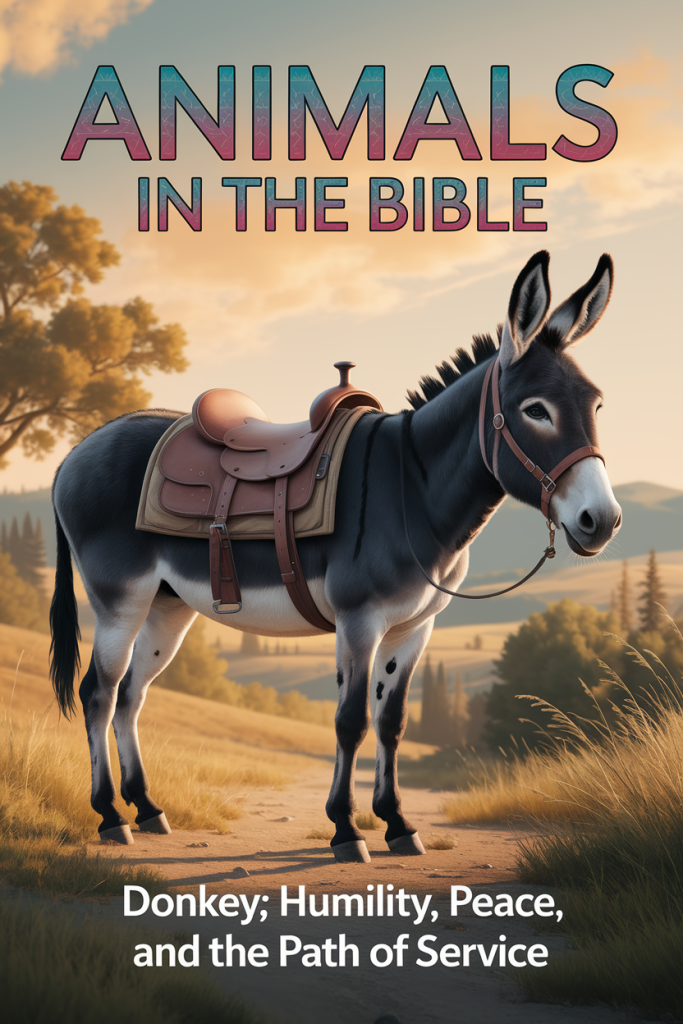
In contrast to the warhorse, the donkey or ass in the Bible symbolizes humility, peace, and service.
In the Old Testament, donkeys were commonly used for riding in times of peace and for carrying burdens, highlighting their role in everyday life and service (Genesis 22:3, Numbers 22, 1 Samuel 25:20).
The prophecy in Zechariah 9:9 contrasts the coming Messiah riding on a donkey with kings who ride horses for war, emphasizing his peaceful nature.
In the New Testament, this prophecy is dramatically fulfilled when Jesus makes his triumphal entry into Jerusalem riding on a donkey (Matthew 21:1-11, Mark 11:1-10, Luke 19:28-40, John 12:12-15).
This deliberate act underscored his role as the peaceful Messiah, contrasting with expectations of a conquering king arriving on a warhorse. The symbolism of the donkey thus consistently represents humility and peace, culminating in its association with Christ's messianic identity in the New Testament.
Goat:
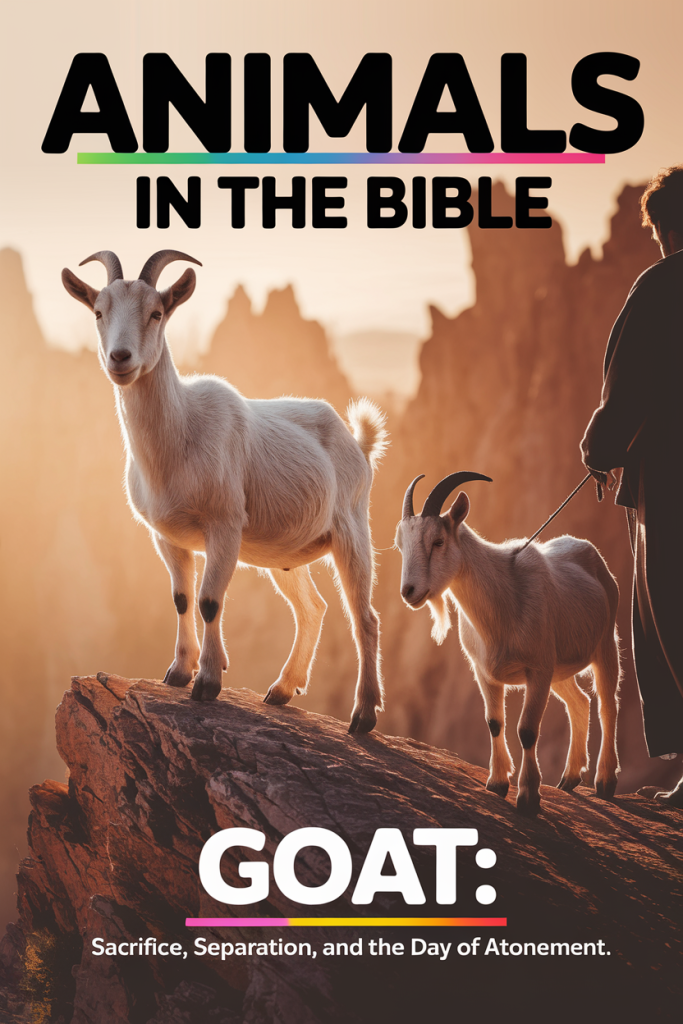
The goat holds a dual symbolism in the Bible, primarily representing sacrifice and separation.
In the Old Testament, goats were significant sacrificial animals, most notably the scapegoat used on the Day of Atonement (Leviticus 16, Numbers 15).
This ritual symbolized the removal of the people's sins, transferring them onto the goat which was then led away into the wilderness.
In the New Testament, Jesus' parable of the sheep and goats in Matthew 25:31-46 uses the goat to symbolize the unrighteous who will be separated from the righteous at the final judgment.
This draws upon the Old Testament theme of separation associated with sacrificial practices, highlighting a final division based on one's actions and relationship with Christ.
The goat thus consistently represents themes of sacrifice and the concept of separation, whether for atonement in the Old Testament or for judgment in the New Testament.
Dog:

The symbolism of the dog in the Bible is somewhat complex, generally associated with uncleanness and, at times, loyalty.
In the Old Testament, dogs are often depicted as unclean scavengers (1 Samuel 17:43, 2 Kings 9:36, Psalm 22:16) and are figuratively used to represent enemies and the wicked (Psalm 22:20).
Their scavenging behavior and association with death contributed to their unclean status in Jewish culture. In the New Testament, this negative connotation persists in passages like Matthew 7:6 and Revelation 22:15.
However, there are also instances that suggest loyalty and dependence, such as the story of the Canaanite woman in Matthew 15:21-28 and Mark 7:24-30, and the parable of the rich man and Lazarus in Luke 16:19-31.
The story of the Canaanite woman, in particular, highlights a potential shift in perspective, where even those considered "outside" the covenant can demonstrate faith and receive God's mercy.
While the prevalent symbolism leans towards uncleanness, the New Testament hints at the dog's capacity for loyalty and dependence, especially in the context of Gentiles seeking God.
Fox:
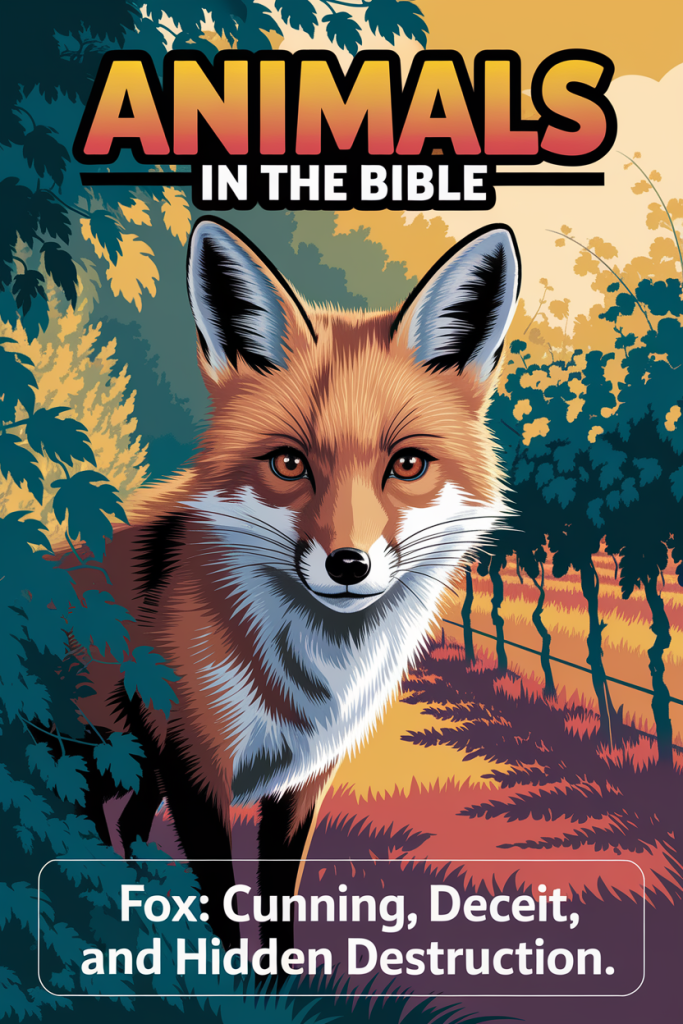
The fox in the Bible primarily symbolizes cunning and destructiveness.
In the Old Testament, foxes are depicted as crafty and destructive creatures, particularly in their tendency to raid vineyards (Judges 15:4, Nehemiah 4:3, Song of Solomon 2:15).
Their sly nature and ability to cause damage made them a fitting symbol for subtle and destructive forces. In the New Testament, Herod is referred to as a fox by Jesus in Luke 13:32, highlighting his cunning and malicious nature.
This continues the theme of the fox representing deceit and harmful intentions, now applied to a specific political figure.
Jesus' description underscores Herod's manipulative and dangerous character, aligning with the Old Testament portrayal of the fox as a creature of guile and destruction.
Deer/Hart/Gazelle:
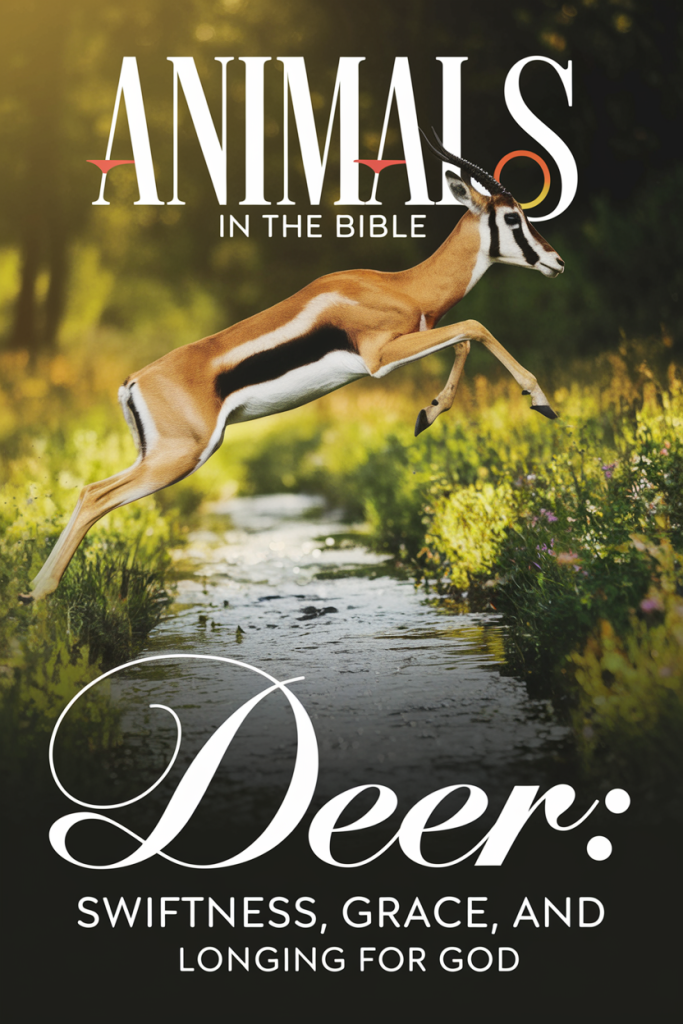
Known for their swiftness and grace, the deer, hart, and gazelle in the Old Testament often symbolize these qualities and a deep longing for God.
Their speed is noted in passages like 2 Samuel 1:19 and Psalm 18:33, while Psalm 42:1 uses the image of a deer panting for water to symbolize the soul's longing for God.
These animals evoke images of agility and a profound yearning, often used in metaphorical expressions of spiritual desire. No significant symbolic use of these animals is found in the provided snippets for the New Testament.
Ant:
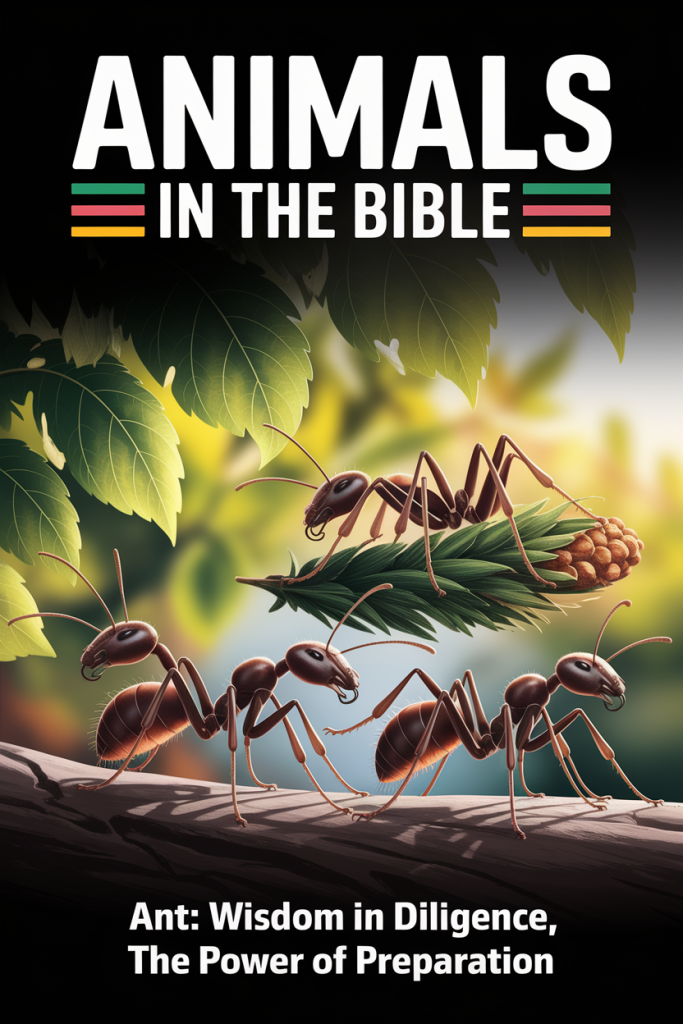
The ant, though small, serves as a powerful symbol of diligence and wisdom in the Old Testament.
The book of Proverbs explicitly points to the ant as an exemplar of hard work, diligence, and foresight (Proverbs 6:6-11, 30:25).
Solomon's wisdom literature uses the ant's industrious nature and its habit of preparing food in the summer for the winter as a practical lesson for humans to avoid laziness and to plan for the future through diligent effort.
No significant symbolic use of the ant is found in the provided snippets for the New Testament.
Dove:
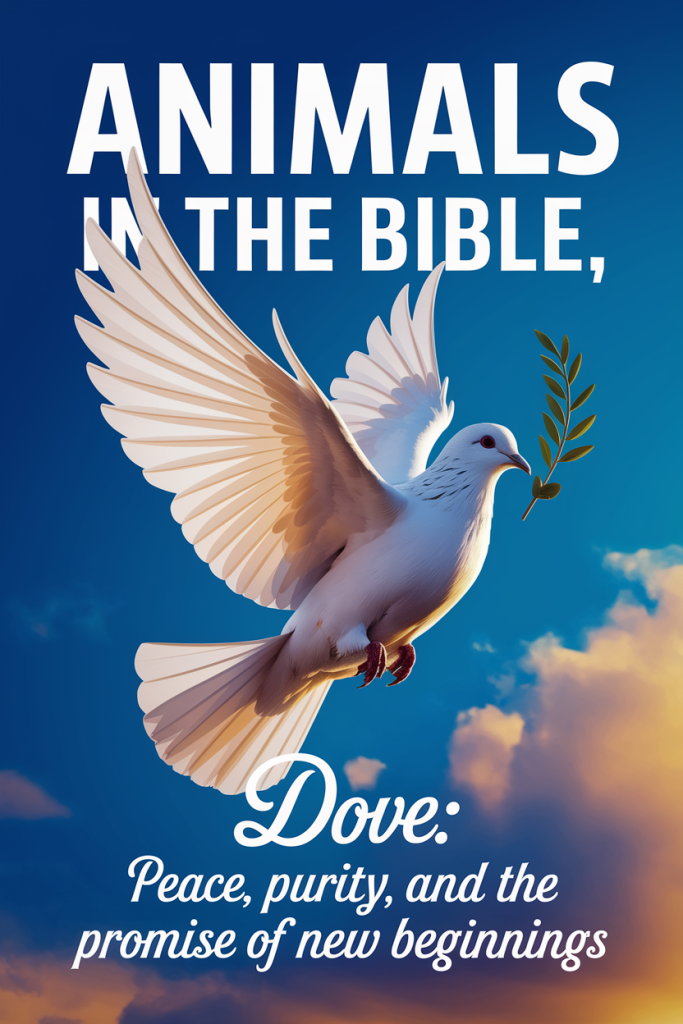
The dove is a consistent symbol of peace, purity, and, in the New Testament, the Holy Spirit. In the Old Testament, the dove's most famous appearance is in the story of Noah's Ark, where it returns with an olive branch, symbolizing peace and reconciliation after the flood (Genesis 8:8-12).
It is also used as a symbol of mourning and gentleness in Isaiah 38:14 and 59:11. Additionally, the dove was a sacrificial animal, particularly for those who were poor (Leviticus 12:6).
In the New Testament, the dove takes on profound significance as the form in which the Holy Spirit descends upon Jesus at his baptism (Matthew 3:16, Mark 1:10, Luke 3:22, John 1:32).
Jesus also uses the dove as a symbol of purity and harmlessness in Matthew 10:16.
The New Testament firmly establishes the dove as a primary symbol of the Holy Spirit, linking its gentleness and purity to the third person of the Trinity, building upon the Old Testament associations with peace and purity.
Eagle:
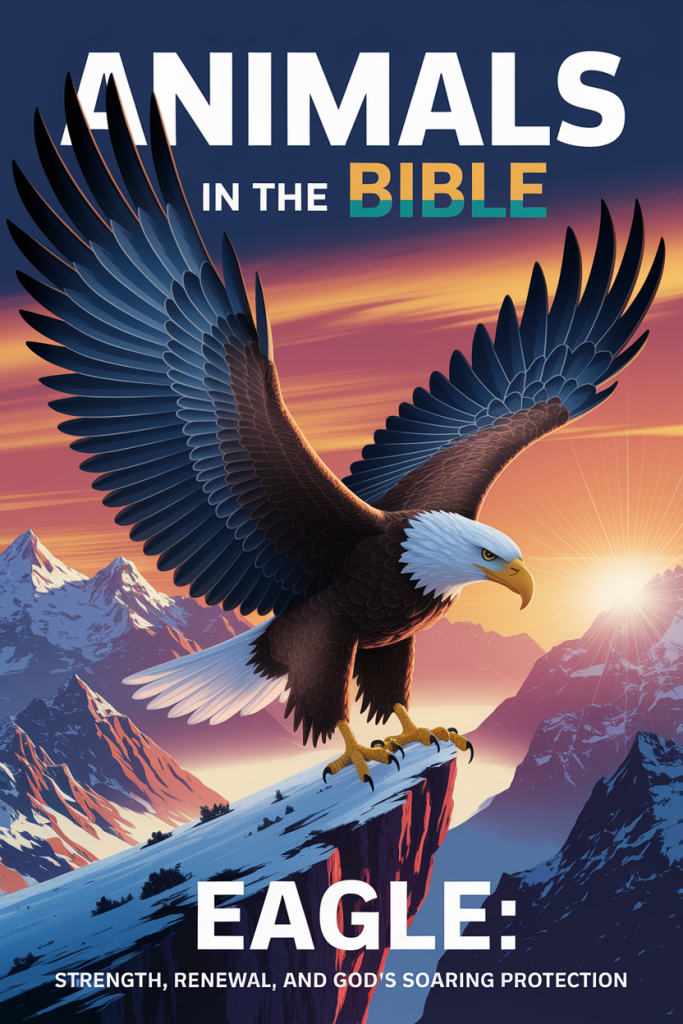
The majestic eagle is a powerful symbol of strength, renewal, and divine protection throughout the Bible.
In the Old Testament, the eagle represents God's care and protection for Israel, as depicted in Exodus 19:4 and Deuteronomy 32:11, where God describes carrying his people "on eagles' wings".
The eagle's strength and power are highlighted in Isaiah 40:31, promising renewed strength to those who wait on the Lord, enabling them to "mount up with wings as eagles".
It also symbolizes swiftness, particularly in the context of judgment, as seen in Deuteronomy 28:49 and Jeremiah 49:22. Psalm 103:5 speaks of the Lord renewing youth "like the eagle's," symbolizing renewal and longevity.
In the New Testament, the eagle is one of the four living creatures around God's throne in Revelation 4:7, symbolizing divine majesty and authority.
It also appears in Revelation 12:14, where the woman (representing the church) is given "two wings of a great eagle" for protection and escape . The eagle's symbolism thus consistently represents divine power, protection, and majesty across both testaments.
Raven:
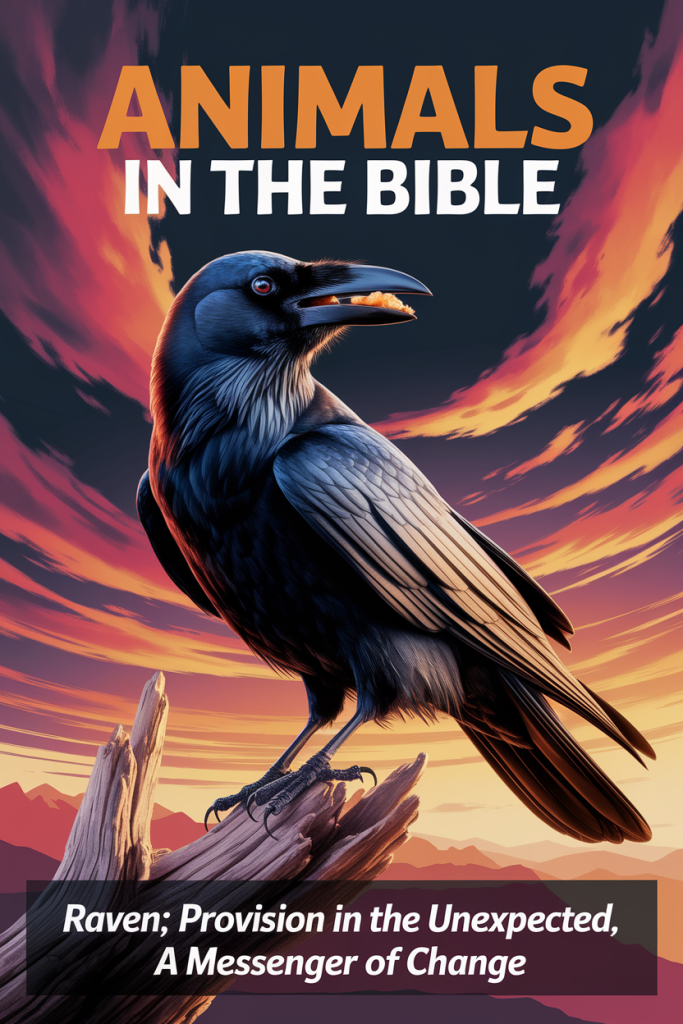
With its dark plumage and scavenging habits, the raven in the Bible carries symbolism related to both provision and judgment.
In the Old Testament, the raven is the first bird sent out by Noah after the flood to find dry land, symbolizing exploration and the beginning of a new era (Genesis 8:7).
Notably, God commands ravens to feed the prophet Elijah during a severe famine, demonstrating divine provision through unexpected means (1 Kings 17:4-6).
Despite this, the raven is listed among the unclean birds in Leviticus 11:15 and Deuteronomy 14:14.
In the New Testament, Jesus uses the raven in Luke 12:24 to illustrate God's providential care and the folly of anxiety, stating that God feeds the ravens even though they do not sow or reap.
This reinforces the theme of God's concern for all of creation, even those considered less significant.
The raven's symbolism thus encompasses both God's ability to provide in surprising ways and its association with the less desirable aspects of the created order.
Sparrow:
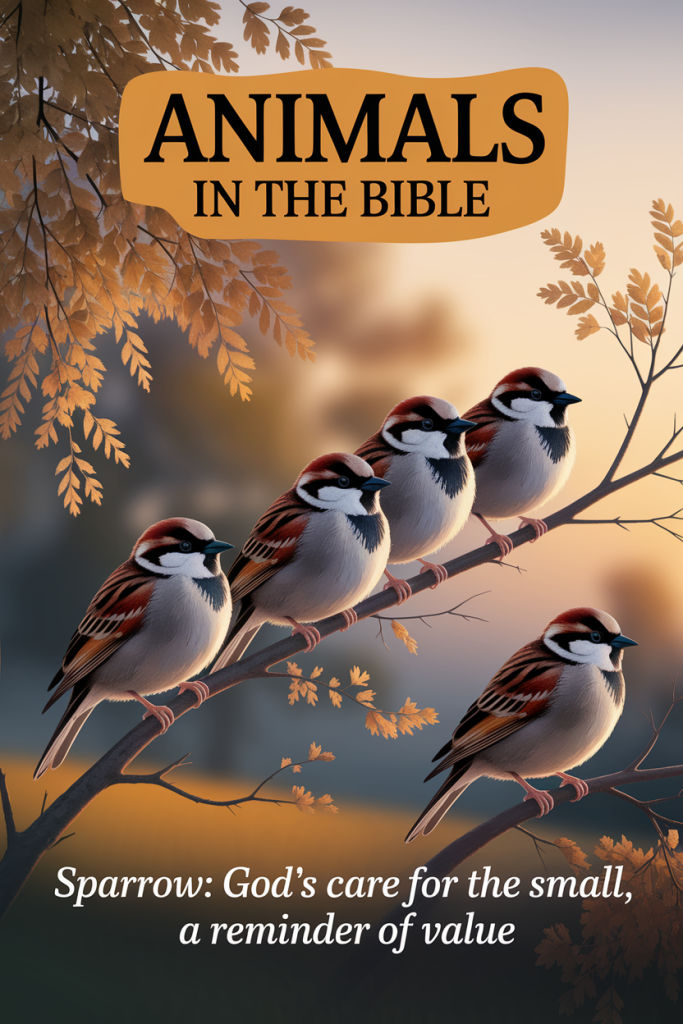
The humble sparrow is used in the New Testament to illustrate God's meticulous care and the immense value he places on each individual.
In Matthew 10:29-31 and Luke 12:6-7, Jesus assures his disciples that even sparrows, which were of little monetary value, are known and cared for by God.
He emphasizes that if God pays such attention to these small birds, then his followers, who are far more valuable, need not fear, for they are also under his watchful care.
The sparrow serves as a poignant reminder of God's personal and intimate involvement in the lives of his creation, highlighting that even the seemingly insignificant are precious in his sight.
Serpent/Snake:
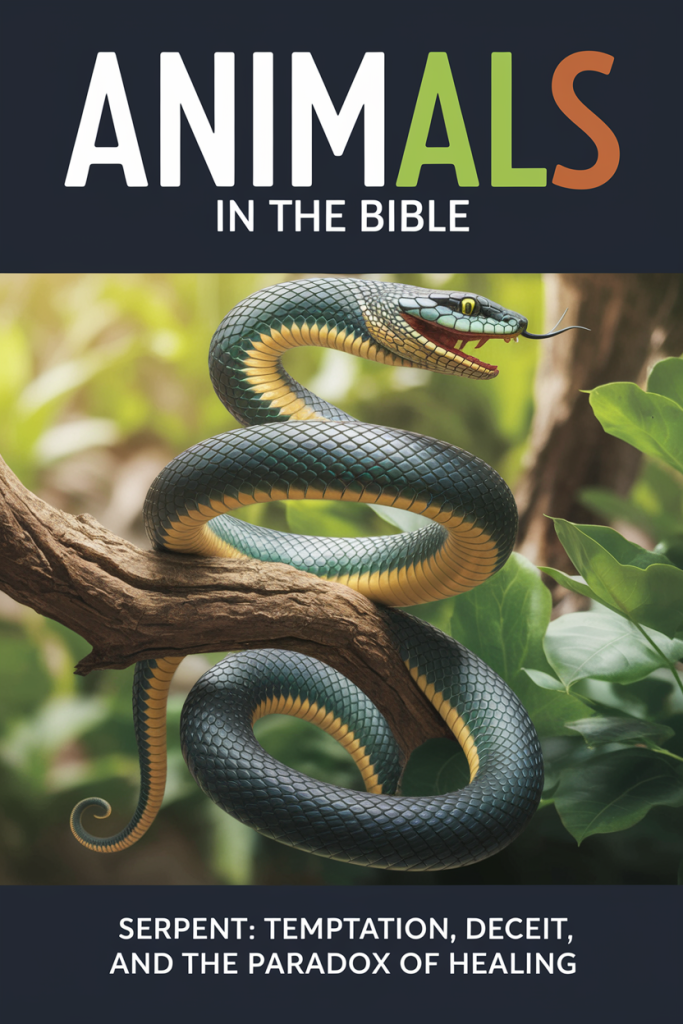
The serpent or snake is a multifaceted symbol in the Bible, representing temptation, evil, and, paradoxically, wisdom and healing.
In the Old Testament, the serpent in the Garden of Eden is the primary symbol of temptation and the catalyst for the fall of humanity (Genesis 3). It embodies evil, deceit, and the adversary who questions God's word.
However, in a striking instance in Numbers 21:4-9, God instructs Moses to create a bronze serpent and lift it up so that those bitten by venomous snakes would be healed by looking at it. This bronze serpent becomes a symbol of salvation through looking to God.
The serpent is also figuratively used to describe deadly enemies in Psalm 58:4.
In the New Testament, Satan is explicitly identified as the "serpent of old" in Revelation 12:9 and 20:2.
Yet, Jesus instructs his disciples to be "wise as serpents and harmless as doves" in Matthew 10:16, acknowledging the serpent's cunning as a trait to be used for good when balanced with innocence.
Jesus himself draws a parallel between the lifting up of the bronze serpent and his own crucifixion, signifying that just as the Israelites looked to the serpent for physical healing, people should look to him for spiritual healing and eternal life (John 3:14-15).
The serpent's symbolism thus ranges from the embodiment of evil to a representation of healing and wisdom, demonstrating a complex and evolving meaning across the Old and New Testaments.
Locust:
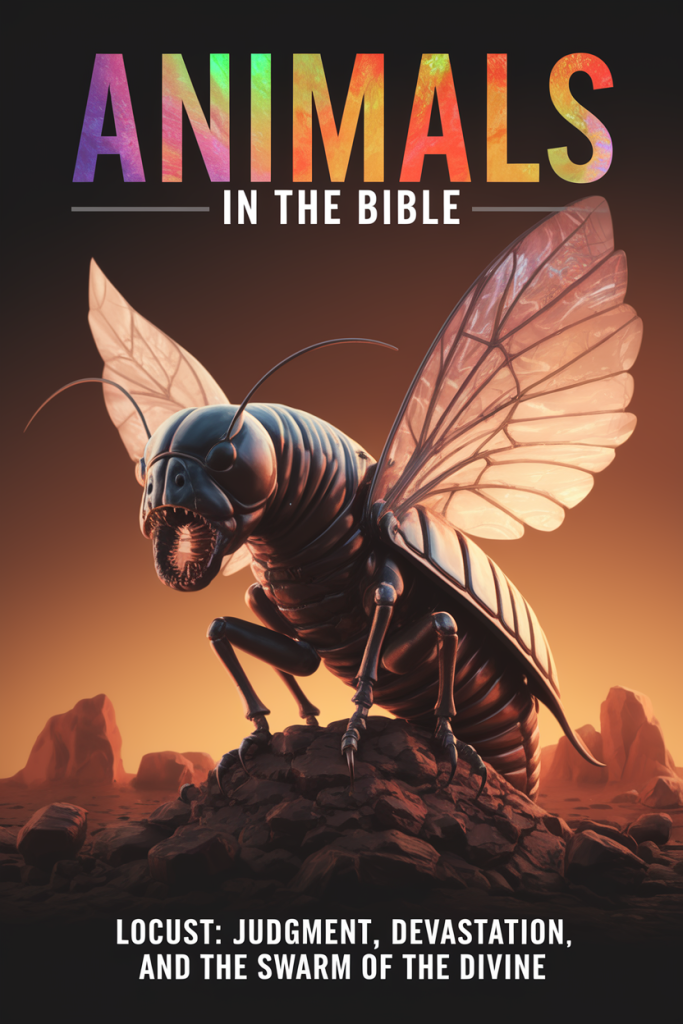
The locust is predominantly a symbol of judgment and destruction in the Bible, often associated with divine wrath and devastation.
In the Old Testament, the plague of locusts is one of the most dramatic displays of divine judgment upon Egypt in Exodus 10, causing widespread famine and destruction.
The prophet Joel also vividly describes a devastating locust invasion as a harbinger of the "Day of the LORD" (Joel 1-2).
In the New Testament, locusts appear as part of the terrifying apocalyptic judgments in Revelation 9:1-11, emerging from the abyss with the power to torment those who do not have the seal of God.
However, there is a notable exception: John the Baptist's diet included locusts, symbolizing his ascetic lifestyle and separation from worldly comforts (Matthew 3:4, Mark 1:6).
While primarily a symbol of divine judgment and destruction, the locust also appears in the context of John the Baptist's unique prophetic mission.
Frog:
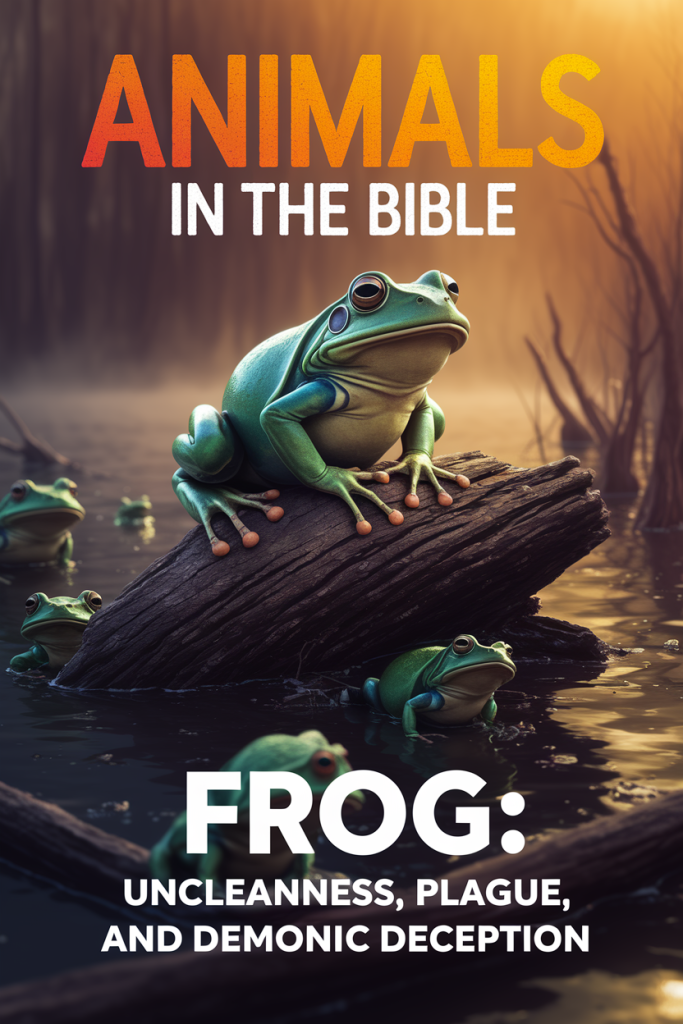
The frog appears in the Bible as a symbol of uncleanness and, in the New Testament, demonic influence.
In the Old Testament, the plague of frogs in Exodus 8 is the second plague inflicted upon Egypt, representing uncleanness and demonstrating God's power over the Egyptian frog-goddess Heqet, associated with fertility and life.
The overwhelming presence of frogs throughout the land symbolized a disruption of the natural order and a judgment against Egypt's religious system.
In the New Testament, frogs are depicted as unclean spirits coming out of the mouths of the dragon, the beast, and the false prophet in Revelation 16:13-14.
These spirits are demonic, performing signs to gather the kings of the earth for the battle of Armageddon, symbolizing deception and demonic influence in the end times.
The symbolism of the frog thus evolves from representing a plague and God's power over false gods in the Old Testament to embodying evil and deception in the New Testament.
Behemoth, Leviathan, Dragon:
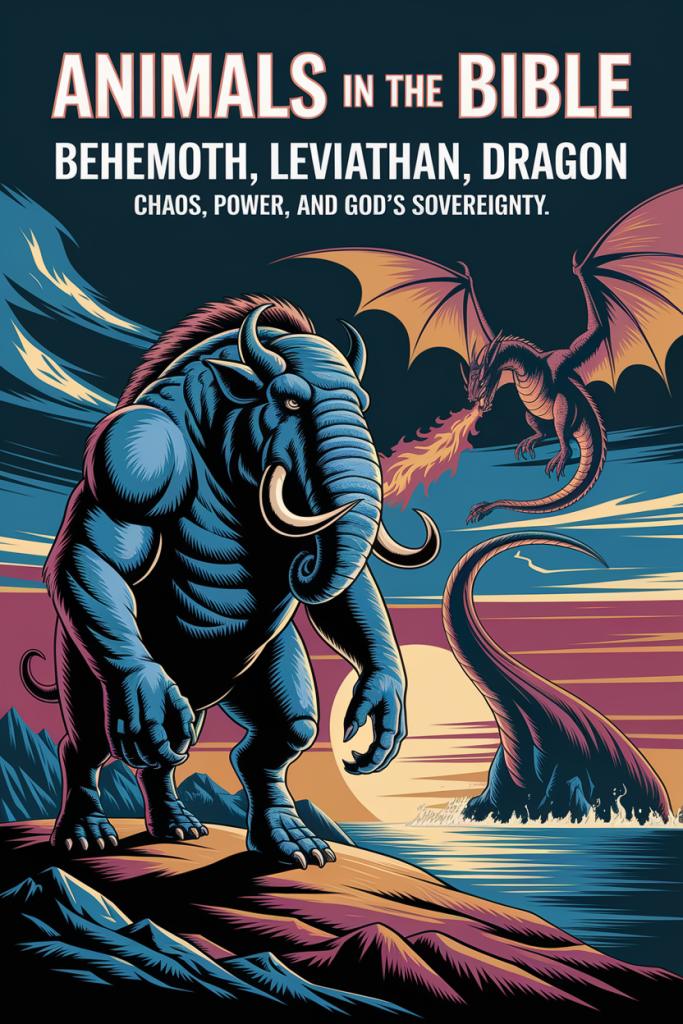
While not zoologically accurate, the mythical creatures mentioned in the KJV Bible – Behemoth, Leviathan, and the Dragon – carry significant symbolic weight, representing chaos and the immense power of God.
- In the Old Testament, Behemoth (Job 40:15-24), symbolizes the untamed power of creation, highlighting God's sovereignty over even the largest and most formidable creatures.
- Leviathan (Job 41, Psalm 74:14, Isaiah 27:1), represents chaos and the untamed sea, symbolizing the forces that oppose God's order yet remain under his ultimate control .
- The Dragon in the Old Testament is often synonymous with the serpent, representing evil and opposition to God (Psalm 74:13-14, Isaiah 27:1) .
These creatures collectively illustrate the vastness of God's power and his dominion over both the natural and supernatural realms, including forces of chaos and evil.
In the New Testament, the Dragon is clearly identified with Satan, the ultimate adversary of God and humanity (Revelation 12:3-17, 20:2).
The New Testament thus focuses the symbolism of the dragon specifically on Satan, solidifying its role as the embodiment of evil and the primary opponent of God's redemptive plan.
Connecting Threads: Old Testament Archetypes and New Testament Fulfillment
The spiritual symbolism of animals in the King James Bible reveals remarkable connections between the Old Testament and the New Testament, demonstrating a consistent and unfolding divine narrative.
The Lamb as a Prefigurement of Christ's Sacrifice:
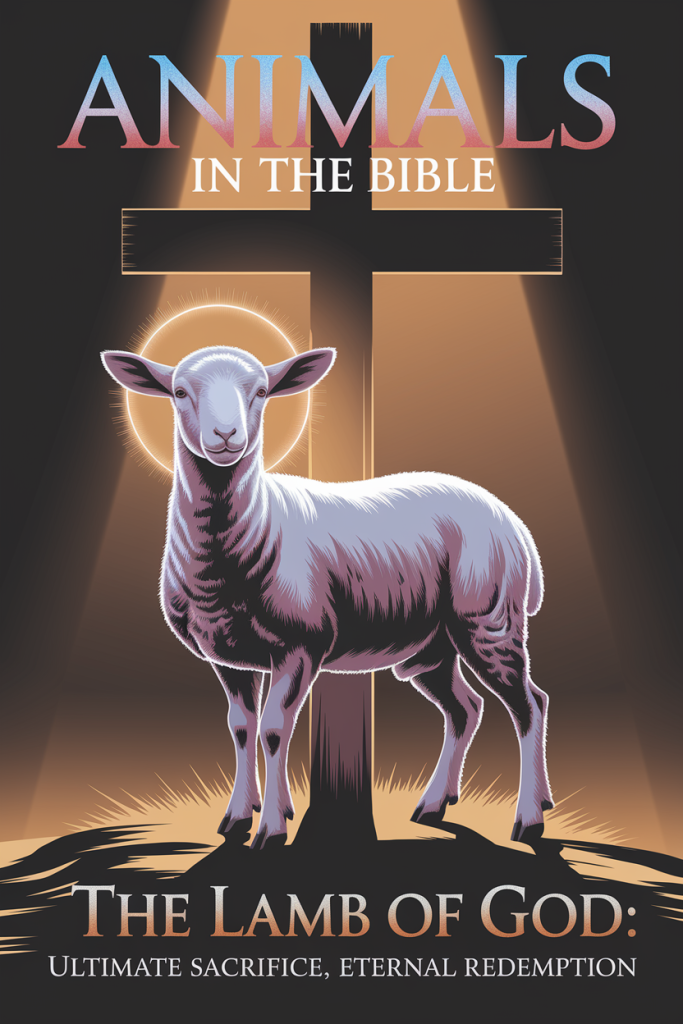
The Old Testament sacrificial system, with its central figure of the unblemished lamb, serves as a profound prefigurement of Jesus Christ's ultimate sacrifice.
Just as the Passover lamb was slain and its blood applied for deliverance from physical death in Exodus 12, Jesus, the Lamb of God, shed his blood for the spiritual deliverance of humanity from sin and eternal death (John 1:29, Hebrews 9-10).
The requirement for the sacrificial lamb to be without blemish (Exodus 12:5) mirrors the sinless nature of Christ (1 Peter 1:18-19).
| Characteristic | Passover Lamb (Old Testament) | Jesus Christ (New Testament) |
| Blemish | Without blemish (Exodus 12:5) | Without blemish or defect (1 Peter 1:19) |
| Gender | Male (Exodus 12:5) | The Son of God |
| Blood | Shed for deliverance from physical death (Exodus 12:13) | Shed for salvation from spiritual death (John 1:29) |
| Broken Bones | Bones not to be broken (Exodus 12:46) | Bones not broken (John 19:33) |
| Purpose | Anticipated future redemption (Exodus 12:14) | Provides final and complete redemption (Hebrews 9:12) |
The Lion of Judah: Prophecy and Fulfillment in Jesus:
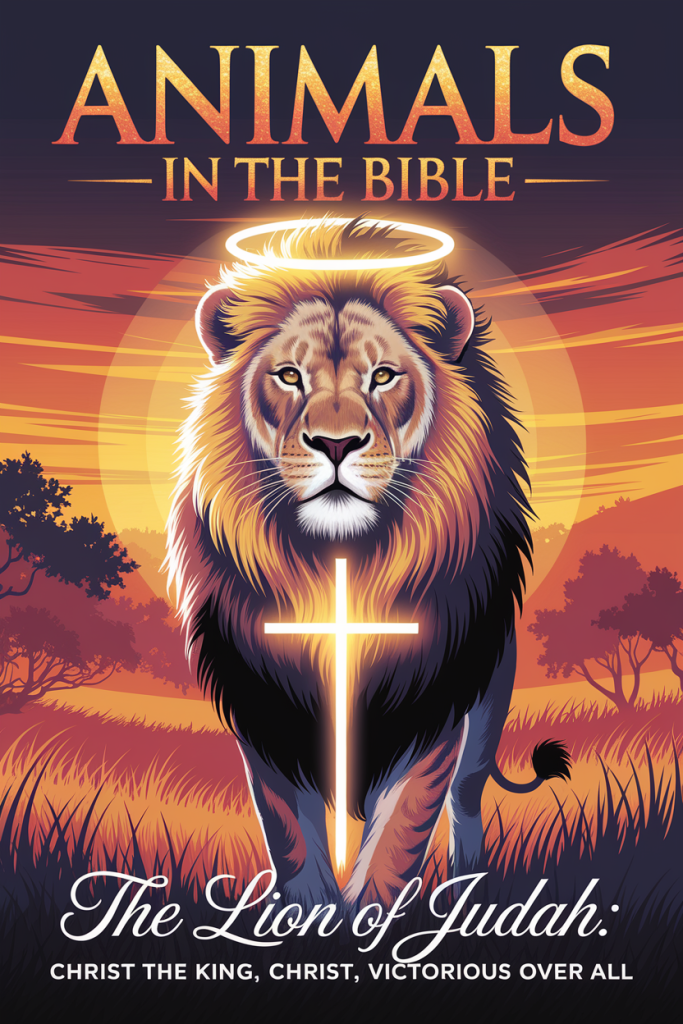
The Old Testament prophecy of Judah as a lion, symbolizing strength and royalty (Genesis 49:9), finds its ultimate fulfillment in Jesus Christ, who is identified as the Lion of the Tribe of Judah in Revelation 5:5.
This title signifies Christ's divine authority, majesty, and ultimate victory over sin and death, fulfilling the messianic expectations rooted in the Old Testament.
The Dove and the Spirit of God: Continuity from Creation to Christ's Baptism:
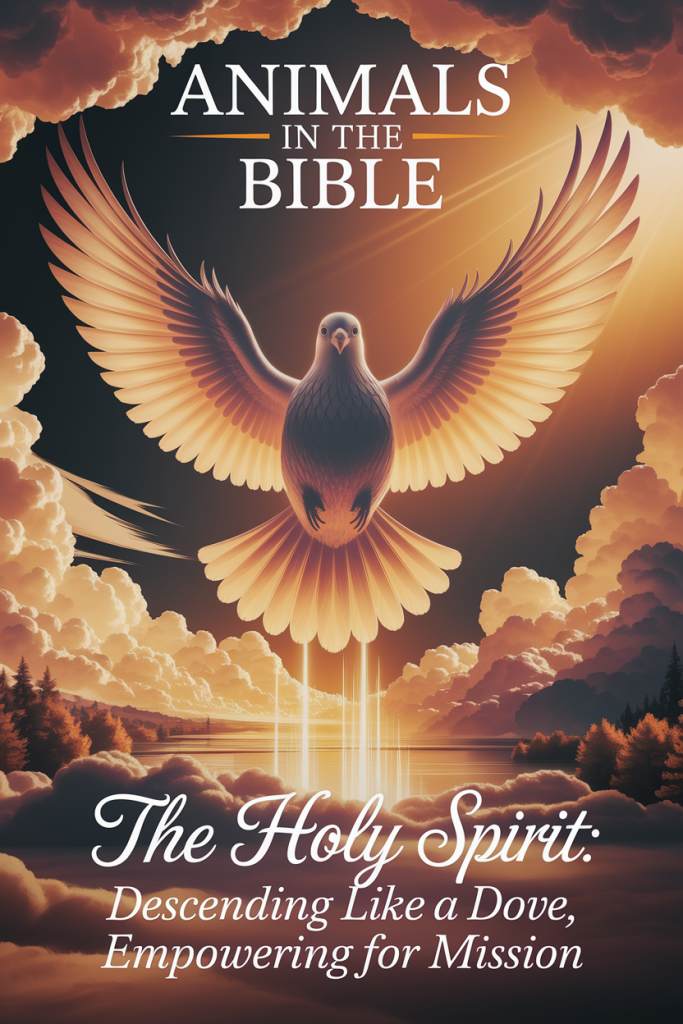
The dove's association with peace and the Spirit of God in the Old Testament, particularly in the aftermath of the Flood (Genesis 8:8-12), continues seamlessly into the New Testament.
The Holy Spirit descends upon Jesus like a dove at his baptism (Matthew 3:16, Mark 1:10, Luke 3:22, John 1:32), marking the beginning of his public ministry and signifying divine approval and empowerment.
This imagery connects the Spirit's presence at the dawn of creation with the inauguration of the new creation in Christ.
The Serpent: From Temptation in Eden to Satan in Revelation:
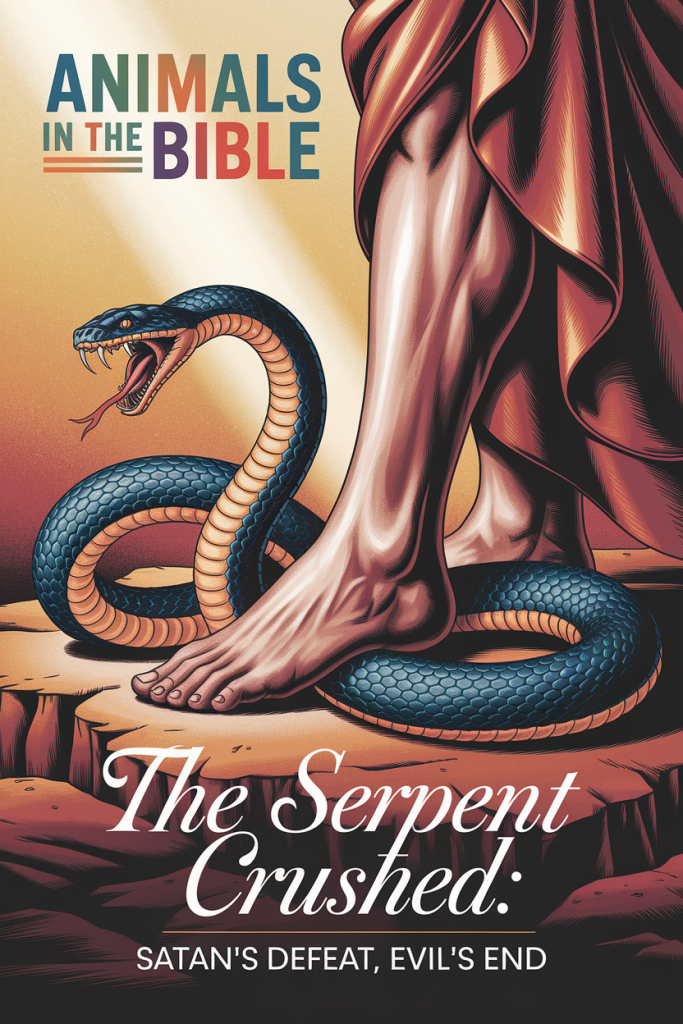
The serpent's role as the tempter in the Old Testament (Genesis 3) is directly linked to Satan in the New Testament, who is explicitly called the "serpent of old" (Revelation 12:9, 20:2).
This identification underscores the enduring nature of evil and deception from the very beginning of human history to the eschatological events described in Revelation.
Animals in Prophetic Visions: Symbolism of Kingdoms and Divine Intervention:

Animals frequently appear in prophetic visions in both the Old Testament (Daniel, Ezekiel) and the New Testament (Revelation) to symbolize earthly kingdoms, divine judgment, and the unfolding of God's plan for the end times.
For instance, the bear in Daniel 7:5 symbolizes the Medo-Persian Empire, while in Revelation 13:2, a beast with feet like a bear represents destructive power.
Horses in the Old Testament are primarily associated with warfare and royalty, while the Four Horsemen of the Apocalypse in Revelation 6 symbolize various aspects of divine judgment.
The consistent use of animal imagery in these prophetic contexts demonstrates a unified approach to conveying profound theological truths about history and eschatology across both testaments.
| Animal | Old Testament Prophetic Symbolism | New Testament Prophetic Symbolism |
| Bear | Medo-Persian Empire (Daniel 7:5) | Destructive Power of the Beast (Revelation 13:2) |
| Lion | Babylonian Empire (Daniel 7:4) | One of the faces of the Cherubim (Ezekiel 1:10), Component of the Beast (Revelation 13:2) |
| Leopard | Grecian Empire (Daniel 7:6) | Component of the Beast (Revelation 13:2) |
| Eagle | Divine Swiftness and Power (Ezekiel 1:10) | One of the four living creatures (Revelation 4:7), Protection for the Woman (Revelation 12:14) |
| Horse | Military Might (Zechariah 1:8, 6:2-8) | Four Horsemen of the Apocalypse (Revelation 6:1-8), Christ's Return (Revelation 19:11) |
| Ox | Service and Strength (Ezekiel 1:10) | One of the four living creatures (Revelation 4:7) |
Conclusion: The Enduring Lessons from the Animal Kingdom in Scripture
The pervasive presence of animals and their symbolic meanings throughout the Bible underscores their vital role in God's communication with humanity.
This rich tapestry of animal symbolism offers tangible and relatable avenues for understanding often abstract spiritual concepts, bridging the gap between the divine and the human experience.
By tracing the threads of this symbolism across the Old and New Testaments, a profound continuity and the unfolding of God's redemptive plan are revealed.
The Old Testament archetypes, such as the sacrificial lamb and the lion of Judah, find their ultimate fulfillment in the person and work of Jesus Christ in the New Testament.
Similarly, symbols like the dove and the serpent maintain core meanings while also evolving to convey new layers of spiritual truth in the context of the new covenant.
The consistent use of animals in prophetic visions across both testaments further highlights their significance in illustrating God's sovereignty over history and his plans for the future.
The study of animal symbolism in the Bible not only deepens theological understanding but also fosters a greater appreciation for the intricate beauty and wisdom embedded within God's creation.
By observing the natural world, as Scripture often encourages, believers can gain valuable insights into the character of God and their relationship with him, recognizing the enduring lessons that the animal kingdom continues to offer.
Resources:
- United Church of God: Which Animals Does the Bible Designate as 'Clean' and 'Unclean'?
- Vocal Media: Animals in the Bible: Symbolism and Significance
- Sacred Windows: The Vast and Wonderful Array of Biblical Animals
- ResearchGate: The Symbolic Roles of Animals in the Bible
- Duke University Chapel: Animals in the Bible and Christian Tradition
- LDS Living: 8 Animals in Scriptures and Their Symbolism
- Wisdom Online: Jesus: The Lion of Judah
- Digital Bible: Lion in Biblical Symbolism
- BibleChat.ai: What Does the Lion Symbolize in the Bible?
- Wikipedia: Doves as Symbols
- Religious Studies Center: Behold the Lamb of God
- Fort Hill United Methodist Church: What Does the Dove Represent in the Bible?
- Biblical Archaeology Society: Enduring Symbolism of Doves
- BibleHub: Symbolism of the Lamb
- This Redeemed Life: BEHOLD THE LAMB
- Bible Study Tools: What Do Doves Symbolize in the Bible?
- GotQuestions.org:
- Credo Magazine: Leonine Imagery in Hosea
- The God Who Speaks: Significance of the Dove
- Scholars Crossing: Nature of Christ as Lamb
- Reddit (r/Bible): Why Choose a Dove to Resemble the Holy Spirit?
- BibleHub: Symbolism of Lions
- University of Malta: Symbolism of the Lamb in the New Testament
- Wikipedia: Lamb of God
- JesusBoat.com: The Lamb from Genesis to the New Testament
- Artza Community: What Does the Eagle Represent in the Bible?
- Wikipedia: Serpents in the Bible
- BibleHub:
- BYU Scholars Archive: Serpent Symbols and Salvation
- The Gospel Coalition Africa: Story Behind Snakes
- Digital Bible: Bear: Symbol of Strength and Judgement
- Knightword (WordPress): Bears in the Bible
- Lamp of the Lamb: Elisha’s She-Bears
- Reddit (r/RadicalChristianity): Eagle: Idolatry or Power of God?
- Prayersbase.com: Characteristics of an Eagle in the Bible
- JewishEncyclopedia.com: Bear
- BibleHub: Symbolism of Camels and Sheep
- Evangelical Focus: Camels in the Bible
- Prepare Ministries: What's With The Camels?
- Time: Mystery of Bible's Phantom Camels
- Jewish Bible Quarterly: Camels in the Bible
- TruthUnity.net: Metaphysical Meaning of Camel
- Fig Tree Christian: Biblical Animals: Bear
- BibleHub: Frog Symbolism
- Love Fast Live Slow: What Do Frogs Symbolize in the Bible?
- eQuest For Truth: Horses in the Bible
- Digital Bible:
- Mark's Bible Study: Frogs in the Bible
- BibleHub: Symbolism of Locusts
- Medium: Significance of the Locust Army
- Artza Community: What Do Ravens Mean in the Bible?
- The God Who Speaks: The Raven
- Catholic Culture: Ant
- Genesis CLF Church: Life Lessons from an Ant
- BibleHub: Ox Symbolism
- Ministry Samples (Watchman Nee): Face of an Ox
Call to Action: The Question That Demands an AnswerIn Acts 2:37 Peter and the Apostles were asked the question – What Shall We do? And in Acts 2:38 Peter answered, Repent, and be baptized every one of you in the name of Jesus Christ for the remission of sins, and ye shall receive the gift of the Holy Ghost. For the promise is unto you, and to your children, and to all that are afar off, even as many as the Lord our God shall call. Do you understand this? After hearing the gospel and believing, they asked what should would do. The answer hasn’t changed friend, Peter clearly gave the answer. The question for you today is, Have you receieved the Holy Spirit Since you believed? If you’re ready to take that step, or you want to learn more about what it means to be born again of water and Spirit, visit: Come, and let the Spirit make you new. |