The Sound of Hopelessness
The courtyard of King Zedekiah’s palace reeked of fear. Jerusalem was surrounded, famine gnawed through the streets, and every whisper carried suspicion. In the shadows of royal walls, a broken man – Jeremiah, the prophet who spoke truth no one wanted to hear – had been thrown into a cistern. It wasn’t a clean pit of water but a dark hole filled with mud so thick it swallowed his feet, his legs, and eventually his hope. He sank deeper each hour, his body trembling from cold and exhaustion.
Somewhere nearby, a servant named Ebed-Melech overheard the rumor: “The prophet’s been silenced.” Most would have shrugged or turned away. But something in him stirred. The kind of stirring you feel when injustice stands naked before you and you can’t pretend you didn’t see it.
The Forgotten Man in the Palace
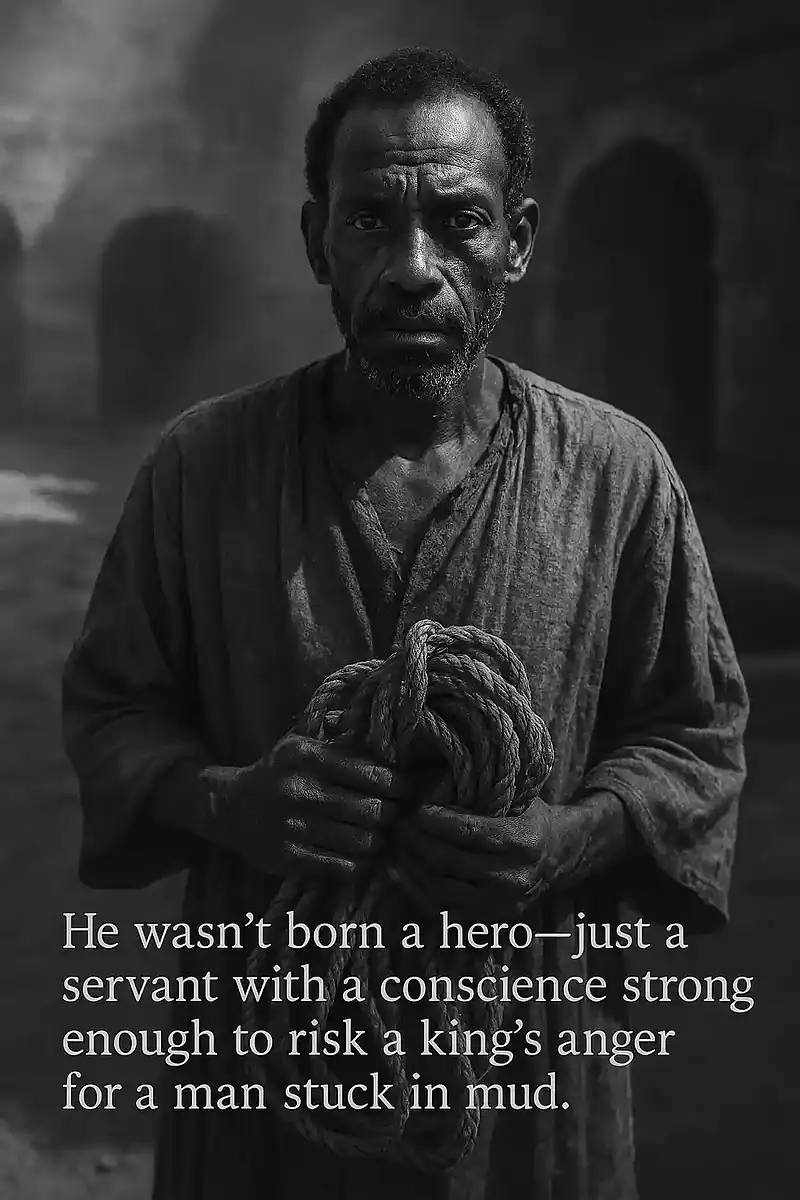
Ebed-Melech wasn’t a warrior or nobleman. He was a Cushite – a foreigner, dark-skinned, serving in a court that barely tolerated outsiders. His name meant “servant of the king,” yet he served in a palace where truth had no throne. But Ebed-Melech had something the others didn’t: a conscience still awake, and faith that had survived exile, hierarchy, and the arrogance of kings.
He could have kept quiet. People like him disappeared easily in royal courts. One wrong sentence, one bold move, and he’d be gone. But as he imagined Jeremiah sinking into that pit, something within him refused silence. Maybe he remembered the God Jeremiah preached about – the God who said, “Call unto Me, and I will answer you.” Or maybe he simply couldn’t stand to see righteousness suffocate in mud.
The Risk of Speaking Up
He approached the king. Imagine the courage it took – a foreign servant addressing the ruler of Judah while guards and nobles watched. The air must have tightened around him as he spoke: “My lord the king, these men have done evil in all that they have done to Jeremiah. He will die there from hunger.”
Zedekiah, weary and cowardly, waved his hand: “Take thirty men with you and lift him out.”
Thirty men. To rescue one man. From one pit. The math of mercy doesn’t follow human logic – it follows heaven’s.
The Rescue Nobody Expected
Ebed-Melech ran to the old storeroom under the treasury. There, he found what others would have called trash – old rags, worn-out clothes, forgotten cloths from forgotten people. But he saw possibility. He carried them to the pit and shouted down to Jeremiah, “Put these old rags under your arms under the ropes!”
You can almost see Jeremiah’s hands trembling as ropes dropped through the darkness. The fabric – soft where rope would burn – spoke of compassion as much as practicality. Slowly, painfully, they pulled him up from the mud. Inch by inch, a prophet was restored to light. And behind it all stood one man who simply didn’t look away.
The Courage That Heaven Noticed
In a city full of priests, prophets, and princes, only one man risked his life to save God’s messenger. And God noticed. Later, while Jerusalem burned, the word of the Lord came to Jeremiah: “Go tell Ebed-Melech… I will deliver you in that day. You will not be given into the hand of those whom you fear.”
Ebed-Melech didn’t earn his safety through royal favor – he received it through divine recognition. When others sought power, he sought mercy. When others hid, he stood up. When others followed fear, he followed the whisper of God.
The Mud Beneath Every Calling
Every believer, sooner or later, faces their own cistern moment. It’s not always a physical pit – it might be the mud of despair, the weight of shame, or the silence of unanswered prayer. Sometimes we’re Jeremiah, sinking and waiting for someone to pull us out. Sometimes we’re Ebed-Melech, standing in the corridor of decision, wondering if it’s worth the risk to help.
But here’s the truth: faith rarely feels convenient. Obedience doesn’t wait for applause. And rescue, more often than not, starts with someone who refuses to let fear decide what’s possible.
When Compassion Becomes Courage
Think about it – Ebed-Melech didn’t have an army or title. He didn’t even have the right skin color or social status for a voice that mattered. Yet he became the answer to a prophet’s prayer. God used an outsider to rescue His insider. That’s how God works. He delights in overturning man’s categories, in showing that His kingdom moves by compassion, not credentials.
What Ebed-Melech did with ropes and rags was small by worldly standards – but heaven called it faith.
The Reward of Quiet Faithfulness
When Babylon’s soldiers stormed the gates, when the temple was plundered and kings were carried away, Ebed-Melech’s name should have been forgotten. But it wasn’t. God remembered him. He promised, “You will escape with your life because you have trusted in Me.”
Trusted. That’s the whole story in one word. Trust is what made a servant stand before a king. Trust is what made him lift a prophet out of despair. Trust is what God rewards when everything else is stripped away.
The Reflection We’re Meant to See
We live in a world that celebrates power but forgets kindness. Yet the gospel reminds us: it was never about power – it was always about love that takes action. Ebed-Melech’s story whispers to every believer who feels unseen: God sees your courage. Even if you serve quietly. Even if your hands are the ones holding the rope while someone else gets the spotlight.
Maybe the pit in your life isn’t mud – it’s a situation that feels too heavy, too dark, too messy. But if you keep trusting, keep acting with compassion, God will make sure your name is written in places where fear can’t erase it.
The Foreshadow of a Greater Rescue
Ebed-Melech’s act of rescue pointed forward to a greater one. Centuries later, another outsider would come – a carpenter’s son from Nazareth – who would pull humanity from a deeper pit. Not of mud, but of sin and separation. He, too, used what seemed ordinary – wood, nails, and a cross – to lift us up to light and life.
Ebed-Melech risked his position to save a prophet. Jesus gave His life to save the world. And in both stories, compassion overcame fear.
The Final Glimpse of Grace
If you stood in that courtyard as Jeremiah was lifted up, you’d hear the wet ropes creak, the mud suck and release, the faint gasp as air hit his lungs again. You’d see the hands – strong, dirty, trembling with relief. And you’d realize that sometimes, the holiest moments aren’t wrapped in ceremony but soaked in mud and mercy.
That’s the heart of this story: God remembers the ones who act when others only talk. And He still delights in pulling His people from the pits we thought we’d never escape.
Because that’s who He is – the God who sends help through unlikely hands, who turns servants into heroes, and who never forgets a single act of courage done in faith.