Quick Overview of This Bible Study…
Short on time? I have created a short slide show presentation of some key takeaways in our study. The complete, more comprehensive bible study is below…
We all know what it’s like to feel broken or run-down. Life piles on struggles until we’re barely hanging on. In those moments, the idea of restoration is like a drink of cold water on a hot day.
Christians often talk about “restoration” – and not the kind you do on classic cars or old houses, but the kind God does in our lives. In fact, to restore literally means “to repair, renovate, or return to a former condition”.
The Bible is full of hope that God can bring us back from our lowest points. It’s one big story of God taking what’s broken and making it new and whole again.
If you’re feeling spiritually drained or like you’ve messed up beyond repair, take heart.
The New Testament brims with promises of restoration for believers – spiritually, personally, and in our communities. And this theme isn’t confined to a few verses; it runs from Genesis to Revelation.
In this Bible study, we’ll explore how restoration is a golden thread throughout Scripture, connecting the Old and New Testaments, fulfilling ancient prophecies, and showing up in stories of real people like Job, Peter, and the prodigal son.
Grab your Bible (KJV if you have it!) and let’s journey through this honest, heartfelt study of God’s restoring work. I promise it’s good news for all of us “fixer-uppers” in life.
Restoration in the New Testament: Promises for Believers
The New Testament encourages Christians with clear instructions and promises about restoration. Following Jesus means experiencing renewal in every area of life.
Here we’ll look at how the New Testament speaks to...
- spiritual restoration (our relationship with God)
- personal restoration (our inner life and purpose)
- and communal restoration (our relationships with others in the church).
It’s an everyday hope that what’s damaged by sin or hardship can be repaired by God’s grace.
Spiritual Restoration: Reconciled to God

At its core, the gospel is all about restoring a broken relationship. Spiritually, we were separated from God, kind of like estranged family. But through Jesus, God brought us back home.
The Apostle Paul put it this way: “if any man be in Christ, he is a new creature: old things are passed away; behold, all things are become new.” (2 Corinthians 5:17, KJV).
That’s a bold promise of inner restoration – God doesn’t just patch up our old life, He gives us a new one! When we trust in Christ, our sins are forgiven and our hearts are made alive toward God, restoring the fellowship that was lost in Eden.
In fact, Jesus had to become one of us (fully human) in order to redeem us. Hebrews 2:17 says He was made like His brothers “to make propitiation for the sins of the people,” restoring us to God.
As one writer explained, “Sin has separated us from the Father… So, Jesus came to be our kinsman-redeemer. Through His shed blood on the cross, He has bought our freedom from sin and restored our relationship with the Father.” steppesoffaith-56895.medium.com.
Think about that: the King of heaven stepped down and paid the ultimate price so you and I could be reconciled – our friendship with God fully restored.

We go from orphans to beloved children, from spiritual death to life. No wonder Jesus said, “I am come that they might have life, and… have it more abundantly” (John 10:10, KJV)
This spiritual restoration is both instant and ongoing. The moment we’re saved, our standing with God is restored. But God continues to “restore our souls” day by day as the Good Shepherd (Psalm 23:3, KJV).
We drift, He brings us back. We get dry, He refreshes us.
Peter described God as “the God of all grace, who hath called us unto his eternal glory by Christ Jesus” and promised that after believers endure a little suffering, God himself will “make you perfect, stablish, strengthen, settle you” (1 Peter 5:10, KJV).
(In more modern terms, God will personally restore and support you.)
No soul is so shattered that the Creator can’t repair it. As Psalm 23 says, He’s in the business of soul-restoration, guiding us into righteousness for His name’s sake.
Personal Restoration: Renewal of Heart and Mind
Even after we come to Christ, life can batter our hearts. We face loss, failure, discouragement – things that sap our joy and confidence.
Personal restoration is when God heals our brokenness on the inside, renewing our emotions, our thinking, and even sometimes our physical circumstances.
A beautiful example in Scripture is King David’s plea after he had sinned badly: “Restore unto me the joy of thy salvation; and uphold me with thy free spirit.” (Psalm 51:12, KJV).
David hadn’t lost his salvation, but he sure lost his joy! He felt the anguish of his wrong and longed for the joy and peace he once knew with God. And God did renew David’s heart when he repented (though the road wasn’t easy).
This shows us we can always cry out to God to restore our peace and joy when we’ve lost it through sin or suffering.

The New Testament echoes this hope for inner renewal. It talks about believers being transformed by the renewing of our minds (Romans 12:2) and putting on the new self, “which is renewed in knowledge after the image of him that created him” (Colossians 3:10, KJV).

In a very real sense, personal restoration is about God renovating us from the inside out – kind of like those home makeover shows where they fix the hidden problems behind the walls, not just slap on new paint.
In fact, one devotional commentator notes that in restoration, “God wants to see deep change in us, beginning with not-so-pretty things that may not be visible to others.” morethanyourself.com.
It might take longer than we expect, and it can get uncomfortable as God digs out the mold and rot in our character. But He is at work, and we can trust Him.
Think of the Apostle Peter. He was a passionate follower of Jesus, but he famously fell hard – denying three times that he even knew Christ. Talk about personal failure and shame! Yet the risen Jesus sought Peter out to restore him, not condemn him.

In John 21, Jesus gives Peter a three-fold chance to reaffirm his love (erasing those three denials) and commissions him, “Feed my sheep.” He was essentially saying, “I’m not done with you, Peter. Get back up – I still have a purpose for you.”
The Bible makes clear that Peter was restored. One study notes that “Jesus not only restored Peter to fellowship with God, but used him” to lead and feed others cameronshaffer.com.
By the time we get to Acts, we see a renewed Peter boldly preaching and shepherding the early church. His story screams of God’s grace: no personal failure is final when met with sincere repentance.

God can restore lost confidence, lost integrity, and lost years of influence – and often He does “twice as much” as before, just as “the LORD…gave Job twice as much as he had before” after Job endured his trial (Job 42:10, KJV).
Maybe you feel like you’ve lost your calling or joy. Take heart that Jesus specializes in do-overs. He can heal your heart and give you a fresh start.
Sometimes the circumstances will change (He might even restore what you lost, as He did for Job), but even if they don’t immediately, He will restore you – your soul, your hope, your sense of purpose.
“He will again have compassion on us” and cast our sins away scriptures.blog, as the Old Testament prophet Micah said.
In Christ, “old things are passed away” and you’re a new creation – and that newness is an ongoing gift.
Communal Restoration: Healing Relationships in the Church
Restoration in the Bible isn’t just about “me and God”; it also transforms our relationships with each other. In fact, a huge part of Christian living is about restoring community and fellowship that have been broken by sin or conflict.

The early church was taught to actively work on reconciliation. For example, Galatians 6:1 instructs believers: “Brethren, if a man be overtaken in a fault, ye which are spiritual, restore such an one in the spirit of meekness; considering thyself, lest thou also be tempted.” (KJV).
In other words, when a fellow Christian messes up, we shouldn’t gossip about them or cast them out without mercy – we should gently help restore them to right living and fellowship, being humble enough to remember we all stumble. Restoration is a community project.

Jesus outlined a process in Matthew 18 for dealing with someone who sins against you, with the goal of winning them back. If they listen and repent, you’ve “gained your brother” – relationship restored (Matt. 18:15).
And if they initially won’t listen, the whole effort of involving witnesses and even the church is aimed at restoration, not punishment.
The “hopeful resolution,” as one writer notes, “is that repentance and forgiveness lead to you gaining a brother. This is a restoration.” cameronshaffer.com.
The early Christians took this seriously. In 2 Corinthians, Paul talks about a man who had been disciplined for sin, and urges the church to forgive and comfort him now, “lest perhaps such a one should be swallowed up with overmuch sorrow” (2 Cor. 2:7).
Essentially: he’s repented, so reaffirm your love and bring him back into fellowship. This is communal restoration in action – healing the break and welcoming a person back to the family after sin, so that shame doesn’t destroy them.
- The New Testament also shows restoration of broken relationships between people. Jews and Gentiles, who were formerly divided, are reconciled into one body in Christ (Ephesians 2:14-16).
- Masters and runaway slaves (like Philemon and Onesimus) are urged to come back together as beloved brothers in the Lord.
The heart of it all is that “restoration in the Bible is always a restoration to communion with God and fellowship with His people” cameronshaffer.com.
It’s not about returning to status or positions (for instance, a disqualified leader might not return to leadership), but it is about returning to love, trust, and community. The church should be a place where broken relationships get mended.
Of course, we won’t experience perfect fellowship until heaven, but we strive for it now. James 5:16 says, “Confess your faults one to another, and pray one for another, that ye may be healed.”
Healing – that’s restoration language, and it applies to churches and friendships too.
When we forgive each other, carry each other’s burdens, and refuse to give up on those who fall, we become agents of God’s restoration.
We reflect the Father’s heart, who is in the business of reconciliation. There’s true joy when a relationship is restored – just like the father’s joy in the Parable of the Prodigal Son when his lost boy came home (more on that soon!).
Restoration Now and Not Yet
Before we move on, it’s worth noting that the New Testament balances present restoration with future restoration. Believers experience real restoration now – spiritually and often in other ways – but we still live in a broken world.
Not every illness is healed now, not every relationship fully fixed, not every loss recovered yet.
The Bible is honest that we’re “living between the times” storyofgrace.org: Jesus has inaugurated the Kingdom (it’s “already” here in our hearts and community), but the complete restoration of all things is “not yet” until He comes again.
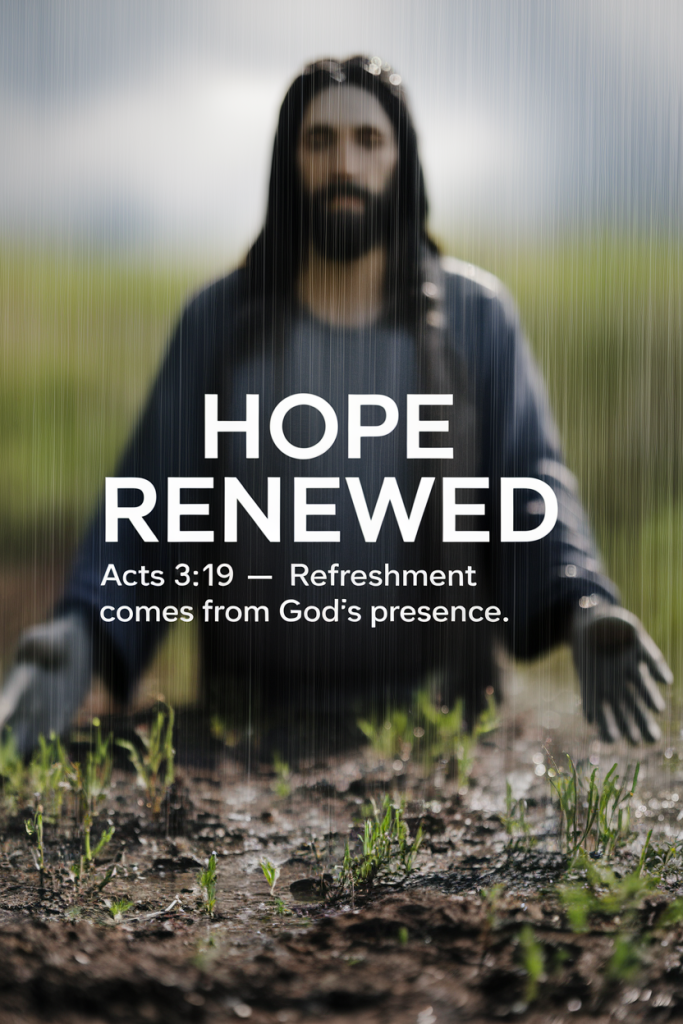
Peter preached about this in Acts 3, urging people to repent and turn to Christ “that your sins may be blotted out, when the times of refreshing shall come from the presence of the Lord” (Acts 3:19, KJV).
He went on to say that Jesus will remain in heaven “until the times of restitution of all things, which God hath spoken by the mouth of all his holy prophets” (Acts 3:21, KJV).
In plain language, God has promised a future era of universal restoration – a “refreshing” renewal of creation and society under Jesus’ reign scriptures.blog. We’re looking forward to that! It’s the ultimate fix-up: creation itself will be set free from decay (Romans 8:21).
So as Christians, we live in hopeful tension. We work for and experience restoration now in part, and we ache for the full restoration God has promised.
That ache keeps us dependent on Him and focused on eternity. The beautiful thing is, the restoration we do taste now – forgiveness, peace with God, a healed heart, a reconciled friendship – those are real previews of the perfect restoration to come.
They are like small restorations pointing to the grand Restoration. Every time someone turns to Christ or a broken marriage is mended or a hurting person finds hope, we’re seeing a sneak peek of the coming attraction.
It’s like patches of blue sky breaking through the clouds, assuring us the sun will eventually shine in full.
As one Bible teacher put it, “The arc of history is moving toward the restoration of all that is broken… Jesus Christ set in motion a plan to see it repaired and will return physically to make sure the restoration is completely done – perfect justice, complete healing, established peace.” storyofgrace.org.
What a promise! This leads us into how the whole Bible, from beginning to end, follows this restoration theme.
Restoration Through the Whole Bible: God’s Big Story
It’s not an exaggeration to say that the Bible is the story of restoration – the restoration of everything broken by sin. From Genesis to Revelation, God is at work to bring people and creation back to His original intent.
Let’s zoom out and see the big picture of this pattern of restoration running through Scripture. We’ll see how the Old Testament sets the stage with promises and foreshadows, and how the New Testament fulfills them in Christ and the Church, with the final act still ahead.
Through it all, one thing becomes clear: God never gives up on His plan to redeem and restore. He is faithful, even when humanity is not.
From the Fall to the Promise of a King
In the very beginning, God created a perfect world – no decay, no shame, no separation. But human sin shattered that peace. When Adam and Eve fell, death, suffering, and estrangement entered the scene.
Yet, even on the day of the Fall, God gave a hint of restoration: the promise that the seed of the woman would one day crush the serpent’s head (Genesis 3:15).
It was the first glimmer of a Savior who would restore what was lost. From then on, the Old Testament is full of God’s restorative actions and promises.
Consider the stories in Genesis alone. After humanity’s corruption, God sent a flood – but preserved Noah’s family to “restart” the human race (a kind of restoration of the world, with a promise never to destroy it like that again).
Later, He called Abraham and promised that through his offspring “shall all the families of the earth be blessed” (Genesis 12:3, 22:18) – a plan to undo the curse and bring blessing (restoration) to all nations.
That promise pointed ultimately to Jesus, a descendant of Abraham, who would bring salvation to the world.
Meanwhile, we see individual restorations that are like previews of God’s power. One powerful example is Joseph. Joseph went through betrayal, slavery, and imprisonment – about as broken a life as you could imagine.
But God was with him and in one day raised him from the dungeon to the palace, restoring his freedom and more. Joseph ended up saving his brothers (the very ones who wronged him) from famine and reconciling with them.
He told them, “ye thought evil against me; but God meant it unto good, to... save much people alive.” (Genesis 50:20, KJV).
What a picture of God’s redemptive twist! Not only was Joseph’s personal fortune restored (even elevated), but his family relationships were healed.
In Joseph’s story, we also “have a foreshadow of the Lord Jesus Christ”. Just as Joseph’s suffering led to the saving of many lives and reconciliation with his brothers, Jesus’ suffering on the cross leads to the salvation of the world and our reconciliation to God.
It’s like Joseph was a sneak peek of the greater Restorer to come.
Throughout the Old Testament, God keeps showing this pattern. The nation of Israel itself is a grand illustration. They became slaves in Egypt – lost, oppressed, seemingly abandoned.
But God hadn’t forgotten. He redeemed them with mighty miracles and brought them into the Promised Land, essentially restoring their freedom and identity as His people.
After their Exodus, God gave Israel laws and sacrifices to restore fellowship when they sinned.
He even built into their society the concept of Jubilee (Leviticus 25) – every 50 years debts were canceled, slaves freed, and land returned to original families. Talk about restoration!
The land itself got rest, and people got a fresh start.
The Jubilee was a bold statement of God’s heart: He wills freedom and restoration, not perpetual bondage. (By the way, Jesus later proclaimed Himself as fulfilling the Jubilee in a spiritual sense – more on that soon.)
Sadly, Israel frequently strayed from God. They fell into idolatry and injustice, which led to national collapse and exile. Jerusalem was destroyed; the people were captives in Babylon.
It was their own doing, yet even then God spoke words of hope.
Through Jeremiah, He promised, “I will restore your fortunes… and I will bring you back from the place I drove you” (Jeremiah 29:14, paraphrase). In KJV language: “I will turn away your captivity”, gathering them home.
True to His word, after 70 years God did bring a remnant of Judah back to their land. The city and temple were rebuilt in the days of Nehemiah and Ezra.
This return from exile was a huge act of restoration – the nation was given a second chance.
As Jeremiah 30:17 says, “For I will restore health unto thee, and I will heal thee of thy wounds, saith the LORD”. He was speaking to wounded Israel, and indeed God bound up their wounds and brought them home, showing His mercy.
Yet, as great as that was, the Old Testament closes with a sense that the ultimate restoration hasn’t happened yet. The Jews were back in their land, but they were a vassal state under foreign empires.
The human heart was still prone to sin. The glorious promises of a new covenant and a Messianic kingdom were only partially realized. The stage was set for something (or someone) greater.
The prophets had painted tantalizing pictures of what God would do:
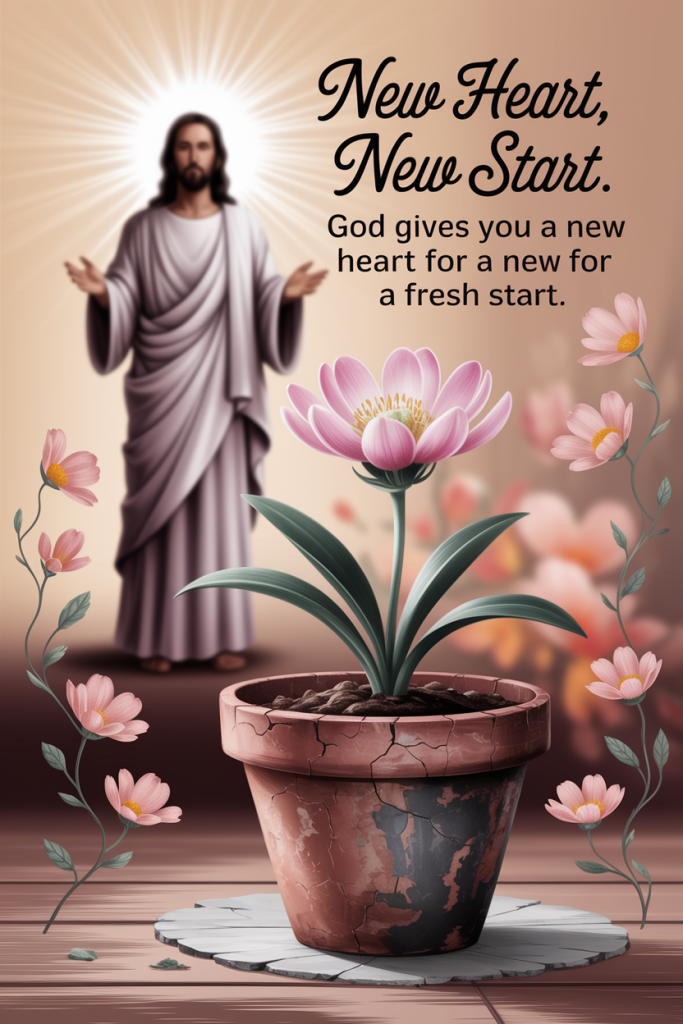
- “I will give you a new heart” (Ezekiel 36:26)
- “the Sun of righteousness [Messiah] shall arise with healing in his wings” (Malachi 4:2)
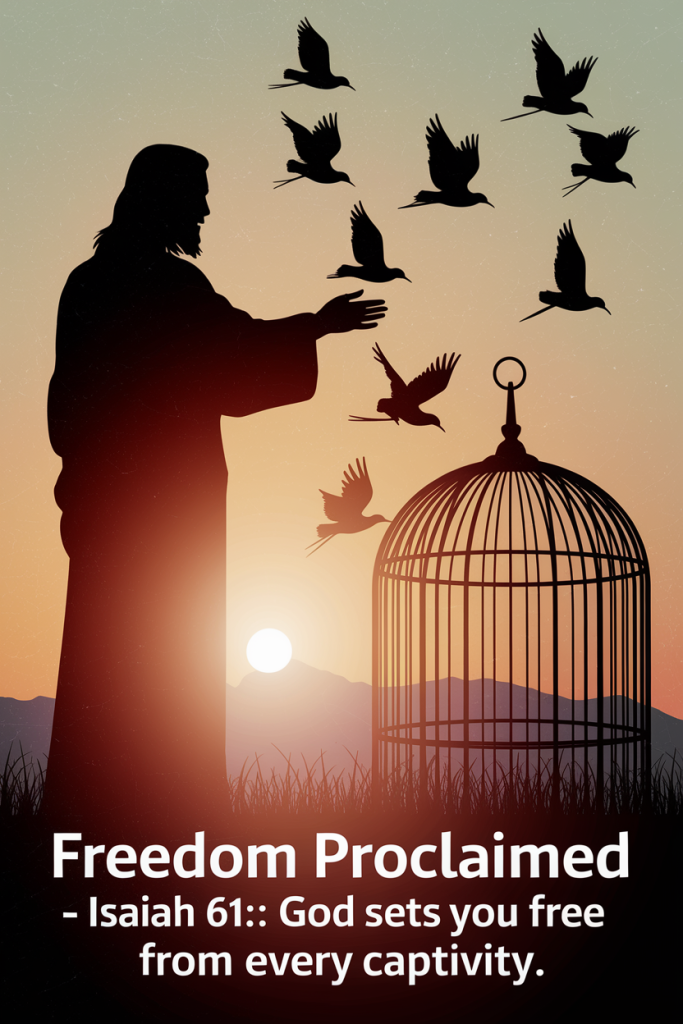
- “He hath sent me to bind up the brokenhearted... to proclaim liberty to the captives” (Isaiah 61:1).

Particularly, Isaiah 61 is a rich restoration chapter, promising that God’s people would rebuild ancient ruins and receive “double” for their former shame, with “everlasting joy”. Israel longed for the day those prophecies would come true.
There’s a poignant phrase in Zechariah 9:12 where God calls the exiles “prisoners of hope,” and pledges, “this day do I declare that I will render double unto thee”.
In other words, “I’ll repay you with twice as much blessing”. That’s God’s restoration economy – He loves to give back more. But when and how would these promises be fulfilled? Enter Jesus Christ.
Christ the Restorer: Fulfillment of God’s Promises
When Jesus began His ministry, He went to his hometown synagogue and read from Isaiah 61:
“The Spirit of the Lord is upon me, because He hath anointed me to preach good tidings unto the meek; He hath sent me to bind up the brokenhearted…” (KJV wording in Isaiah 61:1).
He then astonished everyone by saying, “This day is this scripture fulfilled in your ears” (Luke 4:21, KJV). Mic drop moment!
Jesus was basically announcing: “I am the promised Restorer.”
He is the one anointed to heal hearts, free captives, and announce “the acceptable year of the Lord” (Luke 4:19) – which alludes to the Jubilee year of restoration. In Christ, all the threads of Old Testament hope come together.
Throughout the New Testament, we see Jesus fulfilling restoration in various ways:
Physical restoration:
He restored sight to the blind, hearing to the deaf, strength to the lame. Every healing was a little act of restoration, reversing the curse (sickness and disability aren’t part of God’s original design).
- When Jesus cleansed lepers, He not only healed their disease but restored them to society and family.
- When He cast out demons, He restored those individuals to sanity and freedom.
One dramatic case is the man possessed by a legion of demons – after Jesus freed him, the man was “clothed, and in his right mind” (Mark 5:15). That’s restoration from utter brokenness!
Social restoration:
Jesus restored the marginalized and outcasts. He welcomed tax collectors and prostitutes into fellowship, restoring their dignity and identity as beloved of God.
Think of Zacchaeus – a cheating tax man turned into a generous friend (Luke 19). Jesus declared, “This day is salvation come to this house… For the Son of man is come to seek and to save that which was lost” (Luke 19:9-10, KJV).
Salvation in the full sense is restoration – finding the lost and bringing them home.
Also, Jesus famously broke social barriers by talking to a Samaritan woman, restoring her sense of worth and giving her the “living water” of His grace (John 4).
He even restored relationships among His disciples; when they bickered or drifted, He guided them back to unity.
Spiritual restoration & forgiveness:
The most profound restoration Jesus did was forgiving sins. For example, when a paralyzed man was brought to Him, before healing the paralysis, Jesus said, “Son, thy sins be forgiven thee” (Mark 2:5, KJV).
The religious leaders were shocked, but Jesus wanted to show that restoring someone’s soul is the greatest miracle. On the cross, Jesus accomplished the ultimate act of restoration by atoning for sin.
In that moment, the veil in the Temple tore in two – symbolizing that the barrier between God and humanity was removed (Mark 15:38). Access to God was restored for all who come through Jesus. Hallelujah!
Restoration of life:
Three times the Gospels record Jesus raising the dead – Jairus’s daughter, a widow’s only son, and His friend Lazarus. Each of these is a foretaste of the coming resurrection, the restoration of life itself.
Jesus told Martha before raising Lazarus, “I am the resurrection, and the life” (John 11:25).
Ultimately, His own resurrection on the third day is the linchpin of all restoration hope. By rising, He conquered death – the deepest brokenness.
As 1 Corinthians 15 explains, Jesus’ resurrection is the “firstfruits” of those who have died, guaranteeing that in the end, all of His people will be restored to life with new, imperishable bodies.
In Jesus, so many Old Testament prophecies click into place. Jeremiah’s promise of a new covenant where sins are forgiven and the law is written on hearts – fulfilled by Christ’s blood and the Holy Spirit’s work.
Ezekiel’s vision of dry bones coming to life – echoed when God raised us from spiritual death (Eph. 2:1-5) and ultimately when He will raise our bodies.
The promise in Joel “I will restore to you the years that the locust hath eaten”, given originally to Israel after a locust plague, takes on a broader meaning in Christ: God can restore years of pain and loss by His grace, giving abundant life even after wasted time.

Many of us can testify how coming to Jesus has redeemed lost years – it’s like He accelerates growth or uses our past as fertilizer for a fruitful future. Truly, “where sin abounded, grace did much more abound” (Romans 5:20).
Importantly, Jesus didn’t finish the restoration project in His first coming – He started it. He inaugurated the Kingdom of God (He said “the kingdom of God is at hand”), but He will consummate it when He comes again.
This is why Christians await the Second Coming with eager anticipation. We look around at the world still full of injustice, disease, and death, and we pray, “Thy Kingdom come.”
The New Testament ends with a magnificent promise of full restoration:
- And I saw a new heaven and a new earth...
- And I heard a great voice out of heaven saying,
- Behold, the tabernacle of God is with men…
- And God shall wipe away all tears from their eyes;
- and there shall be no more death,
- neither sorrow,
- nor crying,
- neither shall there be any more pain (Revelation 21:1-4, KJV).
In that day, everything lost will be restored to an even better state than before. It will be like Eden, but even better – a world where fallenness is no longer possible.
God Himself says, “Behold, I make all things new.” Until then, we live as “prisoners of hope”, knowing our Redeemer lives and that our labor in the Lord to spread restoration is not in vain.

Shadows and Signs: Restoration Foreshadowed in the Old Testament
Before we dive into a few specific restoration stories, let’s highlight how many Old Testament people and events were “types and shadows” of Christ’s restoring work. God loves to drop hints!
- We already mentioned Joseph as a type of Christ – betrayed by his own, yet later forgiving and saving them.
- Another beautiful foreshadow is Boaz in the Book of Ruth. Boaz served as a kinsman-redeemer for Naomi’s family.
Naomi had lost everything (her husband and sons died, leaving her and Ruth destitute).
But Boaz, a relative, stepped in by marrying Ruth and redeeming the family land, thus restoring Naomi’s life and legacy.
The women of the town celebrated the birth of Ruth and Boaz’s son, telling Naomi: “He shall be unto thee a restorer of thy life, and a nourisher of thine old age” (Ruth 4:15, KJV).
It’s one of the few places the KJV actually uses the word “restorer.”
Boaz’s kindness gave Naomi a new joy in her old age – she even gets to nurse her grandson. And significantly, that baby (Obed) became grandfather to King David, meaning Naomi’s restored family line led to Jesus!
Boaz is a clear picture of Christ, who is our ultimate Kinsman-Redeemer.
One article explains, “Through His shed blood on the cross, [Jesus] has bought our freedom from sin and restored our relationship with the Father”, just as Boaz paid a price to redeem Naomi’s inheritance and continue her family line.
In exchange, Christ receives us as His Bride (the Church) – a beautiful marriage of the Redeemer with the redeemed steppesoffaith-56895.medium.com.
Just as Boaz’s union with Ruth brought Naomi out of bitterness into joy, Christ’s union with us brings us out of emptiness into fullness.
- These parallels are not coincidence; God masterfully wove the gospel storyline into real history beforehand.
- We see other types too: Moses delivering Israel from slavery foreshadows Christ delivering us from sin’s slavery.
- Joshua (his very name is Hebrew for Jesus) leading into the Promised Land foreshadows Jesus leading us into eternal inheritance.
- David restoring the kingdom’s worship and expanding the realm hints at the Son of David establishing God’s Kingdom forever.
- Even the Year of Jubilee we mentioned is a type: in Christ, every day is Jubilee in the spirit – our debts to God are canceled, we find freedom from bondage, and we look to the final Jubilee when creation is set free.
- And consider the sacrificial system: those repeated sacrifices at the Temple were shadows pointing to the cross, where Jesus by one sacrifice would cleanse sin and restore our direct access to God (Hebrews 10:19-22).
- The High Priest entering the Holy of Holies to intercede was a type of Christ entering heaven for us.
All these signs show that restoration is part of God’s design all along – He provided temporary measures and human figures that prefigured the perfect restoration through His Son.
Restoration for Israel and the Hope of the Church
We would be remiss not to talk about the promises of restoration given specifically to Israel, and how they connect to Christian hope.
The Old Testament prophets frequently spoke of Israel’s restoration in two senses: physical/national and spiritual.
On one hand, they foretold the return from Babylonian exile (which happened in part under Zerubbabel, Ezra, Nehemiah).
But many prophecies seem to reach beyond that, to a greater restoration – a messianic age of peace and righteousness.
Christians have sometimes debated the exact fulfillment of these, but here’s the big picture: God’s faithfulness to restore Israel assures us He will be faithful to restore us, too.
Take Ezekiel’s vision of the dry bones (Ezekiel 37). He sees a valley of skeletons, and God asks, “Can these bones live?”
Then, as Ezekiel prophesies, the bones rattle together, flesh comes on them, and finally God breathes into them and they stand as a living army.
God explains this represents Israel: “Behold, O my people, I will open your graves, and cause you to come up... and bring you into the land of Israel” (Eze. 37:12, KJV).
Indeed, God revived the “dead” nation. But on a spiritual level, we too were dry bones before Christ breathed life into us. And one day even our literal graves will open by His resurrection power.
The restoration of Israel in history (partially fulfilled when they returned to their land) is a preview of the greater restoration God has for all His people.
It’s no wonder Paul uses an olive tree analogy in Romans 11 – natural branches (Israel) were broken off for unbelief, wild branches (Gentiles) grafted in, and he says if Israel does not continue in unbelief, God is able to graft them in again, “for God is able to graft them in again” (Rom. 11:23).
He even foresees that “all Israel shall be saved” (Rom. 11:26) one day, which suggests a massive restoration of Israel’s heart to accept Messiah. To us, this is a hopeful sign: God keeps His promises even to a wayward people, and He can bring even the most stubborn hearts (be they Jewish or Gentile) back to Himself in the end.
Many promises to Israel now apply in principle to all believers in Christ.
For instance, God told Israel through Joel that after judgment, “I will pour out my Spirit upon all flesh” (Joel 2:28), which Peter in Acts 2:16-17 says was being fulfilled at Pentecost for the church.
That outpouring of the Spirit is part of God’s restorative work – giving us new hearts and power to live for Him. Joel also gave the famous promise, “And I will restore to you the years that the locust hath eaten”.
While its first context was agricultural blessing for Israel, many Christians have taken comfort that God can restore lost years in our lives too – years eaten up by the “locusts” of bad choices or hardships.
It’s a valid application: the same God who cared about Israel’s crops cares about our personal losses. He can pack so much growth and goodness into the years we have left that it’s as if the lost years are compensated.
That’s the “double portion” principle again (like Job ending up with double). It’s not about material prosperity per se, but about God’s generosity in redemption.
As Isaiah 61:7 told Israel, “For your shame ye shall have double… everlasting joy shall be unto them”.
In Christ, instead of our shame, we get a double share of honor and joy – ultimately fulfilled in glory, but often tasted now in a redeemed life.
Another angle is the restoration of Israel’s kingdom. After Jesus’ resurrection, His disciples asked, “Lord, wilt thou at this time restore again the kingdom to Israel?” (Acts 1:6, KJV).
They were anxious for the political/territorial kingdom. Jesus didn’t deny that restoration would happen; He just told them the timing wasn’t for them to know, and that their job for now was to be Spirit-empowered witnesses.
This implies there will be a future restoration of all things (as Peter preached later stillfaith.com), including Israel’s glory, but in God’s timing.
The takeaway for us: there is a glorious future for God’s people – both the Israelite branches and the Gentile wild branches grafted into His olive tree. We all share in the hope of Christ’s return, when “the times of refreshing” come.
The Old Testament often describes that future in terms of Israel’s peace and prosperity: everyone sitting under their vine and fig tree (Micah 4:4), wolves and lambs at peace (Isaiah 11:6), God rejoicing over Jerusalem.
The New Testament describes the same ultimate reality as “a new Jerusalem, coming down from God” where God lives with men and wipes away every tear.
These are not competing visions; they are complementary. God hasn’t abandoned Israel, and He hasn’t left the rest of us out, either.

In Christ, all the promises of God are Yes and Amen (2 Cor. 1:20). That means the promise to “restore health” and heal wounds (Jer. 30:17), the promise to “turn mourning into joy” (Jer. 31:13), the promise of “a stronghold for the prisoners of hope” (Zech. 9:12) – they all find their fulfillment in the Messiah and His people. We taste them now and will see them fully realized in the Kingdom.
Before moving on, let me put it this way: God’s track record with Israel gives us confidence. He was extraordinarily patient and merciful with them, even when they hit rock bottom.
He brought them back from exile – something unheard of in the ancient world (most exiled peoples assimilated and vanished). He preserved them for a purpose.
If God can restore a whole nation after 70 years in a pagan land, and ultimately bring the Messiah through them, is there any mess in our lives He can’t redeem? Absolutely not.
We, the church, are now grafted into this story of God’s faithfulness. We too are “prisoners of hope” – in a good way!

We have seen God’s hand in history, and we trust He will finish what He started with us. As Philippians 1:6 says, “He which hath begun a good work in you will perform it until the day of Jesus Christ.”
In other words, God completes His restoration projects – He doesn’t walk off the job halfway. That gives us steady hope as we press forward.
Stories of Restoration: Hope for Us Today
Theological truths are great, but sometimes we need a story to really grasp them. Thankfully, the Bible is full of stories of restoration – real people who experienced God’s redeeming power.
These narratives encourage us that no situation is too far gone. Here are a few vivid examples from both Testaments, and what they teach us:
Job:
Job’s story might be the most famous restoration tale. This man lost everything in a series of tragic events – his wealth, his children, and even his health. He went from riches to rags and sat in ashes, scraping his boils and wondering why this was happening.
Yet, Job clung to his faith in God through the confusion. In the end, God vindicated Job’s trust.
The Scripture says, “the LORD turned the captivity of Job... also the LORD gave Job twice as much as he had before”.
Job’s latter end was more blessed than his beginning: he had more livestock, and he was given more children to love (without negating the ones he lost).
The lesson? God can restore our losses, sometimes even double. But it’s not just about material things – God also restored Job’s understanding and deepened it.
Job emerged knowing God far better, saying, “I have heard of thee by the hearing of the ear: but now mine eye seeth thee” (Job 42:5).
His relationship with God was restored and enriched through the trial. If you’re in a season of loss, Job’s story reminds you to hold on – God is full of compassion and mercy, and “the end of the Lord” (the outcome He brings) can be very tender indeed cameronshaffer.com.
Joseph:
We talked about Joseph as a type of Christ, but on a personal level, Joseph’s restoration with his family is so moving. As a teenager, Joseph was betrayed by his brothers and sold into slavery.
He spent years in bondage and even in prison due to a false accusation. It looked like his life was ruined. But God was working behind the scenes.
In a dramatic turn of events, Joseph rose to become Pharaoh’s right-hand man during a crisis. When a famine hit, his brothers came begging for grain – not realizing the Egyptian official was their very brother they betrayed! In the end, Joseph forgave them and revealed himself with tears.
The family was reconciled and saved from starvation. Joseph told them plainly, “Ye thought evil against me; but God meant it unto good… to save much people alive”.
There’s multiple restorations here: Joseph’s freedom and success were restored (from slave to governor), and the broken family relationship was restored (estranged brothers to a united family).
If God can heal that family (imagine the guilt and bitterness they all had to overcome), He can heal ours too. Sometimes the road is long – Joseph’s journey took years – but God’s timing is perfect.
Forgiveness was key in this story. Joseph’s willingness to forgive opened the door for complete restoration. In our lives, extending forgiveness can be the moment the healing begins.
Naomi (and Ruth):
The Book of Ruth opens with Naomi bitter and empty. A famine drove her family from Israel to Moab. In Moab, things went from bad to worse – her husband died, then both her sons died, leaving Naomi with only her two Moabite daughters-in-law.
Grief-stricken, she decided to return to Bethlehem, telling people not to call her Naomi (“pleasant”) anymore but Mara (“bitter”), “for the Almighty hath dealt very bitterly with me... I went out full and the LORD hath brought me home again empty.” (Ruth 1:20-21).
Yet, one of her daughters-in-law, Ruth, clung to her and came along, forsaking her own people to support Naomi. Fast forward, and by God’s providence Ruth meets Boaz, the gracious relative who becomes her kinsman-redeemer.
By the end of the story, Ruth and Boaz marry and have a baby.
The women of Bethlehem glorify God, saying to Naomi: “Blessed be the LORD, which hath not left thee this day without a kinsman... And he shall be unto thee a restorer of thy life, and a nourisher of thine old age” (Ruth 4:14-15, KJV).
How beautiful is that? Naomi’s arms, once empty, now held a grandchild. Her property was redeemed, her family line continued, and her joy reborn. God turned her mourning into dancing.
This story shows that even when we feel empty and bitter, God is at work in ways we can’t imagine. Naomi couldn’t see it in chapter 1, but by chapter 4 it’s clear God never abandoned her.
He was lining up “coincidences” (Ruth “happening” to glean in Boaz’s field, etc.) to write a redemption story. Likewise, we might not perceive God’s plan in our pain, but later we often realize He was moving all along to restore something far greater.
And note: Naomi’s restored joy wasn’t just about her – it fed into God’s bigger plan (the lineage of King David and ultimately Jesus). Our restoration often ends up blessing others and honoring God in a larger story.
The Prodigal Son:
Jesus gave perhaps the most beloved picture of personal restoration in the parable of the prodigal son (Luke 15:11-32). Though a parable, it rings true to life.
A young man demands his inheritance early, leaves home, and wastes all his money in wild living. Soon he’s destitute and ashamed, feeding pigs (a hated job for a Jew).
In that pigpen, he “comes to himself” and decides to go back home, not expecting anything more than maybe a servant’s position. But how does the father respond?
The father runs to meet him, hugs and kisses him, and celebrates lavishly. He gives him a robe, a ring, and sandals – symbols of full sonship and honor – and throws a feast saying, “For this my son was dead, and is alive again; he was lost, and is found.”.
- The KJV wording is so powerful there: dead/alive, lost/found. It’s ultimate restoration: from death to life, from lost to found, from disgrace to full restoration as a son.
Jesus wanted us to know that this is how God welcomes us back. No grudges, no probation period – just open arms and a party in heaven (Luke 15:7).
The prodigal didn’t even get through his rehearsed apology before the father’s love overwhelmed him. If you’ve strayed from God, let this sink in: God longs for you to come home so He can restore you.
There’s no need to clean yourself up first; come as you are, pig stench and all, and He’ll embrace you. Jesus crafted this story to give us unshakeable confidence in the Father’s heart.
Whether it’s a story of initial salvation or a believer who messed up and returns, the result is the same: total forgiveness, relationship restored.
And note, restoration in this case meant the son didn’t come back as a second-class citizen; he got the ring of authority back on his finger.
Our Father doesn’t say “I’ll take you back but you’re on thin ice.” He says, “Welcome home, my child.” What a God we serve!
Peter:
We’ve mentioned Peter’s restoration already, but it’s worth putting in the lineup. Peter, one of Jesus’ closest disciples, swore he would never deny his Lord.
Yet, under pressure the night of Jesus’ trial, Peter did exactly that – three times, with cursing and swearing, he denied even knowing Jesus. When the rooster crowed, Peter realized what he’d done and wept bitterly (Luke 22:62).
He thought he was finished as a disciple. After Jesus’ crucifixion, Peter was deeply ashamed; even the resurrection news had him confused and hopeful but unsure of his standing.
In John 21, we find the tender scene of Jesus cooking breakfast for the disciples by the Sea of Galilee.
There, Jesus asks Peter three times, “Simon, son of Jonas, lovest thou me?” and each time upon Peter’s affirmative, Jesus says “Feed my lambs/sheep.” By the third time, Peter is hurt (it mirrored his three denials), but it finally sinks in: Jesus is reinstating him.
He’s entrusting Peter with caring for His flock – effectively saying, “I still choose you, failure and all. I forgive you. Get back in the game.” Peter’s relationship with Jesus was fully repaired, and he went on to be the lead preacher at Pentecost and a pillar in the early church.
A commentary on this notes, “Peter denied Jesus three times... yet Jesus not only restored Peter to fellowship with God, but used him... It is only in his restoration to fellowship with Christ that Peter receives the calling to feed God’s sheep.”cameronshaffer.com
Peter’s story teaches us that a fall, even a serious one, doesn’t have to be the end. There is a way back. It requires godly sorrow (Peter had that in spades) and humble love, but Jesus is quick to restore the truly repentant.
Maybe you identify with Peter – you boasted you’d stand strong, then did the opposite. The Lord can redeem that. He can even use your failure to make you more dependent on His grace and therefore more effective.
After all, a Peter who knows he’s weak is a Peter who relies on the Spirit. Sure enough, the pre-Pentecost Peter learned to lean on God, and when filled with the Holy Spirit, he stood boldly for Christ to the end.
Restoration often brings us back stronger, because it’s no longer we who stand, but Christ in us.
These are just a few stories – there are countless others! The Bible is literally packed with them:
- Hannah’s barren womb restored to joy with baby Samuel
- King Manasseh’s late-in-life repentance and restoration after great evil
- Elijah’s discouraged heart restored by God’s still small voice, and on and on.
Each of these accounts is meant to inspire us to trust God’s character.
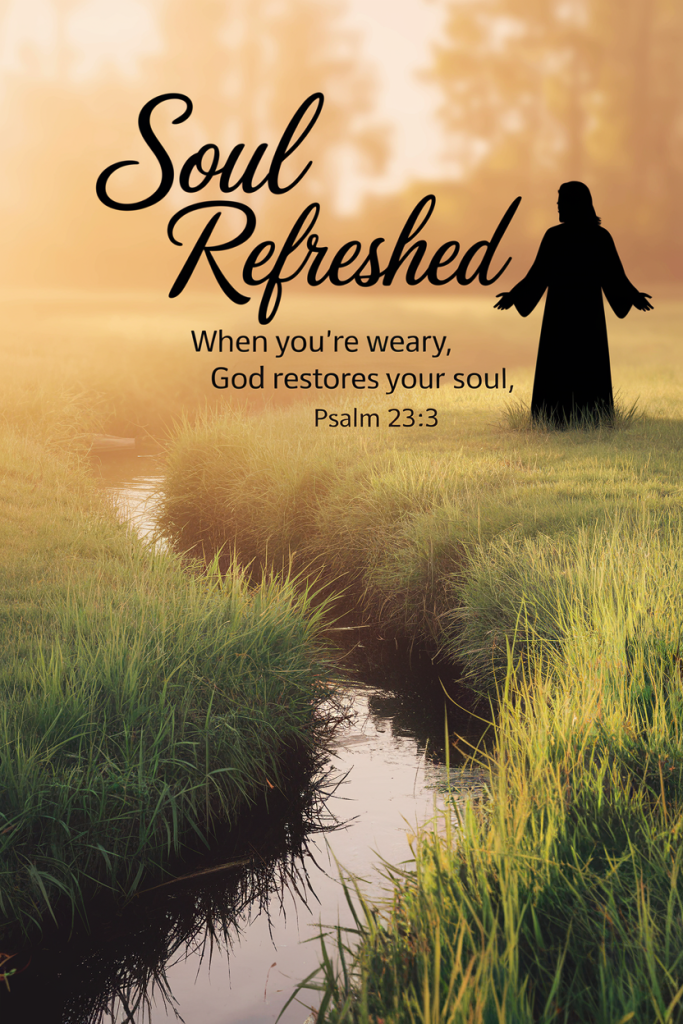
As the Psalmist says, “He restoreth my soul” (Psalm 23:3, KJV) – it’s what He does. And He can do it for you.
Living in Restoration: An Encouraging Conclusion
Maybe you’re reading this and thinking, “This all sounds great, but my situation is beyond hope.” Let me gently challenge that...
No situation is beyond God’s restoring power.
- If He can raise the dead, He can revive a dead marriage.
- If He can bring prodigals home, He can call your wandering loved one back.
- If He can give Job a double portion after unspeakable tragedy, He can give you a fulfilling life beyond your pain.
- If He can forgive and restore a sinner like me (and believe me, I’ve had my prodigal seasons), He can restore you too.
However, restoration doesn’t always mean replacement of exactly what was lost. Sometimes it does (Job got new children, not the same ones back).
Sometimes it means God gives something different but equally good for His purposes.
For example, maybe you lost a job – God might not give you that same job back, but He provides a new opportunity that ends up better for you and His kingdom.
Or if you’ve wasted years in addiction, you can’t get those literal years back, but God can pack so much growth and goodness into your new sober life that it outweighs the past – effectively restoring the lost time in terms of impact steppesoffaith-56895.medium.com.
And ultimately, in eternity, God will wipe away every tear and right every wrong. The scales of justice and restoration will be fully balanced by His hand.
Every wound will be healed. This is not wishful thinking; it’s promised in Scripture and backed by God’s own character.
So what can we do in the meantime, as believers longing for restoration? Return to the Lord.
That’s the constant biblical refrain. “Come, and let us return unto the LORD: for he hath torn, and he will heal us” (Hosea 6:1, KJV).
Whether you need spiritual renewal, emotional healing, or relational reconciliation, it starts with turning your heart to God and trusting His mercy. Often, repentance and humility are the gateway to restoration.
James 4:8-10 says if we draw near to God, humble ourselves, and purify our hearts, “He shall lift you up.”
God lifted up the prodigal, He lifted Peter from shame, He lifted Joseph from the pit. He’ll lift you too, in due time.
Also, stay hopeful and patient. Restoration is often a process, not an instant fix. Think of it like the rebuilding of a house after a disaster. It takes time, maybe longer than you want. But God’s in the construction zone with you.
Little by little, you’ll see progress – a healed habit here, a mended relationship there, a renewed sense of purpose growing day by day. Give thanks for each little bit of rebuilding.
You’re “under construction” with the best foreman in the universe. Philippians 1:6 bears repeating: He will finish the work He began in you.
And don’t try to restore yourself in your own strength. That can lead to frustration or shallow results. Instead, invite God into every broken area.
Pray boldly for restoration. The Psalms are full of such prayers: “Restore us again, O God of our salvation” (Psalm 85:4), “restore unto me the joy of thy salvation” (Psalm 51:12).
God is drawn to a sincere prayer for renewal. He honored David’s prayer, He’ll honor yours.
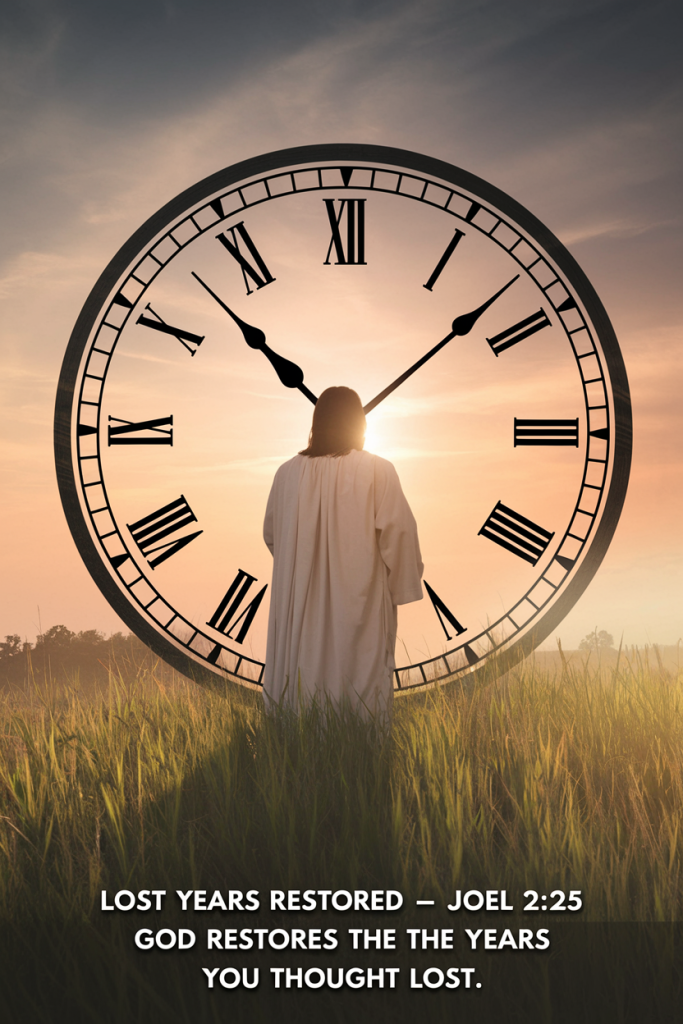
Sometimes He even exceeds what we asked. Joel 2:25, as we saw, had God promising to restore years of harvest – that’s above and beyond just forgiveness; that’s God saying “I’ll make it as if the tragedy never happened, and then some.”
Finally, embrace the role of being an agent of restoration for others. Because we’ve received grace, we can pass it on. We can help “restore” others gently (Gal. 6:1), we can be the encourager who lifts someone up, or the peacemaker who helps reconcile friends.
The church is meant to be a community of restoration, where we all help each other experience God’s grace. When you participate in bringing hope to someone else, you often find your own soul refreshed (Proverbs 11:25).
It’s like how Job prayed for his friends, and then God restored Job’s fortunes – when Job got his eyes off his own misery to intercede for others, God turned things around. There’s a principle there: be a restorer, and you’ll taste restoration.
In closing, let me assure you from the heart: God is a restorer. I’ve seen Him restore things in my life I thought were gone forever. I’ve seen Him restore others in miraculous ways.
The Bible’s testimony and my personal experience align on this truth. And most importantly, Scripture assures us that the best is yet to come. We’re all awaiting that final restoration when Jesus returns.
Revelation paints the scene of a New Jerusalem, and in it Jesus says, “Behold, I make all things new” (Rev. 21:5).
That’s the ultimate fulfillment of every longing. Our bodies, our souls, our world – all made new, never to break again. Total restoration.
Until that day, we walk by faith, trusting our Restorer, and rejoicing in the “little” restorations He gives along the way. Your story isn’t over, and neither is mine.
By God’s grace, the broken pieces of our lives are being rebuilt into something that, in eternity, will shine with more glory than if they’d never been broken at all.
As strange as it sounds, our scars will sing of His restoration. I’ll leave you with this encouraging thought from a modern writer: “God is restoring all that is broken but not all at once… We live in between the Already and Not Yet.”
So take heart in the already – the cross and empty tomb have secured your restoration – and take hope in the not yet – the day is coming when all will be restored.
In the meantime, we pray, we trust, and we echo the final prayer of the Bible: “Even so, come, Lord Jesus” – our ultimate Restorer. Amen.
Call to Action: The Question That Demands an AnswerIn Acts 2:37 Peter and the Apostles were asked the question – What Shall We do? And in Acts 2:38 Peter answered, Repent, and be baptized every one of you in the name of Jesus Christ for the remission of sins, and ye shall receive the gift of the Holy Ghost. For the promise is unto you, and to your children, and to all that are afar off, even as many as the Lord our God shall call. Do you understand this? After hearing the gospel and believing, they asked what should would do. The answer hasn’t changed friend, Peter clearly gave the answer. The question for you today is, Have you receieved the Holy Spirit Since you believed? If you’re ready to take that step, or you want to learn more about what it means to be born again of water and Spirit, visit: Come, and let the Spirit make you new. |