

Quick Overview of Wells in the Bible…
Short on time? Here’s a brief slideshow of key “well” moments. The full study follows below…
Life can sometimes feel like a dry, dusty journey – and all you want is a refreshing sip of hope. The good news is that the Bible is full of “well” stories that quench our thirst in surprising ways.
From Genesis to Revelation, wells show up as more than just watering holes; they become symbols of God’s provision, blessings, and even encounters with Him.
In this friendly exploration, we’ll journey through Scripture’s wells – both literal wells in the ground and the “wells” of spiritual truth – and see what they mean for us today. Grab a bucket (and maybe a Bible), and let’s draw some water from these ancient wells together!
Wells of Blessing and Provision in the Old Testament
In the arid landscapes of the Bible, a well was literally a lifesaver. A single well could mean the difference between life and death for families and their flocks. It’s no wonder that wells often signified God’s blessing and provision. Here are a few stand-out examples of God meeting practical needs through wells:
Hagar’s Well in the Wilderness:
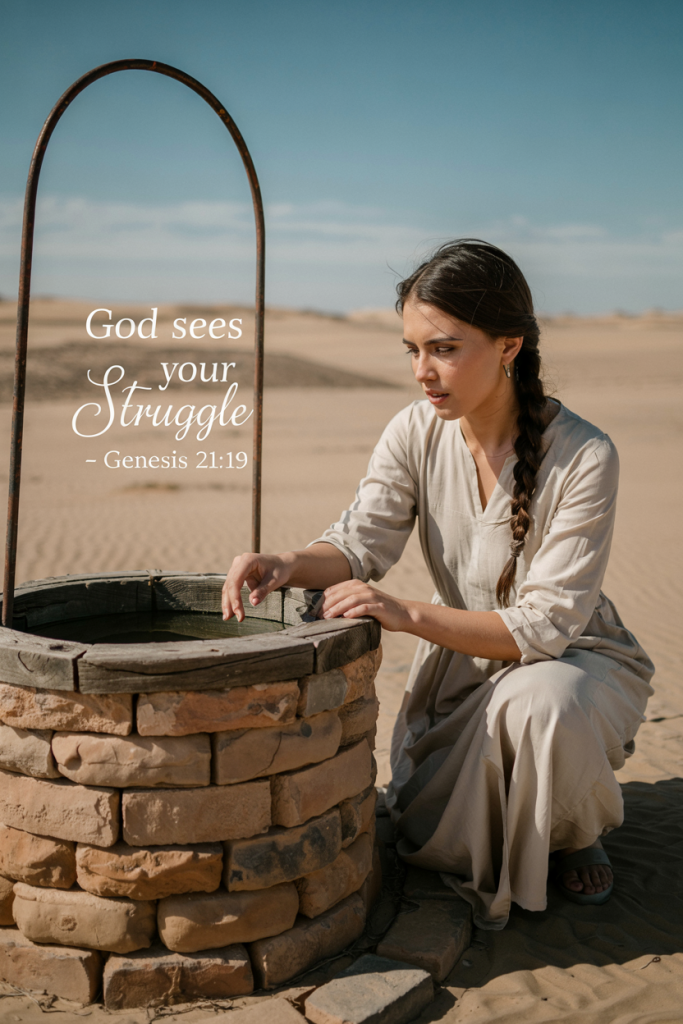
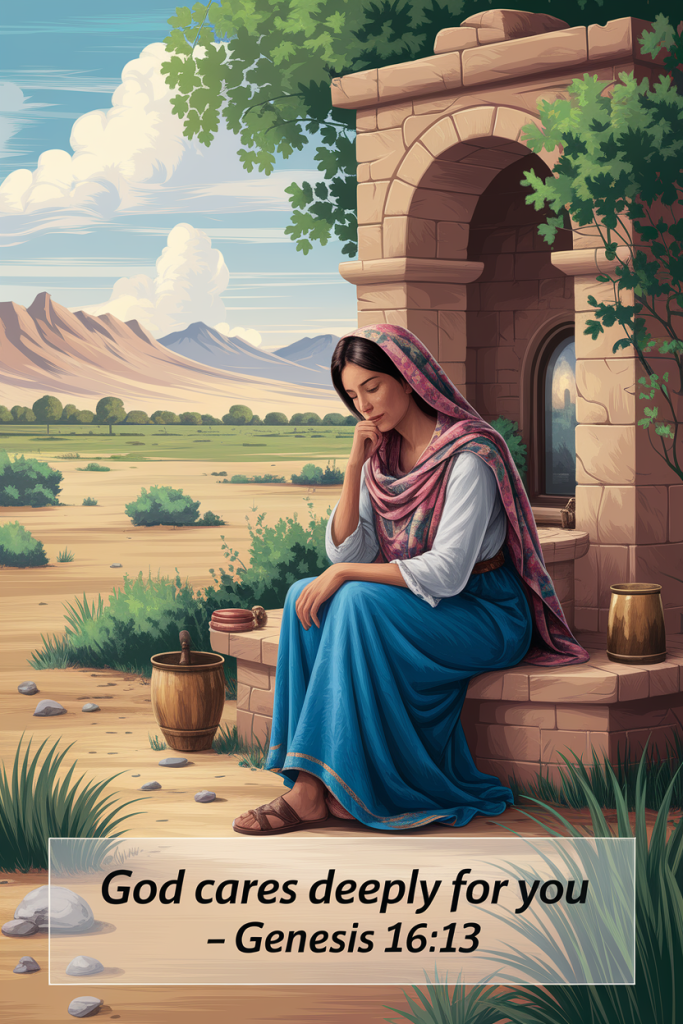
In Genesis 21, Hagar had given up hope, believing her son Ishmael would die of thirst. But “God opened her eyes, and she saw a well of water”. That hidden well saved their lives.
Hagar actually named an earlier well Beer-lahai-roi, meaning “well of the Living One who sees me,” after God met her in her distress. It was her way of saying, “God sees me and cares for me, even here!”
If you’ve ever felt invisible or desperate, Hagar’s story is a reminder that God sees your plight and provides what you need – often in unexpected places.
Isaac’s Wells of Inheritance:
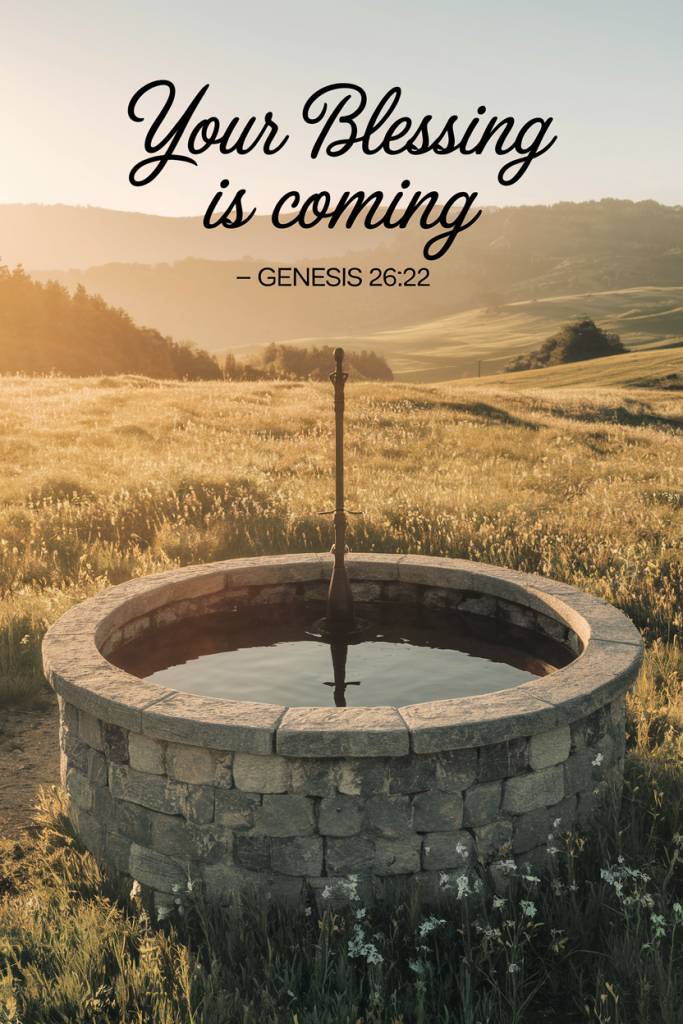
Genesis 26 paints a picture of Isaac re-digging the wells his father Abraham had originally dug, which enemies later filled in. Isaac “digged again the wells of water” his father had made, essentially reclaiming the blessing and inheritance God had given to Abraham.
Every time Isaac’s servants found water, rival herdsmen tried to fight over it. Instead of fighting back, Isaac moved on peacefully and dug another well until finally, at a well he named Rehoboth, there was room and no strife.
“For now the LORD hath made room for us, and we shall be fruitful in the land,” he said (Genesis 26:22).
Isaac trusted God to provide in due time, and God did – providing water and peace. His gentle persistence shows that sometimes we have to keep “digging” in faith, but God will make space for us and bless us.
In fact, Isaac’s patient response to opposition – giving up the well and trusting God to care for him elsewhere – is an inspiring example of relying on God’s providence rather than our own fighting.
“Spring Up, O Well!” – Water in the Wilderness:
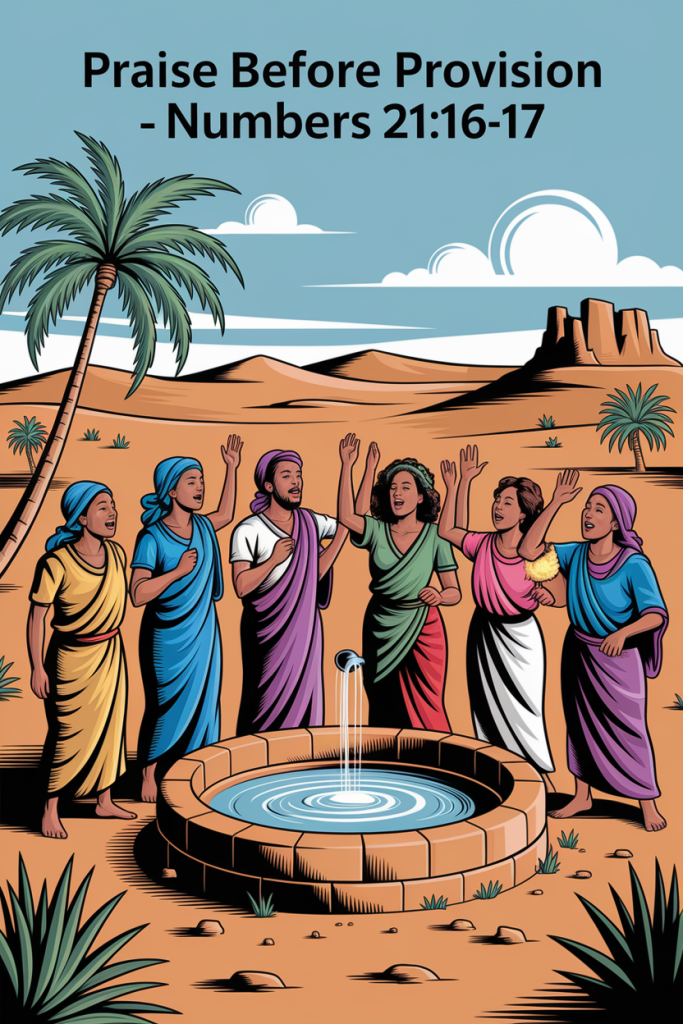
During Israel’s wilderness journey, God led them to a place actually named Beer, which means “well.” There the Lord told Moses, “Gather the people together, and I will give them water” (Numbers 21:16).
In faith and gratitude, the Israelites sang a song of praise even before the water gushed out: “Spring up, O well; sing ye unto it”. And sure enough, God provided a flowing well.
A well in the desert is such a vivid picture of God’s provision: when we’re in a dry place, God can bring relief from right under our feet. The people’s song reminds us to praise God in advance for the blessings we trust He’ll provide.
As one commentary notes, a well may look small on the surface, yet it taps into a vast underground supply – just as our little prayers tap into God’s vast resources of grace.
Blessings at Beersheba:
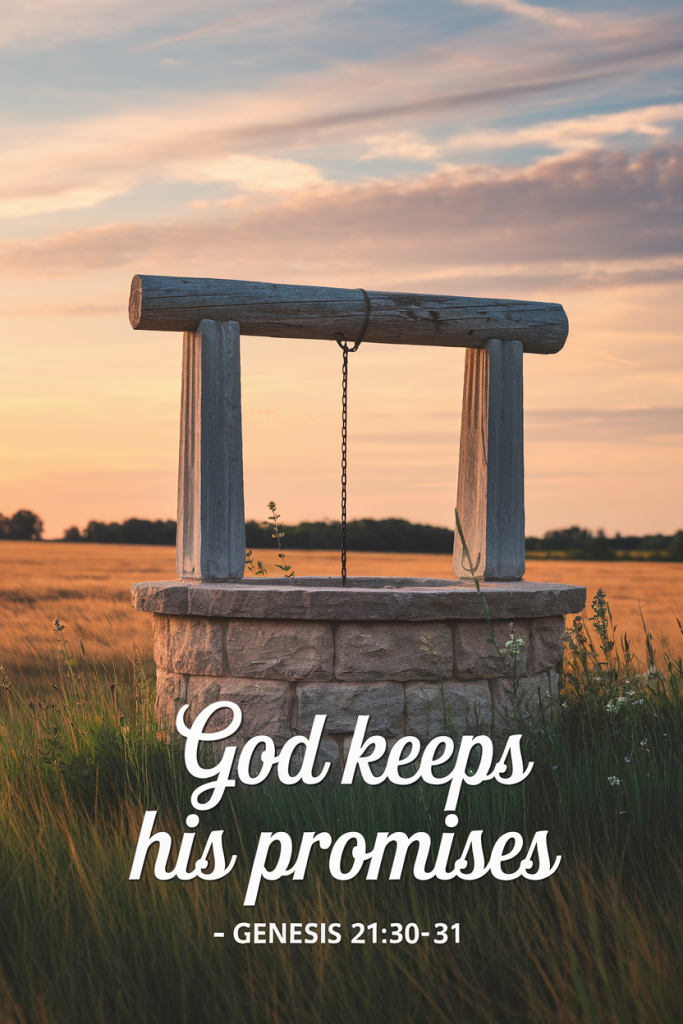
Many significant moments happened at Beersheba (a name meaning “well of the oath” or “well of seven”). Abraham dug a well there and made a covenant with Abimelech, naming the place Beersheba as a witness of God’s provision (Genesis 21:30-31).
Later, Isaac also dug a well at Beersheba and that same night God appeared to reassure him of the promised blessing (Genesis 26:23-25).
Beersheba became a place of oath and blessing, underscoring how wells were tied to God’s promises.
Whenever you see Beersheba in Scripture, you might recall how God’s provision of water was linked with His covenant faithfulness. It’s as if each well Abraham and Isaac dug was another marker saying, “God keeps His promises – here’s the water to prove it.”
From these examples, we see a theme: wells represent God’s faithful provision. When His people were weary, He provided water. And often, that practical blessing carried a deeper message about God’s care.
If you’re feeling parched – physically, emotionally, or spiritually – remember that God hasn’t changed. He still provides “water in the wilderness” for you (even if it shows up in ways you didn’t expect).
Wells as Meeting Places for Divine Encounters
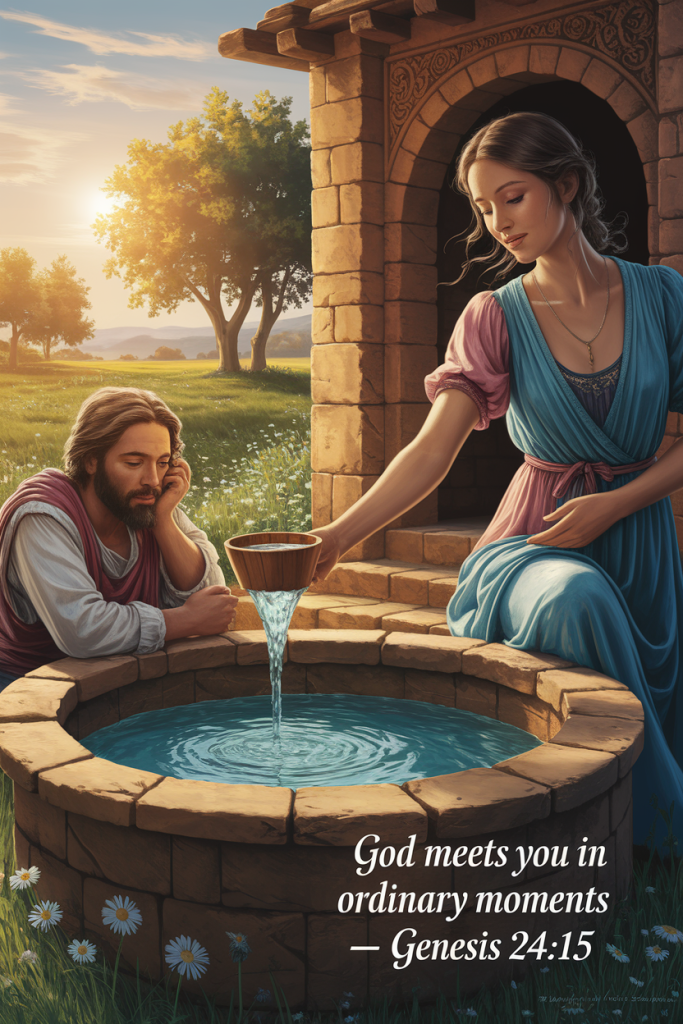
Beyond just quenching physical thirst, wells in the Bible became backdrops for some life-changing encounters with God’s presence and guidance. Ordinary moments (like drawing water) turned into extraordinary encounters. It’s a beautiful reminder that God can meet us in the everyday routines of life – even a trip to the water cooler, so to speak!
Consider a pattern that emerges in the Old Testament: wells were often where people found their future spouses – by God’s providence – which carried a sense of divine purpose. For example:
Rebekah and the Servant at the Well:

Abraham’s servant met Rebekah by a well when seeking a wife for Isaac. This wasn’t a random meet-cute; it was an answer to prayer. The servant had just prayed for a sign, and along comes Rebekah, who graciously offers water to him and his camels – exactly the sign he asked of God.
That well in Genesis 24 became the meeting place that brought Rebekah into Abraham’s family.
It’s a subtle reminder that God guides our steps – even our relationships – when we seek Him. (And notice how kindness and service – drawing water for a stranger – opened the door for Rebekah’s future blessing!)
Jacob and Rachel at the Well:
In Genesis 29, Jacob arrives in Haran and meets Rachel at – you guessed it – a well. In a dramatic scene, Jacob rolls away the stone covering the well’s mouth and waters her flock.
That well introduced Jacob to his great love (and incidentally to a pretty complicated family life with Laban, but that’s another story!).
The key is that Jacob’s journey of faith took a turn at a well, leading to the twelve tribes of Israel being born from that encounter. Again, God was at work in the mundane task of watering sheep.
I just had a thought, could this be a type for the stone rolled away from Jesus tomb? The stone rolled away and we now have access to the well of living water.
Moses and Zipporah at the Well:

Fleeing Egypt, Moses stops by a well in Midian (Exodus 2:15-16). There he heroically helps Jethro’s daughters water their flock, rescuing them from bullying shepherds.
One of those young women, Zipporah, eventually becomes Moses’ wife. Through that well encounter, Moses finds a new family and a safe haven until God calls him from the burning bush.
It’s amazing – the deliverer of Israel spent 40 years tending sheep in the desert, and it all started with a chance meeting at a well. This shows that even in our “waiting periods,” God is setting up divine appointments.
Each of these “well stories” involves someone taking a journey, stopping for water, and discovering God’s provision for the next chapter of their life – often through meeting another person.
They weren’t seeking a mystical experience; they were just doing what needed to be done (getting water), and God showed up in the midst of it. That should encourage us that God can show up on ordinary days.
You might be running errands or grabbing your morning coffee, and God could bring a conversation or a moment of clarity that redirects your life.
Jesus and the Samaritan Woman:

In John 4, Jesus, tired and thirsty, sat down by Jacob’s well. When a Samaritan woman came to draw water, Jesus asked her for a drink – a simple request that shocked her because Jews normally wouldn’t talk with Samaritans.
What follows is one of the most heartfelt, revealing conversations in Scripture. Jesus gently uncovers her deep thirst for truth and love, and then He offers her something amazing: “living water.”
He says if she knew who He was, she would have asked Him for water, and “he would have given thee living water”. He explains that “whosoever drinketh of the water that I shall give him shall never thirst; but [it] shall be in him a well of water springing up into everlasting life”.
Think about that – a well inside you, welling up with eternal life! Jesus was talking about the Holy Spirit’s life-giving presence. In that moment at the well, this woman went from feeling empty and ashamed to feeling seen, known, and loved by the Messiah.
She even left her waterpot behind (John 4:28) because she had found something far greater than literal water. She ran off to tell her whole village about Jesus. Jacob’s well became the meeting place not just for one woman and Jesus, but for many Samaritans to meet their Savior.
As one commentary puts it, Jacob’s well provided physical water, but it ultimately served as the setting for Jesus to present Himself as the life-giving Messiah, offering water that satisfies our deepest thirst.
Jacob gave a well; Jesus gave “living water” that leads to eternal life.
Do you notice a thread through these stories? Wells were where God met people at critical moments:
- A runaway slave girl (Hagar) met God’s angel by a spring and learned that God “sees” her.
- A faithful servant found the answer to prayer (Rebekah) at a well, ensuring the next generation of God’s promise.
- Future leaders like Jacob and Moses found direction (and families) at wells in foreign lands.
- And an outcast woman found the Messiah Himself at a well called Sychar.
God loves to meet us where we are, even in the ordinary tasks. A trip to the well might seem mundane, but it can be the very place God speaks to your heart.
Perhaps the “well” for you is your kitchen sink as you wash dishes, or your commute to work – a routine place where God can get your attention. Don’t underestimate those everyday moments; they might become holy ground where you sense God’s presence or guidance.
Wells of Salvation and “Living Water” – From Promise to Fulfillment

Wells in Scripture aren’t only literal; they carry a rich symbolic meaning too. Throughout the Bible, water is a picture of spiritual refreshment, eternal life, and the Holy Spirit.
The Old Testament often uses the imagery of wells, fountains, and springs to talk about the salvation and blessing God provides, and the New Testament picks up that imagery and connects it to Jesus.
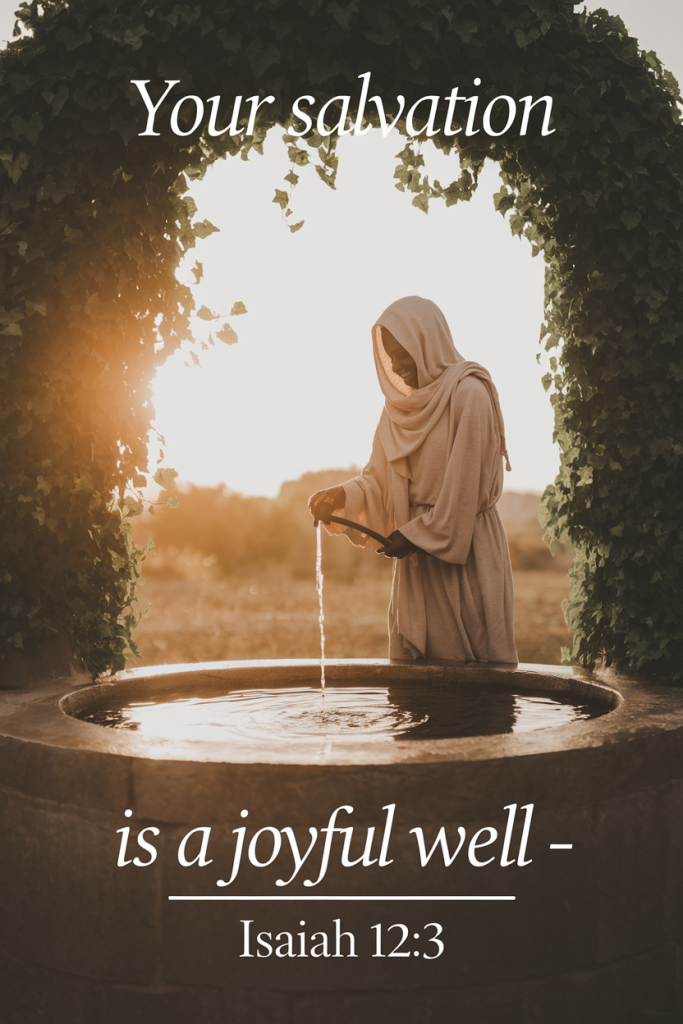
One beautiful Old Testament verse is Isaiah 12:3: “Therefore with joy shall ye draw water out of the wells of salvation.”. Here salvation is pictured like a well – something you can draw from again and again.
It’s not a one-time sip; it’s a source that never runs dry. This prophecy envisions a time of great joy when God’s people will freely drink from His salvation.
Many Christians see this as pointing to the joy of knowing Christ, through whom God’s saving promises are fulfilled. When we experience God’s forgiveness and grace, it’s like taking a cool, satisfying drink after a long thirst. Salvation is a well we can keep coming back to with joy.
The prophets also contrasted God’s life-giving water with the false, inadequate sources people sometimes turn to.
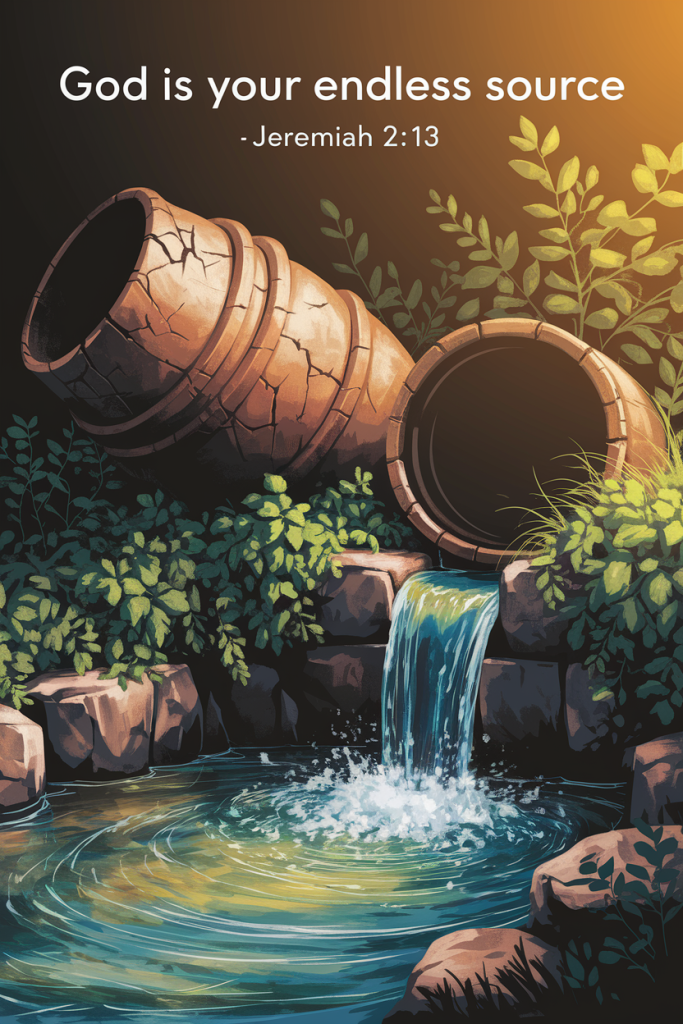
Jeremiah 2:13 contains a pointed metaphor from God: “For my people have committed two evils; they have forsaken me, the fountain of living waters, and hewed them out cisterns, broken cisterns, that can hold no water.”.
In ancient times, a cistern was a man-made reservoir for rainwater – useful but stagnant, and prone to cracking. God basically says, “I offered you fresh, flowing water, and you traded it for leaky pits!”
It’s a heart-check for all of us: Are we trying to satisfy our thirst with things that can’t hold water? The world offers plenty of “wells” that promise satisfaction – success, relationships, entertainment, etc. – but they often turn out to be broken cisterns that leave us thirsty.
God alone is the fountain of living water that never fails. He invites us to come to Him, the source, instead of trying to drink from substitutes.
The concept of “living water” comes to full bloom in the New Testament with Jesus. We already saw it in His conversation with the Samaritan woman. Jesus used the phrase “living water” to describe the eternal life and spiritual satisfaction He gives.

Later in John’s Gospel, Jesus stands up at a feast in Jerusalem and cries out: “If any man thirst, let him come unto me, and drink. He that believeth on me… out of his belly shall flow rivers of living water.”.
John explains that Jesus was talking about the Holy Spirit, who would be given to believers. In other words, when you believe in Jesus, God’s Spirit comes to live in you – an internal well springing up with life. The thirst of the human soul is met from within by God Himself!

What a promise: not only do we get a drink, but we become a source of life to others. Jesus fulfills the Old Testament hopes by providing a never-ending well.
As He told the Samaritan woman, “Whosoever drinks of this water shall never thirst”.
That doesn’t mean we never feel spiritual dryness as Christians, but it means the solution is always right at hand – we can turn inward to prayer and upward to God, and find the Holy Spirit ready to refresh us. Jesus is always accessible, like a personal well in our heart.
It’s also worth noting how inclusive this living water promise is. In that John 7 scene, Jesus invited “anyone” who is thirsty.
In Revelation, the last book of the Bible, we hear a similar invitation: “Whosoever will, let him take the water of life freely.” (Revelation 22:17).
God’s heart is that everyone would come and drink.
In fact, the Spirit and the Bride (symbolic of the Church) are saying “Come!” – God wants to share this living water. And in Revelation 21:6, God declares, “I will give unto him that is athirst of the fountain of the water of life freely.”
No charge, no barrier – just grace.
All these threads weave together a beautiful truth: The literal wells of the Old Testament were hints and pictures of the deeper spiritual “well” we find in Jesus.
The refreshing water that saved lives in the desert is a small taste of the eternal life Jesus gives. The joyful drawing of water in Isaiah’s prophecy finds its fulfillment in the joy of salvation through Christ.
And where the Old Testament spoke of God as the “fountain of living waters,” Jesus boldly stood up and essentially said, “That’s me. Come to me and drink.”
So if you ever hear a Bible story about a well and think, “So what?”, remember this: every well points us to the character of God – a God who supplies our needs and longs to satisfy our deepest thirst.
They point forward to Jesus, who didn’t just find a well or give water; He IS the well of living water.
Drawing Water with Joy: Lessons for Us Today
Okay, these ancient well stories are fascinating – but how do they touch our lives now? Let’s bring it home with some practical takeaways for modern believers. Imagine your life as a journey through a land that sometimes feels spiritual dry.
What can the wells of the Bible teach you on Monday morning when you’re weary or worried? Here are a few lessons from the wells, offered in the same spirit of honesty and encouragement we find in Scripture:
God sees you and cares for you (Hagar’s lesson).
Hagar named that well Beer-lahai-roi – “the well of the Living One who sees me” – after God met her in her lowest moment. You might feel alone or mistreated like Hagar did, but you are not invisible to God.
He is El Roi, the God who sees. If you’re crying out in the desert, He hears you. Ask Him to open your eyes to the “well” of His provision nearby. It might be a Scripture that speaks to you, a person He sends to encourage you, or even a new opportunity you hadn’t considered.
Trust that God will provide exactly what you need, when you need it. He did it for Hagar; He will do it for you.
Keep digging and don’t give up (Isaac’s lesson).

Maybe you’re facing conflict or obstacles as you try to follow God or provide for your family. Isaac literally dug multiple wells only to have strife over them, over and over, until finally there was peace (Genesis 26).
He could have quit after the first or second dispute, but he persevered and God made room for him. In the same way, don’t quit seeking God’s blessing just because you hit some opposition. Keep praying, keep doing what’s right, keep “digging.”
In time, God will lead you to your Rehoboth – a place of fruitfulness and rest. And remember Isaac’s calm faith; he didn’t fight for his rights even though stopping up someone’s well was basically an act of war in those days.
Sometimes the best thing we can do is step back, let God handle the injustice, and move forward trusting He’ll provide elsewhere. God honored Isaac’s faith, and He’ll honor yours too.
Meet God in the everyday moments.

The women going to the well for water weren’t expecting to meet their future or meet God – but they did. You don’t have to be in a church or on a mountaintop retreat to have a spiritual encounter; it can happen in your car, at your job, or at home doing laundry.
What makes the difference is an openness to God. The Samaritan woman’s life changed when she had an honest conversation with Jesus. We can cultivate that kind of openness by turning our thoughts to God throughout the day.
Maybe say a quick prayer while waiting in line, or put on worship music while cooking dinner. Invite God into your ordinary routines, and you might find your “well moments” – little breakthroughs of insight, peace, or divine timing.
Don’t settle for broken cisterns.
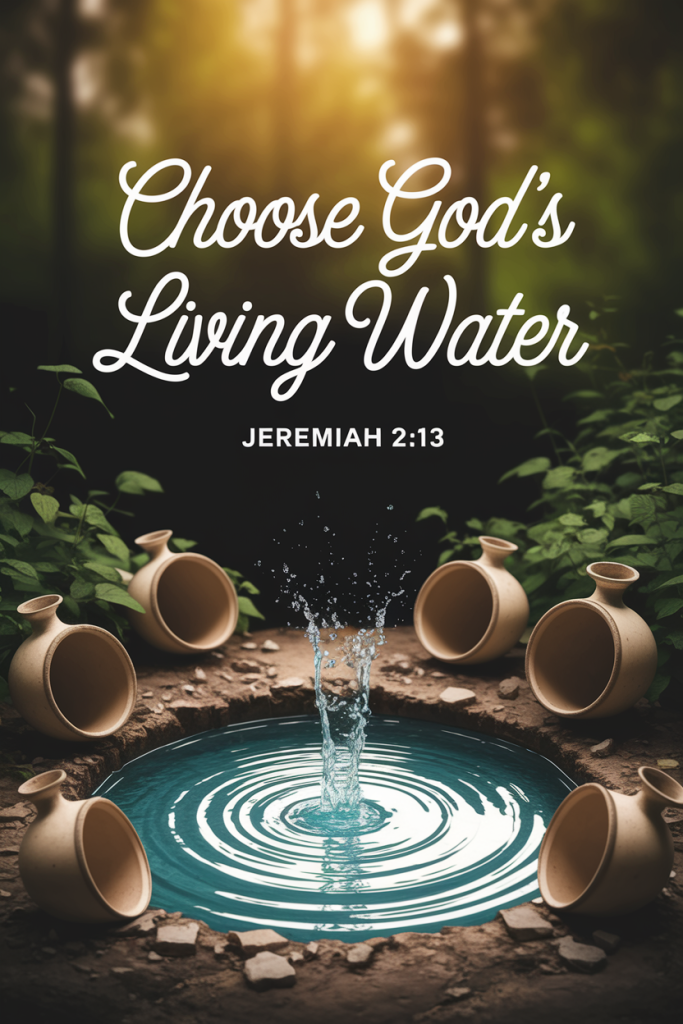
Be real with yourself: what “wells” are you drinking from? We all have our go-to sources when we feel empty – maybe it’s binge-watching shows, scrolling social media, shopping, or chasing career success.
Those things might give a momentary buzz, but they don’t truly satisfy our soul’s thirst. God calls them “broken cisterns” for a reason – they leak! If you’ve been going to one of those repeatedly and still feel dry, it’s time to return to the true source.
Jesus said, “If you knew the gift of God…” you would ask Him for living water. Sometimes we don’t realize how good the Father’s water is, so we keep trying other stuff.
Let’s “know the gift” and go straight to Jesus. That might look like carving out time to read Scripture and pray, joining a community of believers, or simply confessing, “Lord, I’ve been trying to quench my thirst my own way, but I need You.”
Let Jesus fill you – and become a well for others.

Jesus promised that whoever believes in Him will have rivers of living water flowing from within. That means He not only wants to satisfy you, but also to use you to bless others.
When you’re filled with the Holy Spirit’s love and joy, you become like a well for people around you. Your words can refresh someone’s weary heart (Proverbs 10:11 calls the mouth of the righteous “a well of life”).
Your kindness can be the cup of cold water that revives a tired soul. So stay filled up by staying close to Jesus. Drink deeply of His Word and His presence, so that when others come to you, they’ll taste His love overflowing.
We live in a world where so many are spiritually parched – you might be the closest thing to an oasis your neighbor or coworker encounters! What an opportunity to quietly share the life of Christ through your life.
Lastly, remember that joy Isaiah spoke about: “with joy you will draw water from the wells of salvation”.

There is joy in this journey. Christians sometimes get a reputation for being dour or dehydrated – but we of all people have reason to be refreshed! If we find ourselves joyless, it might be a sign we need to go back to the well and drink again.
Jesus has not run dry, and He never will. Take time to rejoice in your salvation, to thank God for even the small “sips” of grace each day, and you’ll find joy bubbling up.
Conclusion: Come to the Well
The story of the Bible could, in one sense, be told as a tale of wells. It starts with God providing rivers in Eden, continues with Him meeting people at wells in the desert, and ends with Him inviting everyone to drink freely of the water of life. Wells mark the places where God showed up and needs were met – whether physical thirst or the thirst of the soul.
And here’s the thing: God is still in the business of digging wells in our wilderness and guiding us to them. He is still the same God who sees us, who provides for us, and who even is Himself the water that gives life. Jesus Christ, the same yesterday, today, and forever, stands at the well and calls out, “If you’re thirsty, come to Me and drink.”

So wherever you are on your journey – if you’re rejoicing by a full well, or trudging through a dry valley – know that the Lord is with you. He can turn even the “Valley of Baca” (valley of weeping) into a place of springs (Psalm 84:6). In plain terms: your hardest times can become wells of encounter with God.
Let’s be those who dig into God’s promises, who sing “Spring up, O well!” in faith, and who draw water with joy from the great salvation God has given us. The world may offer many wells, but only one gives living water. Jesus is that well – and He’s forever free and overflowing. Come and drink, and let your soul be satisfied.
Call to Action: The Question That Demands an AnswerIn Acts 2:37 Peter and the Apostles were asked the question – What Shall We do? And in Acts 2:38 Peter answered, Repent, and be baptized every one of you in the name of Jesus Christ for the remission of sins, and ye shall receive the gift of the Holy Ghost. For the promise is unto you, and to your children, and to all that are afar off, even as many as the Lord our God shall call. Do you understand this? After hearing the gospel and believing, they asked what should would do. The answer hasn’t changed friend, Peter clearly gave the answer. The question for you today is, Have you receieved the Holy Spirit Since you believed? If you’re ready to take that step, or you want to learn more about what it means to be born again of water and Spirit, visit: Come, and let the Spirit make you new. |