

Quick Overview of This Bible Study…
Short on time? I have created a short slide show presentation of some key takeaways in our study. The complete, more comprehensive bible study is below…
Patience in the Bible is more than passive waiting – it’s an active, faith-filled endurance. Biblical patience (often called “longsuffering”) is the ability to trust God’s timing and remain steadfast under trial.
It is a fruit of the Spirit, reflecting God’s own character of mercy and forbearance. In Scripture, patience is linked with hope, maturity, and unwavering faith in God’s promises.
In this encouraging study, we’ll explore what the Bible teaches about patience and why it’s so vital for spiritual growth. We’ll journey through five devotional-style modules – each a heart-renewing segment with Scripture, insights, life application, and encouragement – to help you grow in “faithful endurance.”
Along the way, we’ll see how patience is woven through the stories of Job, Abraham and Sarah, Joseph, Simeon and Anna, and ultimately how it points us to Jesus. By the end, you’ll have practical tools and inspired confidence to cultivate patience in your daily walk. Let’s dive in!
Module 1: Understanding Patience in the Bible

Key Scripture: “Knowing this, that the trying of your faith worketh patience. But let patience have her perfect work, that ye may be perfect and entire, wanting nothing” (James 1:3–4, KJV).
Defining Biblical Patience:
In the New Testament, the word patience often comes from the Greek hupomonē, meaning steadfast endurance. It’s not just waiting, but persevering with hope through difficulties.
James writes that when our faith is tested, it produces patience, and this patience develops us toward spiritual maturity. Similarly, Paul says, “tribulation worketh patience; and patience, experience; and experience, hope”.
In other words, every trial we endure with faith is building strong character and a hope that “maketh not ashamed” – a hope firmly rooted in God.
Patience as a Fruit of the Spirit:
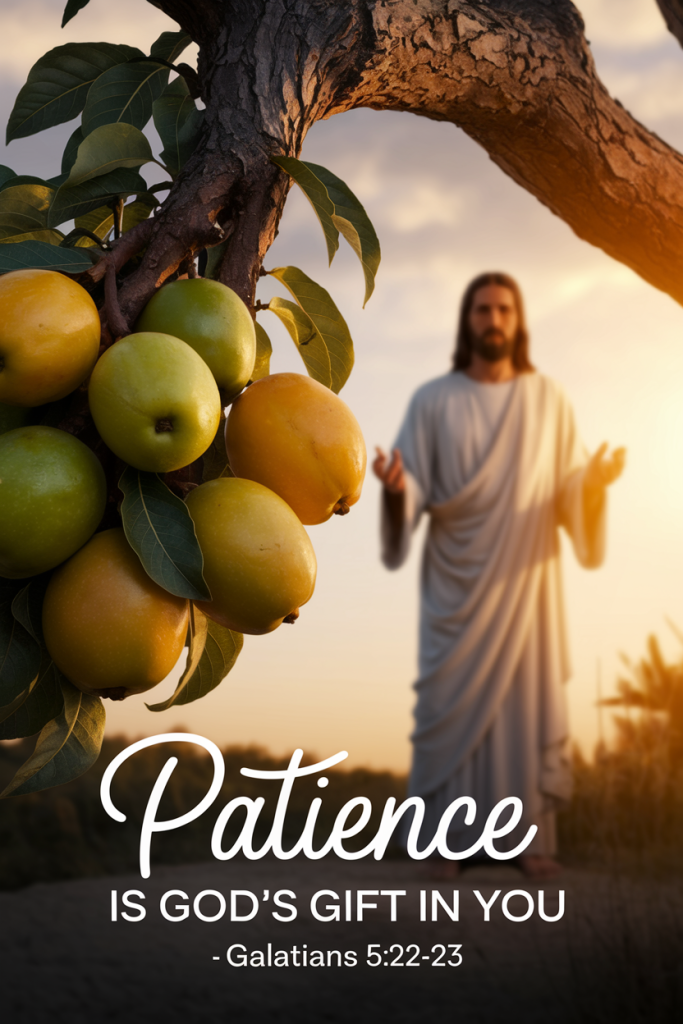
Patience isn’t only developed by trials; it’s also a gift grown in us by the Holy Spirit.
Galatians 5:22–23 lists “longsuffering” (another word for patience) as part of the fruit the Spirit produces in a believer.
This means true patience reflects God’s love at work in us. Think of it as a facet of God’s own character being formed in your heart – His slow-to-anger mercy (Exodus 34:6) now growing in you.
As we stay connected to Christ, like branches to a vine, the nourishing sap of the Holy Spirit helps us bear patience naturally (John 15:5). When impatience flares, it’s a signal to yield to the Spirit’s gentle nudge and let His fruit ripen in us.
Biblical Examples of Patience:
Job – Enduring Unimaginable Hardship:
Job is synonymous with patience. In one day he lost his children, wealth, and health, yet he responded in worship saying, “the LORD gave, and the LORD hath taken away; blessed be the name of the LORD”.
In all his suffering, “Job sinned not, nor charged God foolishly” (Job 1:22) – he never cursed God or abandoned his faith.
He wrestled honestly, but ultimately declared, “Though He slay me, yet will I trust in Him” (Job 13:15). In the end, “the Lord turned the captivity of Job” and “blessed the latter end of Job more than his beginning”, restoring twice what he lost.
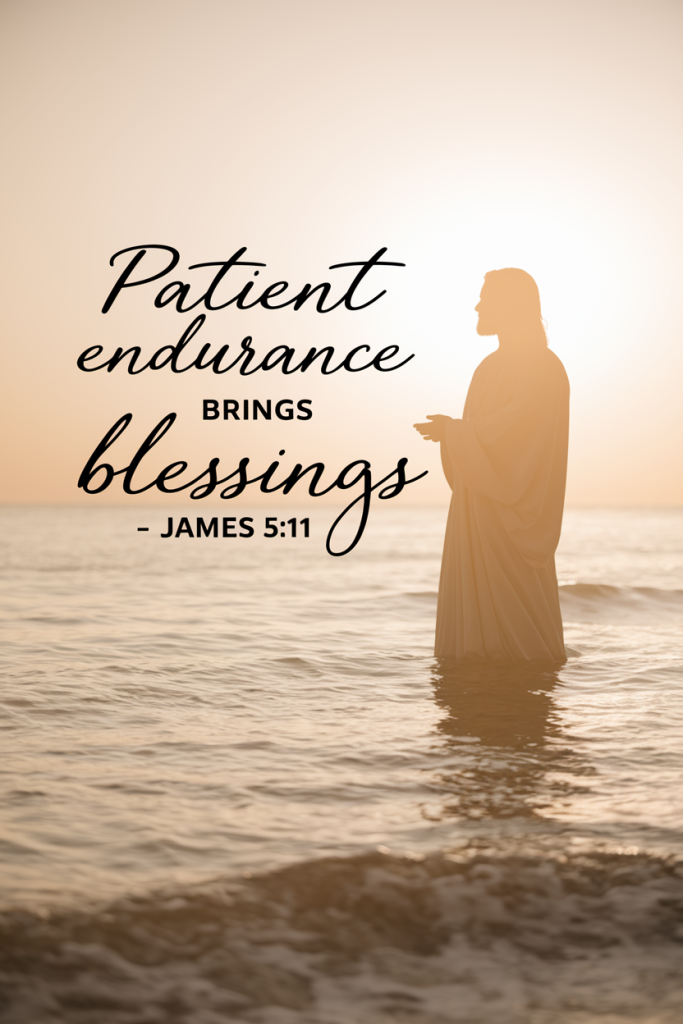
Job’s story encourages us that patient trust amid pain is precious to God and will be rewarded in His time (James 5:11). It also foreshadows Christ’s own innocent suffering and subsequent glorification – a reminder that God can turn even tragedy into triumph.
Abraham and Sarah – Waiting on the Promise:
Abraham was 75 when God promised him a son, and 25 long years went by before Isaac was born.
Through that season of waiting, Abraham’s faith sometimes wavered, but ultimately he “staggered not at the promise of God through unbelief” (Romans 4:20).
Sarah initially laughed in disbelief at the idea of having a child in old age (Genesis 18:12), yet when Isaac finally arrived, she laughed with joy: “God hath made me to laugh, so that all that hear will laugh with me”biblegateway.com.
The Bible notes Abraham was “an hundred years old” when Isaac was born, a testimony that God’s promise may tarry but will surely come to pass (Genesis 21:5)kingjamesbibleonline.org.
Their patience wasn’t perfect, but God was faithful. Isaac’s birth in their old age not only fulfilled God’s word to Abraham, it also foreshadowed the miraculous birth of Jesus – the ultimate promised Son – born in God’s perfect timing to bring laughter and salvation to all who believe.
Life Application – Embracing the Growth:
When trials test your faith, remember they are producing something priceless in you.
Instead of praying only for the trial to end, also pray, “Lord, let this season accomplish in me what You intend. Teach me to trust You more.”
Memorize James 1:3–4 or Romans 5:3–4 and speak it over yourself when you feel like giving up. Remind your soul that waiting on God is not wasting time; it’s training time for your faith.
Just as weightlifting builds muscle, each spiritual test – big or small – is building endurance. Choose to “count it all joy” (James 1:2) knowing a greater perfection is coming forth.
Spiritual Encouragement:
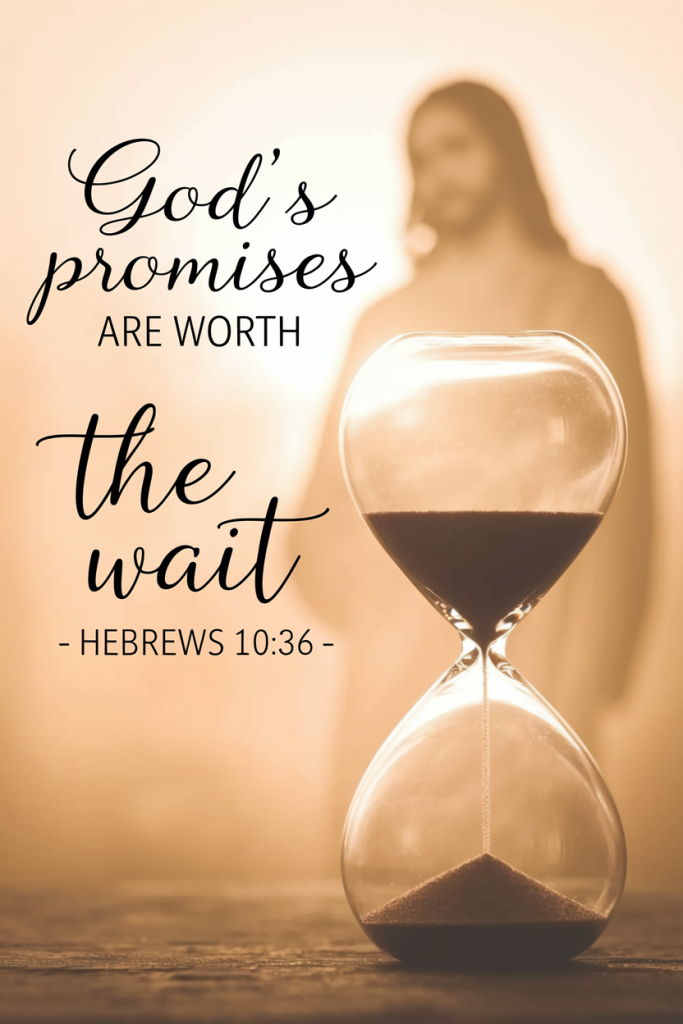
God sees your perseverance and is with you in every moment of waiting.
Hebrews 10:36 assures us, “For ye have need of patience, that, after ye have done the will of God, ye might receive the promise” biblegateway.com.
Every promise of God has an appointed season. If you’re in the in-between, take heart – delay is not denial.
The Lord who began a good work in you will carry it on to completion. Lean into His strength and keep going. You are being perfected by the Perfect One Himself.
Module 2: Patience in Trials and Tribulations
Key Scripture: “Rejoicing in hope; patient in tribulation; continuing instant in prayer” (Romans 12:12, KJV).
Trusting God in Difficult Times:

The Bible never says we won’t face trials; rather, it tells us how to face them – with hope, patience, and constant prayer. Being “patient in tribulation” means to endure under pressure without losing faith.
It’s the picture of a steadfast believer who, even in storms, fixes their eyes on Jesus and refuses to let go of hope.
King David exemplified this when he wrote, “I waited patiently for the LORD; and he inclined unto me, and heard my cry” kingjamesbibleonline.org.
David was often pursued by enemies and in desperate situations, yet he learned to wait on God’s deliverance.
In time, God lifted him out of “the miry clay” and set his feet upon a rock (Psalm 40:1–2).
When we endure hardship patiently, we echo the faith of the prophets and apostles. The Apostle Paul, who suffered imprisonment, beatings, and shipwrecks, could still say “we glory in tribulations” because those hardships taught him perseverance and hope.
Ultimately, patient endurance in trials honors God – it says we trust His sovereignty more than our sight.
We also reflect Jesus, who for the joy set before Him endured the cross, despising its shame (Hebrews 12:2).
Christ in His earthly life experienced hunger, fatigue, opposition, and excruciating pain, yet He patiently submitted to the Father’s will at every step. His endurance accomplished our salvation, proving that suffering is not meaningless when entrusted to God.
Handling Delay and Disappointment:
One of the hardest tests of patience is delayed hope. “Hope deferred maketh the heart sick” biblegateway.com says Proverbs 13:12, poignantly capturing how we feel when prayers seem unanswered or dreams are on hold.
Think of the story of Joseph. God gave Joseph a vision of greatness as a youth, but immediately his life plunged into a series of heartbreaking setbacks – betrayed by his brothers, sold into slavery, falsely accused and thrown into prison (Genesis 37–40).
Year after year passed with no fulfillment of the dream. Yet, Scripture shows that “the LORD was with Joseph” through it all (Genesis 39:21) and that Joseph remained faithful, using his gifts even in prison.
In the darkest dungeon, Joseph interpreted others’ dreams and quietly served, demonstrating patience and integrity.
The psalmist writes, “the word of the LORD tried him” during that time. At the right moment – after 13 years of waiting – God vindicated Joseph, promoting him to Egypt’s second-in-command overnight.
Joseph then understood God’s purpose in every delay: “Ye thought evil against me; but God meant it unto good... to save much people alive”. His long trial had positioned him to save his family (and nation) from famine.

Joseph’s story powerfully foreshadows Jesus: beloved of His Father, betrayed for silver, falsely accused, yet eventually exalted to save many. It reminds us that God’s timing is perfect. Even when people or circumstances intend harm, God can weave it into a greater good (Romans 8:28).
When you face disappointments – a closed door, a postponed blessing – remember Joseph. It may be that the Lord is arranging something better than you imagined. Your job is to stay faithful where you are, as Joseph did in each season. Do your best in the “small” tasks and trust God with the big picture.
Case Study – Joseph’s Patient Faith:
We can draw practical lessons from Joseph’s patience.
(1) Keep your character – Joseph did not let bitterness poison him. In Potiphar’s house and in prison, he acted with honor, showing that patience often looks like doing the right thing even when unrewarded.
(2) Keep using your gifts – Joseph interpreted dreams and helped others in jail. He didn’t say “I’ll serve God when I’m out of this situation.” Patient people serve in the waiting room.
(3) Keep trusting God’s promise – Though he spent his prime years unjustly confined, Joseph clung to the dream God gave him.
When Pharaoh’s butler was restored to position, Joseph asked him to remember him, indicating Joseph still believed he didn’t belong in prison (Genesis 40:14).
He anticipated God’s deliverance. Likewise, don’t abandon the promises God planted in your heart. Continue preparing for them.
(4) Forgive and see God’s hand – When Joseph finally faced his brothers, he forgave them, recognizing God’s sovereignty in the entire journey. Patience and forgiveness often go hand in hand.
Holding onto anger or blame can stall the progress God wants in your life. Joseph’s patient faith opened the door to reconciliation and restoration.
Life Application – Finding Purpose in Pain:
If you are in a season of suffering or delay, write down what you believe God has promised or called you to. Place that note somewhere visible. When discouragement hits, pray over those promises.
Remind yourself that every day in God’s will is one day closer to the fulfillment, not farther. Make a gratitude list of how God is sustaining you in the meantime.
Like Joseph, look for small ways to serve or grow right where you are. Maybe it’s volunteering, learning a new skill, or simply cultivating a positive attitude at work.
These “little” faithfulnesses are your offering of patience to God. They declare, “Lord, I trust Your timing.”
Also, practice relinquishing your timeline. Verbally say to God, “I surrender this into Your hands. Have Your way, in Your time.” There is a deep peace that follows such surrender.
Spiritual Encouragement:
God’s delays are not denials. They are often preparation or protection. Trust that God is working behind the scenes.
Jesus told His disciples, “In the world ye shall have tribulation: but be of good cheer; I have overcome the world” (John 16:33).
Our hope in trials is anchored in Jesus’ victory. No hardship can separate us from His love (Romans 8:35–39).
Take courage – the same God who was with Joseph in prison, with Daniel in the lions’ den, and with Paul in the storm, is with you in your trial.
He will never leave you or forsake you. Lean on His promises and look forward to the good He is crafting from your situation. Your perseverance will yield a rich harvest.
Module 3: Cultivating Patience Through Prayer

Key Scripture: “Be careful for nothing; but in every thing by prayer and supplication with thanksgiving let your requests be made known unto God.
And the peace of God, which passeth all understanding, shall keep your hearts and minds through Christ Jesus” (Philippians 4:6–7, KJV).
Prayer – The Pathway to Patience:
When anxiety, impatience, or frustration flood our hearts, prayer is the God-given outlet to release those burdens. “Be careful for nothing” means “do not be anxious about anything”. Instead of stewing in worry or impatience, God invites us to pray about everything.
Through prayer and supplication (earnest pleading) mixed with thanksgiving, we can offload our cares onto the Lord.
The promise? His incomprehensible peace will guard our hearts and minds in Christ. This peace is the soil in which patience grows. It’s hard to be patient when your heart is in turmoil, but when God’s peace settles in, you can wait calmly for His answer.
How does this work practically?
Imagine you’re waiting for a job breakthrough or healing in a relationship. Worry whispers, “What if this never happens?”
Impatience prods you to take rash action or to complain. Instead, when those feelings rise, take them to God in prayer immediately.
Even if you have to step aside for a few minutes at work or jot a quick prayer in a journal, turn anxious moments into prayer moments. Say, “Lord, I feel worried about this delay.
I surrender my timeline to You. Please give me the patience and faith to wait well.
I thank You that You hear me and You’re working this out for good.” As you consistently replace worry with prayer, you’ll notice a steadier heart.
The situation may not instantly change, but you will be changed – calmer, more trusting, more patient. Over time, this becomes a beautiful habit: prayer-conditioned patience.
Waiting on the Lord:
The psalmist counsels, “Wait on the LORD: be of good courage, and he shall strengthen thine heart: wait, I say, on the LORD”.
Waiting on God in prayer is not a passive sitting around; it’s an expectant, courageous seeking of God. It’s what Simeon and Anna did as they yearned for the Messiah.
Simeon “waited for the consolation of Israel” (the coming Savior) and spent his days in the Temple listening to the Holy Spirit.
Anna “served God with fastings and prayers night and day” as a widow of 84, patiently hoping to see the promised Christ (Luke 2:37–38).
God rewarded their patient devotion – both encountered the baby Jesus in the Temple and rejoiced in the fulfillment of God’s word. Simeon took Jesus in his arms and praised God, and Anna “spake of him to all them that looked for redemption in Jerusalem”.
Their decades of prayerful waiting were not in vain. In the same way, our waiting seasons are where we can draw closest to God. Through prayer, fasting, and worship, we become more attentive to His voice.
Often, we discover that the greater reward in waiting is not the thing we were waiting for, but a deeper relationship with God Himself.
Patience-Building Prayer Habits:
Morning Surrender: Begin your day by surrendering your schedule and goals to God. A simple prayer like, “Lord, I trust You with today – help me to be patient and open to Your plans,” can set a tone of patience.
When unexpected delays or interruptions come, recall that morning prayer and respond with, “Okay, God, You’ve got this, I’ll flow with You.”
Breath Prayers in Tension: When you feel impatience rising (e.g., stuck in traffic, or waiting for someone running late), use a “breath prayer.”
Inhale deeply and pray in your mind, “Lord Jesus…” then exhale, “…give me Your peace.” Repeating this slows your heart rate and recenters you on Christ. It’s amazing how a minute of inviting Jesus into the moment can diffuse frustration.
Thanksgiving Lists: Incorporate gratitude in your prayers especially while waiting. Thank God for three things each day. Gratitude shifts your focus from what you lack to what you have.
As you thank God, your perspective widens – you remember His past faithfulness, which makes it easier to trust His timing now. Giving thanks also fulfills the “with thanksgiving” part of Philippians 4:6, releasing joy into your spirit.
Impatience often comes from a place of perceived scarcity or fear, whereas gratitude affirms abundance and love, nurturing patience.
Journal Your Prayers: Writing prayers in a journal can be therapeutic and enlightening. Pour out your hopes, fears, and desires to God on paper. Over time, you’ll see patterns of God’s responses.
Journal entries become “stones of remembrance” of how God answered or sustained you. Knowing that you’ve entrusted matters to God helps you rest instead of fret.
When you catch yourself wanting to take matters into your own hands prematurely, revisit your journal and see how far God has brought you. This rekindles patience to continue trusting His process.
Life Application – Active Waiting:
To wait on God doesn’t mean doing nothing; it means doing the right things while you wait. Consider making a “waiting plan” for yourself.
For example, if you’re waiting for a new job, your plan might include:
- daily prayer for guidance
- sending out applications in faith
- volunteering or taking a course to improve your skills
- and connecting with encouraging mentors or friends.
If you’re praying for a loved one to come to faith, your waiting plan might involve: praying Scriptures over them, showing them consistent love and Christ-like character, and perhaps fasting once a week for their soul.
Having a prayerful action plan gives you a sense of purpose in the delay and keeps you from stagnating. You are actively partnering with God, like a farmer who plants seeds and then prays for rain.
You do what you can and trust God to do what only He can. This balance of action and surrender is the sweet spot of patience.
Spiritual Encouragement:
There is “a peace of God, which passeth all understanding” promised to you when you pray. Jesus often withdrew to pray, sometimes spending entire nights in prayer, because He lived in complete dependence on the Father.
As you cultivate a life of prayer, you are walking in Jesus’ footsteps. Over time, you will find that you handle delays or trials with more grace. Others may even marvel at your composure.
This is not natural temperament – it’s the work of God’s Spirit in you, a result of time spent in His presence. Isaiah 40:31 says “they that wait upon the LORD shall renew their strength”.
God will renew you as you wait on Him. You will run and not grow weary, walk and not faint. Take that promise to heart. In prayer, you exchange your weakness for His strength.
You are not just killing time in waiting; you are killing impatience and growing strong wings of faith to soar above the storms. Keep praying, keep trusting – your Father in heaven delights to support and sustain you.
Module 4: Patience with Others

Key Scripture: “With all lowliness and meekness, with longsuffering, forbearing one another in love” (Ephesians 4:2, KJV).
Called to Relational Patience:
The Bible not only speaks of patience in relation to circumstances, but also patience with people.
Ephesians 4:2 paints a picture of how Christians should treat each other – with humility, gentleness, and longsuffering (patience), “bearing with one another in love.”
To forbear means to patiently tolerate and to hold back from retaliation or irritation.
Why is this necessary? Because even in the best of communities or families, we will rub each other the wrong way at times. We all have quirks, weaknesses, and moments of selfishness.
Relational patience is the grease that keeps the gears of fellowship turning smoothly.
Colossians 3:12–13 echoes this: as God’s chosen people, we’re to “put on… mercies, kindness, humbleness of mind, meekness, longsuffering”, “forbearing one another, and forgiving one another… even as Christ forgave you”.
Our model is Jesus – consider how patient He is with us. Christ continually shows mercy despite our failings, so He empowers us to extend the same grace to others.
In the Gospels, Jesus’ interactions brim with patience. He gently taught His disciples truths they were slow to grasp, repeating lessons and parables until understanding dawned (Mark 8:17–21).
He didn’t dismiss Peter after his impulsive mistakes, but kept refining him in love.
Jesus even showed patience toward those who opposed Him – for instance, when the Pharisees complained, He would often answer with wisdom rather than wiping them out in anger.
Ultimately on the cross, Jesus prayed, “Father, forgive them; for they know not what they do.” That is infinite patience and love! If the Spirit of Christ lives in us, He will prompt us to respond to others with that same longsuffering heart.
Practical Ways to Show Patience in Relationships:
It’s been said that patience is the oil that takes the friction out of life. Nowhere is that more true than in our relationships. Here are a few practical “oil applications” to reduce friction with people in your life:
Listen Actively: James 1:19 advises us to be “swift to hear, slow to speak, slow to wrath.”
Practice really listening when someone is talking, especially if they’re upset or taking a long time to express themselves. Instead of formulating your response or getting annoyed at their pace, focus on their words and feelings.
Active listening (nodding, asking clarifying questions, empathizing) demonstrates value and respect. It defuses tension and helps you respond patiently because you understand better.
Often, impatience in conversation comes from assuming we know what the other person will say or from discomfort with silence. Embrace a bit of silence – it gives others space to share and shows you care.
Forgive Freely: When Peter asked Jesus “Lord, how oft shall my brother sin against me, and I forgive him? till seven times?” Jesus replied, “I say not unto thee, Until seven times: but, Until seventy times seven” (Matthew 18:21–22).
In other words, don’t put a limit on forgiveness. People will disappoint or hurt us – sometimes repeatedly. Patience with others means we don’t keep a tally of offenses.
We choose to forgive as Christ forgave us. This doesn’t mean ignoring healthy boundaries, but it does mean refusing to harbor grudges. Forgiveness is a decision and sometimes a process; it may need to be reaffirmed in prayer many times.
But each time you forgive, you release yourself from bitterness and allow patience to fill that space. A forgiving heart is a patient heart, because it lets go of the “debt” you feel someone owes you. It reflects Jesus’ longsuffering with us.
Choose Empathy over Judgment:
Impatience often flares when we judge someone’s actions or motives rashly. For example, if a coworker is late, we might think, “They’re so irresponsible!” and feel irritated.
But choosing empathy sounds like, “I wonder if they hit traffic or had a rough morning with their kids.” Empathy tries to see from the other’s perspective. It asks, “What might they be going through?”
This shift softens our stance. Even if discipline or truth-telling is needed, approaching from empathy leads to kindness rather than anger.
Colossians 3:13 literally says to “bear with each other” – implying a load-sharing.
Maybe that person is carrying a heavy burden we know nothing about. If we bear a bit of it with them through understanding, we fulfill the law of Christ (Galatians 6:2).
Next time someone’s behavior tempts you to snap, take a breath and imagine yourself in their shoes. Deliberately respond in a way you would appreciate if you were them. This is love in action and will cultivate patience in you.
Patience in Marriage, Family, and Church:
These are the arenas where patience is tested daily! In marriage, spouses see each other’s best and worst. Little habits can annoy over time.
A key to a loving marriage is extending grace for those small irritations and kindly communicating when something truly bothers you – not with a harsh tone, but with patience. The phrase “forbearing one another in love” biblegateway.com is golden for marriage.
It means sometimes you simply tolerate and overlook minor flaws because you love the person more than you love being right or comfortable. The same goes with children or siblings.
Children, especially, require enormous patience as they learn (and sometimes repeatedly test) boundaries. Remember how patient God is with us as we slowly grow in obedience.
Model that to your kids. Instead of snapping at a child who’s asking “Why?” for the tenth time, take a moment to answer or gently redirect. In church or community, patience preserves unity.
Personal differences in how we worship, lead, or express opinions can cause friction. Ephesians 4:3 urges “endeavoring to keep the unity of the Spirit in the bond of peace.” Right before that, it lists humility, gentleness, and patience biblegateway.com as the ingredients for unity.
When conflict arises, a patient person seeks to understand, avoids rush to judgment, and gives God room to work on hearts. Sometimes it means biting your tongue instead of retaliating to a rude comment, and praying instead.
Other times it means sticking with someone who is growing slowly, not giving up on them.
Dietrich Bonhoeffer said, “Christian community is not an ideal we have to realize, but rather a reality created by God in Christ in which we may participate.”
Participating well means embracing one another’s imperfections and trusting God to refine all of us in His time.
Life Application – Practicing Patience Daily:
Identify one relationship in your life where you often feel impatience. It could be a coworker who chats too much, a family member who tests your nerves, or an online acquaintance with whom you disagree.
This week, make a concrete plan to show patience in that relationship. Maybe it’s deciding not to honk when that slow driver (who always seems to be in front of you) appears – instead, pray for them.
Maybe it’s letting your spouse finish their story completely before you interject. Or setting aside time to give undivided attention to that one friend who really needs a listening ear.
Keep a “patience diary” for a few days: note situations where you succeeded in being patient and situations where you slipped. Reflect on the triggers that made you impatient and brainstorm a better response for next time.
For instance, if you lost patience because you were tired or hungry, the simple fix might be ensuring you rest or snack before engaging in a challenging interaction.
If certain negative thoughts fuel your impatience (like “They always do this!”), challenge those thoughts with truth (“Nobody is perfect, and I probably annoy others too. I choose grace.”).
Celebrate small victories – each time you respond with patience when you previously wouldn’t have, rejoice that the Holy Spirit is at work in you!
Spiritual Encouragement:
In a world short on tolerance, your decision to be patient with others shines the light of Christ. Jesus said that by our love the world will know we are His disciples (John 13:35). Patience is a form of love.
1 Corinthians 13:4 famously begins, “Love suffereth long, and is kind” – love is patient and kind. When you bear with someone difficult, you are literally embodying godly love.
It might feel unnoticed or unrewarded, but God sees. “Charity…beareth all things, believeth all things, hopeth all things, endureth all things” (1 Corinthians 13:7).
Those who endure in loving patience will reap reward. Think of Jesus again: how patient He was with the twelve disciples who often misunderstood Him, yet those were the men who went on to turn the world upside down for the Gospel.
Your patience with someone could be the bridge God uses to transform their life. And even if it doesn’t change them quickly, it will change you. You’ll become more like Jesus, and there is no greater joy than that.
Module 5: Patience and God’s Timing
Key Scripture: “To every thing there is a season, and a time to every purpose under the heaven” (Ecclesiastes 3:1, KJV).
Trusting God’s Perfect Timing:
Ecclesiastes 3 reminds us that life unfolds in seasons – “a time to be born, and a time to die; a time to plant, and a time to pluck up...” (3:2). There is an appointed time for every purpose by God’s design kingjamesbibleonline.org.
Patience is essentially faith in God’s timing. When we lack patience, we’re often trying to rush a season or cling to one that’s passing. But just as we cannot force winter to turn into spring overnight, we cannot hasten God’s purposes beyond His ordained timing.

When we truly believe that “He hath made every thing beautiful in his time” (Ecclesiastes 3:11), we can relax and trust the process.
This applies to our personal dreams, to the fulfillment of God’s promises, and to global events.
The Jews waited centuries for the Messiah; “when the fulness of the time was come, God sent forth his Son” (Galatians 4:4). Jesus began His ministry at “about thirty years of age” (Luke 3:23) – not earlier, not later, but at the right moment.
Even in His ministry, Jesus often said, “My hour is not yet come” (John 2:4) until the appointed time for His sacrifice drew near. If our Lord lived by the Father’s clock, how much more should we humbly accept that Father knows best when scheduling our lives.
Sometimes impatience tempts us to take shortcuts (think of Abraham growing impatient and fathering Ishmael). But an Ishmael birthed in haste can create strife that lasts years.
In contrast, waiting for Isaac – the child of promise – brings lasting blessing biblegateway.com. Hebrews 10:36 encourages, “For ye have need of patience, that, after ye have done the will of God, ye might receive the promise” biblegateway.com.
There is often a gap between doing God’s will and receiving His promises – that gap is bridged by patience. It’s comforting to know that God sees the end from the beginning (Isaiah 46:10).
What feels like delay to us might be profound preparation in God’s eyes. The story of Simeon and Anna (Luke 2:25–38) illustrates this beautifully. They lived in a period of prophetic silence (400 years had passed since a word from the Lord), yet they held onto hope.
Simeon was assured by the Holy Spirit that he would see the Christ before death. He entered the Temple “by the Spirit” at the precise day Mary and Joseph came to present baby Jesus.
God’s promise met its fulfillment right on time. Simeon embraced Jesus and declared he could “depart in peace” now that his eyes had seen God’s salvation.
Anna, who had been widowed for decades, also came at that same hour. Had she given up praying or left the Temple out of impatience, she would have missed that divine appointment.
But she didn’t – she was there, “coming in that instant” and began to give thanks and spread the news. Their long wait was not wasted; it was saturated with worship, and it climaxed in joy.
Inspirational Examples of God’s Timing:
- Simeon and Anna (Luke 2:25–38): As discussed, they exemplify patient faith. Simeon’s name means “God has heard,” fitting for a man who likely prayed daily for Israel’s consolation. Anna’s life shows that devotion in waiting is a powerful testimony – she likely encouraged others who were also “looking for redemption.” When Jesus arrived, she recognized Him immediately as the answer to years of prayers. Application: In seasons of waiting, immerse yourself in God’s presence like they did. You’re not just waiting for God; you’re waiting with God.
- David’s Road to Kingship: David was anointed in his youth but became king years later after many trials and patiently refusing to take matters into his own hands by harming King Saul. He often asked God, “How long?” in the Psalms, yet he also affirmed, “My times are in Thy hand” (Psalm 31:15). At the right time, Saul fell in battle and David took the throne. God’s timing vindicated David’s patience.
- Jesus’ Return: No discussion of God’s timing is complete without acknowledging the ultimate wait – the return of Christ. The early church lived in expectancy of Jesus’ Second Coming, and here we are 2000 years later still waiting. Scoffers may ask, “Where is the promise of His coming?” But Scripture assures us, “The Lord is not slack concerning his promise… but is longsuffering… not willing that any should perish” (2 Peter 3:9). God’s patience means salvation for more people. In the interim, we are called to wait eagerly yet patiently, doing the Master’s work. Jesus likened it to servants managing a household until the owner returns (Luke 12:35–40). We must not become impatient or fall asleep spiritually. God’s timing for Jesus’ return is precise; it will happen at the perfect moment. Every day of delay is a day of grace for someone to come to repentance. Understanding this helps us be patient with the state of the world, continuing in hope and mission rather than despair.
When God Says “Not Yet”:
Often we interpret silence or delays as “No” from God, when actually it might be “Not yet.” Patience is what enables us to live in the “not yet” with trust. Consider Jesus’ first miracle at Cana – He initially told Mary “Mine hour is not yet come” when she wanted Him to address the wine shortage.
Mary patiently trusted (telling the servants, “Do whatever He tells you”), and in a short time, Jesus did act, turning water into wine at the right moment. There’s a lesson: keep your hope quietly alive even when you hear “Not yet.”
In your spirit, you can say, “Alright, Lord, I’ll wait for Your ‘yes’ in Your timing.” This surrendered patience is powerful. It keeps you from running ahead of God, and it keeps you sensitive to His cues.
Often, between the “not yet” and the eventual answer, God is aligning circumstances or shaping our hearts to receive the blessing properly. Sometimes if we received what we wanted now, we wouldn’t be equipped to handle it. Trust that God’s preparatory work is as important as the promise itself.
Life Application – Aligning with God’s Timing:
To cultivate sensitivity to God’s timing, practice seeking His will in daily decisions. The more you attune to His guidance in small things, the more confidence you’ll have in His timing for big things.
Before making plans, pray like Moses, “If Your Presence does not go with us, do not send us up from here” (Exodus 33:15, NIV). This attitude of “God, I only want this if You’re in it” naturally produces patience, because you become willing to wait for God’s green light.
Another practical tip is to look for God’s peace as an umpire. Colossians 3:15 says “let the peace of God rule in your hearts”. If you lack peace about moving forward, that could be God signaling “wait.”
When it is God’s time, often He gives a supernatural peace and clarity, and doors open without you forcing them. If you’re straining and striving anxiously, it might be a sign to pause and pray.
Also, seek wise counsel. Sometimes God’s timing is confirmed through counsel of godly friends or mentors who might say, “Perhaps you should hold off on this decision,” or conversely, “I think the time is right.”
Finally, embrace contentment in the present (Philippians 4:11). Contentment is not complacency; it’s a heartfelt acceptance of where God has you now.
It’s good to have godly ambition and vision, but temper it with contentment, knowing that when God’s time arrives, He can bring opportunities and change in an instant.
Meanwhile, there is much to appreciate and learn in your current season. Make a list of the perks or blessings of now. Thank God for them. That grateful heart will make the waiting far easier and sweeter.
Spiritual Encouragement: God’s timing is worth waiting for.
Think of how a symphony builds to a grand finale – each instrument comes in at the precise measure. If one comes in too early, it mars the song. Your life is part of God’s grand symphony. “He hath made every thing beautiful in his time” (Eccl. 3:11).
When the fulfillment comes, you will say, “Ah, it couldn’t have happened a moment sooner or later – the Lord truly knew best.” Take comfort in the fact that God is never in a hurry and never late.
He is the Lord of time. As Habakkuk 2:3 assures, “Though the vision tarry, wait for it; because it will surely come, it will not tarry.” In God’s economy, the promise will not delay a second beyond the appointed time.
In the interim, you have the most precious gift – God Himself walking with you. Sometimes we focus so much on the destination that we miss Jesus’s company on the journey.
He is Immanuel, “God with us,” not just at the end of the road, but each step. Fellowship with Him in the waiting and you will find that your soul is satisfied even before the answer comes.
And when that answer does come – oh, what a celebration! It will be exceedingly, abundantly above all you imagined, perfectly tailored and timed by your loving Father.
Final Module: Growing in Patience
Key Scripture: “But they that wait upon the LORD shall renew their strength; they shall mount up with wings as eagles; they shall run, and not be weary; and they shall walk, and not faint” (Isaiah 40:31, KJV).
Patience is not a one-time achievement; it’s a lifelong growth process. Like a muscle, it strengthens with continued use and occasional stretching.
The promise in Isaiah 40:31 is for those who continually “wait upon the LORD” – an ongoing stance of trust. They will experience ever-renewing strength to run and walk without exhaustion.
As we wrap up our study, let’s consolidate how we can keep growing in patience for the long haul and how patience reshapes our faith journey.
Long-Term Strategies for Patience:
Stay Grounded in Scripture:
“For whatsoever things were written aforetime were written for our learning, that we through patience and comfort of the Scriptures might have hope” (Romans 15:4).
Regular Bible reading fortifies patience because we see example after example of God’s faithfulness through delays and trials.
When you read about Abraham, Joseph, Moses (40 years in the desert before leading Israel), or Hannah (who prayed years for a child), you gain perspective on your own wait.
Their stories mentor us in patience. Make it a habit to meditate on verses about waiting on God (many Psalms speak of it). Let Scripture recalibrate your expectations to God’s rhythm.
Build Reminders of Past Deliverances:
In the Old Testament, God’s people often set up stones of remembrance after God brought them through a waiting period (like Samuel’s Ebenezer stone in 1 Samuel 7:12, meaning “Thus far the LORD has helped us”).
You can do something similar. Keep a journal or a “faith timeline” of instances where you waited and God answered. It could be simple bullet points: 2018 – prayed for job, 2019 – God provided perfect role; June: struggled with illness, by August – healed.
Review these often. It will amaze you how many “waiting stories” in your life already have happy endings. This practice breeds patience for future waits because it reminds you that God has come through and He will again.
Cultivate a Worshipful Heart:
Patience flourishes in a worshiping soul. Why? Because worship shifts our focus from our timetable to God’s worthiness. When we worship, we declare, “God, You are sovereign, good, and in control – I trust You.”
This attitude naturally produces patience. Whenever impatience or discouragement starts to creep in, turn on some praise music or sing a favorite hymn.
King Jehoshaphat in 2 Chronicles 20 appointed singers to lead the army saying “Give thanks to the Lord, His love endures forever” while they were still facing a battle – God caused the victory as they worshiped.
Worship in the waiting is one of the most powerful acts of faith. It confuses the enemy (who expects you to panic) and it invites God’s presence (Psalm 22:3). A heart full of praise has little room for fretting.
Embrace Community Support:
We grow patience in community, too. Surround yourself with at least a few friends or mentors who encourage you to trust God. When your patience grows thin, let them speak truth and cheer you on.
Perhaps join a small group or Bible study where testimonies are shared; hearing others’ journeys can bolster your own patience.
Hebrews 10:36 (about needing patience for the promise) is followed by Hebrews 10:37–25 which urges believers not to forsake assembling together, but to exhort one another as they await Christ’s return.
In community, we remind each other of the bigger picture and the eternal perspective, which fuels perseverance.
If you know someone who exemplifies patience, consider asking them to coffee and learning from them. Often, patient people have fought hard battles – their wisdom can save you some bumps.
Reflective Questions:
Where is patience most needed in your life right now?
Think of one or two areas. Is it in waiting for a life event (marriage, children, promotion)? Or in dealing with a person or personal weakness? Identifying the key pressure points helps you pray specifically and apply Scripture directly to that situation.
Jot down your areas and search the Bible for at least one promise or story that speaks to each. For example, if you’re waiting for direction in life, you might take Psalm 32:8 (“I will instruct thee and teach thee in the way which thou shalt go…”) as a promise to cling to.
If it’s patience with people, Ephesians 4:2 (our key verse) could become your mantra. Bringing these areas into the light of God’s Word is the first step in yielding them to His control.
How does patience reshape your faith?
Consider how seasons of waiting or endurance have changed you. Many Christians, looking back, say that the times they had to wait on God were the times their relationship with Him deepened the most. Has that been true for you?
Do you find you pray more fervently, seek Scripture more hungrily, or experience God’s comfort more richly when you’re in a holding pattern? If so, that’s not coincidence – that’s by God’s design.
Patience isn’t only about getting to the destination; it’s about who you become on the way. Perhaps you’ve become more compassionate, more understanding of others’ struggles because of your own waits. Perhaps you’ve let go of some self-reliance and learned to lean on God.
These are beautiful fruits. Acknowledge them and thank God. This reflection turns waiting from something that seems wasteland-ish into something that is actually fertile ground for spiritual growth.
If you’re currently in a waiting season, project forward: how might this patience trial be preparing you for future service or blessings?
Often, our ministry is born from what we’ve patiently endured (for instance, someone who patiently walked through grief may later have a calling to comfort others).
Viewing your waiting through this redemptive lens gives it purpose and dignity. It’s not for nothing; it’s crafting you into the image of Christ.
Commitment Challenge: Develop an Action Plan
Now that we’ve studied patience in its many facets, it’s time to put it into practice. James 1:22 encourages us to be doers of the Word, not hearers only.
Consider writing a “Patience Growth Covenant” – a simple commitment between you and God outlining how you will seek to grow in patience.
It might include commitments like: I will begin each day with a surrender prayer, or I will memorize one verse on patience each week, or When I feel like complaining, I will instead speak a praise.
Be specific and realistic. Maybe pick one relational situation and one personal wait to focus on. Commit to praying for those daily. You could also choose a “patron saint” of patience from Scripture – an example who inspires you – and read their story whenever you need a boost.
For instance, decide: “When I feel like giving up, I will reread Joseph’s story in Genesis 37–50,” or “When I lose my temper with someone, I will read how Jesus interacted calmly in Matthew 26:51–56.”
Schedule checkpoints for yourself in a month or two: review your covenant, see where you’ve grown or struggled, and adjust it. Share your plan with a trusted friend who can hold you accountable and cheer you on.
Remember, growth is gradual. You may not feel vastly more patient overnight, but over weeks and months, the Holy Spirit will work through your intentionality.
And when you stumble (we all do), don’t be discouraged. Peter says, “The Lord is patient with you” (2 Peter 3:9, NIV).
God is patient as we learn patience! Receive His grace, get back up, and keep practicing. Over time, you’ll likely notice situations that used to frazzle you now roll off your back.
That difficult person may still be difficult, but you respond more calmly. These little signs of change are worth celebrating. They mean God is faithful in completing the good work He began in you (Philippians 1:6).
Spiritual Encouragement: Finally, imagine the end result of a life of patience.
Think of standing before the Lord one day and hearing Him say, “Well done…you have been faithful”. So much of faithfulness is wrapped up in patience – staying true to God and loving others over the long haul. Jesus taught that by persistent endurance we gain eternal life (Luke 21:19).

Every act of patience here on earth echoes into eternity. It’s never wasted. “Let us not be weary in well doing: for in due season we shall reap, if we faint not” (Galatians 6:9).
The harvest is coming! Keep going, dear friend. The eagle’s wings are forming, the marathon strength is building. Day by day, as you wait on the Lord, He is renewing your strength.
Others will notice the difference, and God will be glorified by your quiet, steady trust in Him. In a hurried world, you’ll shine as a beacon of peace. Great is the reward for those who patiently endure (James 1:12). Press on with joy, knowing that God’s grace is sufficient for every waiting season you will ever face.
Conclusion
Patience is often called a virtue, but after this study we see it’s more – it’s a conduit of God’s grace in our lives. Through patience, our faith is refined, our character matured, our relationships strengthened, and our hope made concrete.
We’ve learned from James that trials, rightly met, yield perseverance leading to completeness. Paul showed us that suffering for Christ produces endurance, character, and a hope that won’t disappoint. We saw the fruit of the Spirit includes patience – evidence that God’s Spirit is actively working in us.
Our tour of biblical figures demonstrated that God honors those who wait on Him: Job’s latter days were blessed, Abraham and Sarah rejoiced in Isaac biblegateway.com, Joseph was elevated to save lives, Simeon and Anna beheld the Messiah with their own eyes.
Most of all, in Jesus we have the ultimate example and enabler of patience – He fulfilled God’s plan in God’s time and now lives in us so we can do the same.
If there’s one takeaway, let it be this: Patience is worth it. It’s worth the uncomfortable wait, the restraint of tongue, the second and seventieth chance given to someone, the prayers prayed yet unanswered, because in all these we are meeting God.
We are participating in His nature. We are allowing Him to be God and acknowledging we are not. And in that place of surrendered trust, there is profound peace and strength.
Remember, you are not alone in this journey. Hebrews 12:1 reminds us of the great cloud of witnesses who ran with patience before us, and it urges us to run our race with the same endurance, fixing our eyes on Jesus.
You have saints cheering you on from heaven, companions alongside you on earth, and the Holy Spirit within you as your Coach and Comforter. You are being equipped daily by a loving God who smiles at each patient choice you make.
Take a moment now to reflect on what God has spoken to you through these modules. What is one practical step you will take? What truth will you hold onto? Write it down or say it aloud. Seal it in your heart. And know that as you step out in faith, God’s grace goes with you to empower every effort.
Let’s close with a prayer of commitment and trust:
Closing Prayer:
“Gracious Father, thank You for Your incredible patience with us. When we wander, You gently lead us back. When we doubt, You reassure us. Your longsuffering love through Christ has saved us, and we are grateful.
Lord, we confess we often grow impatient – forgive us for our restless hearts. We ask You to cultivate the fruit of patience in us by Your Holy Spirit. Help us to trust Your timing in every area of our lives.
Teach us to pray and to worship while we wait. Give us Your heart for others, that we may bear with them in love and reflect Jesus in our relationships.
When trials come, remind us that You are refining our faith like gold. Strengthen us to endure and to count it all joy. We specifically lift up the situations identified in our hearts where patience is needed. (Take a moment to silently name yours to God.)
We place these into Your capable hands. Exchange our anxiety with Your peace. Exchange our timing for Your perfect schedule. Father, we believe that as we wait upon You, You will renew our strength.
We will run and not be weary; we will walk and not faint. Thank You, Lord, for what You are doing in us through patience. We trust that we will reap a harvest in due season if we faint not.
We love You, and we rest in Your unfailing promises. In Jesus’ precious Name we pray, Amen.”
Be encouraged: the God of patience and consolation is with you (Romans 15:5). Go forth each day with an attitude of hope, knowing that with each act of patience you are sowing seeds that will bloom into a testimony of God’s faithfulness.
Your story is still being written – and the Author is trustworthy. Wait for the Lord; His promises never fail!