
Quick Overview of This Bible Study…
Short on time? I have created a short slide show presentation of some key takeaways in our study. The complete, more comprehensive bible study is below…
In the King James Bible, "false gods" and "foreign gods" are any gods that aren't the God of Abraham (called Yahweh in the Old Testament).
The Bible teaches that there is only one real God. Any other god that people worship is considered fake or powerless. These are often called "idols" too.
People who believe in many gods might think the single God of the Bible is the fake one. But in the Bible itself, any god that isn't Yahweh is called "false" because the Bible says they aren't real gods.
When the Bible calls these gods "foreign," it means they came from outside Israel and weren't part of God's special relationship with the Israelites.
The Covenant and the Challenge of Idolatry in Ancient Israel

God and the Israelites had a special agreement called a covenant. This covenant was first made with Abraham and later with Moses. One of the most important rules of this agreement was that the Israelites should worship only God.
The first two commandments in Exodus 20:3-6 clearly state that the Israelites must worship only Yahweh (God's name in the Old Testament) and must not make or bow down to any statues or images of other gods. This rule was the foundation of their entire relationship with God.
Psalm 81:9 reminds the Israelites not to have any "strange god" or "foreign god" among them. This shows how important it was for them to be loyal only to Yahweh. This message appears many times throughout the Old Testament.
The Bible often compares idolatry (worshiping other gods) to cheating in a marriage.
In books like Hosea and Ezekiel, God and Israel's relationship is described like a marriage. When Israelites worshiped other gods, it was like they were cheating on their spouse.
This comparison helps us understand how seriously God took idolatry. It wasn't just breaking a rule—it was a personal betrayal that hurt God deeply. When Israelites worshiped other gods, they were breaking their promises, just like someone who breaks their marriage vows.
The historical backdrop against which this struggle with idolatry unfolded was the constant interaction between Israel and the surrounding polytheistic cultures.
Upon their arrival in Canaan, the Israelites encountered a land teeming with various deities, including Baal, Ashtoreth, Asherah, Chemosh, and Molech.
These gods were deeply ingrained in the social, economic, and political fabric of the Canaanite society, presenting a persistent temptation for the Israelites to adopt their religious practices.
The influence of these neighboring nations extended beyond Canaan, with Israel encountering the gods of Egypt, Babylon, and other powers throughout their history.
The worship of these foreign gods was often intertwined with political alliances and cultural assimilation, making it a complex challenge for Israel to maintain its distinct religious identity centered on Yahweh.
Engaging with these deities could symbolize a shift in allegiance, not only in the spiritual realm but also in the political and cultural spheres, moving away from the Lord and towards other nations.
A Pantheon of Deception: Examining Key False and Foreign Gods in the KJV Old Testament
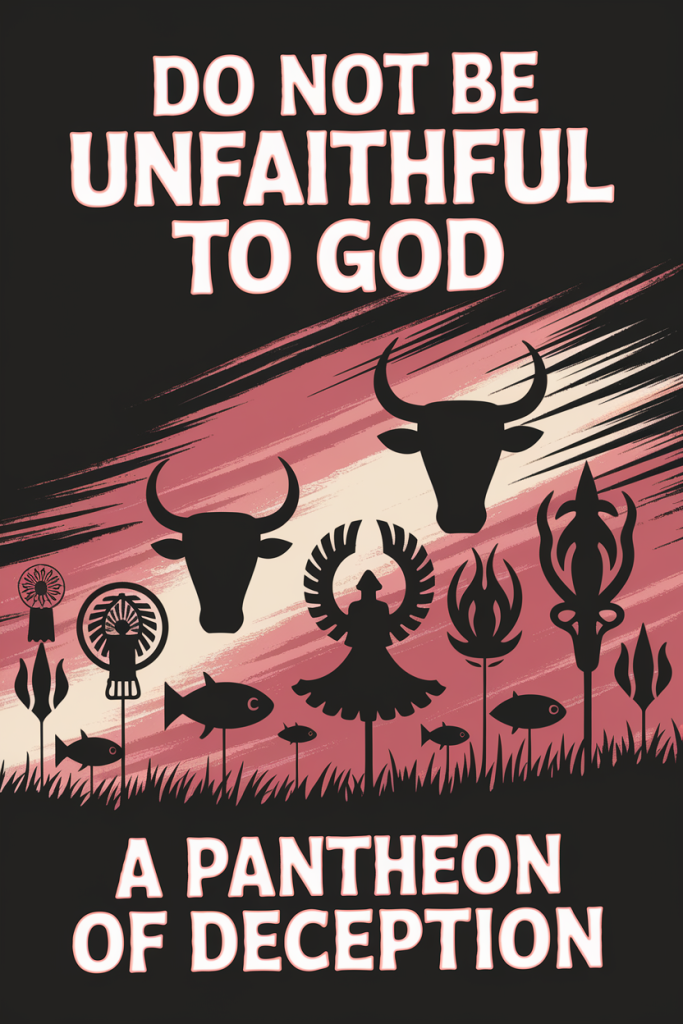
The Old Testament narrative frequently recounts the Israelites' entanglement with a multitude of false and foreign gods, each with their own distinct characteristics, associated practices, and perceived domains of influence.
Understanding these deities provides crucial insight into the nature of Israel's covenantal unfaithfulness.
Baal

A prominent deity in Canaan and Phoenicia, was primarily worshipped as a god of fertility and rain. In an agrarian society heavily reliant on rainfall for successful harvests, Baal's perceived control over these vital elements made him an appealing figure.
Often depicted standing on a bull, symbolizing strength and fertility, Baal was believed to bring the rains necessary for agricultural prosperity. His worship was frequently associated with other Canaanite goddesses like Asherah and Ashtoreth.
However, the practices associated with Baal worship were often morally objectionable from the perspective of Yahweh's covenant.
These included ritual prostitution, intended to promote fertility, and the horrific practice of child sacrifice, as mentioned in Jeremiah 19:5.
Such practices directly contradicted the ethical and moral standards laid out in the covenant with Yahweh, further highlighting the severity of this form of idolatry.
Ashtoreth
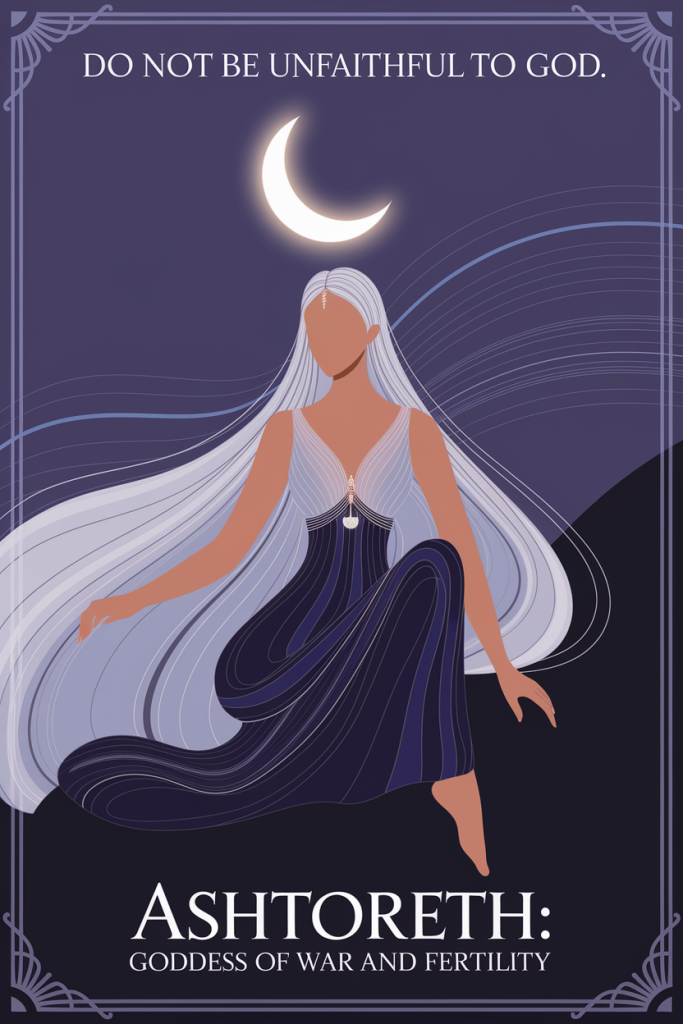
Also known as Astarte, was another significant goddess in the Canaanite pantheon, revered as a deity of war and fertility.
Associated with the evening star, Ashtoreth's worship spread beyond Canaan, with connections to Ishtar in Babylon and the Greek/Roman goddesses Aphrodite and Venus.
As the consort of Baal in many traditions, she appealed to a wide spectrum of human desires, from success in battle to fruitful relationships and healthy offspring. People likely sought her favor in various aspects of life, attributing power over these domains to her rather than to Yahweh.
Asherah
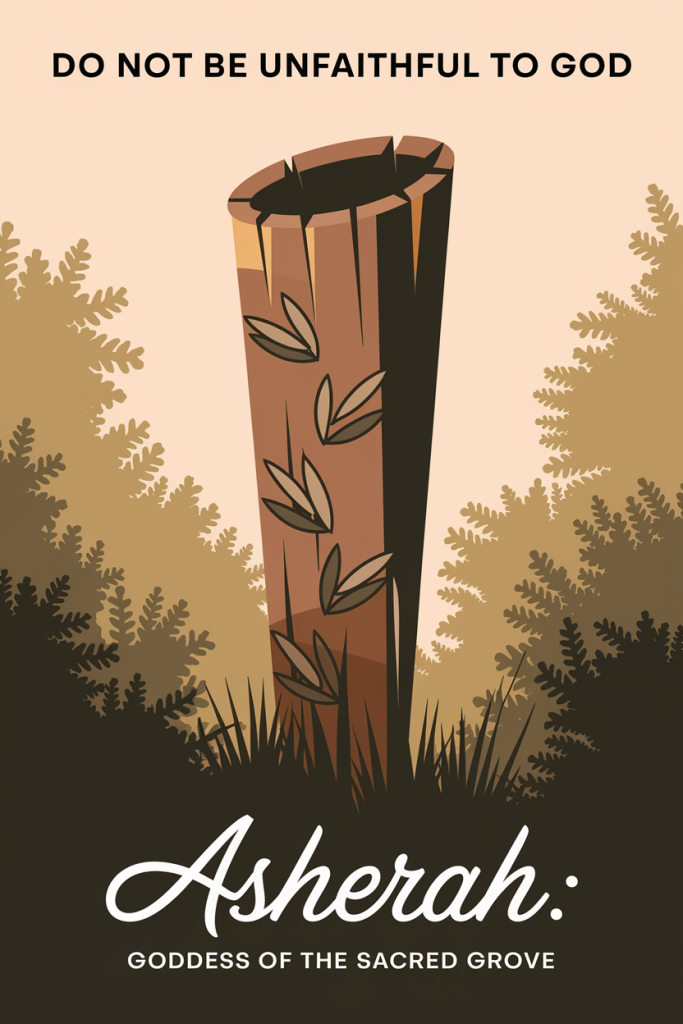
Was another prominent Canaanite fertility goddess, often considered the consort of El, the chief god of the Canaanite pantheon, and later associated with Baal.
She was frequently represented by wooden poles, known as Asherim, which were erected near pagan altars and in groves.
Asherah's close association with fertility and her representation by tangible objects likely made her easily integrated into local worship practices, perhaps seeming more accessible and relatable to some Israelites.
It is noteworthy that the term "Asherah" was sometimes mistranslated as "grove" in the KJV. This highlights the importance of understanding the original Hebrew terms to fully grasp that a specific goddess and her symbolic representations were being worshipped, rather than just natural locations.
Chemosh
Held the position of chief god for the Moabites, a kingdom bordering Israel. Often associated with war, Chemosh was invoked in times of military conflict, with the Moabites even referring to themselves as the "People of Chemosh".
Some accounts suggest that the worship of Chemosh may have included the abhorrent practice of child sacrifice. As the national deity of a neighboring kingdom, Chemosh represented a significant power that could influence Moab's interactions with Israel, potentially tempting the Israelites to seek his favor for political or strategic advantage.
Molech
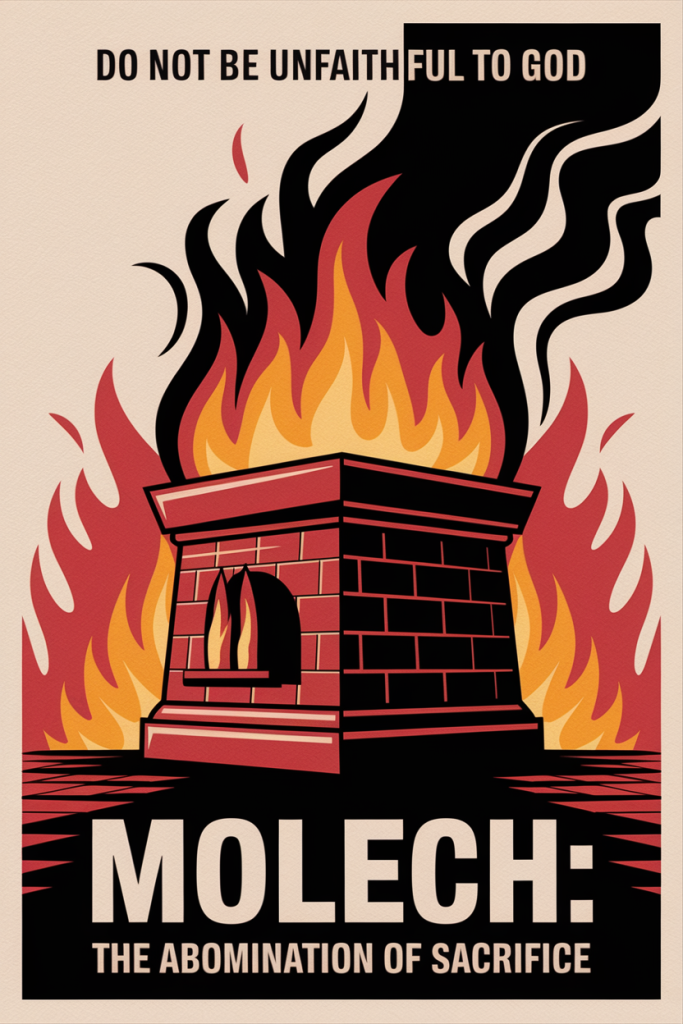
The chief deity of Ammon, was particularly infamous for the practice of child sacrifice. This horrific act, where children were offered as burnt offerings, was vehemently condemned by Yahweh as one of the most repulsive abominations.
The very act of sacrificing one's own offspring to Molech underscores the extreme deviation from Yahweh's commands, which emphasized the sanctity of life and justice.
This practice was a direct affront to the covenant, highlighting the profound spiritual depravity that could result from turning away from the true God.
Dagon

Was a deity worshipped in both Babylonia and Philistia. While sometimes associated with grain, he was also depicted in a unique form as half-man and half-fish.
Dagon held the status of national god for the Philistines, a frequent adversary of Israel. Encounters with the Philistines likely exposed the Israelites to the worship of Dagon, representing a distinct religious identity in opposition to their own.
Tammuz
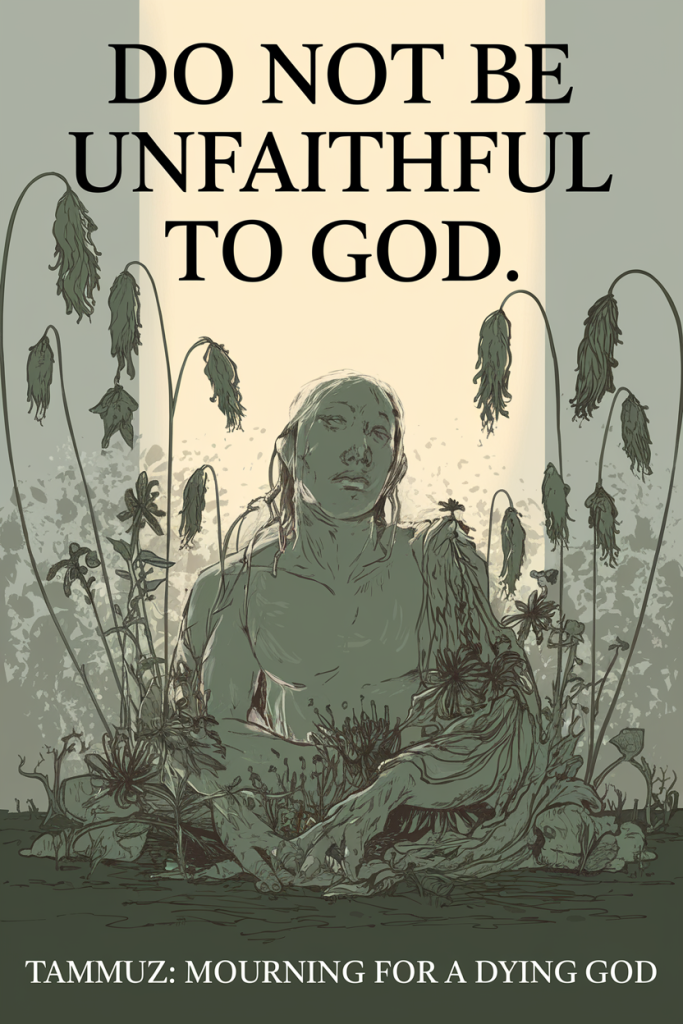
Originating in Babylonian mythology, was a fertility god associated with the cyclical death and rebirth of vegetation. The ritualistic weeping for Tammuz, particularly by women, was considered an abomination in Ezekiel 8:14.
The focus on seasonal cycles in Tammuz's worship reflects a different understanding of divine power compared to Yahweh's covenantal relationship with Israel, which emphasized historical deliverance and moral conduct.
The Israelites' participation in mourning rituals for Tammuz indicates their adoption of foreign religious practices, moving away from the prescribed worship of the Lord.
Idols
Beyond these prominent deities, the Old Testament uses various Hebrew terms to describe idols, often with derogatory connotations. Terms like Aven, meaning "nothingness" or "vanity," and 'Elil, signifying "a thing of naught," emphasize the worthlessness and futility of idol worship.
Chamman or Hammanim, referring to "sun-images," indicate the presence of sun worship, often associated with Baal.
Matztzebah, statues or memorial stones, were sometimes erected in honor of Baal, directly contradicting the prohibition of graven images.
Teraphim, often described as household idols, may have represented ancestors and were sometimes used for divination, highlighting syncretistic practices within Israel.
The sheer number of these terms and their negative connotations underscore the strong condemnation of idolatry within the Hebrew scriptures.
| God/Idol | Origin | Primary Reasons for Worship | Key Associations/Rituals |
| Baal | Canaan, Phoenicia | Fertility, rain, storms, prosperity | Ritual prostitution, child sacrifice |
| Ashtoreth | Canaan, Babylon | War, fertility, love | Evening star, linked to Ishtar/Aphrodite/Venus |
| Asherah | Canaan | Fertility, motherhood | Wooden poles (Asherim), groves, consort of El/Baal |
| Chemosh | Moab | War, national identity | Possibly child sacrifice |
| Molech | Ammon | Protection, appeasement | Child sacrifice |
| Dagon | Babylonia, Philistia | Grain, possibly sea/water | Half-man, half-fish depiction, national god of Philistines |
| Tammuz | Babylon | Fertility, cycle of vegetation | Annual mourning rituals |
| Teraphim | Uncertain | Household protection, divination, possibly ancestor veneration | Human-shaped figurines |
| Matztzebah | Canaan | Commemoration, association with Baal | Standing stones, statues |
| Aven | Hebrew (derogatory) | Idolatry (term of contempt) | Used to refer to idols and idolatrous places |
| 'Elil | Hebrew (derogatory) | Idolatry (term of contempt) | "Thing of naught" |
| Chamman/im | Phoenicia | Sun worship (associated with Baal) | Sun-images, sun-pillars |
This diverse pantheon of false and foreign gods reveals the multifaceted nature of the idolatry that plagued ancient Israel.
The appeal of these deities often lay in their perceived power over essential aspects of life, such as fertility, prosperity, and protection, leading the Israelites to stray from their exclusive devotion to the Lord.
Jeremiah's Indictment: The Covenant Broken in Chapters 2:23-5:19

The prophecy of Jeremiah unfolds during a tumultuous period in Judah's history, marked by political instability and a pervasive spiritual decline leading up to the Babylonian exile.
Jeremiah's prophetic messages frequently centered on the people's profound unfaithfulness to Yahweh, with idolatry being a primary focus of his condemnation.
His pronouncements served as both an indictment of their present sins and a warning of the impending judgment.
Understanding this historical context is essential for grasping the weight and urgency of Jeremiah's words regarding the worship of false gods.
Within the specific chapters of Jeremiah 2:23-5:19, the prophet delivers a powerful and impassioned indictment against Judah's spiritual adultery.
In Jeremiah 2:23, the Lord, through Jeremiah, directly confronts the people's denial of their idolatrous practices: "How canst thou say, I am not polluted, I have not gone after Baalim? see thy way in the valley, know what thou hast done: thou art a swift dromedary (camel) traversing her ways".
The accusation of going after "Baalim," the plural form of Baal, clearly points to the worship of this foreign deity.
The imagery of a swift dromedary restlessly traversing her ways vividly portrays the frantic and unfaithful pursuit of these other gods, suggesting a deep and persistent engagement in idolatry despite their claims of innocence.
The Lord urges them to look at their actions, particularly in the "valley," a place often associated with pagan worship, and acknowledge the reality of their unfaithfulness.
The entirety of Jeremiah chapter 3 employs the poignant and pervasive metaphor of adultery and harlotry to depict Israel's broken covenant with Yahweh.
Israel Has Played The Harlot
The Lord laments that Israel has "played the harlot with many lovers," referencing their worship on "every high mountain and under every green tree," which were common locations for pagan shrines and rituals.
This repeated use of sexual infidelity as a metaphor underscores the intimate and exclusive nature of the covenant relationship between God and His people. Just as a marriage vows exclusive devotion, the covenant demanded the same from Israel towards Yahweh.
Their turning to other gods was thus portrayed as a profound act of betrayal, akin to a spouse seeking affection and intimacy outside the marriage.
The Lord presents Himself as a betrayed husband, emphasizing the emotional pain and righteous anger caused by Israel's spiritual adultery.
Israel's Adultery

While Jeremiah chapter 4 does not explicitly list specific false gods, the context established in the preceding chapters makes it clear that idolatry is a primary reason for the impending judgment.
The chapter warns of devastation coming upon Judah due to their unrepentant hearts and calls for a genuine return to the Lord. The severity of the predicted consequences underscores the seriousness with which the Lord views their unfaithfulness, particularly their persistent engagement in idolatry.
In Jeremiah 5:7, the Lord's indictment becomes even more direct: "How shall I pardon thee for this? thy children have forsaken me, and sworn by them that are no gods: when I had fed them to the full, they then committed adultery, and assembled themselves by troops in the harlots' houses".
This verse explicitly states that the people have "sworn by them that are no gods," leaving no doubt about their allegiance to false deities. The phrase "no gods" emphasizes the Lord's perspective on the powerlessness and illegitimacy of these idols.
Furthermore, the comparison to physical adultery reinforces the central theme of covenantal unfaithfulness. The Lord expresses His righteous indignation at the people's blatant rejection of Him, even after He had abundantly provided for them ("when I had fed them to the full").
Consequences of Idolatry

The consequences of this idolatry are clearly laid out in Jeremiah 5:19: "And it shall come to pass, when ye shall say, Wherefore doeth the Lord our God all these things unto us? then shalt thou answer them, Like as ye have forsaken me, and served strange gods in your land, so shall ye serve strangers in a land that is not your's".
This verse directly establishes a causal link between the people's service of "strange gods" and the impending exile.
The Lord makes it unequivocally clear that their unfaithfulness to the covenant, manifested through the worship of foreign deities, will result in the loss of their land and their freedom, as they will be forced to serve strangers in a foreign land.
Throughout these chapters, the consistent use of the metaphor of adultery powerfully conveys how idolatry was perceived as "cheating on the Lord".
This metaphor reveals the deeply personal and emotional dimension of God's relationship with Israel.
Their worship of other gods was not merely a theological error or a deviation from religious practice; it was a profoundly hurtful act of betrayal, akin to a spouse breaking the sacred vows of marriage.
By choosing to give their devotion and allegiance to other gods, the Israelites were breaking their exclusive commitment to Yahweh, the God who had redeemed them and entered into a covenant with them.
The language of adultery evokes strong feelings of broken trust and infidelity, mirroring the Lord's response to Israel's spiritual unfaithfulness.
The Bible explicitly describes idolatry as a form of adultery, with Israel portrayed as the unfaithful bride who has forsaken her husband, the Lord, for other lovers.
This powerful imagery underscores the severity of idolatry in the eyes of God and the profound breach of covenant it represented.
New Testament Reflections: Echoes of the Old Testament Warning
The New Testament, while establishing a new covenant through Jesus Christ, does not ignore the warnings against false worship found in the Old Testament.
Instead, it echoes these warnings, sometimes directly referencing Old Testament deities and often expanding the concept of idolatry to address the spiritual dangers faced by early Christians.
Direct references to Old Testament false gods appear in the New Testament, demonstrating their continued recognition, albeit often within a negative context.
For instance, Beelzebub, a name derived from Baal-Zebub, a Philistine deity, is mentioned in Matthew 12:24, Mark 3:22, and Luke 11:15.
In these passages, the Pharisees accuse Jesus of casting out demons by the power of Beelzebub, associating the name of an old pagan god with demonic forces.
This indicates the enduring negative perception of these Old Testament deities within the New Testament framework.
Christian Warnings About Idolatry

The New Testament broadens the concept of idolatry beyond the literal worship of physical idols. While condemning the worship of idols (1 Corinthians 10:14, 1 John 5:21), it also identifies other forms of misplaced devotion as idolatrous.
Covetousness, or excessive desire for material possessions, is explicitly labeled as idolatry in Colossians 3:5 and Ephesians 5:5.
This highlights the spiritual danger of allowing material desires to take precedence over devotion to God.
Similarly, James 4:4 uses strong language, referring to those who are friends with the world as "adulteresses," emphasizing that friendship with the world is hostility toward God and constitutes spiritual unfaithfulness.
Numerous New Testament Passages Caution Believers Against False Worship and Misplaced Devotion.
These warnings echo the Old Testament emphasis on exclusive devotion to God and alert believers to the ongoing dangers of turning to false alternatives.
For example, 1 Corinthians 10:1-22 draws a direct parallel between the Israelites' experiences in the wilderness, including their idolatry with the golden calf (1 Corinthians 10:7, alluding to Exodus 32:6) and their subsequent punishment, and the temptations faced by the Corinthian believers regarding participation in pagan temple feasts.
Paul uses these Old Testament examples as cautionary tales, urging the Corinthians to flee from idolatry and warning against the consequences of unfaithfulness to God.
He emphasizes that participating in pagan rituals, even seemingly innocuous acts like eating food offered to idols, could lead to fellowship with demons (1 Corinthians 10:20).
The warning in 1 Corinthians 10:22, "Do we provoke the Lord to jealousy? Are we stronger than he?", directly echoes the Old Testament theme of God's jealousy regarding idolatry.
The thematic connection between Old Testament idolatry and New Testament warnings is significant. The underlying principle of God's jealousy for the exclusive devotion of His people remains consistent across both covenants.
God desires a wholehearted relationship with humanity, and idolatry, in its various forms, is seen as a direct challenge to His sovereignty and a rejection of His love.
The consequences of idolatry, whether earthly judgment in the Old Testament or spiritual separation in both testaments, serve as a persistent warning against unfaithfulness to the true God.
The continued use of the metaphor of spiritual adultery in the New Testament, as seen in James 4:4, further emphasizes the seriousness of divided loyalties and the call for believers to maintain purity in their relationship with God.
Conclusion: A Timeless Call to Unwavering Loyalty
In the Old Testament, we see that the Israelites often struggled between staying loyal to God (Yahweh) and being attracted to the gods of neighboring nations. Gods like Baal, Ashtoreth, and Molech were constantly tempting the Israelites away from their promise to worship only God.
The prophet Jeremiah (especially in chapters 2-5) strongly criticized the Israelites for breaking their promise to God. He compared their worship of other gods to cheating on a spouse. This comparison shows that God's relationship with his people was personal, not just a set of rules.
The New Testament continues these warnings about idolatry. It mentions some of the same false gods from the Old Testament but also expands what idolatry means. In the New Testament, idolatry includes not just worshiping statues but also being greedy or loving worldly things too much.
In 1 Corinthians 10, Paul reminds the early Christians about how the Israelites were punished for worshiping idols. This shows that the lessons from the Old Testament were still important for the new Christian church.
Both the Old and New Testaments show that God wants His people to be completely loyal to Him. The Bible's teachings about idolatry show God's commitment to His relationship with us and His right to ask for our complete worship.
These stories also remind us that people have always been tempted to turn away from God, and there are serious consequences when we do. Though today we might not worship statues of Baal or Molech, we can still put other things before God in our lives.
The Bible's warnings about idolatry remind us to check our hearts and make sure God comes first in our lives. Anything that we love or value more than God can become our "idol," which is why we need to stay committed to putting God first.
Resources:
- en.wikipedia.org - False god - Wikipedia
- biblehub.com - Psalm 81:9 There must be no strange god among you, nor shall you bow to a foreign god.
- christiananswers.net - IDOLS in the Bible / false gods mentioned in the Bible - WebBible Encyclopedia
- biblegateway.com - 8747 false gods - Dictionary of Bible Themes
- thebiblejourney.org - Foreign gods - The Bible Journey
- en.wikipedia.org - Baal - Wikipedia
- biblicaltraining.org - Ashtoreth - Search results provided by BiblicalTraining
- biblestudytools.com - Eliel Meaning - Bible Definition and References
- britannica.com - Baal | Definition, Myths, Worship, & Facts
- gotquestions.org - Who was Asherah?
- pursuegod.org - Who Was Baal in the Old Testament?
- learnreligions.com - Who Is Asherah in the Bible?
- bibleodyssey.org - What Is an Asherah?
- britannica.com - Asherah | Canaanite, Mother Goddess, Fertility
- biblestudytools.com - Aven Meaning - Bible Definition and References
- firmisrael.org - Praise and Worship in Hebrew: 6 Unique Words to Know
- ccel.org - New Schaff-Herzog Encyclopedia of Religious Knowledge
- jewishencyclopedia.com - ASHTORETH - JewishEncyclopedia.com
- blueletterbible.org - Dictionaries - Idol - Blue Letter Bible
- wisdomlib.org - Idol: 7 definitions
- kingjamesbibledictionary.com - Reference List - Idol's - King James Bible Dictionary
- biblestudytools.com - Ashtoreth Meaning - Bible Definition and References
- biblehub.com - Aven - Topical Bible
- biblehub.com - Strong's Hebrew: 206. אָ֫וֶן (Aven) -- Iniquity, trouble, wickedness, vanity, idolatry
- en.wikipedia.org - Teraphim - Wikipedia
- jewishencyclopedia.com - TERAPHIM - JewishEncyclopedia.com
- britannica.com - Tammuz summary - Britannica
- biblehub.com - Tammuz - Topical Bible
- knowhy.bibleodyssey.com - Household Gods - Bible Odyssey
- nehemiaswall.com - Don't Call It Tammuz! - Nehemia's Wall
- en.wikipedia.org - Dagon - Wikipedia
- jewishvirtuallibrary.org - Dagon - Jewish Virtual Library
- gotquestions.org - Who was Dagon in the Bible?
- en.wikipedia.org - Chemosh - Wikipedia
- biblehub.com - Chemosh - Topical Bible
- compellingtruth.org - Who was Chemosh in the Bible?
- compellingtruth.org - Who was the Canaanite God Molech?
- allthatsinteresting.com - Moloch, The Ancient Pagan God Of Child Sacrifice
- biblestudytools.com - What Does the Bible Say about Molech?
- blueletterbible.org - Jeremiah 23 (KJV) - Woe be unto the pastors
- biblegateway.com - Jeremiah 4 KJV - If thou wilt return, O Israel
- youtube.com - The Holy Bible - Jeremiah Chapter 4 (KJV)
- bible.com - Jeremiah 2:23 KJV
- biblestudytools.com - Jeremiah 5:1-19 - “Go up and down the streets of Jerusalem”
- rsc.byu.edu - The Marriage of Hosea and Jehovah's Covenant with Israel
- versebyverseministry.org - What is “spiritual adultery”?
- bibletools.org - What the Bible says about Marriage Analogy
- biblehub.com - Topical Bible: Misplaced Worship
- callingcouplestochrist.org - Marriage: Image of God's Covenant with His People
- bibleversaz.com - Bible Verses About Worshiping Man: A Warning Against Misplaced Devotion
- biblehub.com - Topical Bible: Idolatry as Spiritual Adultery
- njrcs.org - The Use of Marriage and Family Metaphors in Hosea
- gotquestions.org - What is spiritual adultery?
- openbible.info - What Does the Bible Say About Worship Of False Gods?
- biblehub.com - Topical Bible: Spiritual Adultery
- bibleref.com - What does 1 Corinthians 10:2 mean?
- thegospelcoalition.org - The Concept of Idolatry
- preceptaustin.org - 1 Corinthians 10 Commentary