Quick Overview of This Bible Study…
Short on time? I have created a short slide show presentation of some key takeaways in our study. The complete, more comprehensive bible study is below…
Introducing Zion
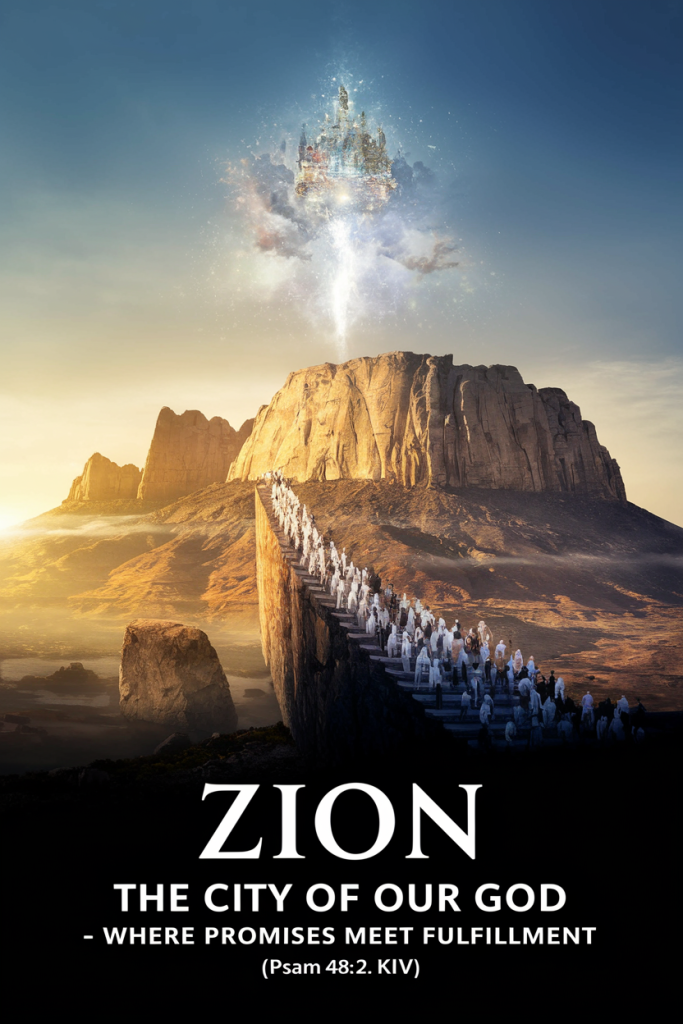
The term Zion in the King James Version (KJV) Bible carries rich meaning, appearing about 150 times in the Old Testament and several times in the New (Zion | History, Significance, Map, & Facts | Britannica).
In its most basic sense, “Zion” essentially means a fortified height or stronghold, conveying the idea of something “raised up” (What is Zion? What is Mount Zion? What is the biblical meaning of Zion? | GotQuestions.org).
Scripture uses Zion to refer to a real geographical place – specifically, Jerusalem – and also to a spiritual reality associated with God’s people and His kingdom.
Psalm 87:2-3 illustrates this dual significance: “the Lord loveth the gates of Zion... glorious things are spoken of thee, O city of God” (KJV), equating Zion with the “city of God” that God loves
As the biblical narrative progresses, Zion’s meaning expands from a physical location to a theological symbol, encompassing the spiritual hopes of Israel and, ultimately, the promises fulfilled in Christ
This research will explore Zion’s physical and spiritual meanings, its role in the Old Testament, and its fulfillment or transformation in the New Testament, including key prophecies and their New Testament parallels.
We will also examine Zion’s eschatological role in biblical prophecy, highlighting how this revered “city of God” figures into end-time hopes.
Zion in the Old Testament: The Physical City of David and Jerusalem

Historical Location: Zion’s first biblical mention defines it as a physical place.
After King David became king, he conquered an ancient Jebusite fortress on a hill in Jerusalem: “David took the stronghold of Zion: the same is the City of David” (2 Samuel 5:7, KJV).
This fortified hill on Jerusalem’s eastern side became David’s city and royal capita. Archaeology confirms a heavily fortified area in the City of David, consistent with the biblical account of Zion as a stronghold (What is Zion's significance in biblical prophecy?).
Initially, Mount Zion referred specifically to this ridge or bastion captured by David.
Expansion to Jerusalem and the Temple: Over time, “Zion” expanded in meaning beyond David’s original fortress. When Solomon built the First Temple on nearby Mount Moriah, the whole temple mount area also came to be called Zion.
Thus, Zion could indicate Jerusalem’s holy hill where the temple stood (cf. Isaiah 2:3, Psalm 132:13) as well as Jerusalem at large. In fact, the Bible often uses Zion as a synonym for the city of Jerusalem itself.
For example, Isaiah 40:9 uses parallel terms, addressing Zion and Jerusalem both as the bearer of good tidings (What is Zion's significance in biblical prophecy?).
Zion can even refer to the broader region of Judah or Israel as a whole in poetic language (e.g. Jeremiah 31:12, Zechariah 9:13). To summarize the usage:
- Mount Zion – the hill of David’s fortress and later the Temple Mount in Jerusalem.
- Zion = City of David/Jerusalem – often used interchangeably with the city, especially in Psalms and prophets.
- Zion = the Nation – on occasion, represents the people or nation of Israel/Judah collectively.
In the Old Testament, Zion is overwhelmingly a poetic and prophetic name for Jerusalem, laden with emotional and religious overtones (Zion | History, Significance, Map, & Facts | Britannica).
It’s noteworthy that Zion appears most frequently in books like Psalms (the worship songs of Israel) and Isaiah (the prophetic vision of salvation)
This indicates that Zion was more than a point on a map – it was a spiritual concept intertwined with Israel’s identity.
Zion as the City of God’s Presence and Worship
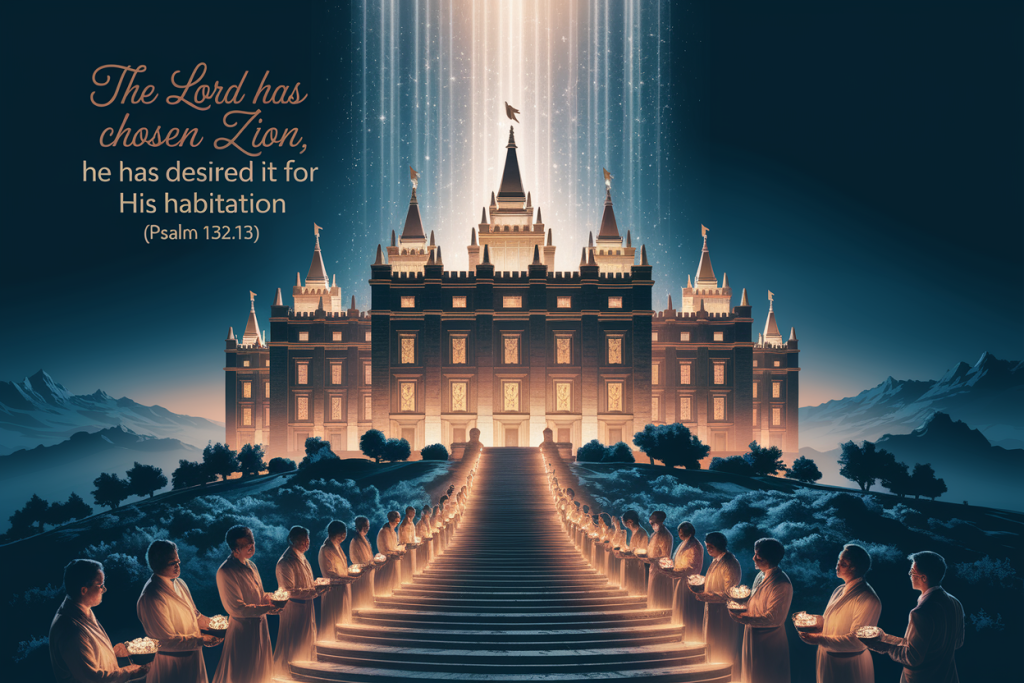
From the time David brought the Ark of the Covenant into Zion, this city was understood as the dwelling place of God’s presence (What is Zion's significance in biblical prophecy?).
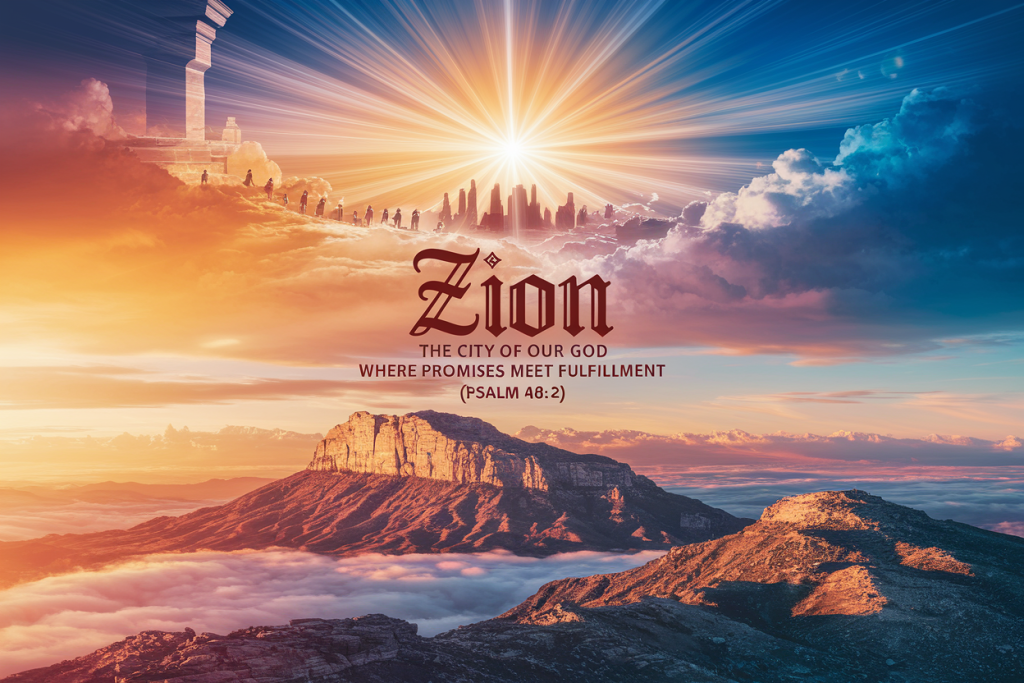
Mount Zion became “the city of the great King” (Psalm 48:2, KJV) – the earthly throne of Israel’s God.
Many scriptures celebrate Zion as God’s chosen habitat: “For the Lord hath chosen Zion; he hath desired it for his habitation” (Psalm 132:13, KJV). Psalm 74:2 similarly prays, “Remember thy congregation... mount Zion, wherein Thou hast dwelt” .
The prophet Isaiah proclaims that the Lord “dwells in Mount Zion” (Isaiah 8:18) and is enthroned there as King (Isaiah 24:23) (Zion | History, Significance, Map, & Facts | Britannica).
In Zion stood the Temple, the center of sacrificial worship, so Zion became synonymous with the presence of God and true worship of Yahweh.
Because of God’s presence, Zion was revered as holy ground. The Psalms paint Zion as uniquely beloved and beautiful: “Beautiful for situation, the joy of the whole earth, is mount Zion… the city of the great King” (Psalm 48:2, KJV).
It is in Zion that God “shines forth” in perfect beauty (Psalm 50:2), and from Zion He speaks and judges (Joel 3:16, Amos 1:2).
In Israel’s worship and poetry, Zion represents the ideal of God’s kingdom on earth – a place secure, “fortified” by God, and filled with His glory. This deep connection between Zion and God’s presence made Zion theology central to Israel’s faith and hope.
Zion as God’s People – “Daughter of Zion” and the Faithful Community
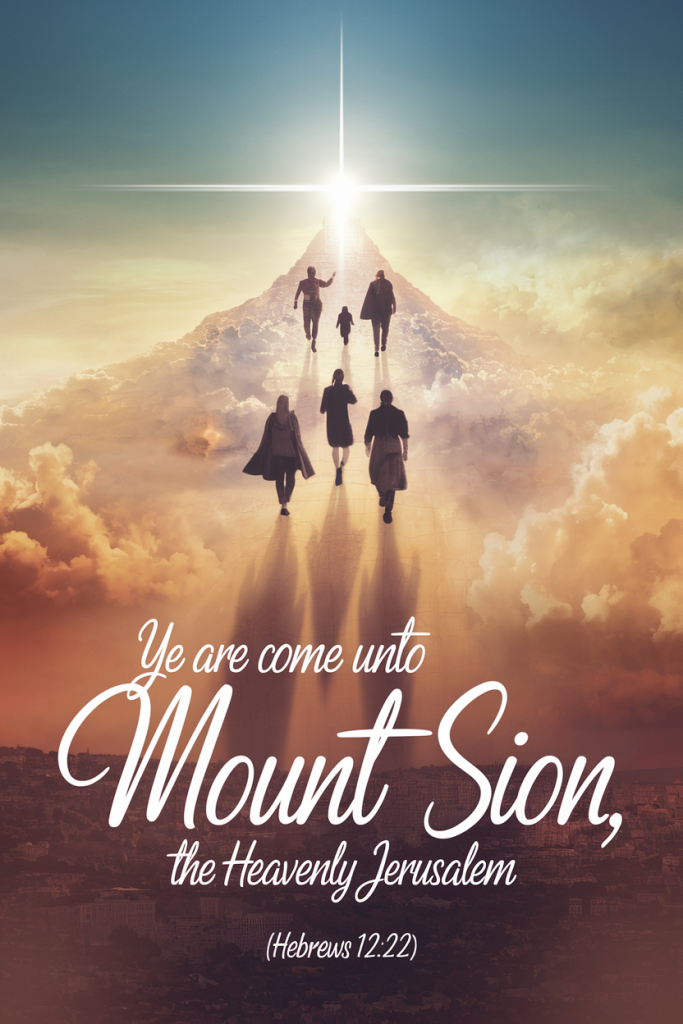
In addition to being a locale, Zion also came to personify the community of God’s people. The Old Testament sometimes addresses Zion as a person – notably “the daughter of Zion.”
This poetic figure refers to Jerusalem’s inhabitants, portraying the city as a woman (a daughter) who experiences God’s judgments and salvation (Zion | History, Significance, Map, & Facts | Britannica).
For instance, prophets cry, “Rejoice greatly, O daughter of Zion” when announcing the coming King (Zechariah 9:9) (What is Zion's significance in biblical prophecy?), or conversely, lament “the daughter of Zion” when describing Jerusalem’s devastation (e.g. Lamentations 2:1).
The phrase always carries strong emotion (Zion | History, Significance, Map, & Facts | Britannica), highlighting Zion (Jerusalem and its people) either in suffering or joyful deliverance.
After the Babylonians destroyed Jerusalem in 586 B.C., Zion became the symbol of hope for the exiles. “By the rivers of Babylon, there we sat down, yea, we wept, when we remembered Zion” (Psalm 137:1, KJV) – this famous lament shows how Zion lived in the hearts of the captives.
Prophets foretold that God would restore His people to Zion: “Turn, O backsliding children... for I am married unto you: and I will take you... to Zion” (Jeremiah 3:14, KJV) (Zion | History, Significance, Map, & Facts | Britannica).
Zion, in these prophecies, represents the nation of Israel renewed and back in covenant with God. In a broader sense, Zion becomes almost synonymous with Israel itself – the people marked as God’s own.
As one writer puts it, “Zion wraps up Jewish identity as a whole,” because it signifies the people chosen and marked by God’s covenant (Zion: God’s Precious Possession - The Friends of Israel Gospel Ministry).
Thus, references to Zion often carry a dual meaning: the holy city and the holy people. The destiny of Zion is tied to the destiny of God’s people in the Old Testament narrative.
Prophetic Hope: Zion’s Future Glory and Messianic Significance
Throughout the prophetic books, Zion is at the heart of God’s future plan of redemption and glory.
The prophets envisaged a day when Zion would no longer suffer but would become the epicenter of blessing for Israel and all nations.
This hope has two key aspects: the restoration of Zion (Jerusalem and the people) after punishment, and the coming of the Messiah-King to reign from Zion.
Restoration and Glory of Zion:
Many prophecies speak of Zion being comforted and restored. Isaiah, for example, pictures a herald ascending Zion to announce good news: “O Zion, that bringest good tidings, get thee up into the high mountain… say unto the cities of Judah, Behold your God!” (Isaiah 40:9, KJV) (What is Zion's significance in biblical prophecy?).
In this and similar passages, Zion is portrayed as the messenger and venue of God’s salvation.
Another vivid prophecy is Isaiah 2:2–3 (echoed in Micah 4:1–2), which foretells: “In the last days, the mountain of the Lord’s house shall be established in the top of the mountains... and all nations shall flow unto it. … For out of Zion shall go forth the law, and the word of the Lord from Jerusalem” (KJV)
Here Zion (the Lord’s mountain) is lifted up above all others, drawing the Gentiles to worship the God of Israel and learn His ways.
This indicates a future universal significance for Zion as the source of divine truth and peace; indeed, the prophecy continues to describe God judging between nations and an era of global peace (swords beaten into plowshares) centered on Zion’s influence.
Such passages show Zion as the focal point of a messianic age, when God’s kingdom is established in justice and peace.
Numerous other prophecies likewise paint Zion in a state of future glory: “The Lord will comfort Zion... and make her wilderness like Eden” (Isaiah 51:3, KJV); “Arise, shine; for thy light is come, and the glory of the Lord is risen upon thee” (Isaiah 60:1, addressed to Zion).
In these visions, Zion is no longer desolate but radiant, a redeemed community.
Notably, Isaiah 35:10 foresees the redeemed returning to Zion with singing, “and everlasting joy upon their heads” – a prophecy of joyful homecoming for God’s people.
After the exile, Zion’s restoration was partly fulfilled when the Jews rebuilt Jerusalem, but the language of these prophecies often transcends that immediate fulfillment, pointing to a greater, more universal redemption.
Messianic King in Zion:
Zion is also integral to Messianic prophecy. God’s ideal king and the Messiah are linked with Zion.
In Psalm 2, God declares, “Yet have I set my King upon my holy hill of Zion” (Psalm 2:6, KJV), which is understood as the Messiah’s installation by God.
Jewish tradition identified this promised King of Zion as the coming Messiah (What is Zion's significance in biblical prophecy?), and the New Testament affirms this in applying such verses to Jesus.
Psalm 110 likewise says, “The Lord shall send the rod of thy strength out of Zion: rule thou in the midst of thine enemies” (Psalm 110:2, KJV).
This portrays Zion as the spring from which the Messiah’s power and rule extend to the world.
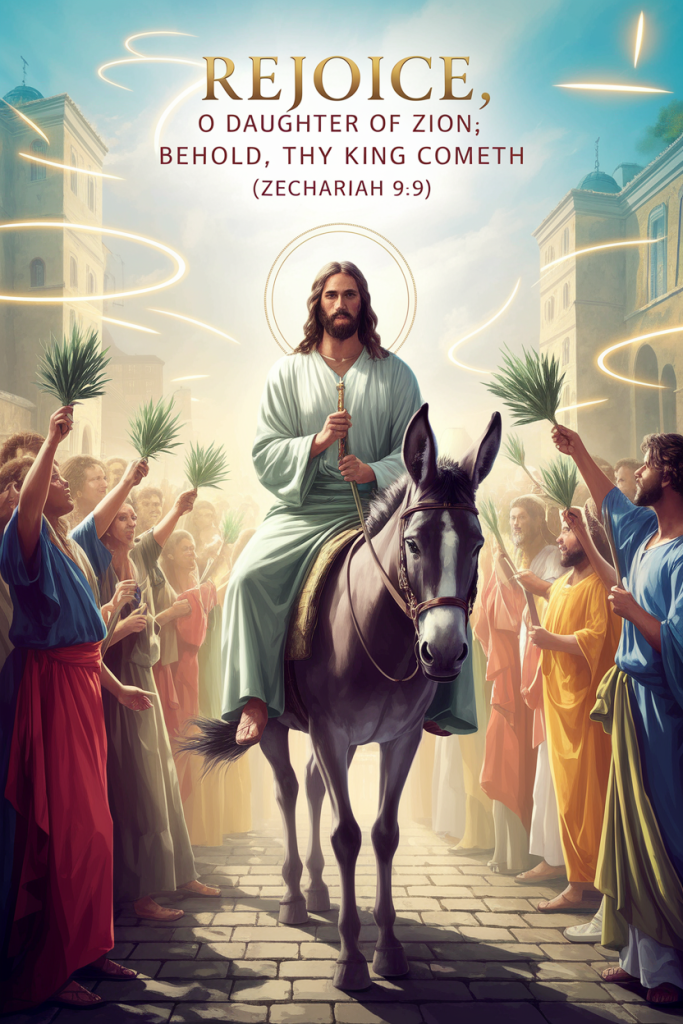
The prophet Zechariah gave a clear picture of Zion’s King which directly ties to the New Testament. He exhorted Zion to rejoice because “thy King cometh unto thee… lowly, and riding upon a donkey” (Zechariah 9:9, KJV).
This was unmistakably a Messianic prophecy, fulfilled when Jesus rode into Jerusalem on a donkey.
The Gospels quote this verse, saying “Tell ye the daughter of Sion, Behold, thy King cometh unto thee” (Matthew 21:5, KJV).
By using the prophetic address “daughter of Zion,” the New Testament shows that Jesus’ triumphal entry was the arrival of Zion’s promised King, fulfilling Zechariah’s words (What is Zion's significance in biblical prophecy?).
In this way, Zion serves as a bridge between prophecy and fulfillment: the hopes invested in Zion (a righteous King, salvation for God’s people) come to fruition in Jesus Christ.
Additionally, Zion is associated with deliverance from sin. Isaiah 59:20 prophesied a Redeemer coming “to Zion” to turn transgressors from sin, and Paul adapts this in Romans 11:26 as “There shall come out of Sion the Deliverer” to save Israel – again identifying Jesus as that deliverer for Zion.
Likewise, Joel 2:32 foretold that in the day of the Lord “in Mount Zion… shall be deliverance”, a promise Peter links to salvation through Christ (Acts 2:21) by quoting Joel’s “whoever calls on the Lord shall be saved.”
In sum, the Old Testament prophetic vision consistently cast Zion as the stage for God’s ultimate act of salvation – whether that be the return of exiles, the reign of the Messiah, or the outpouring of salvation to all who believe.
Zion in the New Testament: Fulfillment and Transformation
Though the explicit term “Zion” (or “Sion” in KJV spelling) appears only a handful of times in the New Testament (Zion | History, Significance, Map, & Facts | Britannica), its theological significance carries forward as the promises attached to Zion are fulfilled in Christ and the church.
The New Testament writers often quote Old Testament Zion passages to show their realization in Jesus:
Jesus the Cornerstone in Zion:
The New Testament identifies Jesus as the prophesied cornerstone laid in Zion. Isaiah 28:16 had declared God would lay in Zion “a foundation stone, a tried stone, a precious corner stone” for his people.
Both Paul and Peter quote this to refer to Christ. Paul writes, “Behold, I lay in Sion a stumblingstone and rock of offence: and whosoever believeth on him shall not be ashamed” (Romans 9:33, KJV), showing that Jesus is the stone in Zion whom some stumble over and others trust for salvation.
The Apostle Peter explicitly cites Isaiah, saying “it is contained in Scripture, Behold, I lay in Sion a chief corner stone, elect, precious” – and that this refers to Christ (1 Peter 2:6-7, KJV) (What is Zion? What is Mount Zion? What is the biblical meaning of Zion? | GotQuestions.org).
In these passages, “Zion” is no longer just a physical hill, but the spiritual foundation of God’s people in Christ. Jesus is the cornerstone of the new spiritual temple, and Zion is the realm of salvation centered on Him.
The Church as “Heavenly Zion”:
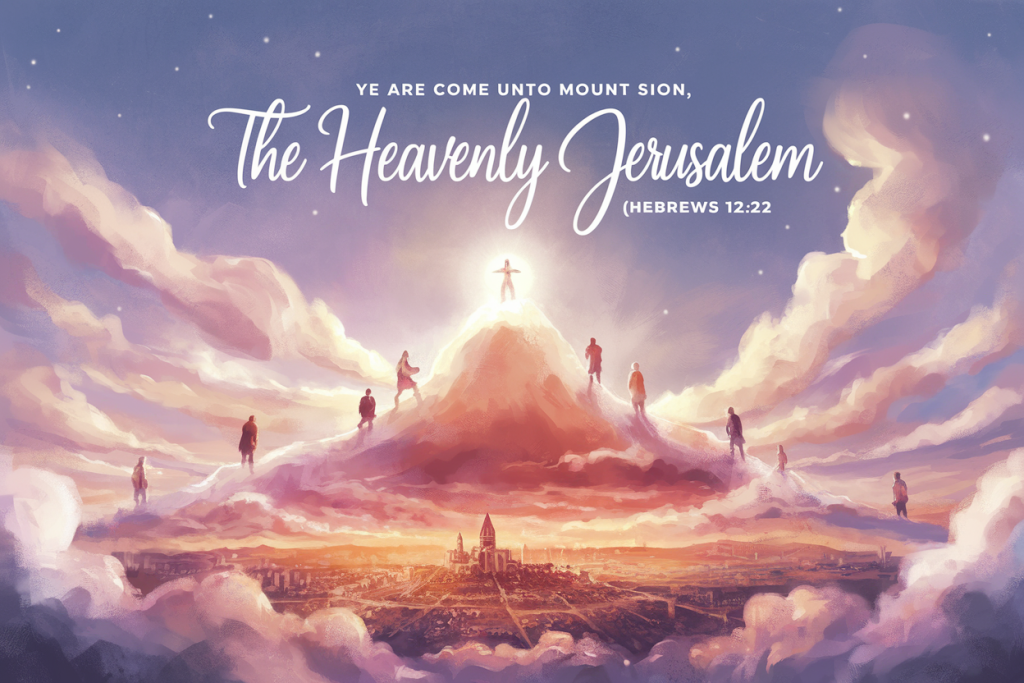
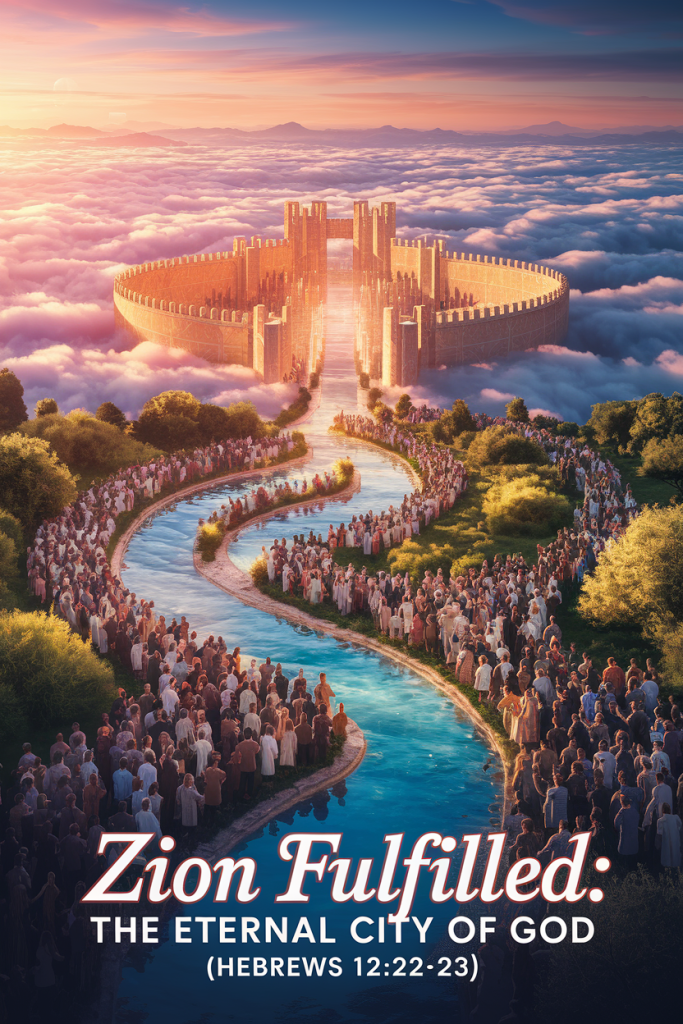
The New Testament reveals a shift from the earthly Mount Zion to the concept of a heavenly Zion. The clearest statement is in Hebrews: “Ye are come unto mount Sion, and unto the city of the living God, the heavenly Jerusalem…” (Hebrews 12:22-23, KJV).
Here, believers in Christ are said to approach Mount Zion in a spiritual sense – which is explained as the heavenly Jerusalem, the assembly of the redeemed and of angels.
This indicates that under the New Covenant, Zion has taken on a spiritual, heavenly meaning. Whereas Israelites gathered at Mount Zion in Jerusalem for worship, now all believers have access to the heavenly city of God.
The Book of Hebrews contrasts this with Mount Sinai (the old covenant mountain) and emphasizes that through Jesus the mediator of a new covenant, we enter the joyous gathering of Zion above (What Is Mount Zion and Why Is It So Important in the Bible?).
In essence, the faithful in Christ constitute “Zion” – God’s people and city – on a spiritual plane, fulfilling what Zion always symbolized (God’s presence and rule among His people).
Zion and the Gospel to All Nations:
In the New Testament, the exclusive association of Zion with the ethnic nation expands to include all who come to Christ. This fulfills many Old Testament hints that Gentiles would one day be joined with Zion (e.g. Psalm 87:4-6, Isaiah 2:2).
Through the gospel, Gentile believers are grafted into the promises of Israel. They become fellow citizens of the heavenly Jerusalem.
As the BibleStudyTools commentary notes, Zion as a place of refuge and communion with God is “not limited to those of Jewish descent,” because through Christ, people of all nations inherit Zion as their spiritual home (What Is Mount Zion and Why Is It So Important in the Bible?).
The early church, which began in Jerusalem (literal Zion), quickly spread to all nations, creating a new Zion community united not by geography but by faith in the Messiah.
It’s important to note that the New Testament still honors the historic importance of Zion/Jerusalem – the events of Christ’s death and resurrection, and the birth of the church at Pentecost, all took place in Jerusalem.
Yet, the emphasis shifts to a fulfilled Zion: Jesus reigns as King (as foreshadowed in Zion), and God’s presence with His people is realized in a new way.
In Christian theology, Zion’s role as the focus of God’s kingdom is now manifested in Christ’s reign in believers’ hearts and the promise of our gathering in the eternal Zion.
In short, what was physical and national in the Old Testament becomes spiritual and universal in the New Testament, without nullifying the old promises but rather transcending and completing them.
Zion’s Eschatological Role in Biblical Prophecy
Finally, Zion plays a prominent role in biblical eschatology (end-times prophecy). Both Old and New Testament prophetic texts use Zion imagery to describe the culmination of God’s plan for history:
The Triumph of the Lamb on Zion:
In the Book of Revelation, John records a vision of the victorious Messiah on Mount Zion. “And I looked, and, lo, a Lamb stood on the mount Sion, and with him an hundred forty and four thousand having his Father’s name written in their foreheads” (Revelation 14:1, KJV).
This scene portrays Christ (the Lamb) standing on Zion with His redeemed people, signaling ultimate victory over evil (What is Zion's significance in biblical prophecy?).
It hearkens back to Zion’s role as the place of God’s kingship – here Jesus stands as King on Zion in the end times, gathering those who belong to God. Thus, Zion is depicted as the rallying point of the redeemed at the climax of history.
The New Jerusalem – Zion’s Final Manifestation:
The ultimate hope for Zion is realized in the vision of the New Jerusalem in Revelation 21-22. While the name “Zion” isn’t explicitly used there, the imagery unmistakably parallels Zion prophecies (What is Zion's significance in biblical prophecy?).
John sees the holy city, New Jerusalem, coming down from God, where God will dwell with His people forever (Revelation 21:2-3).
This fulfills the many Old Testament promises of God returning to dwell in Zion and the people being holy and secure in His presence.
The New Jerusalem is essentially Zion in its perfected form – the “city of the living God” fully realized at last (What is Zion's significance in biblical prophecy?).
It is the eschatological Zion, where there is no more sorrow or death, and where the glory of God illuminates the eternal city (Rev 21:23-27).
Zion in Millennial/Messianic Kingdom Prophecy:
Some prophetic passages are often associated with the anticipated Messianic kingdom on earth, sometimes identified as the millennial reign of Christ. Zion figures prominently in these scenarios as well.
For example, prophecies like Isaiah 2:4 (cited earlier) about nations learning war no more under God’s rule from Zion imply a future period of peace on earth centered in Zion (What Is Mount Zion and Why Is It So Important in the Bible?).
Micah 4:7 says, “the Lord shall reign over them in Mount Zion from henceforth, even for ever” (KJV), indicating an everlasting reign from Zion.
Whether one interprets these as a literal 1000-year reign of Christ from Jerusalem (as in some premillennial views) or as a symbolic depiction of Christ’s spiritual reign, the common thread is that Zion/Jerusalem is portrayed as the seat of God’s kingly rule in the age to come.
Zion is the stage for the fulfillment of the Davidic covenant – God’s promise that David’s line (ultimately Jesus) would reign forever – realized when Christ rules in justice.
In any case, biblical prophecy consistently holds Zion as central to God’s future restoration of order and blessing.
Deliverance and Judgement from Zion:
Zion also appears in prophetic depictions of final judgment and salvation.
Joel 2–3, for instance, mixes images of wrath on the nations with refuge in Zion: “the Lord shall roar out of Zion” against His enemies, but “in Mount Zion… shall be deliverance” for the survivors who turn to God (Joel 3:16, 2:32).
This dual role – Zion as a source of judgment on evil and a place of refuge for God’s people – aligns with its portrayal in Revelation (where Zion’s Lamb triumphs over the Beast) and echoes Old Testament themes.
It reinforces that Zion is instrumental in God’s final victory: it’s where He asserts His justice and where He gathers His faithful remnant.
In summary, Zion’s eschatological role is that of the ultimate holy city and community where God’s kingship is fully realized.
Whether described in terms of a renewed earthly Jerusalem or a heavenly city, Zion represents the fulfillment of all of God’s promises – a reality that believers look forward to.
The concept of Zion carries forward into eternity as the ideal of “God with us” – the Lord dwelling among His people in glory, which is the goal of the entire biblical story.
Theological and Historical Insights on Zion
Beyond the biblical text itself, the idea of Zion has influenced theology and history in significant ways. The enduring image of Zion as God’s special city meant that it became a symbol of hope, identity, and aspiration for generations:
Covenant Identity:
Theologically, Zion underscores God’s covenant relationship with His people. Because God “chose” Zion (Psalm 132:13) and promised David an everlasting kingdom there, Zion came to stand for the assurance of God’s promises.
It reminded Israel that they were the people marked by God – a concept seen in the very word tzion (Hebrew for Zion) which can mean a “marking” or “indicator” (Zion: God’s Precious Possession - The Friends of Israel Gospel Ministry).
Thus, Zion was like a mark of ownership, signifying that Israel belonged to the Lord. Christians later saw themselves as inheriting this identity spiritually – being God’s own people and a new “Zion” community in Christ.
“Zion” in Jewish Hopes:
Historically, Jews in exile longed for Zion as their lost homeland. Zion’s destruction and restoration dominate biblical prayers and literature (see Lamentations or Psalms like 137) (Zion | History, Significance, Map, & Facts | Britannica).
This yearning carried through centuries, so much that the modern movement for a Jewish homeland was named Zionism, indicating the power the biblical vision of Zion had on cultural memory (Zion | History, Significance, Map, & Facts | Britannica).
For the Jewish people, Zion symbolized Jerusalem redeemed – freedom, peace, and the reestablishment of God’s dwelling among them.
“Zion” in Christian Tradition:
In Christian hymnody and writing, “Zion” often became a poetic name for the Church or for the ultimate heavenly city.
For example, hymns speak of believers marching to Zion or longing for Zion, meaning the joyful fellowship of God’s people or heaven itself (Zion | History, Significance, Map, & Facts | Britannica).
Early Christians, while recognizing the historical Zion, increasingly talked of the “heavenly Zion” – the idea we see in Hebrews and Revelation – as the true homeland of the faithful.
The rarity of the name Zion in the New Testament itself (Zion | History, Significance, Map, & Facts | Britannica) did not prevent it from being a cherished concept in theology, representing the continuity of God’s plan from Israel to the Church and on to the eternal kingdom.
Physical and Spiritual Fulfillment:
Zion’s dual aspect (earthly and heavenly) has prompted various theological interpretations.
Some theologians emphasize the continuity of God’s promise to Israel, expecting a future glory of literal Zion (Jerusalem) when Messiah returns, in line with Romans 11:26 and Old Testament prophecies.
Others see Zion’s promises as transferred to the Church – the “Israel of God” – and thus primarily fulfilled in a spiritual sense now and consummated in the heavenly Jerusalem.
Both views find support in Scripture: the former underscores God’s faithfulness to the physical descendants of David and the land of Israel, while the latter underscores the inclusive and spiritual nature of God’s kingdom.
In either case, Zion remains God’s “precious possession”, the locus of His redemptive activity (Zion: God’s Precious Possession - The Friends of Israel Gospel Ministry). It demonstrates how God’s election (choosing Jerusalem and His people) and eschatological hope are intertwined.
By tracing Zion through the whole Bible, we see a thread of God’s faithfulness and presence. The physical Zion in Israel’s history was the stage for mighty acts – from Abraham’s sacrifice on Mount Moriah to David’s establishment of the kingdom, to Solomon’s Temple.
The spiritual Zion is the thread of redemption woven through those events – pointing to Christ’s sacrifice and the establishment of a people who truly know God.
Zion theology teaches us that God is not distant; He chooses to dwell among a people (first in Jerusalem’s temple, ultimately in Christ and the Spirit-indwelt Church), and He invites all nations into that worship. It also reassures us that history is headed toward a Zion of eternal peace.
Conclusion
From Genesis to Revelation, Zion stands as a testimony to God’s unfolding plan.
What began as a captured fortress in Jerusalem became known as “the city of God” – the heartbeat of Israel’s worship and the seat of the Davidic kingdom (What is Zion? What is Mount Zion? What is the biblical meaning of Zion? | GotQuestions.org) (Zion | History, Significance, Map, & Facts | Britannica).
The prophets transformed Zion into a vision of hope: a redeemed community and city where God’s salvation would shine forth.
In the New Testament, we see Zion’s promises fulfilled and expanded – Jesus the Messiah reigns from Zion (spiritually now, and one day in consummation), and all who trust in Him are brought into the citizenship of “heavenly Zion” (What is Zion's significance in biblical prophecy?).
Finally, biblical prophecy assures us that Zion’s story reaches its climax in the New Jerusalem, where God’s presence with His people is eternal (What is Zion's significance in biblical prophecy?).
Thus, Zion bridges the entire biblical narrative: it is physical (a real place pivotal in Israel’s story) and spiritual (a symbol of God’s people and kingdom). It represents God’s covenant love, His dwelling with humanity, and the hope of glory to come.
Little wonder that Zion is called God’s precious possession – a concept cherished in both Judaism and Christianity (Zion: God’s Precious Possession - The Friends of Israel Gospel Ministry).
In Zion, the Bible encapsulates the idea of heaven meeting earth: first on a hill in ancient Jerusalem, and ultimately in God’s everlasting kingdom.
As Psalm 132:14 says of Zion, “This is my rest for ever: here will I dwell; for I have desired it.” Indeed, the Lord’s desire for Zion is the assurance that He will dwell among His people forever – a promise in which all who love Him can take comfort and rejoice.
Call to Action: The Question That Demands an AnswerIn Acts 2:37 Peter and the Apostles were asked the question – What Shall We do? And in Acts 2:38 Peter answered, Repent, and be baptized every one of you in the name of Jesus Christ for the remission of sins, and ye shall receive the gift of the Holy Ghost. For the promise is unto you, and to your children, and to all that are afar off, even as many as the Lord our God shall call. Do you understand this? After hearing the gospel and believing, they asked what should would do. The answer hasn’t changed friend, Peter clearly gave the answer. The question for you today is, Have you receieved the Holy Spirit Since you believed? If you’re ready to take that step, or you want to learn more about what it means to be born again of water and Spirit, visit: Come, and let the Spirit make you new. |