Quick Overview of This Bible Study…
Short on time? I have created a short slide show presentation of some key takeaways in our study. The complete, more comprehensive Bible study is below…
Living in Hope: Instructions for Christians in the KJV
The KJV Bible provides clear guidance and exhortations for Christians on how to live a life characterized by hope. This hope is not intended to be a passive sentiment but an active force that influences believers' attitudes and actions.

One prominent instruction is to rejoice in hope, as stated in Romans 12:12: "Rejoicing in hope; patient in tribulation; continuing instant in prayer".
This verse underscores that hope is a source of joy for Christians, even amidst difficult times. It suggests that the confident expectation of future blessings and God's promises should fuel a sense of joy that perseveres through tribulations.
This connection between hope and joy highlights the transformative power of a forward-looking faith.
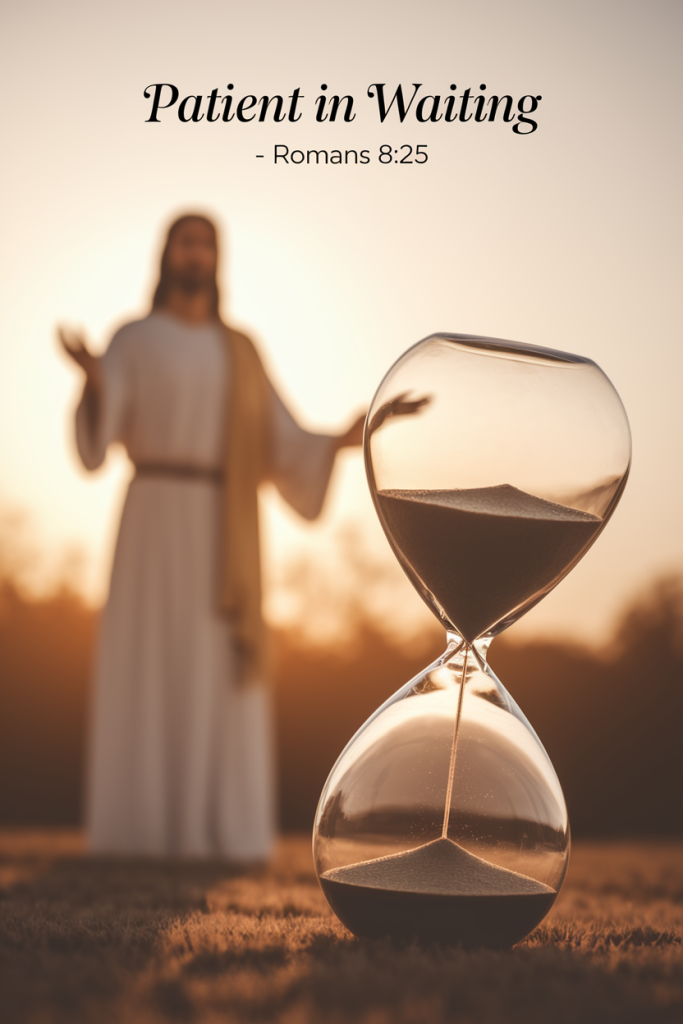
Romans 12:12 also links hope with patience in tribulation. The ability to endure hardship with patience is often sustained by the hope that these trials are temporary and will ultimately lead to a positive outcome.
As Romans 8:25 explains, "But if we hope for that we see not, then do we with patience wait for it".
This patient waiting is not passive resignation but an active trust in God's timing and plan, fueled by the certainty of hope.
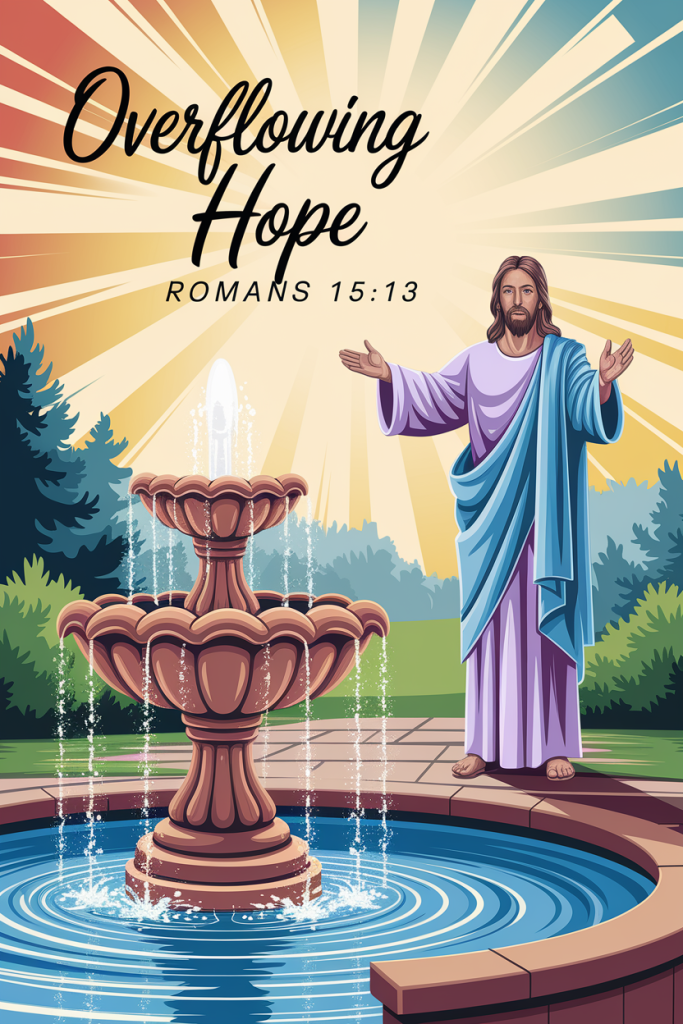
The desire for Christians to abound in hope is expressed in Romans 15:13:
"Now the God of hope fill you with all joy and peace in believing, that ye may abound in hope, through the power of the Holy Ghost".
This verse presents hope as a state of abundance that believers can experience through faith and the power of the Holy Spirit. It suggests that hope is not a limited resource but something that can overflow in the lives of those who trust in God.

Another key instruction is found in 1 Peter 1:13: "Wherefore gird up the loins of your mind, be sober, and hope to the end for the grace that is to be brought unto you at the revelation of Jesus Christ".
This verse calls believers to focus their minds and set their hope firmly on the future grace that will be revealed at Christ's return. It directs hope towards a specific event, emphasizing the certainty of this future revelation and the grace associated with it.
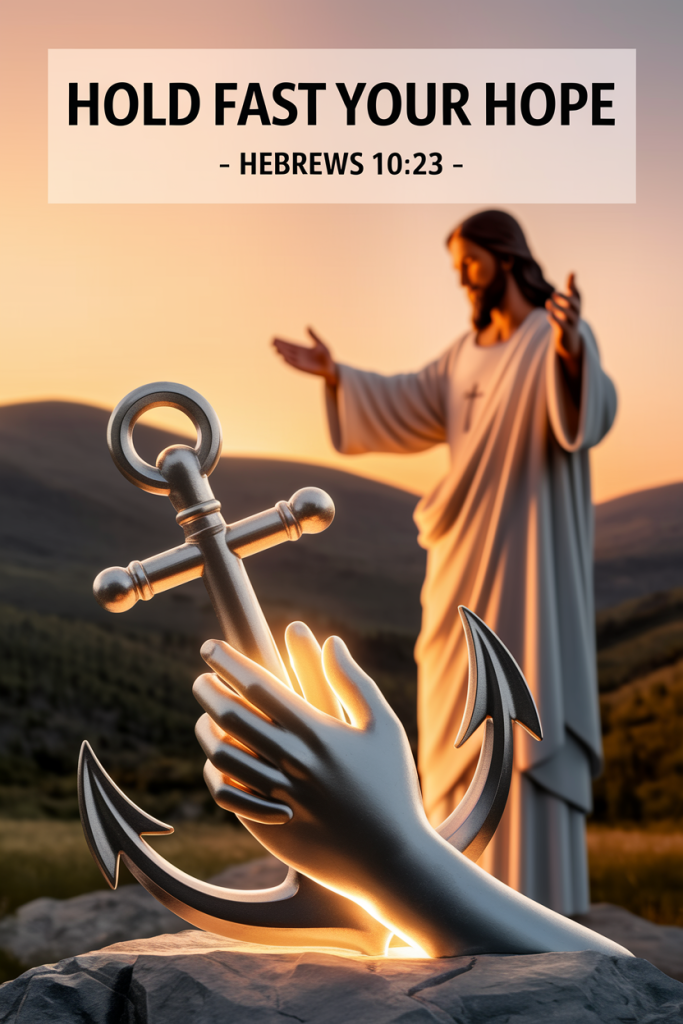
Hebrews 10:23 encourages steadfastness in hope: "Let us hold fast the profession of our faith without wavering; (for he is faithful that promised;)".
This verse urges believers to maintain an unwavering commitment to the hope they profess, grounding this steadfastness in the faithfulness of God who made the promises. It highlights the reliability of God as the foundation of hope.

The protective nature of hope is highlighted in 1 Thessalonians 5:8, which describes hope of salvation as a helmet: "But let us, who are of the day, be sober, putting on the breastplate of faith and love; and for an helmet, the hope of salvation".
Just as a helmet protects the head in battle, the hope of salvation safeguards the believer's mind and spirit, providing assurance and resilience against doubt and despair.
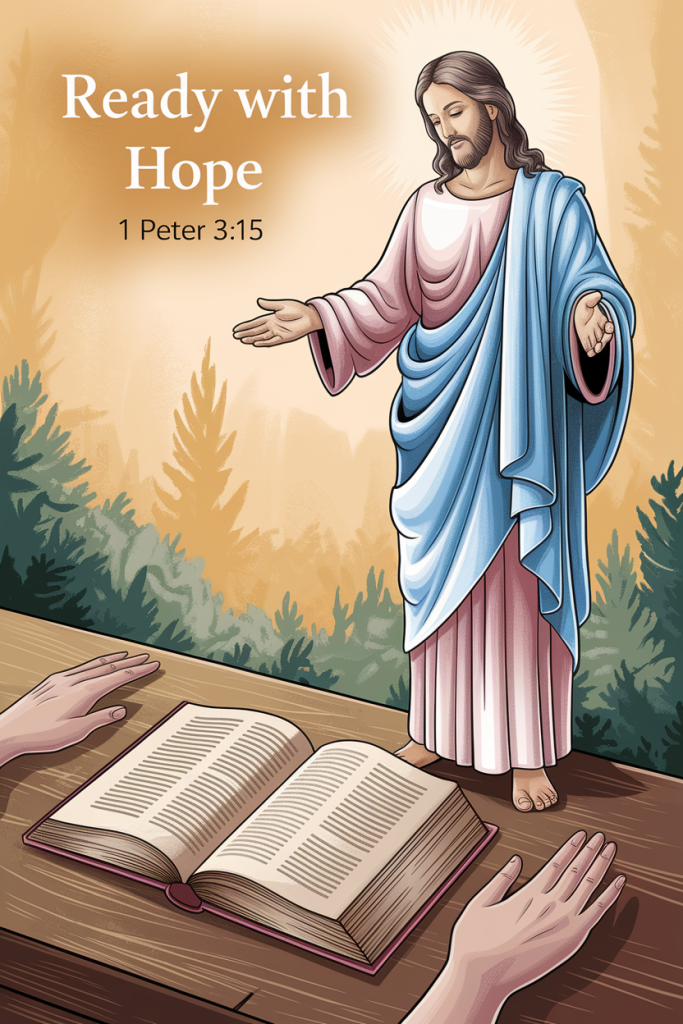
Finally, 1 Peter 3:15 instructs Christians to be prepared to articulate the basis of their hope: "But sanctify the Lord God in your hearts: and be ready always to give an answer to every man that asketh you a reason of the hope that is in you with meekness and fear:".
This verse emphasizes the importance of understanding the reasons for Christian hope so that believers can confidently share their faith with others. It suggests that hope is not a blind faith but one grounded in knowledge and conviction.
These instructions collectively portray hope as a vital and active component of the Christian life. It influences emotions, behaviors, and witness, demonstrating that biblical hope is a dynamic force that shapes the believer's journey.
Witnesses to Hope: Examples in the Old and New Testaments
Throughout the KJV Bible, numerous individuals serve as powerful examples of demonstrating hope in the face of significant challenges. Their experiences illustrate the sustaining power of hope rooted in faith in God.

In the Old Testament, Abraham is a prime example of hope against all odds. Romans 4:18 states that Abraham "Who against hope believed in hope, that he might become the father of many nations, according to that which was spoken, So shall thy seed be".
Despite his and Sarah's advanced age and Sarah's barrenness, Abraham held onto God's promise of numerous descendants.
This unwavering hope in God's faithfulness ultimately led to the fulfillment of the promise, demonstrating the transformative power of believing in what seems impossible from a human perspective.
Job, amidst immense suffering, declared his steadfast hope in God.
Even after losing his family, possessions, and health, Job proclaimed, "Though he slay me, yet will I trust in him: but I will maintain mine own ways before him" (Job 13:15).
This profound statement reflects an unwavering hope in God's ultimate justice and restoration, even when circumstances appeared utterly bleak. Ultimately, God vindicated Job and blessed him with even greater abundance than before, showcasing the reward of hope in the midst of adversity.
David, the shepherd king, faced constant hardship throughout his life, including betrayal, threats to his life, and periods of feeling abandoned by God. Yet, his Psalms are filled with expressions of hope.
In Psalm 27:13-14, he writes, "I had fainted, unless I had believed to see the goodness of the LORD in the land of the living. Wait on the LORD: be of good courage, and he shall strengthen thine heart: wait, I say, on the LORD".
Even in moments of despair, such as depicted in Psalm 13 where he felt forgotten by God, David consistently turned his hope back to the Lord.
The outcomes of his life, including deliverance from enemies and the establishment of his kingdom, stand as testaments to the power of his hope in God.
Moses, the leader of the Israelites out of Egypt, instilled hope in a nation often facing fear and uncertainty.
Before his death, he encouraged them with the words, "Be strong and of a good courage, fear not, nor be afraid of them: for the LORD thy God, he it is that doth go with thee; he will not fail thee, nor forsake thee" (Deuteronomy 31:6).
Moses' leadership, grounded in his own hope in God's presence and promises, guided the Israelites towards the Promised Land, even though he himself did not enter it. His example highlights how hope in God's guidance can sustain and direct even in the face of daunting challenges.
These Old Testament examples demonstrate that hope is not a shield against hardship but a firm reliance on God's character and promises within those difficulties. The outcomes, while not always immediate, ultimately reveal God's faithfulness to those who place their hope in Him.
The New Testament continues this theme with powerful examples of hope rooted in the person and work of Jesus Christ.
The apostle Paul, despite enduring relentless persecution and suffering for the sake of the gospel, consistently expressed his hope in Christ and the future glory awaiting believers.
In Romans 5:2-5, he explains how suffering leads to hope: "By whom also we have access by faith into this grace wherein we stand, and rejoice in hope of the glory of God. And not only so, but we glory in tribulations also: knowing that tribulation worketh patience; And patience, experience; and experience, hope: And hope maketh not ashamed; because the love of God is shed abroad in our hearts by the Holy Ghost which is given unto us".
His unwavering hope fueled his missionary journeys and continues to inspire believers through his writings.
The apostle Peter also emphasized the foundational hope found in Christ's resurrection.
He wrote, "Blessed be the God and Father of our Lord Jesus Christ, which according to his abundant mercy hath begotten us again unto a lively hope by the resurrection of Jesus Christ from the dead" (1 Peter 1:3).
Writing to believers facing persecution, Peter highlighted the resurrection as the source of a living hope that transcends earthly suffering and even death.
These New Testament examples firmly establish that Christian hope is anchored in the person and work of Jesus Christ, particularly his resurrection.
This hope offers a perspective that extends beyond earthly limitations, providing assurance of eternal life and future glory. The resurrection serves as the ultimate victory over death, solidifying the foundation for believers' confident expectation.
The Blessings of Hope: Promises and Rewards in the KJV
The KJV Bible explicitly connects hope with various blessings, rewards, and positive outcomes for those who believe. These connections reveal that hope is not a futile aspiration but a pathway to experiencing God's favor and provision.
Romans 15:13 beautifully illustrates the link between hope and joy and peace: "Now the God of hope fill you with all joy and peace in believing, that ye may abound in hope, through the power of the Holy Ghost".
This verse reveals that the very nature of God is hope, and He desires to fill believers with joy and peace as they place their trust in Him, leading to an abundance of hope. This suggests that hope is not merely a future expectation but a present source of emotional well-being.

The promise of renewed strength for those who hope in the Lord is found in Isaiah 40:31: "But they that wait upon the LORD shall renew their strength; they shall mount up with wings as eagles; they shall run, and not be weary; and they shall walk, and not faint".
This powerful imagery conveys that waiting with hope in God is not a passive endeavor but a posture that leads to supernatural strength, enabling believers to overcome challenges with resilience and endurance.
Jeremiah 29:11 offers assurance of a hopeful future: "For I know the thoughts that I think toward you, saith the LORD, thoughts of peace, and not of evil, to give you an expected end".
This verse highlights God's intentional and benevolent plans for His people, promising a future filled with peace and a positive resolution. This understanding fosters hope by assuring believers that their ultimate destiny is secure in God's hands.
The ultimate blessing of hope is tied to the promise of an eternal inheritance, as described in...
1 Peter 1:3-4: "Blessed be the God and Father of our Lord Jesus Christ, which according to his abundant mercy hath begotten us again unto a lively hope by the resurrection of Jesus Christ from the dead, To an inheritance incorruptible, and undefiled, and that fadeth not away, reserved in heaven for you".
This passage connects the resurrection of Jesus with a living hope that leads to an imperishable and eternal inheritance in heaven. This future prospect serves as a powerful motivator and source of hope for believers facing earthly trials.
Psalm 33:18 links hope with God's watchful care and potential for deliverance: "Behold, the eye of the LORD is upon them that fear him, upon them that hope in his mercy".
This verse assures believers that those who fear God and place their hope in His mercy are under His constant observation and care, implying His readiness to deliver them in times of need.
A direct connection between hope in the Lord and being blessed is stated in Jeremiah 17:7: "Blessed is the man that trusteth in the LORD, and whose hope the LORD is".
This verse unequivocally declares that those whose hope is centered in the Lord are blessed, highlighting the inherent benefit of placing one's trust and expectation in God.
These verses collectively demonstrate that hope in the KJV is not a passive wish but an active trust in God that yields tangible blessings both in the present and in eternity.
These blessings encompass emotional well-being, physical strength, assurance of a positive future, eternal inheritance, divine care, and overall blessedness.
Symbols of Assurance: Metaphors and Imagery of Hope
The KJV Bible employs various symbols and metaphors to vividly illustrate the concept of hope, making it more relatable and impactful for believers. These images convey the security, protection, and future reality associated with biblical hope.

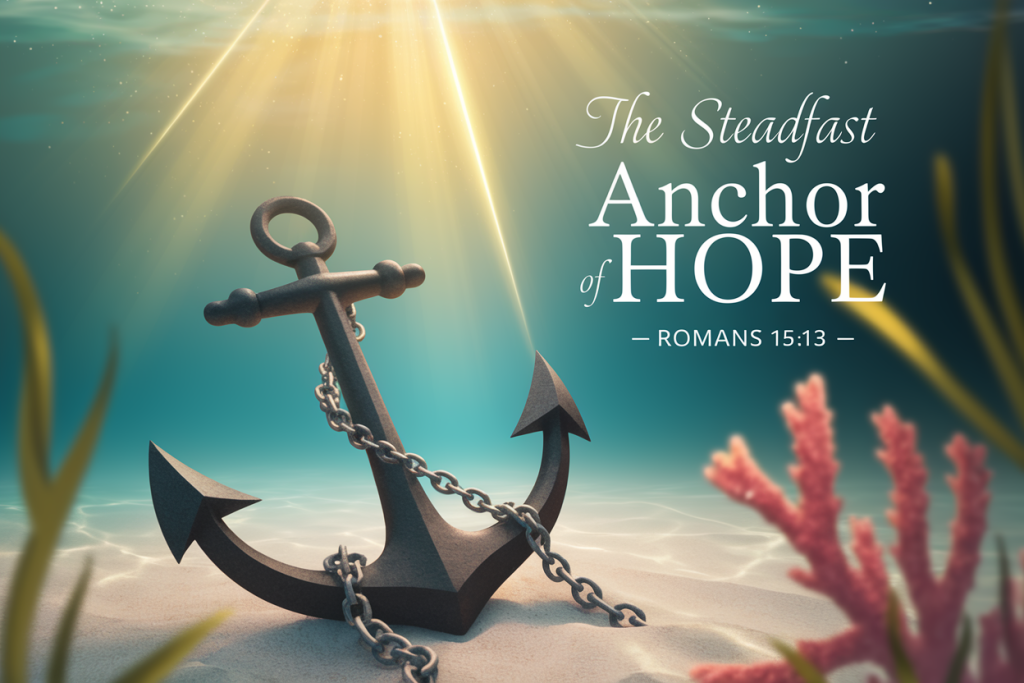
The metaphor of an anchor in Hebrews 6:19 stands out as a powerful symbol: "Which hope we have as an anchor of the soul, both sure and stedfast, and which entereth into that within the veil".
Just as a physical anchor provides stability to a ship amidst turbulent waters, hope acts as an anchor for the soul, keeping it secure and steadfast through life's challenges.
This anchor is not cast on earthly uncertainties but reaches into the heavenly realm, "within the veil," where Christ, our forerunner, has entered. This symbolizes that our hope is firmly grounded in the eternal and secure presence of God.
In 1 Thessalonians 5:8, hope is likened to a helmet: "But let us, who are of the day, be sober, putting on the breastplate of faith and love; and for an helmet, the hope of salvation".
This metaphor suggests that the hope of salvation serves as a protective covering for the believer's mind. It shields against doubt, despair, and the attacks of the enemy, providing assurance and clarity of thought regarding the future.
The concept of inheritance in 1 Peter 1:4 serves as a powerful image of future hope: "To an inheritance incorruptible, and undefiled, and that fadeth not away, reserved in heaven for you".
This metaphor paints a picture of an eternal and secure possession awaiting believers in heaven. Unlike earthly inheritances that are subject to decay and loss, this heavenly inheritance is permanent and undefiled, offering a tangible focus for future hope.
The Psalms often use the imagery of God as a haven, refuge, or fortress to symbolize hope in times of trouble (Psalm 18:2, Psalm 46:1, Psalm 62:7).
Proverbs 18:10 further reinforces this: "The name of the LORD is a strong tower: the righteous runneth into it, and is safe."
These metaphors represent the safety, security, and protection found in God, who is the ultimate object of hope. In times of distress, believers can run to Him as their refuge and find hope in His ability to deliver and protect.
The recurring theme of waiting or expectation in the KJV also symbolizes hope (Psalm 25:5, Psalm 27:14, Psalm 40:1, Psalm 130:5).
Passages like Isaiah 40:31, which speaks of waiting upon the Lord, emphasize an active trust and anticipation of God's promises being fulfilled. This symbolism highlights that hope is not passive but involves a confident and expectant posture towards God.
Proverbs 13:12 uses the image of a "tree of life" to describe the impact of fulfilled hope: "Hope deferred maketh the heart sick: but when the desire cometh, it is a tree of life".
This metaphor illustrates the life-giving and restorative power of hope when it is realized. Just as a tree of life sustains and nourishes, fulfilled hope brings joy, vitality, and renewed strength to the heart.
These diverse metaphors and images in the KJV provide a rich understanding of hope, emphasizing its stability, protection, future reality, present refuge, active anticipation, and life-giving nature.
They offer tangible ways for believers to grasp the multifaceted aspects of hope and its practical significance in their lives.
Echoes of the Future: Old Testament Hope Pointing to Christ
The Old Testament, while often focused on earthly blessings and deliverance, contains numerous prophecies and passages that, when understood in light of the New Testament, foreshadow the ultimate hope found in Jesus Christ.
These "echoes of the future" provided a trajectory of hope for God's people throughout history, culminating in the Messiah.
The prophecy of the "seed of the woman" in Genesis 3:15, stating that this seed would bruise Satan's head, is a foundational promise of hope for the defeat of evil.
The New Testament reveals Jesus Christ as this seed, whose victory over sin and death on the cross fulfills this ancient prophecy, offering the ultimate hope of redemption for humanity.
God's promise to Abraham in Genesis 12:3, that through his offspring all nations would be blessed, also points towards Christ.
The New Testament clarifies that Jesus Christ is the ultimate fulfillment of this promise, as through Him salvation and blessings extend to people of all nations who believe. This broadens the scope of hope beyond the nation of Israel to encompass all of humanity.
The promise of a prophet like Moses in Deuteronomy 18:15 found its fulfillment in Jesus Christ. The New Testament portrays Jesus as the ultimate prophet who speaks God's word with authority and truth, revealing the path to hope and salvation.
The detailed prophecy of the suffering servant in Isaiah 53 vividly describes the Messiah's suffering and sacrifice for the sins of humanity.
The New Testament clearly identifies Jesus Christ as the fulfillment of this prophecy, whose crucifixion provides the basis for hope through atonement, offering forgiveness and reconciliation with God.
The Old Testament also contains prophecies of a Messianic King who would rule with justice and power, such as in Psalm 2 and Psalm 110.
The New Testament proclaims Jesus Christ as this King of kings, whose reign offers the hope of a just and eternal kingdom, both now in the hearts of believers and in its future fullness.
The promise of a new covenant in Jeremiah 31:31-34, where God's law would be written on people's hearts, finds its realization in the new covenant established through the blood of Jesus Christ, as detailed in the New Testament.
This new covenant offers a deeper and more personal hope, based on inward transformation rather than outward adherence to the law.
These Old Testament prophecies, when viewed through the lens of the New Testament, reveal a consistent and powerful thread of hope pointing towards the coming Messiah.
They provided a framework of expectation and assurance for God's people throughout the centuries, anticipating the ultimate fulfillment of hope in Jesus Christ.
The Promised Fulfilled: New Testament Realization of Hope
The New Testament explicitly declares the fulfillment of the Old Testament hopes and prophecies in the person and work of Jesus Christ. These declarations solidify the foundation of Christian hope in the promised Messiah.
Matthew 1:22-23 states that the virgin birth of Jesus was the fulfillment of Isaiah 7:14: "Now all this was done, that it might be fulfilled which was spoken of the Lord by the prophet, saying, Behold, a virgin shall be with child, and shall bring forth a son, and they shall call his name Emmanuel, which being interpreted is, God with us." This event marked the arrival of the Messiah, the one who would bring hope to the world.
In Luke 4:16-21, Jesus himself reads from Isaiah 61 and declares, "This day is this scripture fulfilled in your ears".
This passage speaks of the Spirit of the Lord being upon the Messiah to preach good tidings, heal the brokenhearted, proclaim liberty to the captives, and declare the acceptable year of the Lord. Jesus' declaration affirmed that He was the one anointed to fulfill these hopes of redemption and liberation.
Peter, in Acts 3:18, proclaims that the suffering and resurrection of Jesus fulfilled the prophecies spoken by the prophets: "But those things, which God before had shewed by the mouth of all his prophets, that Christ should suffer, he hath so fulfilled."
This highlights the fulfillment of the suffering servant prophecy, which is central to the hope of salvation through Christ's sacrifice.
Paul, in Romans 1:1-4, identifies Jesus as the promised Messiah, the seed of David, fulfilling Old Testament expectations:
"Paul, a servant of Jesus Christ, called to be an apostle, separated unto the gospel of God, Which he had promised afore by his prophets in the holy scriptures, Concerning his Son Jesus Christ our Lord, which was made of the seed of David according to the flesh; And declared to be the Son of God with power, according to the spirit of holiness, by the resurrection from the dead."
This establishes Jesus' lineage and role as the realization of messianic hope.
The apostle Paul further emphasizes in 2 Corinthians 1:20 that "all the promises of God in him are yea, and in him Amen".
This powerful statement confirms that Jesus Christ is the ultimate fulfillment of all of God's promises, including those of hope, assuring believers of their certainty and reliability.
Hebrews 9:11-15 explains how Christ, as the high priest of the new covenant, fulfilled the Old Testament sacrificial system, offering a better hope:
"But Christ being come an high priest of good things to come, by a greater and more perfect tabernacle, not made with hands, that is to say, not of this building; Neither by the blood of goats and calves, but by his own blood he entered in once into the holy place, having obtained eternal redemption for us."
This passage demonstrates the superiority of the hope found in Christ over the symbolic hopes of the Old Testament.
These New Testament verses consistently point back to the Old Testament, demonstrating how Jesus Christ is the culmination of God's promises and the fulfillment of the hope that was anticipated for centuries.
This explicit connection between the two testaments underscores the unity of God's redemptive plan and solidifies the foundation of Christian hope in the fulfilled prophecies.
Christ, Our Hope: The Centrality of Hope in Jesus' Person and Ministry
The concept of hope is not merely associated with Jesus Christ; it is fundamental to His very identity and the entirety of His ministry as revealed in the New Testament. He is the embodiment and source of true hope for believers.
1 Peter 1:3 speaks of a "lively hope by the resurrection of Jesus Christ from the dead".
His resurrection from the dead is the cornerstone of Christian hope, offering the promise of new life and eternal prospects that would otherwise be unattainable. This event signifies victory over sin and death, paving the way for believers to share in this hope.
Jesus' teachings often pointed towards a better future in God's kingdom, providing hope to those who were weary and burdened.
His invitation in Matthew 11:28, "Come unto me, all ye that labour and are heavy laden, and I will give you rest", offers hope for relief and solace.
Similarly, His promise in John 14:2-3, "In my Father's house are many mansions: if it were not so, I would have told you. I go to prepare a place for you. And if I go and prepare a place for you, I will come again, and receive you unto myself; that where I am, there ye may be also", provides hope for an eternal dwelling with Him.
The miracles performed by Jesus demonstrated God's power to overcome suffering and death, offering a tangible hope for restoration and healing.
His words in Mark 9:23, "Jesus said unto him, If thou canst believe, all things are possible to him that believeth", highlight the role of faith in receiving the hope of healing and restoration.
The raising of Lazarus in John 11:25, where Jesus declared, "I am the resurrection, and the life: he that believeth in me, though he were dead, yet shall he live," offers the ultimate hope of overcoming death itself.
Jesus' sacrificial death on the cross provided atonement for sin, which was the fundamental barrier to true hope.
As Romans 5:8 states, "But God commendeth his love toward us, in that, while we were yet sinners, Christ died for us".
This act of love opened the way for reconciliation with God and the hope of eternal life for all who believe in Him.
The resurrection of Jesus is the ultimate victory over death, guaranteeing the future resurrection of believers and the fullness of hope.
As Paul writes in 1 Corinthians 15:19-20, "If in this life only we have hope in Christ, we are of all men most miserable. But now is Christ risen from the dead, and become the firstfruits of them that slept."
This event is the bedrock of "living hope" and the assurance of eternal life for those who are in Christ.
Colossians 1:27 reveals the profound truth that "To whom God would make known what is the riches of the glory of this mystery among the Gentiles; which is Christ in you, the hope of glory".
The indwelling presence of Christ in believers through the Holy Spirit is the very guarantee and substance of their future glory, making hope an intimate and personal reality.
In essence, hope is not merely a concept taught by Jesus but is intrinsically linked to His person and ministry. His life, death, and resurrection are the very foundation and substance of Christian hope, offering a secure and eternal expectation for all who believe in Him.
Courage Infusers for Hope: Encouraging Reflections from Scripture
Here are some concise, encouraging reflections based on the scriptural understanding of hope in the KJV:
- Embrace the confident expectation that is your inheritance in Christ today. Like a sure and steadfast anchor, let the hope in Jesus secure your soul amidst the storms of life (Hebrews 6:19).
- Remember, beloved, you are saved by hope (Romans 8:24). This hope is not for what you see, but for the glorious future God has prepared for you. Wait patiently, for His promises are certain (Romans 8:25).
- Let the God of hope fill you with all joy and peace as you believe (Romans 15:13). This joy and peace are not dictated by your circumstances but flow from the power of the Holy Ghost within you.
- Even when you walk through the darkest valleys, fear no evil, for your hope is in the Lord (Psalm 23:4). He will never fail you nor forsake you (Deuteronomy 31:6).
- Fix your gaze not on the fleeting things of this world, but on the eternal realities (2 Corinthians 4:18). Your hope is in an everlasting inheritance that can never perish, spoil, or fade away (1 Peter 1:4).
- Take heart and be courageous, all you who place your hope in the Lord (Psalm 31:24). He will strengthen your heart. Your labor in the Lord is not in vain (1 Corinthians 15:58).
- Be prepared always to share the reason for the hope that resides within you (1 Peter 3:15). Proclaim the good news of Jesus Christ, the hope of glory (Colossians 1:27).
- Those who wait upon the Lord shall renew their strength (Isaiah 40:31). When weariness sets in, turn your hope to Him, and He will lift you up on wings like eagles.
- Blessed is the one whose hope is in the Lord (Jeremiah 17:7). Trust in Him with all your being, and you will be like a tree planted by the waters, ever fruitful and resilient.
- Let us hold firmly to the hope we profess, without wavering, for He who promised is utterly faithful (Hebrews 10:23). Your hope is built on the solid, unshakeable foundation of God's unfailing Word.
Conclusion: Abounding in Hope Through the Holy Ghost
In conclusion, the King James Version Bible presents hope as a multifaceted and enduring concept that is central to the life of a believer.
It is more than a mere wish; it is a confident expectation rooted in the unwavering character and promises of God, supremely revealed in Jesus Christ.
From the instructions to rejoice and be patient in hope, to the inspiring examples of those who held fast to hope in challenging circumstances, the KJV underscores the active role hope plays in the Christian journey.
The blessings associated with hope, including joy, peace, strength, and the promise of an eternal inheritance, demonstrate the tangible benefits of placing trust in God.
The rich symbolism and metaphors, such as the anchor, helmet, and inheritance, further illuminate the security, protection, and future reality that hope provides.
The intricate connection between the Old and New Testaments reveals a consistent thread of hope pointing towards the Messiah.
The New Testament declares Jesus Christ as the fulfillment of these ancient hopes, with His life, death, and resurrection serving as the very foundation of Christian hope. He is the source of living hope, offering forgiveness, restoration, and the promise of eternal life.
Therefore, believers are encouraged to cultivate and live in this hope through the power of the Holy Ghost, as exhorted in Romans 15:13. This steadfast anchor of hope in Christ provides stability, assurance, and an unwavering expectation of God's goodness, both now and for eternity.
Call to Action: The Question That Demands an AnswerIn Acts 2:37 Peter and the Apostles were asked the question – What Shall We do? And in Acts 2:38 Peter answered, Repent, and be baptized every one of you in the name of Jesus Christ for the remission of sins, and ye shall receive the gift of the Holy Ghost. For the promise is unto you, and to your children, and to all that are afar off, even as many as the Lord our God shall call. Do you understand this? After hearing the gospel and believing, they asked what should would do. The answer hasn’t changed friend, Peter clearly gave the answer. The question for you today is, Have you receieved the Holy Spirit Since you believed? If you’re ready to take that step, or you want to learn more about what it means to be born again of water and Spirit, visit: Come, and let the Spirit make you new. |